Public Steam disclosure research25,534 disclosures tracked
Where do games disclose AI use?
Search developers’ Steam disclosures, compare classified AI use across
games, and follow recorded changes.
This index adds cross-game classifications and statistics to
statements published on individual store pages.
Groups reflect automatic analysis of public disclosures; mature records are excluded. These counts do not measure AI use across all of Steam.
Missing or unclear statements cannot establish whether a game uses AI.
Our small indie team has responsibly used generative AI tools to accelerate our development while maintaining full creative control.
We used MidJourney to generate base visual assets, which were then carefully edited, customized, and rendered by our artists to match the game’s artistic direction. These AI-generated elements are part of the final visual content, but were not used “as-is” and underwent human refinement.
For localization, we used AI-based tools to assist with proofreading and translation consistency, ensuring clearer communication across languages.
No AI systems are used during gameplay or in real-time content generation. All interactive and gameplay logic was developed by our team.
We fully comply with Steam’s policies regarding AI use, and all assets were created and integrated within the scope of ethical and legal use.
Transparency and player trust are at the heart of our approach.
Some image assets in the game of lesser importance (character portraits, item icons) are made using a process that includes AI image generation. This will be replaced with original artwork in the final product.
Background Music (Suno)
Voice Over Audio (XTTS)
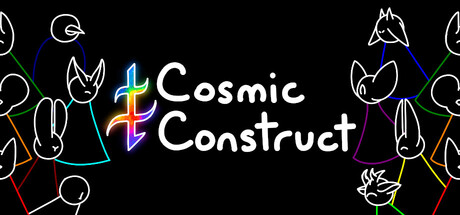
All voice over audio was created with permission from the voice actor. Cosmic Construct has a constructed language (conlang) spoken by the game's characters.
This game includes an experiment about the perception of human-made and AI art in a multimedia context. To that purpose some of the graphic, music and text assets of the game are generated with the help of AI, while others are human-made. The player is asked at the end of the game to guess which parts were made by AI and which were not.
Voiceovers, some marketing content, and a few textures were partially generated in AI and then used with artist created art assets or real-photography.
Our game features an AI-driven narrative system utilized during the opening cutscene. This AI is used exclusively to generate a dynamic, cinematic introduction that adapts based on the player's initial choices or in-game context. It does not influence gameplay mechanics or decision-making beyond the cutscene, but it helps create a unique and immersive storytelling experience.
Museums of History uses AI technology to enhance the visual quality of menu background images. These backgrounds showcase beautifully rendered scenes from the game environment, offering players an engaging preview of the historical settings they’ll explore.
By using AI to refine and generate these visuals, we ensure stunning and immersive artwork that sets the tone for the game, while maintaining a focus on historical accuracy and aesthetic appeal.
AI was used for text translation into multiple languages and for generating small placeholder images, such as icons and minor UI elements.
All core creative assets, gameplay systems, and design decisions were made by the developer, and AI-generated placeholders may be replaced in future updates.
AI was used for grammar and spell checking, as well as for brainstorming certain problems. A select few generated images were used as a starting point and then further manipulated using image editing software. One example is a generated skull image that was used in the background of some menus. These were heavily altered to have a dithered, pixelated look.
No AI was used for any of the sprites found in the game (e.g., the monsters, menu icons, and so on). These were handmade by the awesome artists behind the Dungeon Crawl Stone Soup tileset.
AI tools were used during development for non-interactive assets: ChatGPT for translation support, Suno for music generation, and Hotpot.ai for some graphic assets. These assets are fixed and do not change during gameplay. No AI is used at runtime or for any user-generated content.
Some portions of the textual content in English, French, Russian, and German in this game were pre-generated using artificial intelligence. Additionally, some of the original concept art in the game was generated with the assistance of artificial intelligence. The AI-generated elements contain no illegal, prohibited, or infringing material and align with the representations shown in the game's marketing materials.
Our game utilizes AI in various aspects.
Code: AI algorithms are applied to optimize the game's code, ensuring smoother gameplay and better performance. This includes improving character pathfinding and adjusting in-game parameters for an ideal difficulty level.
Text: We use AI-driven natural language processing to assist in text-related tasks, like ensuring consistency and grammar in the in-game text for items, locations, and descriptions.
Textures: AI, such as generative adversarial networks, helps in creating high-quality textures for different surfaces in the game, enhancing the visual appeal.
Sound Effects: AI is used to analyze and manipulate sound effects, making them more realistic and in tune with in-game actions and events.
Music: AI algorithms analyze musical styles to compose original music that sets the right mood for different game scenes.
This game uses generative AI in parts of the development process. Any AI-assisted assets are reviewed by the developer and, when needed, edited or adjusted before being included in the game. The game does not run generative AI in real time.
Some artwork: selected visuals such as certain card art and enemy character art.
Some music: selected BGM tracks.
Our small indie team has responsibly used generative AI tools to accelerate our development while maintaining full creative control.
We used MidJourney to generate base visual assets, which were then carefully edited, customized, and rendered by our artists to match the game’s artistic direction. These AI-generated elements are part of the final visual content, but were not used “as-is” and underwent human refinement.
For localization, we used AI-based tools to assist with proofreading and translation consistency, ensuring clearer communication across languages.
No AI systems are used during gameplay or in real-time content generation. All interactive and gameplay logic was developed by our team.
We fully comply with Steam’s policies regarding AI use, and all assets were created and integrated within the scope of ethical and legal use.
Transparency and player trust are at the heart of our approach.
Some image assets in the game of lesser importance (character portraits, item icons) are made using a process that includes AI image generation. This will be replaced with original artwork in the final product.
Background Music (Suno)
Voice Over Audio (XTTS)
All voice over audio was created with permission from the voice actor. Cosmic Construct has a constructed language (conlang) spoken by the game's characters.
This game includes an experiment about the perception of human-made and AI art in a multimedia context. To that purpose some of the graphic, music and text assets of the game are generated with the help of AI, while others are human-made. The player is asked at the end of the game to guess which parts were made by AI and which were not.
Voiceovers, some marketing content, and a few textures were partially generated in AI and then used with artist created art assets or real-photography.
Our game features an AI-driven narrative system utilized during the opening cutscene. This AI is used exclusively to generate a dynamic, cinematic introduction that adapts based on the player's initial choices or in-game context. It does not influence gameplay mechanics or decision-making beyond the cutscene, but it helps create a unique and immersive storytelling experience.
Museums of History uses AI technology to enhance the visual quality of menu background images. These backgrounds showcase beautifully rendered scenes from the game environment, offering players an engaging preview of the historical settings they’ll explore.
By using AI to refine and generate these visuals, we ensure stunning and immersive artwork that sets the tone for the game, while maintaining a focus on historical accuracy and aesthetic appeal.
AI was used for text translation into multiple languages and for generating small placeholder images, such as icons and minor UI elements.
All core creative assets, gameplay systems, and design decisions were made by the developer, and AI-generated placeholders may be replaced in future updates.
AI was used for grammar and spell checking, as well as for brainstorming certain problems. A select few generated images were used as a starting point and then further manipulated using image editing software. One example is a generated skull image that was used in the background of some menus. These were heavily altered to have a dithered, pixelated look.
No AI was used for any of the sprites found in the game (e.g., the monsters, menu icons, and so on). These were handmade by the awesome artists behind the Dungeon Crawl Stone Soup tileset.
AI tools were used during development for non-interactive assets: ChatGPT for translation support, Suno for music generation, and Hotpot.ai for some graphic assets. These assets are fixed and do not change during gameplay. No AI is used at runtime or for any user-generated content.
Some portions of the textual content in English, French, Russian, and German in this game were pre-generated using artificial intelligence. Additionally, some of the original concept art in the game was generated with the assistance of artificial intelligence. The AI-generated elements contain no illegal, prohibited, or infringing material and align with the representations shown in the game's marketing materials.
Our game utilizes AI in various aspects.
Code: AI algorithms are applied to optimize the game's code, ensuring smoother gameplay and better performance. This includes improving character pathfinding and adjusting in-game parameters for an ideal difficulty level.
Text: We use AI-driven natural language processing to assist in text-related tasks, like ensuring consistency and grammar in the in-game text for items, locations, and descriptions.
Textures: AI, such as generative adversarial networks, helps in creating high-quality textures for different surfaces in the game, enhancing the visual appeal.
Sound Effects: AI is used to analyze and manipulate sound effects, making them more realistic and in tune with in-game actions and events.
Music: AI algorithms analyze musical styles to compose original music that sets the right mood for different game scenes.
This game uses generative AI in parts of the development process. Any AI-assisted assets are reviewed by the developer and, when needed, edited or adjusted before being included in the game. The game does not run generative AI in real time.
Some artwork: selected visuals such as certain card art and enemy character art.
Some music: selected BGM tracks.