Public Steam disclosure research25,376 disclosures tracked
Where do games disclose AI use?
Search developers’ Steam disclosures, compare classified AI use across
games, and follow recorded changes.
This index adds cross-game classifications and statistics to
statements published on individual store pages.
Groups reflect automatic analysis of public disclosures; mature records are excluded. These counts do not measure AI use across all of Steam.
Missing or unclear statements cannot establish whether a game uses AI.
This game uses AI tools in the following ways:
Music: Composed using Suno.
Code: Written and debugged with AI assistance.
Art: Created with AI assistance.
All AI-assisted content was reviewed, edited, and finalized by the developer.
This game used generative AI for asset creation during development. The HQ statue's 3D model was created with Meshy AI, and background music was composed with Suno AI. Most in-game icons and images were created using Google Gemini and ChatGPT.
Generative AI tools were used during development to create portions of the game's visual artwork, sound effects, music, and localized text, as well as promotional artwork for the Steam store page. This includes pre-rendered background illustrations, promotional capsule images, audio assets, and AI-generated translations.
All graphics in the game are hand-pixelled. The soundtrack was created with generative AI. Some images for the Steam store and library were expanded using AI to fit the required aspect ratios. No content is generated by AI during gameplay.
StageStar uses generative AI only to create fictional social media-style posts inside the game’s parody social platform. These AI-generated posts are used to make the game world feel more alive and reactive to the player’s career progress.
The AI-generated content does not represent real people, real accounts, or real-world social media posts. It is fictional in-game content created for entertainment purposes only.
Bu oyunun bazı mağaza kapak görselleri ve tanıtım materyalleri geliştirme sürecinde yapay zeka araçları yardımıyla önceden oluşturulmuştur. Oyun içerisinde oyuncular tarafından oluşturulan veya gerçek zamanlı üretilen bir yapay zeka içeriği bulunmamaktadır.
Some steps of the art production used AI tools, for example to create or upscale backgrounds and illustrations that were then refined by hand, and for first drafts of language translations. No AI content is generated during gameplay.
Generative AI tools were used during development to create some visual assets, including card and encounter illustrations, the game icon, and certain visual effects, as well as music and some sound effects. AI tools also assisted with in-game text, localization, and store-page copy. This content is prepared before release. The game does not use generative AI to create content during gameplay.
Generative AI tools were used in the following areas of this game's development.
■ Visual assets
Image generation AI was used to create some 2D visual assets, including backgrounds, card artwork, and UI elements. These images are included in the game as fixed assets.
■ Music
The background music was created using Suno, an AI music generation tool.
■ Voice assets
The included female voice assets were created using audio generation AI. The male voice assets are pre-existing recordings provided by T-Sta.
■ Text and translation
Generative AI assisted with writing and translation for some in-game text and the store page description.
■ Program code
AI coding assistance tools were used for part of the implementation work.
■ Other assets
Sound effects are pre-existing audio assets provided by Soundeffect Lab, Kurage Kosho, T-Sta, and DOVA-SYNDROME. The font is Zen Kaku Gothic New, provided under the SIL Open Font License.
■ No live generation
All AI-generated content described above was created in advance during development. The game does not use generative AI to create new images, music, voices, or dialogue during gameplay.
Some visual assets in the game were created using generative AI. This includes the game's logo and some of the artwork found in the hospital map. The hospital map is part of a purchased asset pack, and some of the artwork in the environment was already AI-generated.
Generative AI tools were used during development to create pre-rendered assets: creature and building artwork, icons, 3D models and parts of the store graphics. All assets were selected, edited and integrated by the developers. The game does not generate any content with AI while it is running.
This game uses Generative AI tools to assist in the creation of select visual assets and graphic elements, such as icons, background textures, and concept art.
All generated assets were subsequently reviewed, edited, and manually integrated by our team to ensure quality, consistency, and a seamless gameplay experience.
These features will be replaced as the game progresses through development.
Generative AI was used during development to assist in creating and refining some pre-generated artwork, audio elements, text, and localized text. All content included with the game was selected, edited, and reviewed by the developer. The game does not generate AI content during gameplay and does not connect to external AI services.
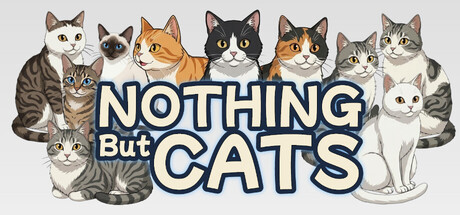
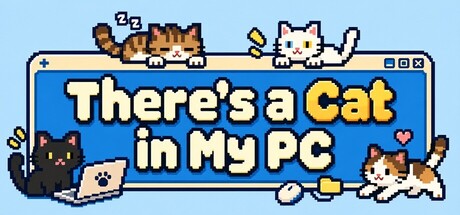
This game's cat characters are based on art assets we created, expanded with generative AI into a variety of patterns and colors. Generative AI image tools were also used at the concept stage for the store page's capsule images and icons.
Players can also optionally register their own free Google API key to chat with their cats or check today's fortune. This feature connects live to Google's Gemini API while the game is running to generate responses; the rest of the game can be enjoyed the same way without registering a key.
"All artwork and video scenes in this game were pre-generated using AI tools. The in-game content is completely fixed, and no adult content or mode-switching code/mechanics are provided."
Transparency is important--I built this game with extensive AI use, from coding to visual assets. If that's not your thing, I respect that. The game is free and I have no intention of adding anything in-game to buy. I just wanted to make something fun and see what I could do. Hopefully, it feels like some effort and creativity went into this and it's not just slop.
Generative AI was used during development to create visual artwork, including character, enemy, item and skill images, as well as store promotional artwork. These are pre-generated assets. The game does not generate AI content during gameplay or connect to external AI services.
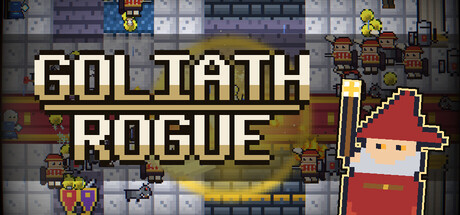
Goliath Rogue was made with the help of generative AI. The 2D art, the music and the sound effects were AI-generated — some of the art was then retouched by hand — and the Spanish and French translations were AI-assisted. All of it ships as fixed assets in the game; nothing is generated while you play. AI coding tools were also used during development to help write the game's code.
We use AI to generate combat simulation tests, placeholder artwork, and agentic workflows for game logic. AI is a tool and not something to replace humans with. A lot of human hours have been put into the game too.
Generative AI was used to generate in-game card illustrations, graphical assets, and all programming code. The game design, world-building, and lore were created directly by the developer.
(게임 내 카드 일러스트와 그래픽 에셋 제작, 그리고 프로그래밍 코딩 전반에 생성형 AI를 활용했습니다. 게임 기획 및 배경 세계관 설정은 직접 작성했습니다.)
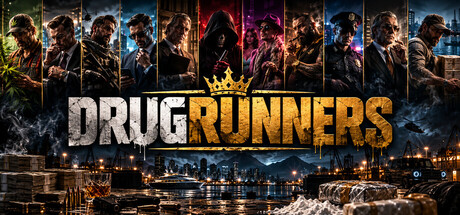
Drugrunners uses generative AI tools to help create some in-game visual assets, including icons, item art, and background artwork. This content is generated in advance during development. The game does not use AI to generate content live or in response to player input during gameplay.
We used generative AI during development. The title logo image was created with a
generative AI image tool. Sound effects in the game and in the trailer are synthesised
by a script that was written with AI coding assistance. The nine non-Japanese interface
translations and the store text were produced by AI. AI coding assistance was used
throughout development. The game does not generate any content with AI while it runs.
The four cat-origin character portraits were created with generative AI during development. Pack and card artwork is contributed by creators and may also include AI-created images; the creation method of some contributed artwork, including the initial BLEP pack, has not been independently verified. The game does not generate artwork during play or connect to an AI generation service during gameplay. Players can report creator content in the game for operator review and removal.
The game utilizes AI-generated content (such as concept illustrations, capsule art, and certain user interface asset variations) during the development process to enhance visual presentation.
I used AI-generated images, assets, and music. I also used AI to assist with creating some of game's Bluprint. However, as a Motion graphic designer, I created as many of the 3D assets myself as possible.
During development, Google Gemini and OpenAI GPT were primarily used for programming assistance, debugging, and development workflow support. Nano Banana was used to generate some character sprite artwork and to redraw or adjust certain facial-expression variants of existing character sprites. All AI-assisted art assets were manually reviewed, selected, and edited by the developer before being included in the game.
Voice lines and sound effects were produced with AI voice synthesis
(ElevenLabs) during development. Some character portraits and UI/VFX
textures were created with AI-assisted tools. All assets were reviewed,
edited and integrated by the developer.
No generative AI runs at runtime — the game ships only pre-generated,
fixed assets.
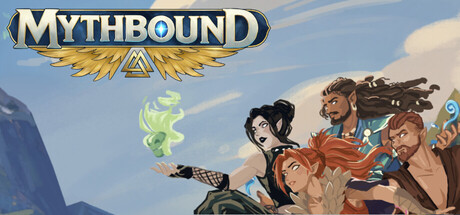
Mythbound features a small portion of generated assets in the form of environmental props for it's Early Access period. No generated assets will be featured in the final release of the game.
Generative AI tools were used during development to assist with parts of concept art, character drafts, draft store assets, localization drafts, and operational copy drafts. All AI-assisted content was manually reviewed, edited, integrated, and approved by the development team before being included in the game or store page.
The game does not use generative AI at runtime to create dialogue, story content, images, audio, or other player-facing content.
No major content was directly created with AI. No graphic assets (store page or in game) were created with AI. Only used to help with creating shaders, database scripts, animations, and some balancing/debugging.
Generative AI was used during development to assist with programming and to create most of the game's visual assets. The player character artwork was created without generative AI.
This game uses generative artificial intelligence for FMV video communications (video and audio), sound effects, sprite images, textures, 3D models. You'd be hard pressed to find a corner of this game AI hasn't touched. I made this because I enjoy it.
All the Localization, voiceovers/music, and many of the in-game textures were generated using AI.
The store page trailer and images are rendered inside the game itself, so indirectly they also contains those AI generated textures.
A note on why.
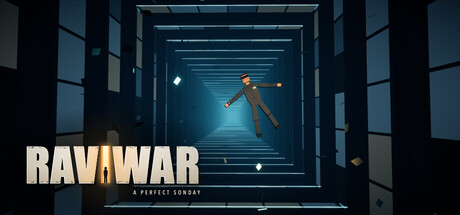
RaviWar 1 is the first part of a story that takes eight games to tell: RaviWar 1 & 2, and six shorter games set inside the same universe, under the name Tales of Takarek.
I am one person, with no studio and no funding behind me. Built the traditional way, a project that size would outlast me. These tools are the only way I can attempt it at all, and I would rather finish the whole story imperfectly than finish a fraction of it perfectly.
It is also why this game is free. I am not asking anyone to pay for AI generated work.
The design, the writing, the puzzles and the world are mine. As the project grows I intend to replace generated assets with commissioned ones.
Once again I am sorry.
This game was vibe coded in C++ with Claude Code Opus 5, and some GPT-6 Astra while I operated Unreal Engine 5.7. Many of the assets were purchased at fab.com, and the voices are from elevenlabs.io. Call it shovelware if you like, I had fun shoveling.
This game uses AI tools in the following ways:
Music: Composed using Suno.
Code: Written and debugged with AI assistance.
Art: Created with AI assistance.
All AI-assisted content was reviewed, edited, and finalized by the developer.
This game used generative AI for asset creation during development. The HQ statue's 3D model was created with Meshy AI, and background music was composed with Suno AI. Most in-game icons and images were created using Google Gemini and ChatGPT.
Generative AI tools were used during development to create portions of the game's visual artwork, sound effects, music, and localized text, as well as promotional artwork for the Steam store page. This includes pre-rendered background illustrations, promotional capsule images, audio assets, and AI-generated translations.
All graphics in the game are hand-pixelled. The soundtrack was created with generative AI. Some images for the Steam store and library were expanded using AI to fit the required aspect ratios. No content is generated by AI during gameplay.
StageStar uses generative AI only to create fictional social media-style posts inside the game’s parody social platform. These AI-generated posts are used to make the game world feel more alive and reactive to the player’s career progress.
The AI-generated content does not represent real people, real accounts, or real-world social media posts. It is fictional in-game content created for entertainment purposes only.
Bu oyunun bazı mağaza kapak görselleri ve tanıtım materyalleri geliştirme sürecinde yapay zeka araçları yardımıyla önceden oluşturulmuştur. Oyun içerisinde oyuncular tarafından oluşturulan veya gerçek zamanlı üretilen bir yapay zeka içeriği bulunmamaktadır.
Some steps of the art production used AI tools, for example to create or upscale backgrounds and illustrations that were then refined by hand, and for first drafts of language translations. No AI content is generated during gameplay.
Generative AI tools were used during development to create some visual assets, including card and encounter illustrations, the game icon, and certain visual effects, as well as music and some sound effects. AI tools also assisted with in-game text, localization, and store-page copy. This content is prepared before release. The game does not use generative AI to create content during gameplay.
Generative AI tools were used in the following areas of this game's development.
■ Visual assets
Image generation AI was used to create some 2D visual assets, including backgrounds, card artwork, and UI elements. These images are included in the game as fixed assets.
■ Music
The background music was created using Suno, an AI music generation tool.
■ Voice assets
The included female voice assets were created using audio generation AI. The male voice assets are pre-existing recordings provided by T-Sta.
■ Text and translation
Generative AI assisted with writing and translation for some in-game text and the store page description.
■ Program code
AI coding assistance tools were used for part of the implementation work.
■ Other assets
Sound effects are pre-existing audio assets provided by Soundeffect Lab, Kurage Kosho, T-Sta, and DOVA-SYNDROME. The font is Zen Kaku Gothic New, provided under the SIL Open Font License.
■ No live generation
All AI-generated content described above was created in advance during development. The game does not use generative AI to create new images, music, voices, or dialogue during gameplay.
Some visual assets in the game were created using generative AI. This includes the game's logo and some of the artwork found in the hospital map. The hospital map is part of a purchased asset pack, and some of the artwork in the environment was already AI-generated.
Generative AI tools were used during development to create pre-rendered assets: creature and building artwork, icons, 3D models and parts of the store graphics. All assets were selected, edited and integrated by the developers. The game does not generate any content with AI while it is running.
This game uses Generative AI tools to assist in the creation of select visual assets and graphic elements, such as icons, background textures, and concept art.
All generated assets were subsequently reviewed, edited, and manually integrated by our team to ensure quality, consistency, and a seamless gameplay experience.
These features will be replaced as the game progresses through development.
Generative AI was used during development to assist in creating and refining some pre-generated artwork, audio elements, text, and localized text. All content included with the game was selected, edited, and reviewed by the developer. The game does not generate AI content during gameplay and does not connect to external AI services.
This game's cat characters are based on art assets we created, expanded with generative AI into a variety of patterns and colors. Generative AI image tools were also used at the concept stage for the store page's capsule images and icons.
Players can also optionally register their own free Google API key to chat with their cats or check today's fortune. This feature connects live to Google's Gemini API while the game is running to generate responses; the rest of the game can be enjoyed the same way without registering a key.
"All artwork and video scenes in this game were pre-generated using AI tools. The in-game content is completely fixed, and no adult content or mode-switching code/mechanics are provided."
Transparency is important--I built this game with extensive AI use, from coding to visual assets. If that's not your thing, I respect that. The game is free and I have no intention of adding anything in-game to buy. I just wanted to make something fun and see what I could do. Hopefully, it feels like some effort and creativity went into this and it's not just slop.
Generative AI was used during development to create visual artwork, including character, enemy, item and skill images, as well as store promotional artwork. These are pre-generated assets. The game does not generate AI content during gameplay or connect to external AI services.
Goliath Rogue was made with the help of generative AI. The 2D art, the music and the sound effects were AI-generated — some of the art was then retouched by hand — and the Spanish and French translations were AI-assisted. All of it ships as fixed assets in the game; nothing is generated while you play. AI coding tools were also used during development to help write the game's code.
We use AI to generate combat simulation tests, placeholder artwork, and agentic workflows for game logic. AI is a tool and not something to replace humans with. A lot of human hours have been put into the game too.
Generative AI was used to generate in-game card illustrations, graphical assets, and all programming code. The game design, world-building, and lore were created directly by the developer.
(게임 내 카드 일러스트와 그래픽 에셋 제작, 그리고 프로그래밍 코딩 전반에 생성형 AI를 활용했습니다. 게임 기획 및 배경 세계관 설정은 직접 작성했습니다.)
Drugrunners uses generative AI tools to help create some in-game visual assets, including icons, item art, and background artwork. This content is generated in advance during development. The game does not use AI to generate content live or in response to player input during gameplay.
We used generative AI during development. The title logo image was created with a
generative AI image tool. Sound effects in the game and in the trailer are synthesised
by a script that was written with AI coding assistance. The nine non-Japanese interface
translations and the store text were produced by AI. AI coding assistance was used
throughout development. The game does not generate any content with AI while it runs.
The four cat-origin character portraits were created with generative AI during development. Pack and card artwork is contributed by creators and may also include AI-created images; the creation method of some contributed artwork, including the initial BLEP pack, has not been independently verified. The game does not generate artwork during play or connect to an AI generation service during gameplay. Players can report creator content in the game for operator review and removal.
The game utilizes AI-generated content (such as concept illustrations, capsule art, and certain user interface asset variations) during the development process to enhance visual presentation.
I used AI-generated images, assets, and music. I also used AI to assist with creating some of game's Bluprint. However, as a Motion graphic designer, I created as many of the 3D assets myself as possible.
During development, Google Gemini and OpenAI GPT were primarily used for programming assistance, debugging, and development workflow support. Nano Banana was used to generate some character sprite artwork and to redraw or adjust certain facial-expression variants of existing character sprites. All AI-assisted art assets were manually reviewed, selected, and edited by the developer before being included in the game.
Voice lines and sound effects were produced with AI voice synthesis
(ElevenLabs) during development. Some character portraits and UI/VFX
textures were created with AI-assisted tools. All assets were reviewed,
edited and integrated by the developer.
No generative AI runs at runtime — the game ships only pre-generated,
fixed assets.
Mythbound features a small portion of generated assets in the form of environmental props for it's Early Access period. No generated assets will be featured in the final release of the game.
Generative AI tools were used during development to assist with parts of concept art, character drafts, draft store assets, localization drafts, and operational copy drafts. All AI-assisted content was manually reviewed, edited, integrated, and approved by the development team before being included in the game or store page.
The game does not use generative AI at runtime to create dialogue, story content, images, audio, or other player-facing content.
No major content was directly created with AI. No graphic assets (store page or in game) were created with AI. Only used to help with creating shaders, database scripts, animations, and some balancing/debugging.
Generative AI was used during development to assist with programming and to create most of the game's visual assets. The player character artwork was created without generative AI.
This game uses generative artificial intelligence for FMV video communications (video and audio), sound effects, sprite images, textures, 3D models. You'd be hard pressed to find a corner of this game AI hasn't touched. I made this because I enjoy it.
All the Localization, voiceovers/music, and many of the in-game textures were generated using AI.
The store page trailer and images are rendered inside the game itself, so indirectly they also contains those AI generated textures.
A note on why.
RaviWar 1 is the first part of a story that takes eight games to tell: RaviWar 1 & 2, and six shorter games set inside the same universe, under the name Tales of Takarek.
I am one person, with no studio and no funding behind me. Built the traditional way, a project that size would outlast me. These tools are the only way I can attempt it at all, and I would rather finish the whole story imperfectly than finish a fraction of it perfectly.
It is also why this game is free. I am not asking anyone to pay for AI generated work.
The design, the writing, the puzzles and the world are mine. As the project grows I intend to replace generated assets with commissioned ones.
Once again I am sorry.
This game was vibe coded in C++ with Claude Code Opus 5, and some GPT-6 Astra while I operated Unreal Engine 5.7. Many of the assets were purchased at fab.com, and the voices are from elevenlabs.io. Call it shovelware if you like, I had fun shoveling.