Public Steam disclosure research25,508 disclosures tracked
Where do games disclose AI use?
Search developers’ Steam disclosures, compare classified AI use across
games, and follow recorded changes.
This index adds cross-game classifications and statistics to
statements published on individual store pages.
Groups reflect automatic analysis of public disclosures; mature records are excluded. These counts do not measure AI use across all of Steam.
Missing or unclear statements cannot establish whether a game uses AI.
Generative AI tools were used during development to create and refine some pre-generated 2D visual assets, including character artwork, backgrounds, UI elements, and promotional/store-page images. Some of the music featured in the game and promotional materials was generated using Suno. All AI-generated content was reviewed and curated by the developer before inclusion. The game does not generate content using AI while it is running.
This game uses generative AI to create the following content:
- Images (backgrounds, character portraits, item art, UI, and store capsule art): image generation models
- Music: Suno
- Sound effects: procedural synthesis, plus OpenMOSS MOSS-SoundEffect v2 (Apache-2.0)
- Text and code: created with the assistance of generative AI
All of the above were pre-generated during development. No AI runs at runtime.
Some visual assets (character and environment art, store and marketing images) were created or assisted with generative AI tools, then selected and edited by the developer. The game does not use generative AI at runtime.
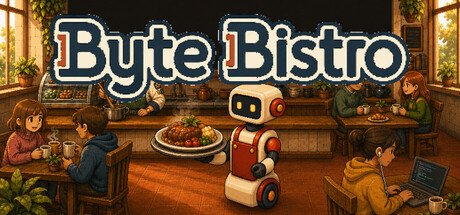
Byte Bistro was developed with assistance from generative AI tools (such as Large Language Models) to help write and structure the source code and draft store descriptions. All AI-generated content was reviewed, edited, and integrated manually. The game does not feature live, runtime generative AI or external API connections during gameplay.
Generative AI tools were used during development to assist with drafting and editing store-page text and other development-related content. The game does not use generative AI during gameplay, and all AI-assisted content is reviewed and edited by the developer before inclusion.
BOOKED uses generative AI-assisted artwork for some fictional in-game book covers and selected promotional/store artwork. Generative AI was also used to assist with some fictional book titles and creative concepts. All generated content was reviewed and selected by the developer before being included in the game.
I am a solo developer with ten years of experience, who started out as a 3D artist.
Every piece of 3D art in this game was made by me: the models, the UVs, the LODs. All of the game code and architecture was designed and programmed by me.
I used generative AI to assist me with some of the textures and the music.
This is a solo project with no funding and I wanted it to follow my vision so I needed any help I could get. If I ever could afford to hire people, that is what I am going to do! So we can deliver even better quality games!
This game was developed with the assistance of generative AI tools during the development process. Generative AI was used to help produce elements of the game's code, artwork, and music. All AI-assisted output was reviewed, edited, and curated by our team before being included in the final game, ensuring it met our creative and quality standards.
Generative AI was used during development to assist with some image assets and written or localized text for the game and its store page, as well as three in-game background music tracks. All AI-assisted content is pre-generated and fixed. The game does not generate content at runtime or send player input or data to AI services.
Generative AI was used to create some pre-rendered marketing artwork for the Steam store page and to assist with drafting and translating store-page text. No generative AI content is generated during gameplay.
Sirius speaks using pre-rendered audio clips. Every line of dialogue was written by hand; an open-weight text-to-speech model (Kokoro-82M, Apache 2.0) was used during development to record those written lines as audio, in the same way a voice actor would. No dialogue, text or imagery is generated by AI — the model performs a fixed script of authored lines, and the resulting audio files ship with the product. Nothing is generated while the software is running.
AI was used to assist with the translation of the game's text into supported languages. No generative AI was used to create the game's art, music, or other game content.
AI assistance (a large language model) was used to translate the store page description into English. No in-game assets — 3D models, textures, music, or sound — were created using generative AI.
Dystopia uses AI to live-generate its radio: all music, DJ voices, lyrics,
song titles, and artist names are created by AI on our own servers and
streamed to every player. Our 3D environments render as Gaussian splats and
were AI generated using World Labs' Marble.
Uncle is 3D artist, uncle job replaced by AI, so uncle learn coding and use AI tool to assist with software programming. Uncle also use photoshop AI to modify some 2D textures.
Everything else is handcrafted, especially the 3D models. AI generated 3D model sucks but I think it's gonna catch up soon at this rate 😭
Generative AI tools were used during development as part of the visual ideation and reference process for some in-game objects. Final game assets were created, assembled, and manually refined by the developer. The game does not use generative AI during gameplay.
This game was created by a solo developer. During development, generative AI was used to assist with some artwork, store promotional images, localized text, and narrative materials. While the game is running, it connects to external AI services to dynamically generate Froggy’s dialogue, travel letters, postcard images, and parts of its travel stories based on player conversations, character memories, real-world weather, and current travel status. Generated content may vary depending on player input and service availability.
Some in-game assets were created with generative AI tools during development. Visual assets — including player portraits, team logos, and court designs — are a mix of hand-crafted artwork and AI-generated images, and some sound effects and music were made with AI audio tools. Similar assets may be added in future updates. All AI-generated content is reviewed by the developer before inclusion, is entirely fictional, and depicts no real people, real teams, or licensed properties.
Generative AI tools were used during development to assist with the creation and refinement of some visual assets, text, localization, and other pre-generated game content. All AI-assisted content included in the game has been reviewed and validated by the developer. The game does not generate AI content during gameplay and does not connect to external AI services.
Artificial intelligence tools were utilized solely in the creation of certain promotional materials, including the game logo and Steam library artwork.
Some of PitWal's artwork and store images were made with help from AI tools and then finished by a person. PitWal's in-app commentary lines were also written with help from AI during development and ship as a fixed set. While you play, PitWal picks from those prewritten lines and fills in your own numbers from your own driving.
PitWal does not run any AI while you play and does not send your data to any AI service. If you want, PitWal lets you connect your own AI assistant, such as Claude or a coding agent local or paid, to read your own data on your own machine. That is optional, uses your own tool, and is never required to use PitWal.
Artificial intelligence was used as a development assistant to generate the game's source code, as well as to write and translate the interface text (localization).
Towards the end of development, we used modern tools to find bugs faster and further improve the player experience. Some graphics are still temporary and will be replaced with original artwork before the full release. These tools will continue to support testing, bug hunting, and technical optimization.
Generative AI tools were used during development to assist with early visual concepts, selected promotional artwork, and development support. All AI-assisted materials included in the final product were reviewed, edited, and integrated by the developer. The game does not generate AI content during gameplay and does not send player input to external generative AI services.
Generative AI tools were used during development to assist with portions of the game's code and some in-game text, including interface descriptions and procedural name pools. All AI-assisted content was reviewed, edited, and tested by the developer before inclusion.
Shirt Happens! was made with the help of generative AI. We used it to write and review
code, to bring the game's mechanics online, to support our UI work, to generate visual
assets and reference images for our 2D and 3D art, to draft written text including parts
of this store page, and as a sounding board for design ideas. Everything it produced was
reviewed, edited and finished by us before it shipped.
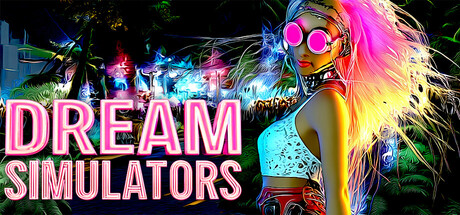
Dream Simulators uses generative AI to create dynamic dialogue, story continuations, characters, missions, and narrative events based on player input and the active Lore system. Each Expansion Pack features its own world, Lore, characters, and adventures, creating a unique storytelling experience. The AI also generates creative scene descriptions and prompts that players can use as inspiration for creating images and videos. Because the experience is driven by player input, generated content may vary between playthroughs.
Some user interface elements (including UI frames, buttons, panels, and HUD background art) were created with the assistance of generative AI image tools during development, then manually edited, composited, and integrated by the development team. Promotional artwork on the store page (capsule, library header/hero images) also used generative AI assistance and was human-reviewed before publication. No AI is used to generate content during gameplay.
AI is used only for text translation/localization (in-game and store page), with every line reviewed and edited by the developer.
No AI-generated graphics, music, audio, or live content generation are used in the game.
This game uses generative AI to provide personalized choices and free-form conversations based on player input and profile information. The main story and scenarios are written by human writers.
We used generative AI to create artwork for this store page and for promotional
materials. All generated material was reviewed and adjusted
by humans before use. No content is generated by AI during gameplay.
Generative AI tools were used during development to create and refine some pre-generated 2D visual assets, including character artwork, backgrounds, UI elements, and promotional/store-page images. Some of the music featured in the game and promotional materials was generated using Suno. All AI-generated content was reviewed and curated by the developer before inclusion. The game does not generate content using AI while it is running.
This game uses generative AI to create the following content:
- Images (backgrounds, character portraits, item art, UI, and store capsule art): image generation models
- Music: Suno
- Sound effects: procedural synthesis, plus OpenMOSS MOSS-SoundEffect v2 (Apache-2.0)
- Text and code: created with the assistance of generative AI
All of the above were pre-generated during development. No AI runs at runtime.
Some visual assets (character and environment art, store and marketing images) were created or assisted with generative AI tools, then selected and edited by the developer. The game does not use generative AI at runtime.
Byte Bistro was developed with assistance from generative AI tools (such as Large Language Models) to help write and structure the source code and draft store descriptions. All AI-generated content was reviewed, edited, and integrated manually. The game does not feature live, runtime generative AI or external API connections during gameplay.
Generative AI tools were used during development to assist with drafting and editing store-page text and other development-related content. The game does not use generative AI during gameplay, and all AI-assisted content is reviewed and edited by the developer before inclusion.
BOOKED uses generative AI-assisted artwork for some fictional in-game book covers and selected promotional/store artwork. Generative AI was also used to assist with some fictional book titles and creative concepts. All generated content was reviewed and selected by the developer before being included in the game.
I am a solo developer with ten years of experience, who started out as a 3D artist.
Every piece of 3D art in this game was made by me: the models, the UVs, the LODs. All of the game code and architecture was designed and programmed by me.
I used generative AI to assist me with some of the textures and the music.
This is a solo project with no funding and I wanted it to follow my vision so I needed any help I could get. If I ever could afford to hire people, that is what I am going to do! So we can deliver even better quality games!
This game was developed with the assistance of generative AI tools during the development process. Generative AI was used to help produce elements of the game's code, artwork, and music. All AI-assisted output was reviewed, edited, and curated by our team before being included in the final game, ensuring it met our creative and quality standards.
Generative AI was used during development to assist with some image assets and written or localized text for the game and its store page, as well as three in-game background music tracks. All AI-assisted content is pre-generated and fixed. The game does not generate content at runtime or send player input or data to AI services.
Generative AI was used to create some pre-rendered marketing artwork for the Steam store page and to assist with drafting and translating store-page text. No generative AI content is generated during gameplay.
Sirius speaks using pre-rendered audio clips. Every line of dialogue was written by hand; an open-weight text-to-speech model (Kokoro-82M, Apache 2.0) was used during development to record those written lines as audio, in the same way a voice actor would. No dialogue, text or imagery is generated by AI — the model performs a fixed script of authored lines, and the resulting audio files ship with the product. Nothing is generated while the software is running.
AI was used to assist with the translation of the game's text into supported languages. No generative AI was used to create the game's art, music, or other game content.
AI assistance (a large language model) was used to translate the store page description into English. No in-game assets — 3D models, textures, music, or sound — were created using generative AI.
Dystopia uses AI to live-generate its radio: all music, DJ voices, lyrics,
song titles, and artist names are created by AI on our own servers and
streamed to every player. Our 3D environments render as Gaussian splats and
were AI generated using World Labs' Marble.
Uncle is 3D artist, uncle job replaced by AI, so uncle learn coding and use AI tool to assist with software programming. Uncle also use photoshop AI to modify some 2D textures.
Everything else is handcrafted, especially the 3D models. AI generated 3D model sucks but I think it's gonna catch up soon at this rate 😭
Generative AI tools were used during development as part of the visual ideation and reference process for some in-game objects. Final game assets were created, assembled, and manually refined by the developer. The game does not use generative AI during gameplay.
This game was created by a solo developer. During development, generative AI was used to assist with some artwork, store promotional images, localized text, and narrative materials. While the game is running, it connects to external AI services to dynamically generate Froggy’s dialogue, travel letters, postcard images, and parts of its travel stories based on player conversations, character memories, real-world weather, and current travel status. Generated content may vary depending on player input and service availability.
Some in-game assets were created with generative AI tools during development. Visual assets — including player portraits, team logos, and court designs — are a mix of hand-crafted artwork and AI-generated images, and some sound effects and music were made with AI audio tools. Similar assets may be added in future updates. All AI-generated content is reviewed by the developer before inclusion, is entirely fictional, and depicts no real people, real teams, or licensed properties.
Generative AI tools were used during development to assist with the creation and refinement of some visual assets, text, localization, and other pre-generated game content. All AI-assisted content included in the game has been reviewed and validated by the developer. The game does not generate AI content during gameplay and does not connect to external AI services.
Artificial intelligence tools were utilized solely in the creation of certain promotional materials, including the game logo and Steam library artwork.
Some of PitWal's artwork and store images were made with help from AI tools and then finished by a person. PitWal's in-app commentary lines were also written with help from AI during development and ship as a fixed set. While you play, PitWal picks from those prewritten lines and fills in your own numbers from your own driving.
PitWal does not run any AI while you play and does not send your data to any AI service. If you want, PitWal lets you connect your own AI assistant, such as Claude or a coding agent local or paid, to read your own data on your own machine. That is optional, uses your own tool, and is never required to use PitWal.
Artificial intelligence was used as a development assistant to generate the game's source code, as well as to write and translate the interface text (localization).
Towards the end of development, we used modern tools to find bugs faster and further improve the player experience. Some graphics are still temporary and will be replaced with original artwork before the full release. These tools will continue to support testing, bug hunting, and technical optimization.
Generative AI tools were used during development to assist with early visual concepts, selected promotional artwork, and development support. All AI-assisted materials included in the final product were reviewed, edited, and integrated by the developer. The game does not generate AI content during gameplay and does not send player input to external generative AI services.
Generative AI tools were used during development to assist with portions of the game's code and some in-game text, including interface descriptions and procedural name pools. All AI-assisted content was reviewed, edited, and tested by the developer before inclusion.
Shirt Happens! was made with the help of generative AI. We used it to write and review
code, to bring the game's mechanics online, to support our UI work, to generate visual
assets and reference images for our 2D and 3D art, to draft written text including parts
of this store page, and as a sounding board for design ideas. Everything it produced was
reviewed, edited and finished by us before it shipped.
Dream Simulators uses generative AI to create dynamic dialogue, story continuations, characters, missions, and narrative events based on player input and the active Lore system. Each Expansion Pack features its own world, Lore, characters, and adventures, creating a unique storytelling experience. The AI also generates creative scene descriptions and prompts that players can use as inspiration for creating images and videos. Because the experience is driven by player input, generated content may vary between playthroughs.
Some user interface elements (including UI frames, buttons, panels, and HUD background art) were created with the assistance of generative AI image tools during development, then manually edited, composited, and integrated by the development team. Promotional artwork on the store page (capsule, library header/hero images) also used generative AI assistance and was human-reviewed before publication. No AI is used to generate content during gameplay.
AI is used only for text translation/localization (in-game and store page), with every line reviewed and edited by the developer.
No AI-generated graphics, music, audio, or live content generation are used in the game.
This game uses generative AI to provide personalized choices and free-form conversations based on player input and profile information. The main story and scenarios are written by human writers.
We used generative AI to create artwork for this store page and for promotional
materials. All generated material was reviewed and adjusted
by humans before use. No content is generated by AI during gameplay.