Public Steam disclosure research25,508 disclosures tracked
Where do games disclose AI use?
Search developers’ Steam disclosures, compare classified AI use across
games, and follow recorded changes.
This index adds cross-game classifications and statistics to
statements published on individual store pages.
Groups reflect automatic analysis of public disclosures; mature records are excluded. These counts do not measure AI use across all of Steam.
Missing or unclear statements cannot establish whether a game uses AI.
Some of the game's 3D models were created using generative AI (Tripo3D). The English localization and store page text were also prepared with the help of an AI assistant and reviewed by hand. The audio and gameplay were made without generative AI.
Часть 3D-моделей в игре создана с помощью генеративного ИИ (Tripo3D). Английская локализация и тексты для страницы в магазине также подготовлены с помощью ИИ-ассистента и вычитаны вручную. Звук и геймплей созданы без генеративного ИИ.
Some of the game's 3D models and artwork were created with the help of generative AI tools and then cleaned up and edited by hand. Parts of the store page text were drafted with AI assistance. The game does not generate any AI content while you play.
Generative AI was used to create and refine the game's store capsule art and logo. No other in-game assets were generated with generative AI, and to the best of my knowledge, the same is true of third-party assets. Separately, a model trained with reinforcement learning controls enemy behavior. It does not generate content.
Some of the artwork that ships with Football Ambition 27 was made using
generative AI tools. That covers the club badges and competition logos in
the default database, the menu and screen backgrounds, the stadium and
facility illustrations, and the library of face parts the game builds
portraits from. The national flags are not among them.
Faces are built while you play. Every player, coach and youth prospect gets
a portrait the moment they exist, including people generated seasons into
your save, assembled by the game from that shipped library of parts. It is
ordinary code doing the assembling, not an AI model, and it can only ever
use art that came with the game.
The game does not connect to any AI service. There is an optional feature,
switched off by default, that lets you connect your own AI chat assistant
to the in game database editor, so it can help with jobs like renaming
clubs or building a scenario. It runs only if you turn it on, and it only
reaches your own files on your own computer.
Some 3D props and textures in this game were created with the help of generative AI tools during development. Every generated asset was then reviewed, edited, retextured and integrated by hand, and anything that did not meet our quality bar was rebuilt or discarded. All gameplay, code, level design, systems and written text are human-made. The game does not generate any content with AI while you play.
The music in this game was created using the Suno AI music generation tool. All other content — including all art and pixel art, level and puzzle design, mechanics, writing, — was created by hand by the developer, without generative AI.
Some of this game's art was stylized or created with AI image generation tools from original prompts and project reference material: character portraits, tables, backgrounds, and Steam store and community artwork. Initial translations were AI-assisted. All of it was edited and reviewed before shipping. The soundtrack is chip-synth music generated at build time by the game's own code, no audio model and no sampled audio in the shipped files. Several tracks are AI-stylized arrangements of original songs written by a member of the development team; others were composed with AI assistance to our direction. Nothing is generated by AI while you play.
Generative AI tools were used during development to help create artwork, including character and environment art, music, voice narration, story text, and promotional materials. These are pre-generated assets included in the game or its marketing. The game does not generate AI content during gameplay or connect to external AI services while playing.
The game's pixel art sprites and visual effects, the store capsule art and logo, and the music were created with the help of generative AI tools, then selected, edited and integrated by the developer. The store page text and its Chinese translation were drafted with AI assistance and reviewed by the developer. All content is pre-generated; nothing is generated while the game is running.
Some backgrounds, item artwork, character portraits, vehicles, icons, and store artwork were created using generative AI during development. These assets are pre-generated. The game does not generate AI content or connect to external AI services during gameplay.
Some pre-generated content — the fictional league, club and player name pools, portions of descriptive and flavour copy, the arena photograph used on the title and store presentation, and parts of the store description — was created with generative-AI assistance during development, then selected, reviewed and edited by the developer. No content is generated at runtime, and no player data is sent to any AI service.
Generative AI was used with human review to assist with portions of the store page text, promotional artwork, and illustrative building blueprint previews. These illustrations are development artwork; actual gameplay appearance may vary. During gameplay, a locally running language model generates text responses in the AI OS tablet and robot chat interfaces. Robot gathering and construction actions use programmed game systems. The language model runs on the player’s computer and does not require an external third-party AI service.
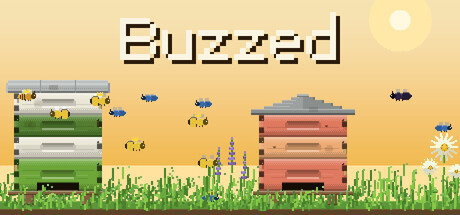
In-game text (bee facts, item descriptions, achievement lines) and store page copy were written with the assistance of an AI writing tool, under the developer's direction and review. All artwork is pixel art drawn by the game's own code, and all audio is synthesized or CC0 field recordings — no AI-generated images, audio, or music.
Some artwork, sound effects, music and written content were created with the help of generative AI tools during development, then selected, refined and integrated by the developer.
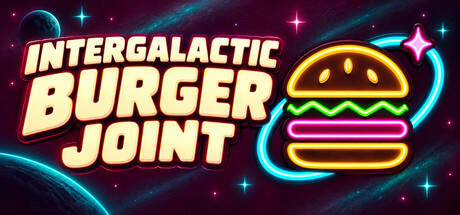
Intergalactic Burger Joint has been a labor of love, with a lot of time, attention, and care put into bringing this little corner of the galaxy to life.
The game’s 3D characters, environments, and props use licensed Synty assets. Generative AI helped create achievement icons, some interface and branding artwork, Steam store images, music, ambient audio, sound effects, and chef and customer voices. It also helped us write in-game text and dialogue.
Choosing what belonged, refining the details, and bringing everything together into a game took time, experimentation, and care. We hope you feel that love in the little details as you play.
All AI-generated content was created during development. Nothing is generated live while you play.
During the development of this game, AI tools were utilized. Some of the art assets were generated by AI and then further refined and rendered by our artists.
The game uses generative AI to create some of the 2D pixel-art sprites and character animations. All such content is manually reviewed and edited before being included in the game.
Generative AI was used during development to create selected pre-generated visual assets, including environmental, vehicle, map, and marketing artwork. These assets were reviewed and integrated by the development team. No generative AI is used during gameplay.
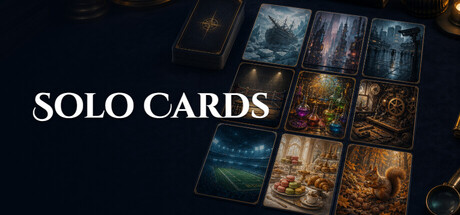
This game was created as a personal challenge to myself to see if i could solo dev a game and release it the same day as GTA 6.
I wanted to see what the highest quality final release consumer ready product I could create with only 69 days and a 200 dollar per month codex pro plan as the budget.
While the majority of implementation and art assets were llm derived, the architecture, game design, card concepts and overall vision of the project remain the product of my own efforts.
Some visual assets in the game were created using generative AI. This includes the game's logo and some of the artwork found in the hospital map. The hospital map is part of a purchased asset pack, and some of the artwork in the environment was already AI-generated.
Generative AI tools were used during development to assist with the creation of various in-game assets and some localization text. All content was reviewed and edited by the developer.
Generative AI tools were used during development to assist with programming, debugging, in-game text, and localization. All AI-assisted output was reviewed, edited, and integrated by the developer. The game does not use generative AI during gameplay, and no content is generated from player input at runtime.
Generative AI was used to assist with the creation of some promotional artwork, Steam store page copy, and translations. These materials were prepared during development, before being presented to players.
Generative AI tools were used during development to help create visual assets, interface artwork, decorative themes, and audio elements. AI tools also assisted with localization and store page text. These materials were prepared in advance under the developer’s direction. The game does not generate AI content during gameplay or connect to external AI services.
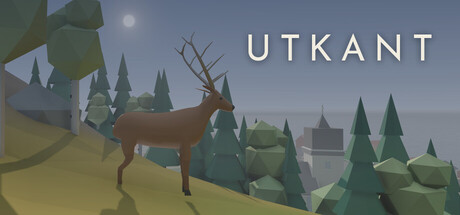
Utkant is a solo project developed with the help of AI coding assistants. The store page text and some in-game writing were drafted with AI assistance, then reviewed and edited by the developer. Nothing is generated by AI while you play.
Generative AI was used to assist in creating some in-game content, as well as store and library artwork. AI tools also assisted with store descriptions and translations.
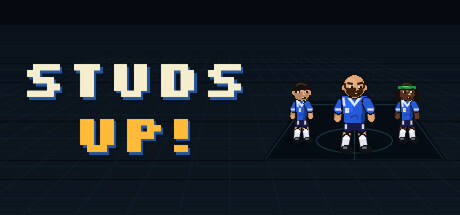
Studs Up! ships some pre-generated AI content. All of it was reviewed and edited by hand before it went into the game:
- Player portraits and the end-of-season win/loss backdrops: image generation, converted down to the game's limited-palette pixel formats.
- The match music loop and the match sound effects: audio generation, edited and loudness-normalised.
- The announcer voice in the trailer: voice generation.
No AI runs while you play. The game is fully offline and generates nothing at runtime.
This game contains content created with the assistance of AI tools. AI was used during development to assist with programming, visual assets, and other creative elements. All generated content was reviewed, edited, and integrated by the dev.
AI Disclosure Statement:Code Optimization: AI tools were used as an assistant during development to review the C# source code and optimize algorithms for better in-game performance (higher FPS).Localization: The translation of game texts into multiple languages was generated using AI translation tools and manually reviewed for quality.Visual Assets: The loading screens were created with the assistance of AI image generation tools and polished for in-game integration. All generated content has been verified to ensure it does not infringe on existing copyrights.
AI tools assisted in developing certain visual and audio elements, design references, and translations. The development team reviewed and finalized all published content.
Levels, game design, boss patterns and story are entirely hand-made in a custom level editor built by the developer. The game code is written with AI coding assistants under the developer's direction. Character and environment sprites started as AI-generated sprite sheets and were hand-retouched frame by frame. Music is created with Suno. Most sound effects are synthesized procedurally by code written with an AI coding assistant, then selected and tuned by the developer; a few come from CC0 and royalty-free libraries (Kenney, OpenGameArt, Mixkit). No AI runs at play time.
Roadshift was developed with assistance from generative AI tools (such as Large Language Models) to help write and structure the source code and draft store descriptions, as well as generating in-game images, assets, art, and 3D models. The game does not feature live, runtime generative AI.
Generative AI was used during development for some cabin and promotional artwork, written text, and localization. The marine-life videos are real underwater footage from NOAA Ocean Exploration. No AI content is generated and no external AI services are connected during play.
Character illustrations, backgrounds, and card artwork in this game were created with the help of generative AI tools and then selected and edited by the developer. AI tools were also used to assist with English translation and text. All music and sound effects are licensed works by human creators. The game does not generate any AI content during gameplay.
Generative AI tools were used throughout development: the game's code and its in-game text, the paintings, icons and interface art, the 3D models, and the music and sound effects. Everything was reviewed, edited and tested, and ships as fixed content. Nothing is generated while you play: the game runs no model and makes no network call.
Generative AI tools were used during development to create pre-rendered assets: creature and building artwork, icons, 3D models and parts of the store graphics. All assets were selected, edited and integrated by the developers. The game does not generate any content with AI while it is running.
This game started with my own ideas. Its development, design, sound, and graphics were all created using AI. AI-generated content was created during development. The game does not generate AI content during gameplay or connect to external AI services.
Generative AI was used to create pre-rendered story illustrations, horror encounter images, promotional artwork and music. AI tools also assisted with narrative text and localization. These assets are prepared in advance; the game does not generate AI content during play.
Generative AI tools were used to assist in creating promotional artwork, cover images, and store page visual assets. The game itself does not generate AI content during gameplay.
Some of the game's 3D models were created using generative AI (Tripo3D). The English localization and store page text were also prepared with the help of an AI assistant and reviewed by hand. The audio and gameplay were made without generative AI.
Часть 3D-моделей в игре создана с помощью генеративного ИИ (Tripo3D). Английская локализация и тексты для страницы в магазине также подготовлены с помощью ИИ-ассистента и вычитаны вручную. Звук и геймплей созданы без генеративного ИИ.
Some of the game's 3D models and artwork were created with the help of generative AI tools and then cleaned up and edited by hand. Parts of the store page text were drafted with AI assistance. The game does not generate any AI content while you play.
Generative AI was used to create and refine the game's store capsule art and logo. No other in-game assets were generated with generative AI, and to the best of my knowledge, the same is true of third-party assets. Separately, a model trained with reinforcement learning controls enemy behavior. It does not generate content.
Some of the artwork that ships with Football Ambition 27 was made using
generative AI tools. That covers the club badges and competition logos in
the default database, the menu and screen backgrounds, the stadium and
facility illustrations, and the library of face parts the game builds
portraits from. The national flags are not among them.
Faces are built while you play. Every player, coach and youth prospect gets
a portrait the moment they exist, including people generated seasons into
your save, assembled by the game from that shipped library of parts. It is
ordinary code doing the assembling, not an AI model, and it can only ever
use art that came with the game.
The game does not connect to any AI service. There is an optional feature,
switched off by default, that lets you connect your own AI chat assistant
to the in game database editor, so it can help with jobs like renaming
clubs or building a scenario. It runs only if you turn it on, and it only
reaches your own files on your own computer.
Some 3D props and textures in this game were created with the help of generative AI tools during development. Every generated asset was then reviewed, edited, retextured and integrated by hand, and anything that did not meet our quality bar was rebuilt or discarded. All gameplay, code, level design, systems and written text are human-made. The game does not generate any content with AI while you play.
The music in this game was created using the Suno AI music generation tool. All other content — including all art and pixel art, level and puzzle design, mechanics, writing, — was created by hand by the developer, without generative AI.
Some of this game's art was stylized or created with AI image generation tools from original prompts and project reference material: character portraits, tables, backgrounds, and Steam store and community artwork. Initial translations were AI-assisted. All of it was edited and reviewed before shipping. The soundtrack is chip-synth music generated at build time by the game's own code, no audio model and no sampled audio in the shipped files. Several tracks are AI-stylized arrangements of original songs written by a member of the development team; others were composed with AI assistance to our direction. Nothing is generated by AI while you play.
Generative AI tools were used during development to help create artwork, including character and environment art, music, voice narration, story text, and promotional materials. These are pre-generated assets included in the game or its marketing. The game does not generate AI content during gameplay or connect to external AI services while playing.
The game's pixel art sprites and visual effects, the store capsule art and logo, and the music were created with the help of generative AI tools, then selected, edited and integrated by the developer. The store page text and its Chinese translation were drafted with AI assistance and reviewed by the developer. All content is pre-generated; nothing is generated while the game is running.
Some backgrounds, item artwork, character portraits, vehicles, icons, and store artwork were created using generative AI during development. These assets are pre-generated. The game does not generate AI content or connect to external AI services during gameplay.
Some pre-generated content — the fictional league, club and player name pools, portions of descriptive and flavour copy, the arena photograph used on the title and store presentation, and parts of the store description — was created with generative-AI assistance during development, then selected, reviewed and edited by the developer. No content is generated at runtime, and no player data is sent to any AI service.
Generative AI was used with human review to assist with portions of the store page text, promotional artwork, and illustrative building blueprint previews. These illustrations are development artwork; actual gameplay appearance may vary. During gameplay, a locally running language model generates text responses in the AI OS tablet and robot chat interfaces. Robot gathering and construction actions use programmed game systems. The language model runs on the player’s computer and does not require an external third-party AI service.
In-game text (bee facts, item descriptions, achievement lines) and store page copy were written with the assistance of an AI writing tool, under the developer's direction and review. All artwork is pixel art drawn by the game's own code, and all audio is synthesized or CC0 field recordings — no AI-generated images, audio, or music.
Some artwork, sound effects, music and written content were created with the help of generative AI tools during development, then selected, refined and integrated by the developer.
Intergalactic Burger Joint has been a labor of love, with a lot of time, attention, and care put into bringing this little corner of the galaxy to life.
The game’s 3D characters, environments, and props use licensed Synty assets. Generative AI helped create achievement icons, some interface and branding artwork, Steam store images, music, ambient audio, sound effects, and chef and customer voices. It also helped us write in-game text and dialogue.
Choosing what belonged, refining the details, and bringing everything together into a game took time, experimentation, and care. We hope you feel that love in the little details as you play.
All AI-generated content was created during development. Nothing is generated live while you play.
During the development of this game, AI tools were utilized. Some of the art assets were generated by AI and then further refined and rendered by our artists.
The game uses generative AI to create some of the 2D pixel-art sprites and character animations. All such content is manually reviewed and edited before being included in the game.
Generative AI was used during development to create selected pre-generated visual assets, including environmental, vehicle, map, and marketing artwork. These assets were reviewed and integrated by the development team. No generative AI is used during gameplay.
This game was created as a personal challenge to myself to see if i could solo dev a game and release it the same day as GTA 6.
I wanted to see what the highest quality final release consumer ready product I could create with only 69 days and a 200 dollar per month codex pro plan as the budget.
While the majority of implementation and art assets were llm derived, the architecture, game design, card concepts and overall vision of the project remain the product of my own efforts.
Some visual assets in the game were created using generative AI. This includes the game's logo and some of the artwork found in the hospital map. The hospital map is part of a purchased asset pack, and some of the artwork in the environment was already AI-generated.
Generative AI tools were used during development to assist with the creation of various in-game assets and some localization text. All content was reviewed and edited by the developer.
Generative AI tools were used during development to assist with programming, debugging, in-game text, and localization. All AI-assisted output was reviewed, edited, and integrated by the developer. The game does not use generative AI during gameplay, and no content is generated from player input at runtime.
Generative AI was used to assist with the creation of some promotional artwork, Steam store page copy, and translations. These materials were prepared during development, before being presented to players.
Generative AI tools were used during development to help create visual assets, interface artwork, decorative themes, and audio elements. AI tools also assisted with localization and store page text. These materials were prepared in advance under the developer’s direction. The game does not generate AI content during gameplay or connect to external AI services.
Utkant is a solo project developed with the help of AI coding assistants. The store page text and some in-game writing were drafted with AI assistance, then reviewed and edited by the developer. Nothing is generated by AI while you play.
Generative AI was used to assist in creating some in-game content, as well as store and library artwork. AI tools also assisted with store descriptions and translations.
Studs Up! ships some pre-generated AI content. All of it was reviewed and edited by hand before it went into the game:
- Player portraits and the end-of-season win/loss backdrops: image generation, converted down to the game's limited-palette pixel formats.
- The match music loop and the match sound effects: audio generation, edited and loudness-normalised.
- The announcer voice in the trailer: voice generation.
No AI runs while you play. The game is fully offline and generates nothing at runtime.
This game contains content created with the assistance of AI tools. AI was used during development to assist with programming, visual assets, and other creative elements. All generated content was reviewed, edited, and integrated by the dev.
AI Disclosure Statement:Code Optimization: AI tools were used as an assistant during development to review the C# source code and optimize algorithms for better in-game performance (higher FPS).Localization: The translation of game texts into multiple languages was generated using AI translation tools and manually reviewed for quality.Visual Assets: The loading screens were created with the assistance of AI image generation tools and polished for in-game integration. All generated content has been verified to ensure it does not infringe on existing copyrights.
AI tools assisted in developing certain visual and audio elements, design references, and translations. The development team reviewed and finalized all published content.
Levels, game design, boss patterns and story are entirely hand-made in a custom level editor built by the developer. The game code is written with AI coding assistants under the developer's direction. Character and environment sprites started as AI-generated sprite sheets and were hand-retouched frame by frame. Music is created with Suno. Most sound effects are synthesized procedurally by code written with an AI coding assistant, then selected and tuned by the developer; a few come from CC0 and royalty-free libraries (Kenney, OpenGameArt, Mixkit). No AI runs at play time.
Roadshift was developed with assistance from generative AI tools (such as Large Language Models) to help write and structure the source code and draft store descriptions, as well as generating in-game images, assets, art, and 3D models. The game does not feature live, runtime generative AI.
Generative AI was used during development for some cabin and promotional artwork, written text, and localization. The marine-life videos are real underwater footage from NOAA Ocean Exploration. No AI content is generated and no external AI services are connected during play.
Character illustrations, backgrounds, and card artwork in this game were created with the help of generative AI tools and then selected and edited by the developer. AI tools were also used to assist with English translation and text. All music and sound effects are licensed works by human creators. The game does not generate any AI content during gameplay.
Generative AI tools were used throughout development: the game's code and its in-game text, the paintings, icons and interface art, the 3D models, and the music and sound effects. Everything was reviewed, edited and tested, and ships as fixed content. Nothing is generated while you play: the game runs no model and makes no network call.
Generative AI tools were used during development to create pre-rendered assets: creature and building artwork, icons, 3D models and parts of the store graphics. All assets were selected, edited and integrated by the developers. The game does not generate any content with AI while it is running.
This game started with my own ideas. Its development, design, sound, and graphics were all created using AI. AI-generated content was created during development. The game does not generate AI content during gameplay or connect to external AI services.
Generative AI was used to create pre-rendered story illustrations, horror encounter images, promotional artwork and music. AI tools also assisted with narrative text and localization. These assets are prepared in advance; the game does not generate AI content during play.
Generative AI tools were used to assist in creating promotional artwork, cover images, and store page visual assets. The game itself does not generate AI content during gameplay.