Public Steam disclosure research25,508 disclosures tracked
Where do games disclose AI use?
Search developers’ Steam disclosures, compare classified AI use across
games, and follow recorded changes.
This index adds cross-game classifications and statistics to
statements published on individual store pages.
Groups reflect automatic analysis of public disclosures; mature records are excluded. These counts do not measure AI use across all of Steam.
Missing or unclear statements cannot establish whether a game uses AI.
Drugrunners uses generative AI tools to help create some in-game visual assets, including icons, item art, and background artwork. This content is generated in advance during development. The game does not use AI to generate content live or in response to player input during gameplay.
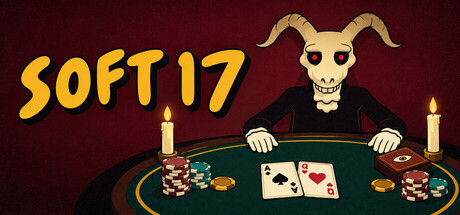
SOFT 17's visuals and audio are generated procedurally from code: the dealers, the
cards, the table and every sound are drawn and synthesized while you play, rather than
imported as files.
Generative AI contributed to some of the content that ships with the game: eight
interface icons in the main menu, the artwork used on this store page, and part of the
in-game text and its English translation. All of it was produced from written briefs,
then reviewed, edited and assembled by hand.
Some of the game's artwork was created with the help of an AI image model and then curated, edited and composited by the developer: companion and character portraits, boss and zone art, and the store page key art. Some in-game item and companion descriptions and patch notes were drafted with AI writing assistance and reviewed by the developer. The game does not generate content with AI while you play and does not connect to any AI service during gameplay.
Generative AI was used for part of this game's content production (background art, music, and text), as well as for part of this store page's text (description and translation).
Some visual assets and store-related materials for this game were created with generative AI assistance, then reviewed and edited by humans before inclusion. In-game opponents use traditional search and position evaluation; moves are not generated by generative AI at runtime.
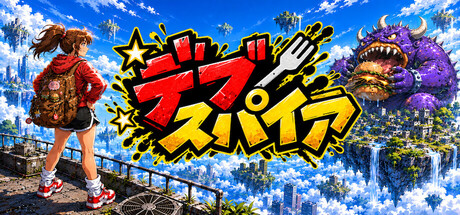
We used generative AI during development. The title logo image was created with a
generative AI image tool. Sound effects in the game and in the trailer are synthesised
by a script that was written with AI coding assistance. The nine non-Japanese interface
translations and the store text were produced by AI. AI coding assistance was used
throughout development. The game does not generate any content with AI while it runs.
Generative AI was used during development to help create some character illustrations, artwork and animations, music and sound effects, drafts of in-game text, localization, and store-page materials. This content is prepared in advance and incorporated into the game or its store page. The game does not generate content using generative AI during gameplay.
AI was used throughout development for assistance with artwork, audio, code, and prototyping, as a tool, not a magic wand. Everything is directed, edited, assembled, and ultimately blamed on one questionably qualified human developer.
No AI runs during gameplay. It already costs me enough when the game isn't running.
The token bill remains undefeated.
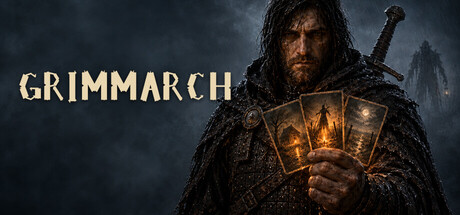
Grimmarch's art, music, voice and sound effects are created or edited with generative AI tools, then selected, edited and approved by a human before shipping. That covers card and interface art, character portraits, map and scene art, the cinematic, music, character voice lines and sound effects.
Nothing is generated while you play: the game contacts no AI service at runtime, and nothing you do is sent to one.
Generative AI was used during development to create visual and 3D assets, background music, sound effects, and localized text, including store and marketing materials. The game does not generate AI content during gameplay or connect to external AI services.
This game uses pre-generated AI only for certain 2D background images and promotional store visuals. These assets were created before release and remain fixed. The game does not include any live AI generation during gameplay.
Programming with AI.
For the art assets, the demo currently uses AI-generated art assets, which will be gradually replaced with artwork created by professional artists before the game’s release.
Generative AI tools were used during development to assist with character artwork, educational text, translations, musical compositions, and store and marketing materials. This content was prepared during development. The game does not use generative AI during gameplay or connect to external AI services.
Some in-app text (character dialogue) and translations were drafted with AI writing assistance and edited by the developer. All graphics are drawn at runtime by hand-written code, and all sounds and music are synthesised by code; no AI image, voice or music models are used, and nothing is AI-generated while you use the app.
Some in-game backgrounds and character and item artwork, as well as promotional artwork, were created using generative AI. AI also assisted with text localization. No generative AI is used during gameplay.
The four cat-origin character portraits were created with generative AI during development. Pack and card artwork is contributed by creators and may also include AI-created images; the creation method of some contributed artwork, including the initial BLEP pack, has not been independently verified. The game does not generate artwork during play or connect to an AI generation service during gameplay. Players can report creator content in the game for operator review and removal.
Generative AI was used to create background images and character artwork in the game. It was also used as a writing aid for proofreading and editing the narrative. AI-assisted content was reviewed and selected by the developer.
The protagonist was entirely hand-drawn. Some of the in-game tilesets, objects, background music, and sound effects were created using generative AI, and all AI-generated assets were manually retouched and edited by me before being used in the game.No generative AI content is generated during gameplay.
We use AI as a production tool in areas of development, with all creative direction, concepts, and final assembly done by humans:
Code assistance: AI tools help us write and debug GDScript/shader code for our Godot 4.5 engine. All architecture, game design decisions, and systems design are human-led.
3D models and art assets: Some 3D models and textures are AI-generated or AI-assisted, then manually cleaned up, retopologized, and integrated by hand. Final visual style and direction are decided by us.
Audio: Some sound effects and audio elements are AI-generated, then curated, edited, and mixed to fit the game.
Everything else — the game concept, world design, story, gameplay systems, and the process of bringing all elements together into the final game — is entirely human-made.
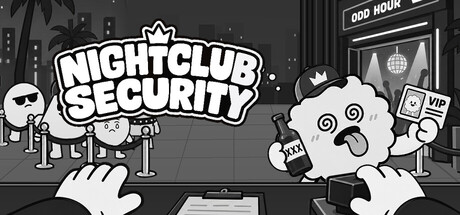
We used AI tools to help create artwork, music, and text, including translations. We selected and refined the visuals to fit Nightclub Security's cartoon style.
I built my own Agentic AI harness, and then used it to build this game, including some assets & animations etc.. I'm not a developer, I'm a Functional/UX/Graphic Designer that finally found a tool that could help me build my dream games... There is no AI running in the game or generating anything live. I wouldn't consider the game "vibe coded", it has been months of obsessive iterations to ensure the functionality and user experience is of the highest level, which was 100% designed and directed by me, using Agentic AI to build to order. It's far from a "one-shot" prompt hope and prayer... and I think you'll be surprised when you see it.
Generative AI was used during development to create some visual assets, including background artwork, UI graphics, icons and 3D models, as well as music, some sound effects, and localized text. These assets are included as pre-generated content. The game does not generate AI content or connect to external AI services during gameplay.
Artwork, video and voice performances in this game were created with generative-AI tools and selected and edited by the author; the writing was drafted with AI assistance and reviewed by the author. Nothing is generated while you play.
This game does not generate any content with AI during play.
During development, generative AI tools were used under human direction to help create some player-facing content:
- Store and marketing artwork (capsule images and similar key art). Outputs were prompted, selected, cropped, and edited by the developer to match the game’s clay board look.
- Some written text, including light in-game story dialogue and store-page copy. All text was reviewed and edited before shipping.
The playable game itself is a hand-authored, turn-based puzzle: boards, rules, 3D presentation, and sound effects are implemented in code (Three.js meshes and materials; synthesized SFX). Puzzle layouts are designed and verified with a traditional search solver, not a generative model.
No third-party likenesses, copyrighted characters, or illegal content are used. All AI-assisted output is reviewed before it appears on the store page or in the game.
AI was used for:
developing content concepts, such as structures, locations, and some smaller details;
creating parts of the environment, such as the day/night cycle and clouds;
generating animals.
Generative AI was used to help create some of this game's marketing artwork, including the store page header and capsule images, based on descriptive prompts we wrote. Generative AI was also used to assist with writing the game's English-language localization (in-game menus and interface text).
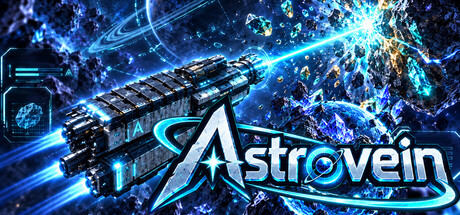
Astrovein was developed with the help of AI tools. The following content is AI-generated and was reviewed by the developer:
- Source code: partially AI-generated, reviewed and tested by the developer.
- Store artwork (capsule images and promotional art): AI-generated.
- Character portraits (captains): AI-generated.
- Store page copy: drafted with AI assistance, then edited and approved by the developer.
The in-game 3D models, sound effects, and music are licensed third-party assets (not AI-generated). No AI content is generated live while the game is running.
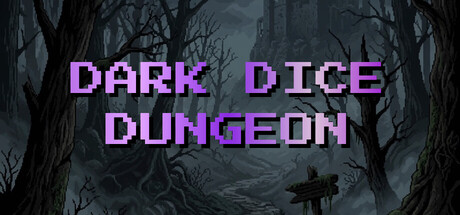
The content of Dark Dice Dungeon was produced with the help of generative AI tools: the illustrations, the music and sound effects, the in-game writing, and the English and Spanish translations. All of it was then selected, edited and assembled by hand by the developer. Nothing is generated while you play: the game ships with fixed assets and never connects to any service.
Pre-generated content: the weapon and enemy sprites, the store artwork (capsules, library
images and background), and the interface translations into Simplified Chinese, Russian,
Spanish, German and French were created with the help of generative AI tools and then edited,
cropped, recoloured and assembled by hand by the developer.
Everything else was made by the developer: the application code, the gameplay systems, the
sound design, the English and Portuguese texts, and the mod tools.
No generative AI runs at runtime: the app ships only fixed image and audio files.
Some art assets in this game — including scene backgrounds, character portraits, promotional images, and music — were created with the assistance of generative AI tools during development, and were manually selected, retouched, and integrated by the developer.
During development, some of the game's art assets were created with the help of AI image-generation tools, then curated, adjusted, and integrated by hand. The game does not generate any AI content in real time during play.
I used AI-generated images, assets, and music. I also used AI to assist with creating some of game's Bluprint. However, as a Motion graphic designer, I created as many of the 3D assets myself as possible.
Generative AI tools were used during development to assist with the creation and refinement of some pre-generated visual and text content. All content included in the game is reviewed and curated by the developer. The game does not generate AI content during gameplay and does not connect to external AI services.
Drugrunners uses generative AI tools to help create some in-game visual assets, including icons, item art, and background artwork. This content is generated in advance during development. The game does not use AI to generate content live or in response to player input during gameplay.
SOFT 17's visuals and audio are generated procedurally from code: the dealers, the
cards, the table and every sound are drawn and synthesized while you play, rather than
imported as files.
Generative AI contributed to some of the content that ships with the game: eight
interface icons in the main menu, the artwork used on this store page, and part of the
in-game text and its English translation. All of it was produced from written briefs,
then reviewed, edited and assembled by hand.
Some of the game's artwork was created with the help of an AI image model and then curated, edited and composited by the developer: companion and character portraits, boss and zone art, and the store page key art. Some in-game item and companion descriptions and patch notes were drafted with AI writing assistance and reviewed by the developer. The game does not generate content with AI while you play and does not connect to any AI service during gameplay.
Generative AI was used for part of this game's content production (background art, music, and text), as well as for part of this store page's text (description and translation).
Some visual assets and store-related materials for this game were created with generative AI assistance, then reviewed and edited by humans before inclusion. In-game opponents use traditional search and position evaluation; moves are not generated by generative AI at runtime.
We used generative AI during development. The title logo image was created with a
generative AI image tool. Sound effects in the game and in the trailer are synthesised
by a script that was written with AI coding assistance. The nine non-Japanese interface
translations and the store text were produced by AI. AI coding assistance was used
throughout development. The game does not generate any content with AI while it runs.
Generative AI was used during development to help create some character illustrations, artwork and animations, music and sound effects, drafts of in-game text, localization, and store-page materials. This content is prepared in advance and incorporated into the game or its store page. The game does not generate content using generative AI during gameplay.
AI was used throughout development for assistance with artwork, audio, code, and prototyping, as a tool, not a magic wand. Everything is directed, edited, assembled, and ultimately blamed on one questionably qualified human developer.
No AI runs during gameplay. It already costs me enough when the game isn't running.
The token bill remains undefeated.
Grimmarch's art, music, voice and sound effects are created or edited with generative AI tools, then selected, edited and approved by a human before shipping. That covers card and interface art, character portraits, map and scene art, the cinematic, music, character voice lines and sound effects.
Nothing is generated while you play: the game contacts no AI service at runtime, and nothing you do is sent to one.
Generative AI was used during development to create visual and 3D assets, background music, sound effects, and localized text, including store and marketing materials. The game does not generate AI content during gameplay or connect to external AI services.
This game uses pre-generated AI only for certain 2D background images and promotional store visuals. These assets were created before release and remain fixed. The game does not include any live AI generation during gameplay.
Programming with AI.
For the art assets, the demo currently uses AI-generated art assets, which will be gradually replaced with artwork created by professional artists before the game’s release.
Generative AI tools were used during development to assist with character artwork, educational text, translations, musical compositions, and store and marketing materials. This content was prepared during development. The game does not use generative AI during gameplay or connect to external AI services.
Some in-app text (character dialogue) and translations were drafted with AI writing assistance and edited by the developer. All graphics are drawn at runtime by hand-written code, and all sounds and music are synthesised by code; no AI image, voice or music models are used, and nothing is AI-generated while you use the app.
Some in-game backgrounds and character and item artwork, as well as promotional artwork, were created using generative AI. AI also assisted with text localization. No generative AI is used during gameplay.
The four cat-origin character portraits were created with generative AI during development. Pack and card artwork is contributed by creators and may also include AI-created images; the creation method of some contributed artwork, including the initial BLEP pack, has not been independently verified. The game does not generate artwork during play or connect to an AI generation service during gameplay. Players can report creator content in the game for operator review and removal.
Generative AI was used to create background images and character artwork in the game. It was also used as a writing aid for proofreading and editing the narrative. AI-assisted content was reviewed and selected by the developer.
The protagonist was entirely hand-drawn. Some of the in-game tilesets, objects, background music, and sound effects were created using generative AI, and all AI-generated assets were manually retouched and edited by me before being used in the game.No generative AI content is generated during gameplay.
We use AI as a production tool in areas of development, with all creative direction, concepts, and final assembly done by humans:
Code assistance: AI tools help us write and debug GDScript/shader code for our Godot 4.5 engine. All architecture, game design decisions, and systems design are human-led.
3D models and art assets: Some 3D models and textures are AI-generated or AI-assisted, then manually cleaned up, retopologized, and integrated by hand. Final visual style and direction are decided by us.
Audio: Some sound effects and audio elements are AI-generated, then curated, edited, and mixed to fit the game.
Everything else — the game concept, world design, story, gameplay systems, and the process of bringing all elements together into the final game — is entirely human-made.
We used AI tools to help create artwork, music, and text, including translations. We selected and refined the visuals to fit Nightclub Security's cartoon style.
I built my own Agentic AI harness, and then used it to build this game, including some assets & animations etc.. I'm not a developer, I'm a Functional/UX/Graphic Designer that finally found a tool that could help me build my dream games... There is no AI running in the game or generating anything live. I wouldn't consider the game "vibe coded", it has been months of obsessive iterations to ensure the functionality and user experience is of the highest level, which was 100% designed and directed by me, using Agentic AI to build to order. It's far from a "one-shot" prompt hope and prayer... and I think you'll be surprised when you see it.
Generative AI was used during development to create some visual assets, including background artwork, UI graphics, icons and 3D models, as well as music, some sound effects, and localized text. These assets are included as pre-generated content. The game does not generate AI content or connect to external AI services during gameplay.
Artwork, video and voice performances in this game were created with generative-AI tools and selected and edited by the author; the writing was drafted with AI assistance and reviewed by the author. Nothing is generated while you play.
This game does not generate any content with AI during play.
During development, generative AI tools were used under human direction to help create some player-facing content:
- Store and marketing artwork (capsule images and similar key art). Outputs were prompted, selected, cropped, and edited by the developer to match the game’s clay board look.
- Some written text, including light in-game story dialogue and store-page copy. All text was reviewed and edited before shipping.
The playable game itself is a hand-authored, turn-based puzzle: boards, rules, 3D presentation, and sound effects are implemented in code (Three.js meshes and materials; synthesized SFX). Puzzle layouts are designed and verified with a traditional search solver, not a generative model.
No third-party likenesses, copyrighted characters, or illegal content are used. All AI-assisted output is reviewed before it appears on the store page or in the game.
AI was used for:
developing content concepts, such as structures, locations, and some smaller details;
creating parts of the environment, such as the day/night cycle and clouds;
generating animals.
Generative AI was used to help create some of this game's marketing artwork, including the store page header and capsule images, based on descriptive prompts we wrote. Generative AI was also used to assist with writing the game's English-language localization (in-game menus and interface text).
Astrovein was developed with the help of AI tools. The following content is AI-generated and was reviewed by the developer:
- Source code: partially AI-generated, reviewed and tested by the developer.
- Store artwork (capsule images and promotional art): AI-generated.
- Character portraits (captains): AI-generated.
- Store page copy: drafted with AI assistance, then edited and approved by the developer.
The in-game 3D models, sound effects, and music are licensed third-party assets (not AI-generated). No AI content is generated live while the game is running.
The content of Dark Dice Dungeon was produced with the help of generative AI tools: the illustrations, the music and sound effects, the in-game writing, and the English and Spanish translations. All of it was then selected, edited and assembled by hand by the developer. Nothing is generated while you play: the game ships with fixed assets and never connects to any service.
Pre-generated content: the weapon and enemy sprites, the store artwork (capsules, library
images and background), and the interface translations into Simplified Chinese, Russian,
Spanish, German and French were created with the help of generative AI tools and then edited,
cropped, recoloured and assembled by hand by the developer.
Everything else was made by the developer: the application code, the gameplay systems, the
sound design, the English and Portuguese texts, and the mod tools.
No generative AI runs at runtime: the app ships only fixed image and audio files.
Some art assets in this game — including scene backgrounds, character portraits, promotional images, and music — were created with the assistance of generative AI tools during development, and were manually selected, retouched, and integrated by the developer.
During development, some of the game's art assets were created with the help of AI image-generation tools, then curated, adjusted, and integrated by hand. The game does not generate any AI content in real time during play.
I used AI-generated images, assets, and music. I also used AI to assist with creating some of game's Bluprint. However, as a Motion graphic designer, I created as many of the 3D assets myself as possible.
Generative AI tools were used during development to assist with the creation and refinement of some pre-generated visual and text content. All content included in the game is reviewed and curated by the developer. The game does not generate AI content during gameplay and does not connect to external AI services.