Public Steam disclosure research25,376 disclosures tracked
Where do games disclose AI use?
Search developers’ Steam disclosures, compare classified AI use across
games, and follow recorded changes.
This index adds cross-game classifications and statistics to
statements published on individual store pages.
Groups reflect automatic analysis of public disclosures; mature records are excluded. These counts do not measure AI use across all of Steam.
Missing or unclear statements cannot establish whether a game uses AI.
Generative AI was used to assist in creating pre-generated visual assets for the game and its promotional materials, including character artwork and event illustrations. It was also used to assist with portions of the game's text and localization. All included content was reviewed and curated by the developer. No content is generated by AI during gameplay.
AI-assisted tools were used for all of the game visuals, audio, and code. No AI generation occurs during gameplay, and no external AI services are used while playing.
This game uses generative AI tools during development for some pre-rendered assets, including store capsules and key art, character sprites, backgrounds, CGs, and certain audio. AI-assisted assets are selected and edited before inclusion. Story and game systems are human-authored.
This game includes a small amount of generative AI content used only for optional tutorial and demonstration materials. These pre‑generated, G‑rated assets illustrate how the game’s IN‑OUT‑based timing loop works. They do not appear in normal gameplay and do not influence any game systems. All core mechanics, visuals, audio, and interactive content are fully handcrafted and do not use AI generation during play.
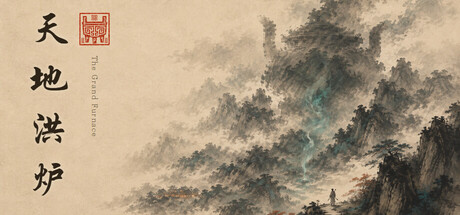
This game uses generative AI in two ways. (1) Live generation: narrative text and NPC dialogue are generated in real time based on the player's choices and current game state. Illustrative images for locations, scenes and items are also generated on demand the first time such an element appears, then cached and reused. Core game rules, numerical outcomes, inventory changes, and progression are always resolved by deterministic game systems. Live text generation is governed by server-side content rules that cannot be directly modified by player input. Live image generation uses server-controlled prompt templates based on structured game data (entity type, name, and a short in-world description) within a fixed ink-painting style; players cannot directly provide image-generation prompts. (2) Development-time generation: some static art assets (including location, scene, item and background illustrations) were generated with image-generation AI tools during development. Store-facing marketing assets and selected screenshots containing such artwork were reviewed by a human before publication. Store page copy was drafted with AI assistance and reviewed by a human.
本游戏以两种方式使用生成式AI。(1)实时生成:叙事文本与NPC对话根据玩家选择与当前游戏状态实时生成;地点/场景/物品的插画也会在其首次出现时按需生成,之后缓存复用。核心规则、数值结算、物品变动与进度始终由确定性游戏系统裁定。实时文本生成受服务端内容规则约束(玩家输入无法直接修改);实时图像生成使用服务端控制的提示词模板,基于结构化游戏数据(实体类别、名称与简短的世界内描述)并锁定水墨画风格,玩家不能直接书写图像提示词。(2)开发期生成:部分静态美术素材(包括地点、场景、物品与背景插画)在开发过程中使用图像生成AI制作;用于商店宣传以及所选商店截图中的相关素材均经过人工审阅后发布。商店页文案由AI辅助创作、经人工审定。
Generative AI tools were used during development to assist with certain pre-generated visual elements and sequences in the game. All such materials were reviewed, selected, edited, and integrated into the final video content by the Dev team. The game’s narrative, interactive structure, gameplay logic, and final presentation are created and controlled by the Dev team.
No generative AI is used during gameplay, and no content is generated dynamically for players.
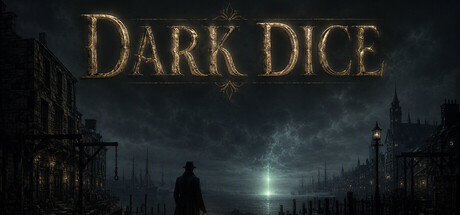
AI-assisted tools were used during the development of DarkDice in the following ways:
Code development — AI coding assistants helped write and refactor portions of the game's codebase.
Text editing — AI tools were used to proofread, polish, and tighten narrative and UI copy.
Localization & Editing — AI is used to assist with the translation, text expansion, polishing, and style adjustment of game text between English and Chinese (Traditional/Simplified).
Image generation — Some visual assets (case artwork, promotional images) were created using AI image-generation tools.
No content is generated in real time during gameplay — every case is a fixed, pre-authored story; nothing changes between playthroughs.
Generative AI tools were used in the artwork production process for this game. The resulting images were selected, edited, and integrated by the developer to match the game’s atmosphere and direction.
This game uses generative AI tools to help create static visual assets, including card illustrations and background artwork. All AI-generated content is produced during development and does not change during gameplay — nothing is generated in real time.
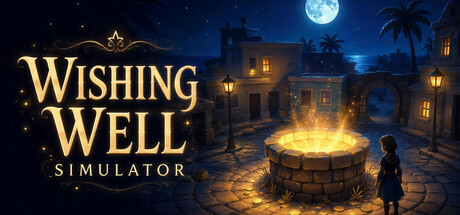
Wishing Well Simulator uses generative AI tools during development only; nothing is generated while you play, and the game never connects to any external AI service.
Pre-generated content made with AI assistance:
Key art and store artwork were created with generative image tools and then edited by hand.
The 3D well model was generated with an AI 3D tool (Meshy) and reworked by hand (materials, UVs, textures).
Translations into 21 languages beyond the original Turkish were produced with AI-assisted translation and then reviewed by hand, including platform terminology corrections.
Some secondary text (credits, tutorial hints) was drafted with AI assistance and edited by the author.
Written by hand: the story, all 119 events, the characters and dialogue, the game design and code. Sound effects are procedurally generated by the game's own code (no AI); the game has no music or voice acting.
Some in-game artwork, including assets shown in screenshots and store capsules, was created by modifying AI-generated imagery. All AI-assisted content was created and reviewed in advance, and no generative AI runs during gameplay.
AI-assisted tools were used during development to help create and refine some visual assets, text, and audio content. All AI-assisted content was reviewed, edited, and curated by the developer before being included in the game. The game does not generate AI content dynamically during gameplay.
AI was utilized as a supplementary tool for the creation of some art and promotional imagery. The core game experience is entirely hand-crafted using the Godot engine with original and licensed assets. All AI-generated marketing materials underwent human curation and post-processing to ensure visual consistency with the actual gameplay and compliance with platform guidelines.
Some art assets were initially created with the assistance of generative AI tools, then manually edited and finalized by the developer. AI tools were also used to assist with multilingual localization.
Generative AI tools were used during development to create and refine selected 2D artwork and UI elements, and to assist with some narrative text and localization. All AI-assisted content was reviewed, edited, and integrated by the developer. The game does not generate content using AI during gameplay.
Chat: replies in the in-game messenger MoChat are generated by a small language model running locally on your PC — characters follow hand-written, all-ages personas and safety rules, and in local mode no chat data ever leaves your machine. Some assets began as AI-generated drafts (3D base models, some icons)
Generative AI was used only to create the game's promotional trailer and Steam store banner art (capsule images). No AI-generated content, art, audio, code, or text is used within the game itself. The final gameplay is entirely hand-crafted.
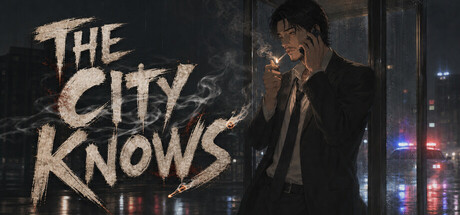
This game utilizes adaptive AI technology during gameplay to power the police interrogator's responses. Player input is evaluated live to generate dynamic, context-aware dialogue and push the interrogation forward.
Background Art — AI generation tools were used for some of the background images. Not all backgrounds were created with AI; hand-made backgrounds are also used. AI-assisted images were further processed to match the game's pixel art style.
Music — The music in this game was created using AI generation tools.
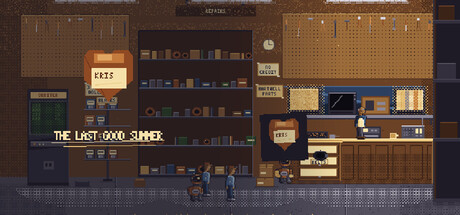
All spoken dialogue in KRIS: The Last Good Summer is generated using AI text-to-speech technology, in both English and German. No other game content (art, music, writing, or code) uses generative AI.
The background art, character art, and music in this game were created with the assistance of generative AI tools. The story and narrative text were written by humans.
All spoken roles were performed by the developer, Morph. Those recordings were then transformed into different character voices and accents using AI voice conversion and further processed with Logic Pro.
Generative AI tools were used during development to assist with portions of the programming, user interface and text presentation implementation, as well as initial drafts of some localizations. The game’s setting, narrative text, visual design, and all final content were created and determined by the developer. No generative image models were used, and the game does not connect to or invoke any generative AI services at runtime. It contains no live-generated content.
Some ambient audio in this game — background crowd voices and station announcements — is generated using neural text-to-speech. All visual art, music, and narrative writing are human-authored or made with traditional, non-generative tools.
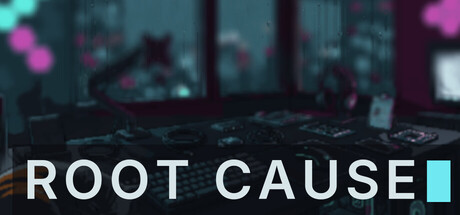
Root Cause is utilizes AI assets in the game. This content, when utilized, is generated during development, then curated, edited, and committed to the project before release. Nothing is generated while the game is running.
Items that may be generated:
Illustrated art.
UI/Interfaces
Icon Sets
Sounds and Music
Dialogue, case briefings, case content, and interface copy
As a solo developer, this game utilizes generative AI tools to assist in the creation of certain assets—including game dialogue, artwork, and audio elements—which are then carefully edited, refined, and polished by the developer.
Art assets in this game were created with AI assistance; narrative content is generated by AI in real time. Solo-developed — thank you for your support
1. During development, due to objective constraints including limited budget, we utilized AI models such as GPT Image2, Banana2, Banana Pro and Seedream 5.0 Pro for art asset creation. Relevant AI-generated assets will be gradually replaced with fully original materials as development progresses.
2. DeepSeek V4 was used to assist translations for non-Chinese text versions. Chinese is the only official language of this game. Players may switch to other available languages in game settings, yet Ritsuai Works provides no guarantee regarding the quality of non-Chinese translations.
Some background music inside the game was created with generative AI tools. Generative AI was also used as a development assistant for some debugging, and code building. The game does not use live AI generation during playing.
All video, voice and music content in this game was pre-generated using AI tools under full human direction. The story, characters, dialogue, game design, editing and code are original work by a solo developer. No content is generated while the game is running; players only ever see pre-produced, human-reviewed material.
Generative AI tools were used during development to assist with debugging code, audio production, and the creation of some item and UI illustrations. AI-generated or AI-assisted content was reviewed and edited by the development team before being included in the final game.
Generative AI was used to assist in creating pre-generated visual assets for the game and its promotional materials, including character artwork and event illustrations. It was also used to assist with portions of the game's text and localization. All included content was reviewed and curated by the developer. No content is generated by AI during gameplay.
AI-assisted tools were used for all of the game visuals, audio, and code. No AI generation occurs during gameplay, and no external AI services are used while playing.
This game uses generative AI tools during development for some pre-rendered assets, including store capsules and key art, character sprites, backgrounds, CGs, and certain audio. AI-assisted assets are selected and edited before inclusion. Story and game systems are human-authored.
This game includes a small amount of generative AI content used only for optional tutorial and demonstration materials. These pre‑generated, G‑rated assets illustrate how the game’s IN‑OUT‑based timing loop works. They do not appear in normal gameplay and do not influence any game systems. All core mechanics, visuals, audio, and interactive content are fully handcrafted and do not use AI generation during play.
This game uses generative AI in two ways. (1) Live generation: narrative text and NPC dialogue are generated in real time based on the player's choices and current game state. Illustrative images for locations, scenes and items are also generated on demand the first time such an element appears, then cached and reused. Core game rules, numerical outcomes, inventory changes, and progression are always resolved by deterministic game systems. Live text generation is governed by server-side content rules that cannot be directly modified by player input. Live image generation uses server-controlled prompt templates based on structured game data (entity type, name, and a short in-world description) within a fixed ink-painting style; players cannot directly provide image-generation prompts. (2) Development-time generation: some static art assets (including location, scene, item and background illustrations) were generated with image-generation AI tools during development. Store-facing marketing assets and selected screenshots containing such artwork were reviewed by a human before publication. Store page copy was drafted with AI assistance and reviewed by a human.
本游戏以两种方式使用生成式AI。(1)实时生成:叙事文本与NPC对话根据玩家选择与当前游戏状态实时生成;地点/场景/物品的插画也会在其首次出现时按需生成,之后缓存复用。核心规则、数值结算、物品变动与进度始终由确定性游戏系统裁定。实时文本生成受服务端内容规则约束(玩家输入无法直接修改);实时图像生成使用服务端控制的提示词模板,基于结构化游戏数据(实体类别、名称与简短的世界内描述)并锁定水墨画风格,玩家不能直接书写图像提示词。(2)开发期生成:部分静态美术素材(包括地点、场景、物品与背景插画)在开发过程中使用图像生成AI制作;用于商店宣传以及所选商店截图中的相关素材均经过人工审阅后发布。商店页文案由AI辅助创作、经人工审定。
Generative AI tools were used during development to assist with certain pre-generated visual elements and sequences in the game. All such materials were reviewed, selected, edited, and integrated into the final video content by the Dev team. The game’s narrative, interactive structure, gameplay logic, and final presentation are created and controlled by the Dev team.
No generative AI is used during gameplay, and no content is generated dynamically for players.
AI-assisted tools were used during the development of DarkDice in the following ways:
Code development — AI coding assistants helped write and refactor portions of the game's codebase.
Text editing — AI tools were used to proofread, polish, and tighten narrative and UI copy.
Localization & Editing — AI is used to assist with the translation, text expansion, polishing, and style adjustment of game text between English and Chinese (Traditional/Simplified).
Image generation — Some visual assets (case artwork, promotional images) were created using AI image-generation tools.
No content is generated in real time during gameplay — every case is a fixed, pre-authored story; nothing changes between playthroughs.
Generative AI tools were used in the artwork production process for this game. The resulting images were selected, edited, and integrated by the developer to match the game’s atmosphere and direction.
This game uses generative AI tools to help create static visual assets, including card illustrations and background artwork. All AI-generated content is produced during development and does not change during gameplay — nothing is generated in real time.
Wishing Well Simulator uses generative AI tools during development only; nothing is generated while you play, and the game never connects to any external AI service.
Pre-generated content made with AI assistance:
Key art and store artwork were created with generative image tools and then edited by hand.
The 3D well model was generated with an AI 3D tool (Meshy) and reworked by hand (materials, UVs, textures).
Translations into 21 languages beyond the original Turkish were produced with AI-assisted translation and then reviewed by hand, including platform terminology corrections.
Some secondary text (credits, tutorial hints) was drafted with AI assistance and edited by the author.
Written by hand: the story, all 119 events, the characters and dialogue, the game design and code. Sound effects are procedurally generated by the game's own code (no AI); the game has no music or voice acting.
Some in-game artwork, including assets shown in screenshots and store capsules, was created by modifying AI-generated imagery. All AI-assisted content was created and reviewed in advance, and no generative AI runs during gameplay.
AI-assisted tools were used during development to help create and refine some visual assets, text, and audio content. All AI-assisted content was reviewed, edited, and curated by the developer before being included in the game. The game does not generate AI content dynamically during gameplay.
AI was utilized as a supplementary tool for the creation of some art and promotional imagery. The core game experience is entirely hand-crafted using the Godot engine with original and licensed assets. All AI-generated marketing materials underwent human curation and post-processing to ensure visual consistency with the actual gameplay and compliance with platform guidelines.
Some art assets were initially created with the assistance of generative AI tools, then manually edited and finalized by the developer. AI tools were also used to assist with multilingual localization.
Generative AI tools were used during development to create and refine selected 2D artwork and UI elements, and to assist with some narrative text and localization. All AI-assisted content was reviewed, edited, and integrated by the developer. The game does not generate content using AI during gameplay.
Chat: replies in the in-game messenger MoChat are generated by a small language model running locally on your PC — characters follow hand-written, all-ages personas and safety rules, and in local mode no chat data ever leaves your machine. Some assets began as AI-generated drafts (3D base models, some icons)
Generative AI was used only to create the game's promotional trailer and Steam store banner art (capsule images). No AI-generated content, art, audio, code, or text is used within the game itself. The final gameplay is entirely hand-crafted.
This game utilizes adaptive AI technology during gameplay to power the police interrogator's responses. Player input is evaluated live to generate dynamic, context-aware dialogue and push the interrogation forward.
Background Art — AI generation tools were used for some of the background images. Not all backgrounds were created with AI; hand-made backgrounds are also used. AI-assisted images were further processed to match the game's pixel art style.
Music — The music in this game was created using AI generation tools.
All spoken dialogue in KRIS: The Last Good Summer is generated using AI text-to-speech technology, in both English and German. No other game content (art, music, writing, or code) uses generative AI.
The background art, character art, and music in this game were created with the assistance of generative AI tools. The story and narrative text were written by humans.
All spoken roles were performed by the developer, Morph. Those recordings were then transformed into different character voices and accents using AI voice conversion and further processed with Logic Pro.
Generative AI tools were used during development to assist with portions of the programming, user interface and text presentation implementation, as well as initial drafts of some localizations. The game’s setting, narrative text, visual design, and all final content were created and determined by the developer. No generative image models were used, and the game does not connect to or invoke any generative AI services at runtime. It contains no live-generated content.
Some ambient audio in this game — background crowd voices and station announcements — is generated using neural text-to-speech. All visual art, music, and narrative writing are human-authored or made with traditional, non-generative tools.
Root Cause is utilizes AI assets in the game. This content, when utilized, is generated during development, then curated, edited, and committed to the project before release. Nothing is generated while the game is running.
Items that may be generated:
Illustrated art.
UI/Interfaces
Icon Sets
Sounds and Music
Dialogue, case briefings, case content, and interface copy
As a solo developer, this game utilizes generative AI tools to assist in the creation of certain assets—including game dialogue, artwork, and audio elements—which are then carefully edited, refined, and polished by the developer.
Art assets in this game were created with AI assistance; narrative content is generated by AI in real time. Solo-developed — thank you for your support
1. During development, due to objective constraints including limited budget, we utilized AI models such as GPT Image2, Banana2, Banana Pro and Seedream 5.0 Pro for art asset creation. Relevant AI-generated assets will be gradually replaced with fully original materials as development progresses.
2. DeepSeek V4 was used to assist translations for non-Chinese text versions. Chinese is the only official language of this game. Players may switch to other available languages in game settings, yet Ritsuai Works provides no guarantee regarding the quality of non-Chinese translations.
Some background music inside the game was created with generative AI tools. Generative AI was also used as a development assistant for some debugging, and code building. The game does not use live AI generation during playing.
All video, voice and music content in this game was pre-generated using AI tools under full human direction. The story, characters, dialogue, game design, editing and code are original work by a solo developer. No content is generated while the game is running; players only ever see pre-produced, human-reviewed material.
Generative AI tools were used during development to assist with debugging code, audio production, and the creation of some item and UI illustrations. AI-generated or AI-assisted content was reviewed and edited by the development team before being included in the final game.