Public Steam disclosure research25,383 disclosures tracked
Where do games disclose AI use?
Search developers’ Steam disclosures, compare classified AI use across
games, and follow recorded changes.
This index adds cross-game classifications and statistics to
statements published on individual store pages.
Groups reflect automatic analysis of public disclosures; mature records are excluded. These counts do not measure AI use across all of Steam.
Missing or unclear statements cannot establish whether a game uses AI.
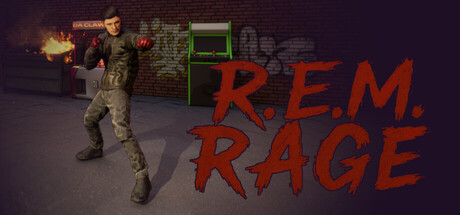
Promotional artwork for R.E.M. Rage was created using AI-assisted tools. These assets are used solely for marketing purposes and do not reflect the in-game visuals or assets, which were created manually.
I use AI to assist in generating pre-rendered game assets, store page copy, and some marketing and community materials to improve production efficiency and quality. However, all AI-generated content is carefully reviewed and edited by humans to ensure it aligns with the game's style and brand identity.
Some of the multilingual descriptions on this page have been generated with AI assistance, and certain in-game text has also been proofread using AI tools.
AI is used to quickly sketch out coding systems and is refined by an experienced human developer to finalize the code. Some art is also generated making use of AI, but again, a human refines and touches up the art to import assets into the game.
Some store copy and achievement images make use of AI as well and is also reviewed by humans prior to submission.
While AI is used to augment the development and marketing process, a human has touched and reviewed all aspects to the best of their ability to insure no copyrights or trademarks have been violated in its use.
This game uses AI to assist with the creation of certain visual and audio elements, such as icons, sound effects, and music.
AI was utilized to enhance production speed and development efficiency, but it does not generate content in real time during gameplay.
All AI use is limited to pre-release asset creation to improve overall quality.
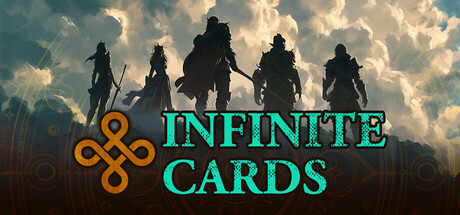
As a solo developer, I use AI tools solely for creative support. Some visual assets in Infinite Cards were created with the help of AI-assisted tools. All generated content was carefully selected and edited to meet the visual style and quality standards of the game.
Generative AI is being used for asset creation during development wherever possible (e.g. sprites, backgrounds, music) to ensure that I, as a solo developer, can keep up with the rapidly evolving nature of this project and meet both my own standards and player expectations of a polished experience.
Most of the art assets, including character illustrations were created using commercially licensed AI platforms. Additionally, AI-assisted refinement was applied to some portions of the textual content.
- The developer initially generated base code using ChatGPT, through which they learned C# and Unity. This code was then manually edited and expanded by hand.
- For the music, the developer received guidance from ChatGPT on composition methods, such as chord progressions, and composed the music manually.
- While the developer received advice from ChatGPT on how to create pixel art, no AI was used in the actual drawing process.
We used generative AI to generate placeholder art for the players and enemies, which we plan to replace before the full release.
We also generated sprites for various items.
The developer describes how AI-generated content is used in the game as follows
- Game Title Idea
- Base of Main Character Design Concepts
- Background Music (BGM)
- Some Sound Effects (SFX)
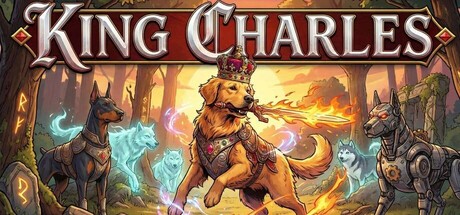
A handful of key art pieces, concept illustrations, and store-page graphics were generated with AI image-generation software to help communicate King Charles’s look and tone. This use of AI is limited strictly to marketing materials.
Some parts of the game's description, promotional text, in-game code snippets, and localization were created with the assistance of generative AI tools. All AI-assisted content has been reviewed and edited by the developer to ensure clarity, accuracy, and functionality.
Some of the game’s 2D artwork was created by feeding my original 3D models and hand drawn sketches to a generative model. I further edited and refined the output using digital painting to match the game’s style and maintain a cohesive visual identity.
As a two-person indie team, we utilize AI-assisted tools for artwork, voice acting, and select textual content. This allows us to:
✓ Maintain visual consistency
✓ Accelerate content iteration
✓ Focus on perfecting core gameplay
All AI-generated assets are manually curated to align with the game's vision. We're committed to continuously refining the final quality.
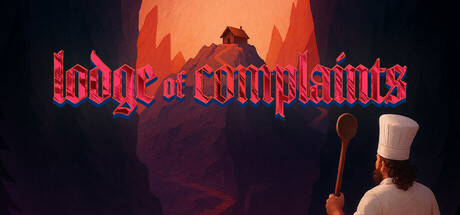
Lodge of Complaints' content systems are built to be highly customizable, from storylines to visual content. The game is still in development and subject to change. It currently contains AI generated art assets which may not be included in the final release.
Some elements of the game, such as character portraits, were created with the help of AI and manually edited by a human. In the future, they may possibly be replaced.
Human touch + AI. Artificial Intelligence (AI) was used to enhance code efficiency and optimize selected graphical elements, improving the overall performance and visual quality of the project — while preserving its handcrafted style and unique artistic identity.
The game uses local, offline LLMs (meaning no data ever leaves your computer and nothing is used in training) for controlling and adapting the behavior of the main enemy in the game.
Promotional artwork for R.E.M. Rage was created using AI-assisted tools. These assets are used solely for marketing purposes and do not reflect the in-game visuals or assets, which were created manually.
I use AI to assist in generating pre-rendered game assets, store page copy, and some marketing and community materials to improve production efficiency and quality. However, all AI-generated content is carefully reviewed and edited by humans to ensure it aligns with the game's style and brand identity.
Some of the multilingual descriptions on this page have been generated with AI assistance, and certain in-game text has also been proofread using AI tools.
AI is used to quickly sketch out coding systems and is refined by an experienced human developer to finalize the code. Some art is also generated making use of AI, but again, a human refines and touches up the art to import assets into the game.
Some store copy and achievement images make use of AI as well and is also reviewed by humans prior to submission.
While AI is used to augment the development and marketing process, a human has touched and reviewed all aspects to the best of their ability to insure no copyrights or trademarks have been violated in its use.
This game uses AI to assist with the creation of certain visual and audio elements, such as icons, sound effects, and music.
AI was utilized to enhance production speed and development efficiency, but it does not generate content in real time during gameplay.
All AI use is limited to pre-release asset creation to improve overall quality.
As a solo developer, I use AI tools solely for creative support. Some visual assets in Infinite Cards were created with the help of AI-assisted tools. All generated content was carefully selected and edited to meet the visual style and quality standards of the game.
Generative AI is being used for asset creation during development wherever possible (e.g. sprites, backgrounds, music) to ensure that I, as a solo developer, can keep up with the rapidly evolving nature of this project and meet both my own standards and player expectations of a polished experience.
Most of the art assets, including character illustrations were created using commercially licensed AI platforms. Additionally, AI-assisted refinement was applied to some portions of the textual content.
- The developer initially generated base code using ChatGPT, through which they learned C# and Unity. This code was then manually edited and expanded by hand.
- For the music, the developer received guidance from ChatGPT on composition methods, such as chord progressions, and composed the music manually.
- While the developer received advice from ChatGPT on how to create pixel art, no AI was used in the actual drawing process.
We used generative AI to generate placeholder art for the players and enemies, which we plan to replace before the full release.
We also generated sprites for various items.
The developer describes how AI-generated content is used in the game as follows
- Game Title Idea
- Base of Main Character Design Concepts
- Background Music (BGM)
- Some Sound Effects (SFX)
A handful of key art pieces, concept illustrations, and store-page graphics were generated with AI image-generation software to help communicate King Charles’s look and tone. This use of AI is limited strictly to marketing materials.
Some parts of the game's description, promotional text, in-game code snippets, and localization were created with the assistance of generative AI tools. All AI-assisted content has been reviewed and edited by the developer to ensure clarity, accuracy, and functionality.
Some of the game’s 2D artwork was created by feeding my original 3D models and hand drawn sketches to a generative model. I further edited and refined the output using digital painting to match the game’s style and maintain a cohesive visual identity.
As a two-person indie team, we utilize AI-assisted tools for artwork, voice acting, and select textual content. This allows us to:
✓ Maintain visual consistency
✓ Accelerate content iteration
✓ Focus on perfecting core gameplay
All AI-generated assets are manually curated to align with the game's vision. We're committed to continuously refining the final quality.
Lodge of Complaints' content systems are built to be highly customizable, from storylines to visual content. The game is still in development and subject to change. It currently contains AI generated art assets which may not be included in the final release.
Some elements of the game, such as character portraits, were created with the help of AI and manually edited by a human. In the future, they may possibly be replaced.
Human touch + AI. Artificial Intelligence (AI) was used to enhance code efficiency and optimize selected graphical elements, improving the overall performance and visual quality of the project — while preserving its handcrafted style and unique artistic identity.
The game uses local, offline LLMs (meaning no data ever leaves your computer and nothing is used in training) for controlling and adapting the behavior of the main enemy in the game.