Public Steam disclosure research25,706 disclosures tracked
Where do games disclose AI use?
Search developers’ Steam disclosures, compare classified AI use across
games, and follow recorded changes.
This index adds cross-game classifications and statistics to
statements published on individual store pages.
Groups reflect automatic analysis of public disclosures; mature records are excluded. These counts do not measure AI use across all of Steam.
Missing or unclear statements cannot establish whether a game uses AI.
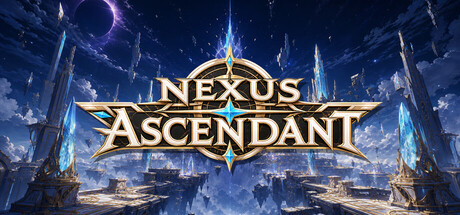
Nexus Ascendant contains pre-generated content created with the assistance of generative AI tools during development. This includes portions of the character and environment artwork, animated visual assets, user-interface graphics, gameplay textures, narrative writing, Japanese voice audio, and marketing materials. All AI-assisted content was selected, edited, reviewed, and integrated by the developer before inclusion. The game does not generate AI content during gameplay or transmit player data to generative AI services.
AI tools were used to assist with some of the game’s translations and in the creation of two in-game textures. These textures were subsequently edited, refined, and carefully reviewed by a human before being included in the final game.
We strictly rely on human creativity and craftsmanship throughout the game’s development.
This application uses AI tools in parts of its development process, including the creation of artwork used in the game and on the store page, the writing of the dialogue text shown by the characters, the tuning of behaviour algorithms, and the translation of the store page into multiple languages. All such output is generated and reviewed in advance before being incorporated into the product, and no generative AI runs during gameplay.
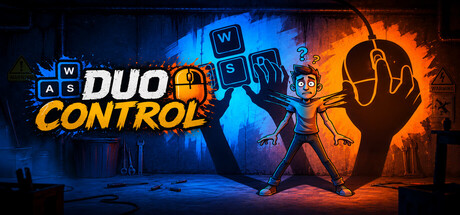
Some visual assets and promotional artwork used in DuoControl were created or assisted using generative AI and were further refined by our development team. No generative AI is used during gameplay, and players cannot generate AI content within the game.
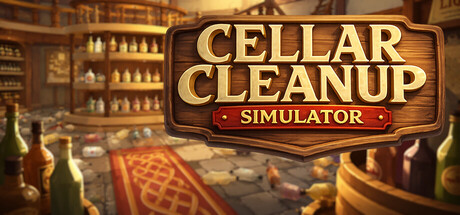
Within the game, we only used AI to assist with translations into different languages and to create the names and designs of the bottle brands.
We use AI solely as a supportive tool. We do not let AI handle the entire process for any task.
AI-generated content in Pin a Million:
- Music: All in-game music tracks were created using generative AI (Suno).
- Icons: The icon artwork on Peg and Perk cards was generated using AI tools.
All on-board gameplay effects, animations, and visuals are hand-coded and rendered procedurally at runtime (no AI-generated content).
During the development process, certain 2D art assets, textures, and UI elements were generated or enhanced using generative AI tools to accelerate production. All final assets have been manually reviewed, edited, and verified by our team to ensure quality and compliance.
This game uses AI-generated content. The character artwork was pre-generated locally with an image model (Animagine XL 3.1) and manually curated by the developer. During gameplay, the mascot's chat replies (text only) are generated in real time by a bundled local language model (Google Gemma 3 via the Ollama runtime) running entirely on your PC. No internet connection is used and no conversation data leaves your device.
Se ha usado IA para la creación de la música de fondo durante el juego, la imagen de la tienda en Steam y para la corrección de errores bajo supervisión personal.
Generative AI was used to assist in creating some promotional artwork and localization text. All AI-assisted content was reviewed and edited by the developer. The game does not generate AI content during gameplay and does not connect to external AI services.
AI tools were used to create certain loading screen images, background music and music for the game trailer. All of these Assets were reviewed and modified as necessary to ensure they comply with copyright and content guidelines.
Generative AI tools were used during development to assist with the creation and iteration of some 2D visual assets, UI elements, concept artwork, and selected audio assets. All AI-assisted content was reviewed, edited, and integrated by the developer. The game does not generate AI content during gameplay.
Narrative dialogue and story text were generated with AI assistance. Placeholder textures generated with AI appear in store page screenshots and marketing assets.
Cindervale Idle was developed with the help of generative AI tools.
The game's artwork - the vector icons used for items, skills and interface elements - and much of its written content, including item and monster descriptions, tooltips and flavor text, were produced with AI assistance, then reviewed, edited and assembled by myself.
No AI runs while you play.
AI-Generated Content Disclosure
This game uses AI-generated artwork for certain visual assets, including background art, illustrations, and promotional images used on the store page (key art, logo, and capsule images). All AI-generated visuals were curated and adjusted by the developer to fit the game's art style and tone.
During development, this game used generative AI tools to assist in creating fixed assets. These outputs were produced during development, reviewed and selected by humans, and then packaged into the game. The game does not call any AI while it is running:
▎ - Code: Anthropic's Claude was used to assist in writing and refactoring the Flutter/Dart game code. All code was reviewed and tested by the developer before being included; no unreviewed AI output is executed automatically.
▎ - Art / Images: Leonardo AI was used to generate pixel-art assets, which were human-selected and edited before use.
▎ - Sound & Voice: ElevenLabs was used to generate sound effects and voice, which were human-selected before use.
We are a small two-person studio. We apologize for using generative AI to assist with the translation and for any inaccuracies that may be present. We used it to make the game available in this language.
This title uses generative artificial intelligence in software development, the creation of art assets, and foreign-language localization.
Given the constraints of our production schedule, the size of our team, and the professional responsibilities of our members outside this project, we chose to incorporate generative AI into certain parts of development in pursuit of a more complete and polished game. However, our team firmly believes that generative AI should help creators produce better work. It should never become an excuse for cutting corners, disregarding the creative process, or replacing skilled professionals.
While working to deliver the most complete experience possible, these technologies enabled our engineers to explore directions that had previously been difficult to pursue because of limited time and manpower. These efforts include machine-learning-based image segmentation and depth mapping using motion-aware techniques, as well as redesigning low-level director systems and asset-management systems for art and text beyond the assistance provided by conventional game-engine tooling.
We also recognize that the experience and judgment of professional creators cannot be replicated. Throughout the production of our artistic assets, the team has actively sought guidance from artists, engineers, and experienced professionals in relevant fields, and has continuously reviewed the final content in accordance with their professional advice. All generated output is subject to human review, selection, and adjustment. No generated material is included in the game without first being inspected.
With regard to our art assets, we take copyright and creators’ rights in connection with generative AI very seriously. We believe that artists’ creative work and aesthetic expertise deserve stronger copyright protection. We have never trained models on others’ work without authorization, nor have we used LoRA models of unknown or unverifiable origin. We will not use an artist’s name, work, or distinctive style to train models or create imitations without permission, and we will never claim another creator’s work as our own.
We understand that players may hold different views regarding generative AI, and we are committed to being transparent about how and where it has been used in this title, as well as the principles that guide our use of it.
We will continue striving to ensure that both our own technology and generative AI serve as tools for creating a more complete work—not as excuses for avoiding creative responsibility, undermining the trust between creators and consumers, or producing inexpensive imitations.
Finally, we sincerely thank you for your understanding and for holding us accountable.
Einige visuelle Elemente des Spiels wurden mithilfe generativer KI-Tools erstellt und anschließend vom Entwickler ausgewählt, bearbeitet und integriert. Während des Spielablaufs kommt keine generative KI zum Einsatz.
BattleDeck uses AI tools in the following areas:
Artwork, audio and as a development assistant during coding. All AI generated content has been reviewed and refined by the developer.
All voice content in Abyssal Guardians is recorded using actor's real voices but some content might be modified with AI to achieve certain styles that match our game.
Generative AI was used to create the capsule artwork displayed on the Steam store page. No AI-generated content is used during gameplay, and the game does not use live-generated AI.
Some of the background music in Aquora was produced using a generative audio tool. Those tracks are placeholder. They are being replaced with commissioned
original music, and any remaining generated audio will be phased out of the game over time.
All visual art in Aquora is procedurally generated by the developer's own custom tooling, drawn from hand-authored colour palettes, explicit shape instructions
and seeded random number generation. No image generation model is involved at any point in the art pipeline, and no AI generated images appear in the game.
Generative AI tools were used during development to assist with enhancing certain texture assets. All final assets were reviewed and tweaked by the developer.
The artwork in this game (backgrounds, menu art, the still-life and landscape references used as puzzle targets, achievement medals, and store art) and the music were created with generative AI tools, then selected and adjusted by the developer before inclusion. No content is generated live during gameplay.
Generative AI tools were used during development to assist with some promotional artwork and written content. All AI-assisted material was reviewed and edited by the developer before inclusion. Apple Catcher does not use generative AI at runtime, and no content is generated during gameplay.
Generative AI tools were used during development to assist in creating pre-rendered 2D artwork and graphical assets (including cowboy character portraits and background visuals), as well as generating select background music tracks for the game.
I received assistance from text-generative AI (LLM) for the English translation (localization) of all in-game text (dialogues, UI, system messages) and for writing the English description on the Steam store page.
We use generative AI for some of the following elements.
・Some of the in-game art
・Some of the code
・Some of the banners and trailers on the store page
Nexus Ascendant contains pre-generated content created with the assistance of generative AI tools during development. This includes portions of the character and environment artwork, animated visual assets, user-interface graphics, gameplay textures, narrative writing, Japanese voice audio, and marketing materials. All AI-assisted content was selected, edited, reviewed, and integrated by the developer before inclusion. The game does not generate AI content during gameplay or transmit player data to generative AI services.
AI tools were used to assist with some of the game’s translations and in the creation of two in-game textures. These textures were subsequently edited, refined, and carefully reviewed by a human before being included in the final game.
We strictly rely on human creativity and craftsmanship throughout the game’s development.
This application uses AI tools in parts of its development process, including the creation of artwork used in the game and on the store page, the writing of the dialogue text shown by the characters, the tuning of behaviour algorithms, and the translation of the store page into multiple languages. All such output is generated and reviewed in advance before being incorporated into the product, and no generative AI runs during gameplay.
Some visual assets and promotional artwork used in DuoControl were created or assisted using generative AI and were further refined by our development team. No generative AI is used during gameplay, and players cannot generate AI content within the game.
Within the game, we only used AI to assist with translations into different languages and to create the names and designs of the bottle brands.
We use AI solely as a supportive tool. We do not let AI handle the entire process for any task.
AI-generated content in Pin a Million:
- Music: All in-game music tracks were created using generative AI (Suno).
- Icons: The icon artwork on Peg and Perk cards was generated using AI tools.
All on-board gameplay effects, animations, and visuals are hand-coded and rendered procedurally at runtime (no AI-generated content).
During the development process, certain 2D art assets, textures, and UI elements were generated or enhanced using generative AI tools to accelerate production. All final assets have been manually reviewed, edited, and verified by our team to ensure quality and compliance.
This game uses AI-generated content. The character artwork was pre-generated locally with an image model (Animagine XL 3.1) and manually curated by the developer. During gameplay, the mascot's chat replies (text only) are generated in real time by a bundled local language model (Google Gemma 3 via the Ollama runtime) running entirely on your PC. No internet connection is used and no conversation data leaves your device.
Se ha usado IA para la creación de la música de fondo durante el juego, la imagen de la tienda en Steam y para la corrección de errores bajo supervisión personal.
Generative AI was used to assist in creating some promotional artwork and localization text. All AI-assisted content was reviewed and edited by the developer. The game does not generate AI content during gameplay and does not connect to external AI services.
AI tools were used to create certain loading screen images, background music and music for the game trailer. All of these Assets were reviewed and modified as necessary to ensure they comply with copyright and content guidelines.
Generative AI tools were used during development to assist with the creation and iteration of some 2D visual assets, UI elements, concept artwork, and selected audio assets. All AI-assisted content was reviewed, edited, and integrated by the developer. The game does not generate AI content during gameplay.
Narrative dialogue and story text were generated with AI assistance. Placeholder textures generated with AI appear in store page screenshots and marketing assets.
Cindervale Idle was developed with the help of generative AI tools.
The game's artwork - the vector icons used for items, skills and interface elements - and much of its written content, including item and monster descriptions, tooltips and flavor text, were produced with AI assistance, then reviewed, edited and assembled by myself.
No AI runs while you play.
AI-Generated Content Disclosure
This game uses AI-generated artwork for certain visual assets, including background art, illustrations, and promotional images used on the store page (key art, logo, and capsule images). All AI-generated visuals were curated and adjusted by the developer to fit the game's art style and tone.
During development, this game used generative AI tools to assist in creating fixed assets. These outputs were produced during development, reviewed and selected by humans, and then packaged into the game. The game does not call any AI while it is running:
▎ - Code: Anthropic's Claude was used to assist in writing and refactoring the Flutter/Dart game code. All code was reviewed and tested by the developer before being included; no unreviewed AI output is executed automatically.
▎ - Art / Images: Leonardo AI was used to generate pixel-art assets, which were human-selected and edited before use.
▎ - Sound & Voice: ElevenLabs was used to generate sound effects and voice, which were human-selected before use.
We are a small two-person studio. We apologize for using generative AI to assist with the translation and for any inaccuracies that may be present. We used it to make the game available in this language.
This title uses generative artificial intelligence in software development, the creation of art assets, and foreign-language localization.
Given the constraints of our production schedule, the size of our team, and the professional responsibilities of our members outside this project, we chose to incorporate generative AI into certain parts of development in pursuit of a more complete and polished game. However, our team firmly believes that generative AI should help creators produce better work. It should never become an excuse for cutting corners, disregarding the creative process, or replacing skilled professionals.
While working to deliver the most complete experience possible, these technologies enabled our engineers to explore directions that had previously been difficult to pursue because of limited time and manpower. These efforts include machine-learning-based image segmentation and depth mapping using motion-aware techniques, as well as redesigning low-level director systems and asset-management systems for art and text beyond the assistance provided by conventional game-engine tooling.
We also recognize that the experience and judgment of professional creators cannot be replicated. Throughout the production of our artistic assets, the team has actively sought guidance from artists, engineers, and experienced professionals in relevant fields, and has continuously reviewed the final content in accordance with their professional advice. All generated output is subject to human review, selection, and adjustment. No generated material is included in the game without first being inspected.
With regard to our art assets, we take copyright and creators’ rights in connection with generative AI very seriously. We believe that artists’ creative work and aesthetic expertise deserve stronger copyright protection. We have never trained models on others’ work without authorization, nor have we used LoRA models of unknown or unverifiable origin. We will not use an artist’s name, work, or distinctive style to train models or create imitations without permission, and we will never claim another creator’s work as our own.
We understand that players may hold different views regarding generative AI, and we are committed to being transparent about how and where it has been used in this title, as well as the principles that guide our use of it.
We will continue striving to ensure that both our own technology and generative AI serve as tools for creating a more complete work—not as excuses for avoiding creative responsibility, undermining the trust between creators and consumers, or producing inexpensive imitations.
Finally, we sincerely thank you for your understanding and for holding us accountable.
Einige visuelle Elemente des Spiels wurden mithilfe generativer KI-Tools erstellt und anschließend vom Entwickler ausgewählt, bearbeitet und integriert. Während des Spielablaufs kommt keine generative KI zum Einsatz.
BattleDeck uses AI tools in the following areas:
Artwork, audio and as a development assistant during coding. All AI generated content has been reviewed and refined by the developer.
All voice content in Abyssal Guardians is recorded using actor's real voices but some content might be modified with AI to achieve certain styles that match our game.
Generative AI was used to create the capsule artwork displayed on the Steam store page. No AI-generated content is used during gameplay, and the game does not use live-generated AI.
Some of the background music in Aquora was produced using a generative audio tool. Those tracks are placeholder. They are being replaced with commissioned
original music, and any remaining generated audio will be phased out of the game over time.
All visual art in Aquora is procedurally generated by the developer's own custom tooling, drawn from hand-authored colour palettes, explicit shape instructions
and seeded random number generation. No image generation model is involved at any point in the art pipeline, and no AI generated images appear in the game.
Generative AI tools were used during development to assist with enhancing certain texture assets. All final assets were reviewed and tweaked by the developer.
The artwork in this game (backgrounds, menu art, the still-life and landscape references used as puzzle targets, achievement medals, and store art) and the music were created with generative AI tools, then selected and adjusted by the developer before inclusion. No content is generated live during gameplay.
Generative AI tools were used during development to assist with some promotional artwork and written content. All AI-assisted material was reviewed and edited by the developer before inclusion. Apple Catcher does not use generative AI at runtime, and no content is generated during gameplay.
Generative AI tools were used during development to assist in creating pre-rendered 2D artwork and graphical assets (including cowboy character portraits and background visuals), as well as generating select background music tracks for the game.
I received assistance from text-generative AI (LLM) for the English translation (localization) of all in-game text (dialogues, UI, system messages) and for writing the English description on the Steam store page.
We use generative AI for some of the following elements.
・Some of the in-game art
・Some of the code
・Some of the banners and trailers on the store page