Public Steam disclosure research25,380 disclosures tracked
Where do games disclose AI use?
Search developers’ Steam disclosures, compare classified AI use across
games, and follow recorded changes.
This index adds cross-game classifications and statistics to
statements published on individual store pages.
Groups reflect automatic analysis of public disclosures; mature records are excluded. These counts do not measure AI use across all of Steam.
Missing or unclear statements cannot establish whether a game uses AI.
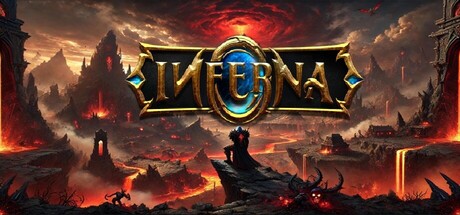
As a small independent team, we use AI as a supportive tool to help us develop and improve Inferna more efficiently.
We may use AI-assisted tools for certain visual materials, such as patch note images, announcements, and loading screens. AI may also support our localization work, including translations of some in-game texts into selected languages.
During gameplay, AI is used for live translations, making it easier for players from different countries to communicate, trade, group up, and play together. Our live translation system is hosted locally on our own infrastructure. Player messages are not sent to third-party AI providers, and player data is never used to train AI models.
Human Error utilizes cloud based generative AI to power the dialogue and interrogation systems of its robotic characters. During the Debrief Session, an integrated model generates text responses based on your performance metrics in the preceding tasks. This technology is used to create dynamic, unscripted confrontations where the machines analyze your behavior and react to your input in real time.
The game generates text-based dialogue during the social deduction phase. This content is created in real time using your performance data (movement patterns, task efficiency, and error logs). This process requires an active internet connection to communicate with our cloud hosted AI systems. We have implemented guardrails to ensure the AI remains within the thematic boundaries of the game.
To maintain high quality interactions and manage operational costs, gameplay is limited to 25 games per day per user. This ensures that our cloud-based AI systems remain available and responsive for all players.
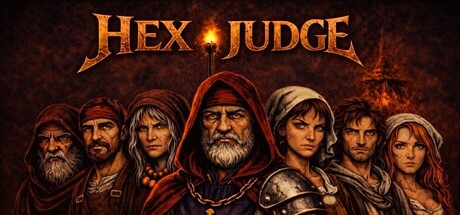
This game uses AI-assisted systems to support dynamic dialogue during interrogations with villagers. The AI helps generate variations in conversations to enhance immersion and replayability while maintaining the game’s narrative structure.
The game also uses AI-assisted systems to generate epilogues based on the player’s verdicts and the relationships between villagers. These epilogues help reflect the consequences of the player’s decisions and provide varied outcomes across playthroughs.
The dialogue and epilogue generation systems operate within structured prompts and developer-defined constraints to ensure consistency with the game’s design.
The AI systems are designed with safeguards to prevent inappropriate or harmful outputs. AI-assisted content is reviewed and refined during development to ensure it remains appropriate for the game’s setting and narrative.
Some visual assets were created with the assistance of generative AI tools. These assets were reviewed, edited, and refined by the developer before being implemented into the game.
All assets were checked to ensure they are appropriate and consistent with the game’s artistic direction.
Claude Code was used to develop this app. This software uses AI and machine learning in the following ways:
- Plant identification: User-uploaded photos are analyzed by AI to identify plant species, mushrooms, and insects.
- Disease detection: A trained machine learning model analyzes plant photos to detect and diagnose diseases. - Thermal imaging analysis: AI assesses plant health from user-uploaded thermal images.
- Garden import: AI vision interprets uploaded garden
photos and documents to auto-populate garden layouts.
All AI features are user-initiated tools that proces user-provided images. No AI was also used to populate the intitial set of image tiles, while I am paying an illustrator to replace them with hand created art.
This game uses generative artificial intelligence to power dynamic NPC dialogue during gameplay. NPCs can respond to player input using AI-generated text, creating unique conversations.
AI tools were also used during development to assist with creating certain assets such as character concepts and dialogue. All generated content is reviewed and integrated by the developer.
The game may connect to external AI services to generate dialogue responses during gameplay.
AI-generated responses are moderated and filtered to prevent inappropriate or harmful content.
Infinite GalGame is an AI-driven visual novel engine that generates a completely unique story every time you play.
There is no fixed script. No predetermined ending. You type — and the AI writes the next scene.
🎮 How It Works
Launch the game, click Start, and an opening scene is generated instantly. From there, choose from suggested options or type your own response freely. The AI director crafts each turn: dialogue, character emotion, scene atmosphere, and a matching anime-style CG illustration — all in real time.
✨ Features
∙ Truly Infinite Stories Every playthrough is different. The AI generates dialogue, plot twists, and character moments on the fly — no two sessions will ever be alike.
∙ Anime CG Illustration Each scene is paired with a freshly generated visual novel-style illustration. Characters maintain a consistent appearance throughout your story.
∙ Custom Character Cards Import SillyTavern-compatible character cards (PNG) to play with your own characters — complete with custom personality, backstory, scenario, and opening lines.
∙ Save & Load System Save your story progress at any point and pick up right where you left off.
∙ Bilingual Support Switch seamlessly between Chinese and English. Story content, UI, and AI output all adapt to your chosen language.
∙ Optional AI Voice Characters can speak their lines aloud with AI-generated voices matched to their gender, age, and personality.
∙ Safe & Moderated Built-in multi-layer content safety: keyword filtering on both input and output, AI self-review on every response, and a one-click in-game report system.
📝 Note Infinite GalGame requires an internet connection to generate stories. Content is produced by AI and may occasionally be imperfect — use the in-game report button to flag anything unusual.
Methodox uses AI-assisted tools during both development and gameplay, with human oversight at every stage.
During production, AI tools were used to help generate certain visual assets and explore design concepts. All assets were reviewed, curated, and integrated by human designers. Final artistic direction and implementation were handled by the development team.
In gameplay, characters use AI-driven systems to simulate conversation. These systems include multiple safety measures and have been thoroughly tested to help ensure generated content remains appropriate. If you encounter an issue, please report it to our support team at contact@methodox.io so we can review and address it.
The team will continue refining and improving gameplay systems and visual assets over time.
Thank you for your support!
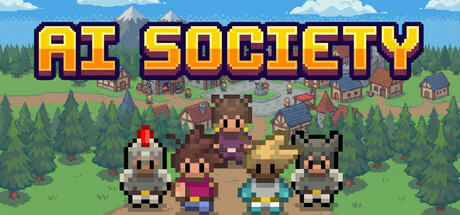
AI Society uses local generative AI (via Ollama) to power each character's behavior, dialogue, and decision-making. Based on the personality traits, hobbies, and description you set for each character, the AI determines their daily routines, job choices, relationships, and what they post on the in-game social media feed. All AI processing runs entirely on the player's machine — no data is sent to external servers.
This app uses live generative AI to create dynamic in-game content such as dialogue and voice output. AI features are processed through developer-managed servers. Players are not required to provide API keys or maintain third-party accounts.
Vtuber Assistant uses generative AI to create live text responses and voice output as a customizable co-host companion. It reacts to your voice/text input, screen audio/visuals, and Twitch chat with fun, contextual commentary.
All core functionality runs through a secure built-in proxy by default (Grok + ElevenLabs integration) — no external API keys or setup required to use the app. Free limited daily uses are included.
Optional premium features (unlimited generations, premium voices) are handled via Steam microtransactions (AI Credits packs). Local fallback models (bundled SmolLM2 + Piper TTS) provide offline functionality when needed.
Twitch chat integration is read-only — the AI consumes incoming messages and produces in-app responses only.
All outputs are moderated by a built-in Safety Guard to help prevent inappropriate content.
This game uses Generative AI in two ways:
1. During Development (Pre-development): Approximately 75% of the game's code was written using AI (Godot GDScript), with the remaining 25% hand-written. Additionally, all of the game's soundtrack and some pixel art backgrounds (only the trees and red crystals) were created using AI. The rest of the artwork was entirely hand-drawn.
2.During Gameplay (Live-generated): The game features a "Card Fusion" mechanic that uses a local AI model (Stable Diffusion) running on the player's hardware to dynamically generate new card illustrations. A strict keyword filtering system is in place to prevent the generation of NSFW or inappropriate content.
This application utilizes generative AI (Large Language Models) strictly for text translation. It translates the original text from user-provided manga images into their target language in real-time. It does not generate any graphical assets or original stories.
Live Through Time utilizes the Gemini 2.5 Flash AI model to act as a dynamic, interactive historian. All narrative text, NPC dialogue, character biographies, and world events are generated live in real-time based entirely on player input. The game contains no pre-written scripts; instead, the AI calculates the historical causality of your actions to create a completely unique, unscripted roleplaying experience.
This game uses generative AI (Large Language Models) as its core engine. Every NPC independently makes decisions, engages in dialogue, forms relationships, and creates emergent stories powered by LLM. AI generates text narratives including NPC thoughts, actions, dialogue, combat scenes, and story events in real time during gameplay. Players must provide their own API key to connect to an LLM service of their choice. No AI content is pre-generated or stored by the developer.
This game connects to an AI service during gameplay to dynamically generate weapon mechanisms and game scripts, providing a randomized and evolving experience for the player.
The game uses an offline local LLM to dynamically generate NPC dialogue, parse player's text commands, and judge the player's actions in court.
The game uses zero generative AI art or audio assets.
CAI UWE uses generative AI technologies (Large Language Models) to generate the character's dialogues in real-time. There are no pre-written scripts; all of UWE's answers are generated live based on the user's chat inputs.
This game is an AI-powered desktop companion that uses Large Language Models (LLM) to generate real-time dialogue and voice interactions. The AI assistant can engage in natural conversations, answer questions, perform tasks, and provide voice feedback through Text-to-Speech (TTS) technology. All AI-generated content is produced in real-time via external API services, with content filtering and safety measures implemented to ensure compliance with community standards.
Neofold includes real-time generated AI content, such as its recommended "Infinity Mode", which uses a local diffusion model to generate infinite unique creatures in real-time using your GPU. No external servers are used. No generation happens without your prior input, ensuring stable performance during your work and gaming sessions.
Neofold includes pre-generated AI content, such as its alternate "Lite Mode", which uses a giant set of pre-generated creatures for players without a suitable video card.
Artificial Intelligence is part of the lore behind this project, but it leans heavily towards balance between humans and AI. - The friend bots within this app can be disabled and reprogrammed by you! - With each update, the machine will become more user friendly. The goal is to create jobs by allowing anyone to become their employer starting here. Placeholders and maintenance may be generated in some projects for demonstrations and further editing. Every update here is free once you own a copy.
This software employs several speech synthesis models trained on open-source large-scale models, whose training datasets are curated to intentionally exclude extreme or inappropriate content. We have built a generative synthesis system based on these models; however, all generated speech content is entirely determined by the user. Therefore, our terms of use explicitly stipulate that this software must be used in a lawful and ethical manner.
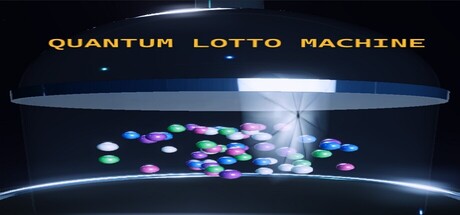
In the upper left corner of the game screen (highlighted in yellow), AI-generated numbers are selected based on an analysis of all possible combinations, including probability calculations. The AI retrieves data from a database of previous draws and uses it to calculate the possible combinations of numbers that could be drawn in the next lotto draw.
Word Gladiator: Infinite Evolution" features a cutting-edge AI Forge powered by Gemini (by Google) models. This system dynamically generates customized vocabulary packs and real-time contextual example sentences based on the themes or keywords you provide. Whether you're practicing for an exam or exploring a specific interest, our AI ensures your learning material is infinite, personalized, and relevant. To maintain a safe and high-quality educational environment, all AI-generated content is passed through strict filters to ensure it remains appropriate and focused on your linguistic progress.
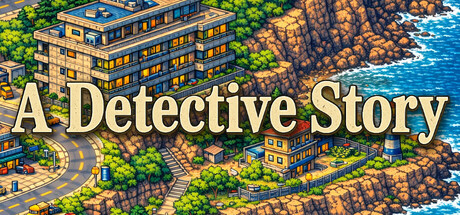
This game uses generative AI to create unique detective cases and power in-game conversations. At the start of each session, the AI generates a new case (scenario details, suspects, motives, and leads). During gameplay, NPC dialogue is also generated in real time based on the case context and what you type.
To keep things safe and on-topic, the game includes guardrails that filter both player input and AI output. AI-generated text is used only for gameplay narrative and dialogue.
NPC dialogue in the game is generated at runtime using a fully local, private AI model that runs entirely on the player’s computer. This AI is used solely to generate NPC text responses during gameplay. No external servers or datacenters are used, and all interactions remain fully local. The AI output is constrained to in-game interactions and does not generate prohibited content. No AI was used in the development of the game’s code, art, soundtrack, or Steam store page.
The application uses local Large Language Models (LLM) to generate conversational text and Text-to-Speech (TTS) engines to generate voice in real-time. All AI processing happens locally on the user's hardware.
Manifest Anything uses generative artificial intelligence to assist players in creating and modifying interactive game experiences. AI systems are used to generate gameplay elements, environments, and content based on player input. All AI-generated content is governed by moderation systems and usage safeguards designed to prevent the creation of inappropriate or illegal material.
Ghostwriter's Pact uses AI as an engine to enable gameplay that would be impossible to achieve with traditional game development methods.
The game is built on a "Hybrid AI" system designed to maximize player creativity while minimizing environmental impact and latency:
1. Pre-generated Content: To allow players to combine word cards into valid sentences, we used LLMs to pre-generate and validate a database of over 1 million properly structured sentences. It would be humanly impossible for a writing team to manually author this volume of text. By pre-generating this data, we ensure the core gameplay is instant, responsive, and does not require constant, energy-intensive API calls for every move the player makes.
2. Live Generation: When a player finalizes a story arc, the game connects to a live LLM to weave their sentences into a cohesive story. A secondary AI acts as a "Critic," evaluating the player's story for cohesiveness and creativity. Pre-generation of stories is impossible here, since players can mix sentences to create a near infinite amount of stories.
3. Visual Assets: The game's imagery was generated locally on developer hardware using custom-trained models (LoRAs) and workflows to ensure a consistent, stylized aesthetic that fits the game's theme.
This application generates text responses in real time using an on-device language model (LLM). All AI output is initiated by user prompts entered through the chat interface. The model runs locally on the user's hardware and does not require an internet connection in the Steam build. The application does not generate images or other media via AI. User inputs and generated content are stored locally on the user’s device and are not transmitted to external servers.
This game uses artificial intelligence systems during gameplay to dynamically adapt investigation scenarios, narrative flow, and event sequencing based on player actions. AI is used to increase replayability and narrative variation, not to generate player-created content or media assets.
Beyond Voice uses generative AI to create the character’s conversation responses in real time. You speak into a microphone, the app transcribes your speech, and the character replies with AI-generated dialogue that is spoken using a synthesized voice, with lip-sync and gestures.
The character also maintains a lightweight relationship and memory system to help conversations carry across sessions. AI output can vary and may be filtered or refused when it violates content rules.
This game uses Spotify's Basic Pitch, a machine learning model for audio-to-MIDI transcription. This technology assists in converting audio files into note data for gameplay purposes and is entirely optional—players can choose whether or not to use this feature. It does not generate music, artwork, or other creative content; all such elements are created by human artists and composers.
This is a game that you can make games in it by describing the tags, we are using AI to achieve such gameplay!
Some chat is also generated using LLM!
Part of the art & promotional assets are generated by AI model.
This game uses live-generated AI to power the dialogue of the suspects. When you type a question, the response is generated in real-time, ensuring that suspects react dynamically to your specific accusations and evidence. An active internet connection is required to play.
- AI evaluates player-entered text to determine story branching and outcomes.
- Generative AI is used in the creation of certain graphic and music assets.
We use AI to power dynamic conversations with hand-crafted NPCs. Each character has a unique personality, backstory, and knowledge base. Their dialogue is generated in real-time based on your questions, creating authentic interview experiences that feel natural and unpredictable.
The AI runs completely offline on your machine. No internet connection required, and your conversations remain private.
The game has a single AI-generated image of deliberate low quality in it, because I wanted to have that.
It also has the "ASA-Intelligence" text generation and modification system, which is technically and pragmatically incomparable to the function of a large language model, but is technically AI. It is not trained on text from anything but the game itself, and is ran entirely locally during certain parts of gameplay.
This game uses AI for chat, image generation/editing, and experimental video generation, and supports multi‑agent collaboration. AI features
require an internet connection and third‑party model services; user inputs may be sent to those services to produce outputs. AI‑generated
content is provided as assistance and should be reviewed by players before use or publication.
Tic Tac Football uses AI-controlled opponents to allow players to compete in single-player matches, cups, and leagues.
AI players follow the same rules as human players and are designed to provide a fair, accessible challenge focused on positioning, timing, and decision-making rather than speed or complex simulation.
AI is used to generate the voices and advice of two opposing royal advisers (Left and Right Councillor). Each turn they comment on the situation and recommend different actions. If the player’s decree aligns more closely with one adviser’s stance, that adviser’s credibility increases while the other’s decreases.
As the credibility gap grows, public trust is affected, reflecting rising factional tension. If an adviser’s credibility reaches zero, they resign—sometimes angrily—warning the player not to dismiss their counsel. The vacant seat is then filled by a successor adviser, represented by a different local LLM model. This creates shifting personalities and advice styles across runs.
AI does not determine the game’s outcomes. Core consequences and metric changes are resolved by the game’s rule system; AI provides narrative and guidance within that system.
1. Asset Creation: Generative AI was used to create base images for some backgrounds and non-character card illustrations (such as items or objects). All these assets have been manually edited and processed by the developer to fit the game's art style and ensure they are used appropriately.
2. Translation: AI is used, as the translation is primarily based on machine translation.
3. Real-time Generation: The game features an optional AI text generation system for exploration flavor text. This function is only activated if the player provides their own API endpoint. The generated text is based on in-game variables (player skills, partners, and floor names) and does not affect the core story or progression. It is a purely cosmetic addition for enhanced immersion.
Players can freely converse with NPCs, and the game will generate dialogue in real time based on the NPCs' personalities and memories.
The main storyline will be driven by AI agents, which will generate plotlines consistent with the game's lore.
As a small independent team, we use AI as a supportive tool to help us develop and improve Inferna more efficiently.
We may use AI-assisted tools for certain visual materials, such as patch note images, announcements, and loading screens. AI may also support our localization work, including translations of some in-game texts into selected languages.
During gameplay, AI is used for live translations, making it easier for players from different countries to communicate, trade, group up, and play together. Our live translation system is hosted locally on our own infrastructure. Player messages are not sent to third-party AI providers, and player data is never used to train AI models.
Human Error utilizes cloud based generative AI to power the dialogue and interrogation systems of its robotic characters. During the Debrief Session, an integrated model generates text responses based on your performance metrics in the preceding tasks. This technology is used to create dynamic, unscripted confrontations where the machines analyze your behavior and react to your input in real time.
The game generates text-based dialogue during the social deduction phase. This content is created in real time using your performance data (movement patterns, task efficiency, and error logs). This process requires an active internet connection to communicate with our cloud hosted AI systems. We have implemented guardrails to ensure the AI remains within the thematic boundaries of the game.
To maintain high quality interactions and manage operational costs, gameplay is limited to 25 games per day per user. This ensures that our cloud-based AI systems remain available and responsive for all players.
This game uses AI-assisted systems to support dynamic dialogue during interrogations with villagers. The AI helps generate variations in conversations to enhance immersion and replayability while maintaining the game’s narrative structure.
The game also uses AI-assisted systems to generate epilogues based on the player’s verdicts and the relationships between villagers. These epilogues help reflect the consequences of the player’s decisions and provide varied outcomes across playthroughs.
The dialogue and epilogue generation systems operate within structured prompts and developer-defined constraints to ensure consistency with the game’s design.
The AI systems are designed with safeguards to prevent inappropriate or harmful outputs. AI-assisted content is reviewed and refined during development to ensure it remains appropriate for the game’s setting and narrative.
Some visual assets were created with the assistance of generative AI tools. These assets were reviewed, edited, and refined by the developer before being implemented into the game.
All assets were checked to ensure they are appropriate and consistent with the game’s artistic direction.
Claude Code was used to develop this app. This software uses AI and machine learning in the following ways:
- Plant identification: User-uploaded photos are analyzed by AI to identify plant species, mushrooms, and insects.
- Disease detection: A trained machine learning model analyzes plant photos to detect and diagnose diseases. - Thermal imaging analysis: AI assesses plant health from user-uploaded thermal images.
- Garden import: AI vision interprets uploaded garden
photos and documents to auto-populate garden layouts.
All AI features are user-initiated tools that proces user-provided images. No AI was also used to populate the intitial set of image tiles, while I am paying an illustrator to replace them with hand created art.
This game uses generative artificial intelligence to power dynamic NPC dialogue during gameplay. NPCs can respond to player input using AI-generated text, creating unique conversations.
AI tools were also used during development to assist with creating certain assets such as character concepts and dialogue. All generated content is reviewed and integrated by the developer.
The game may connect to external AI services to generate dialogue responses during gameplay.
AI-generated responses are moderated and filtered to prevent inappropriate or harmful content.
Infinite GalGame is an AI-driven visual novel engine that generates a completely unique story every time you play.
There is no fixed script. No predetermined ending. You type — and the AI writes the next scene.
🎮 How It Works
Launch the game, click Start, and an opening scene is generated instantly. From there, choose from suggested options or type your own response freely. The AI director crafts each turn: dialogue, character emotion, scene atmosphere, and a matching anime-style CG illustration — all in real time.
✨ Features
∙ Truly Infinite Stories Every playthrough is different. The AI generates dialogue, plot twists, and character moments on the fly — no two sessions will ever be alike.
∙ Anime CG Illustration Each scene is paired with a freshly generated visual novel-style illustration. Characters maintain a consistent appearance throughout your story.
∙ Custom Character Cards Import SillyTavern-compatible character cards (PNG) to play with your own characters — complete with custom personality, backstory, scenario, and opening lines.
∙ Save & Load System Save your story progress at any point and pick up right where you left off.
∙ Bilingual Support Switch seamlessly between Chinese and English. Story content, UI, and AI output all adapt to your chosen language.
∙ Optional AI Voice Characters can speak their lines aloud with AI-generated voices matched to their gender, age, and personality.
∙ Safe & Moderated Built-in multi-layer content safety: keyword filtering on both input and output, AI self-review on every response, and a one-click in-game report system.
📝 Note Infinite GalGame requires an internet connection to generate stories. Content is produced by AI and may occasionally be imperfect — use the in-game report button to flag anything unusual.
Methodox uses AI-assisted tools during both development and gameplay, with human oversight at every stage.
During production, AI tools were used to help generate certain visual assets and explore design concepts. All assets were reviewed, curated, and integrated by human designers. Final artistic direction and implementation were handled by the development team.
In gameplay, characters use AI-driven systems to simulate conversation. These systems include multiple safety measures and have been thoroughly tested to help ensure generated content remains appropriate. If you encounter an issue, please report it to our support team at contact@methodox.io so we can review and address it.
The team will continue refining and improving gameplay systems and visual assets over time.
Thank you for your support!
AI Society uses local generative AI (via Ollama) to power each character's behavior, dialogue, and decision-making. Based on the personality traits, hobbies, and description you set for each character, the AI determines their daily routines, job choices, relationships, and what they post on the in-game social media feed. All AI processing runs entirely on the player's machine — no data is sent to external servers.
This app uses live generative AI to create dynamic in-game content such as dialogue and voice output. AI features are processed through developer-managed servers. Players are not required to provide API keys or maintain third-party accounts.
Vtuber Assistant uses generative AI to create live text responses and voice output as a customizable co-host companion. It reacts to your voice/text input, screen audio/visuals, and Twitch chat with fun, contextual commentary.
All core functionality runs through a secure built-in proxy by default (Grok + ElevenLabs integration) — no external API keys or setup required to use the app. Free limited daily uses are included.
Optional premium features (unlimited generations, premium voices) are handled via Steam microtransactions (AI Credits packs). Local fallback models (bundled SmolLM2 + Piper TTS) provide offline functionality when needed.
Twitch chat integration is read-only — the AI consumes incoming messages and produces in-app responses only.
All outputs are moderated by a built-in Safety Guard to help prevent inappropriate content.
This game uses Generative AI in two ways:
1. During Development (Pre-development): Approximately 75% of the game's code was written using AI (Godot GDScript), with the remaining 25% hand-written. Additionally, all of the game's soundtrack and some pixel art backgrounds (only the trees and red crystals) were created using AI. The rest of the artwork was entirely hand-drawn.
2.During Gameplay (Live-generated): The game features a "Card Fusion" mechanic that uses a local AI model (Stable Diffusion) running on the player's hardware to dynamically generate new card illustrations. A strict keyword filtering system is in place to prevent the generation of NSFW or inappropriate content.
This application utilizes generative AI (Large Language Models) strictly for text translation. It translates the original text from user-provided manga images into their target language in real-time. It does not generate any graphical assets or original stories.
Live Through Time utilizes the Gemini 2.5 Flash AI model to act as a dynamic, interactive historian. All narrative text, NPC dialogue, character biographies, and world events are generated live in real-time based entirely on player input. The game contains no pre-written scripts; instead, the AI calculates the historical causality of your actions to create a completely unique, unscripted roleplaying experience.
This game uses generative AI (Large Language Models) as its core engine. Every NPC independently makes decisions, engages in dialogue, forms relationships, and creates emergent stories powered by LLM. AI generates text narratives including NPC thoughts, actions, dialogue, combat scenes, and story events in real time during gameplay. Players must provide their own API key to connect to an LLM service of their choice. No AI content is pre-generated or stored by the developer.
This game connects to an AI service during gameplay to dynamically generate weapon mechanisms and game scripts, providing a randomized and evolving experience for the player.
The game uses an offline local LLM to dynamically generate NPC dialogue, parse player's text commands, and judge the player's actions in court.
The game uses zero generative AI art or audio assets.
CAI UWE uses generative AI technologies (Large Language Models) to generate the character's dialogues in real-time. There are no pre-written scripts; all of UWE's answers are generated live based on the user's chat inputs.
This game is an AI-powered desktop companion that uses Large Language Models (LLM) to generate real-time dialogue and voice interactions. The AI assistant can engage in natural conversations, answer questions, perform tasks, and provide voice feedback through Text-to-Speech (TTS) technology. All AI-generated content is produced in real-time via external API services, with content filtering and safety measures implemented to ensure compliance with community standards.
Neofold includes real-time generated AI content, such as its recommended "Infinity Mode", which uses a local diffusion model to generate infinite unique creatures in real-time using your GPU. No external servers are used. No generation happens without your prior input, ensuring stable performance during your work and gaming sessions.
Neofold includes pre-generated AI content, such as its alternate "Lite Mode", which uses a giant set of pre-generated creatures for players without a suitable video card.
Artificial Intelligence is part of the lore behind this project, but it leans heavily towards balance between humans and AI. - The friend bots within this app can be disabled and reprogrammed by you! - With each update, the machine will become more user friendly. The goal is to create jobs by allowing anyone to become their employer starting here. Placeholders and maintenance may be generated in some projects for demonstrations and further editing. Every update here is free once you own a copy.
This software employs several speech synthesis models trained on open-source large-scale models, whose training datasets are curated to intentionally exclude extreme or inappropriate content. We have built a generative synthesis system based on these models; however, all generated speech content is entirely determined by the user. Therefore, our terms of use explicitly stipulate that this software must be used in a lawful and ethical manner.
In the upper left corner of the game screen (highlighted in yellow), AI-generated numbers are selected based on an analysis of all possible combinations, including probability calculations. The AI retrieves data from a database of previous draws and uses it to calculate the possible combinations of numbers that could be drawn in the next lotto draw.
Word Gladiator: Infinite Evolution" features a cutting-edge AI Forge powered by Gemini (by Google) models. This system dynamically generates customized vocabulary packs and real-time contextual example sentences based on the themes or keywords you provide. Whether you're practicing for an exam or exploring a specific interest, our AI ensures your learning material is infinite, personalized, and relevant. To maintain a safe and high-quality educational environment, all AI-generated content is passed through strict filters to ensure it remains appropriate and focused on your linguistic progress.
This game uses generative AI to create unique detective cases and power in-game conversations. At the start of each session, the AI generates a new case (scenario details, suspects, motives, and leads). During gameplay, NPC dialogue is also generated in real time based on the case context and what you type.
To keep things safe and on-topic, the game includes guardrails that filter both player input and AI output. AI-generated text is used only for gameplay narrative and dialogue.
NPC dialogue in the game is generated at runtime using a fully local, private AI model that runs entirely on the player’s computer. This AI is used solely to generate NPC text responses during gameplay. No external servers or datacenters are used, and all interactions remain fully local. The AI output is constrained to in-game interactions and does not generate prohibited content. No AI was used in the development of the game’s code, art, soundtrack, or Steam store page.
The application uses local Large Language Models (LLM) to generate conversational text and Text-to-Speech (TTS) engines to generate voice in real-time. All AI processing happens locally on the user's hardware.
Manifest Anything uses generative artificial intelligence to assist players in creating and modifying interactive game experiences. AI systems are used to generate gameplay elements, environments, and content based on player input. All AI-generated content is governed by moderation systems and usage safeguards designed to prevent the creation of inappropriate or illegal material.
Ghostwriter's Pact uses AI as an engine to enable gameplay that would be impossible to achieve with traditional game development methods.
The game is built on a "Hybrid AI" system designed to maximize player creativity while minimizing environmental impact and latency:
1. Pre-generated Content: To allow players to combine word cards into valid sentences, we used LLMs to pre-generate and validate a database of over 1 million properly structured sentences. It would be humanly impossible for a writing team to manually author this volume of text. By pre-generating this data, we ensure the core gameplay is instant, responsive, and does not require constant, energy-intensive API calls for every move the player makes.
2. Live Generation: When a player finalizes a story arc, the game connects to a live LLM to weave their sentences into a cohesive story. A secondary AI acts as a "Critic," evaluating the player's story for cohesiveness and creativity. Pre-generation of stories is impossible here, since players can mix sentences to create a near infinite amount of stories.
3. Visual Assets: The game's imagery was generated locally on developer hardware using custom-trained models (LoRAs) and workflows to ensure a consistent, stylized aesthetic that fits the game's theme.
This application generates text responses in real time using an on-device language model (LLM). All AI output is initiated by user prompts entered through the chat interface. The model runs locally on the user's hardware and does not require an internet connection in the Steam build. The application does not generate images or other media via AI. User inputs and generated content are stored locally on the user’s device and are not transmitted to external servers.
This game uses artificial intelligence systems during gameplay to dynamically adapt investigation scenarios, narrative flow, and event sequencing based on player actions. AI is used to increase replayability and narrative variation, not to generate player-created content or media assets.
Beyond Voice uses generative AI to create the character’s conversation responses in real time. You speak into a microphone, the app transcribes your speech, and the character replies with AI-generated dialogue that is spoken using a synthesized voice, with lip-sync and gestures.
The character also maintains a lightweight relationship and memory system to help conversations carry across sessions. AI output can vary and may be filtered or refused when it violates content rules.
This game uses Spotify's Basic Pitch, a machine learning model for audio-to-MIDI transcription. This technology assists in converting audio files into note data for gameplay purposes and is entirely optional—players can choose whether or not to use this feature. It does not generate music, artwork, or other creative content; all such elements are created by human artists and composers.
This is a game that you can make games in it by describing the tags, we are using AI to achieve such gameplay!
Some chat is also generated using LLM!
Part of the art & promotional assets are generated by AI model.
This game uses live-generated AI to power the dialogue of the suspects. When you type a question, the response is generated in real-time, ensuring that suspects react dynamically to your specific accusations and evidence. An active internet connection is required to play.
- AI evaluates player-entered text to determine story branching and outcomes.
- Generative AI is used in the creation of certain graphic and music assets.
We use AI to power dynamic conversations with hand-crafted NPCs. Each character has a unique personality, backstory, and knowledge base. Their dialogue is generated in real-time based on your questions, creating authentic interview experiences that feel natural and unpredictable.
The AI runs completely offline on your machine. No internet connection required, and your conversations remain private.
The game has a single AI-generated image of deliberate low quality in it, because I wanted to have that.
It also has the "ASA-Intelligence" text generation and modification system, which is technically and pragmatically incomparable to the function of a large language model, but is technically AI. It is not trained on text from anything but the game itself, and is ran entirely locally during certain parts of gameplay.
This game uses AI for chat, image generation/editing, and experimental video generation, and supports multi‑agent collaboration. AI features
require an internet connection and third‑party model services; user inputs may be sent to those services to produce outputs. AI‑generated
content is provided as assistance and should be reviewed by players before use or publication.
Tic Tac Football uses AI-controlled opponents to allow players to compete in single-player matches, cups, and leagues.
AI players follow the same rules as human players and are designed to provide a fair, accessible challenge focused on positioning, timing, and decision-making rather than speed or complex simulation.
AI is used to generate the voices and advice of two opposing royal advisers (Left and Right Councillor). Each turn they comment on the situation and recommend different actions. If the player’s decree aligns more closely with one adviser’s stance, that adviser’s credibility increases while the other’s decreases.
As the credibility gap grows, public trust is affected, reflecting rising factional tension. If an adviser’s credibility reaches zero, they resign—sometimes angrily—warning the player not to dismiss their counsel. The vacant seat is then filled by a successor adviser, represented by a different local LLM model. This creates shifting personalities and advice styles across runs.
AI does not determine the game’s outcomes. Core consequences and metric changes are resolved by the game’s rule system; AI provides narrative and guidance within that system.
1. Asset Creation: Generative AI was used to create base images for some backgrounds and non-character card illustrations (such as items or objects). All these assets have been manually edited and processed by the developer to fit the game's art style and ensure they are used appropriately.
2. Translation: AI is used, as the translation is primarily based on machine translation.
3. Real-time Generation: The game features an optional AI text generation system for exploration flavor text. This function is only activated if the player provides their own API endpoint. The generated text is based on in-game variables (player skills, partners, and floor names) and does not affect the core story or progression. It is a purely cosmetic addition for enhanced immersion.
Players can freely converse with NPCs, and the game will generate dialogue in real time based on the NPCs' personalities and memories.
The main storyline will be driven by AI agents, which will generate plotlines consistent with the game's lore.