Public Steam disclosure research25,380 disclosures tracked
Where do games disclose AI use?
Search developers’ Steam disclosures, compare classified AI use across
games, and follow recorded changes.
This index adds cross-game classifications and statistics to
statements published on individual store pages.
Groups reflect automatic analysis of public disclosures; mature records are excluded. These counts do not measure AI use across all of Steam.
Missing or unclear statements cannot establish whether a game uses AI.
During development, we used generative AI tools to assist in creating certain game content. This includes using AI to generate base concepts and visual assets for specific in-game items or backgrounds (which were subsequently refined manually), as well as using AI for multilingual localization and text polishing.
This game uses AI-generated art assets (ComfyUI / Stable Diffusion XL) and music (AceStep). All AI-generated content was created during development and is fixed in the final build. No AI APIs are
called at runtime.
Kıvam's core — its ebru (paper marbling) simulation, gameplay, design, and direction — is authored by the developer. Generative AI tools were used as assistants in producing some supporting content: store page and marketing imagery, certain visual assets, and drafting/editing of written text, which was then reviewed and finalized by the developer. No AI-generated voice or music is used. The marbling you create in-game is produced by the game's own simulation, not by generative AI.
Character portraits and story illustrations received an AI enhancement pass based on the original hand-painted artwork. Each image was then refined with a manual hand-drawn pass.
Some artwork, text drafts, and development materials were assisted by generative AI tools and then reviewed or edited by the developer. Core gameplay rules, player progress, purchases, and account-related decisions are not generated by AI during play.
We translated the game in German and French ourselves. For Japanese, Simplified Chinese, Spanish and Portuguese (BR), we used AI. If you see any translation mistakes, feel free to let us know!
Assistance in programming ( the programmer can't remember Godot's _unhandled_input(event) syntax even after 5 projects… ). Assistance with text and minor graphic patching.
Generative AI was used as a development assistant for pre-release asset iteration, writing support, localization drafts, ideation and productivity tasks. Some visual assets and draft text/assets may have been assisted or iterated with generative AI before being reviewed and integrated into the game. This content is static and does not generate new content at runtime. The game does not use live generative AI to create content during gameplay. No player prompts are sent to an AI service at runtime. AI-assisted material is reviewed manually before inclusion. It is adjusted to match the game's style, naming, tone and technical requirements, and content that would be inappropriate, infringing or inconsistent with the project is not intentionally included.
Portions of in-game art assets were initially generated with generative AI, followed by extensive manual hand-drawn revision, restructuring and detailed painting by the developer. Game text and localization drafts were AI-assisted then fully proofread and revised manually. All background music and sound effects are licensed free commercial assets downloaded from authorized resource websites; no generative AI was used for audio production. Source code was written with coding assistant tools.
All of your conversations with the “manita” character are generated by artificial intelligence. The design, UI/UX, and character design are not generated by artificial intelligenc
Yes, some environment elements and decorative assets in the game were created with the assistance of generative AI. All AI-generated content has been manually edited and polished to ensure it fits the game's overall art style and to guarantee the absence of any prohibited content.
Artwork, Sound design, Music, Gameplay and Programming are human-created. AI was used to pre-plan artwork, editing/extending images, generating background sounds and music, and to speed up coding.
AI images are being temporarily used in the Steam Store presence and will be removed and replaced before game's release.
Generative AI was used to assist in the creation of some music and visual assets. All content is produced using licensed tools and reviewed by the development team to avoid copyright issues.
This game uses pre-generated AI-assisted music created during development. Generative AI tools were also used as coding assistance during development. The game does not generate AI content live during gameplay.
Generative AI was used only for the creation of certain background music tracks. Story, game design, programming, character artwork, and other visual assets were created by the developer.
This game uses pre-generated AI-assisted content for some visual assets, promotional images, localization support, and marketing materials. All AI-assisted content has been reviewed and edited by the developer before inclusion in the game or store page.
Artificial intelligence was not used in writing the game’s story; the writing process was completed by the developer over approximately 4 months.
AI-assisted tools were used during portions of concept exploration and creative iteration for certain visual and writing workflows.
All game systems, gameplay implementation, worldbuilding, design direction, editing, integration, UI construction, narrative structure, and final production decisions are created and directed by the developer.
AI tools are used as part of an assisted creative workflow rather than as fully autonomous content generation.
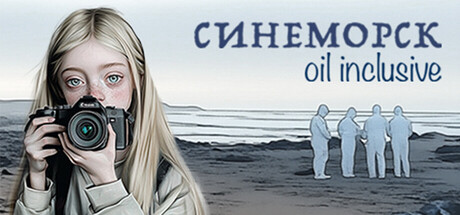
Artificial intelligence was used to create the game. With the help of ChatGPT, we were able to analyze and organize several thousand messages from eco-volunteer chat groups, as well as dozens of media articles, podcasts, and vlogs about the spill. All of this was necessary to identify key events, troubling themes, and the moods of people involved in disaster response, and was used by a human author to further develop the plot and dialogue. The images were created using Midjourney. Photos of real landscapes, but not people, were used to generate prompts. The game’s music was generated in Stability AI. The code to adapt the existing game structure to the Ren’py framework was written using Cursor AI.
Some visual assets used in this game, including character artwork, background images, UI-related artwork, and promotional images, were created or enhanced with the assistance of generative AI tools during development.
All AI-assisted assets were reviewed, selected, edited, and integrated by the development team before being included in the final game. The game does not generate AI content in real time during gameplay.
This game includes pre-generated content made with the assistance of generative AI tools, including some visual assets, audio/sound effects, text, localization, and other production materials. AI tools were also used during development to support programming and production workflows. All AI-assisted content included in the game has been manually reviewed and refined by the development team. The game does not generate AI content during gameplay.
This game uses pre-generated AI-assisted assets in some development and marketing materials, including draft visuals, voice work, localization support, and production references. Final content is reviewed and curated by the developer. The game does not generate AI content during gameplay.
The game itself is made entirely by human hands. All in-game art, music, sound design, and writing are created or directed by human authors without generative AI. All gameplay footage shown on this store page is real, captured from the actual game.
Generative AI is used for some marketing materials — including promotional images, social media assets, and capsule art — to support a small independent studio's marketing within budget constraints. These AI-generated images are intended to represent the game's existing hand-made art style.
No AI-generated content is shipped inside the game itself. If Echo Pandemic recovers its development costs, capsule images and marketing material will be replaced with commissioned human work.
Due to the small scale of the project, many visual assets in the current demo were created using AI-assisted image generation tools, with additional manual editing and selection by the developer.
Some assets may be replaced or redrawn in future versions during development.
Character design,character writing, story structure, dialogue, game design, and overall direction were totally created by the developer.
This is a small independent narrative project focused primarily on storytelling and atmosphere.Thank you for playing, reading, and supporting the project.
Some of the in-game 2D textures and visual effects were created using AI-based tools. These elements are modified in terms of art and development throughout the production process to ensure they meet our quality standards and creative vision.
Grok Imagine was used during development to generate environment backgrounds, level assets, and character concept art. All assets have been curated and integrated manually into the 2D engine.
Suno AI was used to compose the atmospheric music tracks and soundtracks for the different realms of the game.
AI tools were used to assist with code generation. All visual art is hand-drawn by the developer. All AI-assisted content has been manually reviewed and refined.
Visual AI assets were used to fasten the development process, with caution and help of art direction to keep the sketch art style consistent and avoid being another AI slop game.
AI tools were used during development to assist in generating custom sound effects, instrumental music assets, and code optimization. The technology was also utilized as a base to pre-fabricate certain background environment elements. However, all character designs and frame-by-frame 2D animations were 100% hand-drawn and manually created by a solo developer.
Some of the current store page artwork and promotional assets were created using generative AI tools during the early development and marketing phase of the project. As an independent project with limited resources, this approach was used to accelerate initial marketing efforts and bring the game to market more quickly.
Generative AI is not used to create gameplay content, player drawings, or user-generated content within the game. The AI-generated marketing assets may be replaced with human-created artwork in future updates as development continues.
The main theme song for Escape From Planet Pan features lyrics by Nob Studio and was composed using Suno AI.
All other assets were created traditionally.
Generative AI was used during development to assist with some visual concept art, store page images, and marketing assets. All AI-assisted content is manually reviewed, edited, and curated by the developer. The game does not include real-time generative AI content.
The music featured in the trailer was composed using generative AI tools.
Crucially, all game characters and animations are entirely hand-drawn and manually animated by the developer.
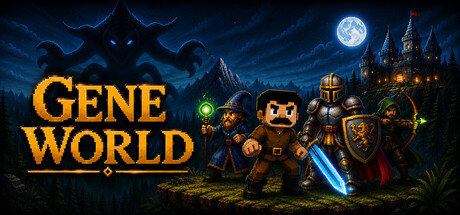
GeneWorld uses generative AI for dynamic NPC interactions and adaptive dialogue systems. NPC responses, quest interactions, trading behavior, and temporary buffs may be generated in real time based on player conversations. All AI-generated content is moderated and restricted from generating inappropriate or harmful content.
During development, we used generative AI tools to assist in creating certain game content. This includes using AI to generate base concepts and visual assets for specific in-game items or backgrounds (which were subsequently refined manually), as well as using AI for multilingual localization and text polishing.
This game uses AI-generated art assets (ComfyUI / Stable Diffusion XL) and music (AceStep). All AI-generated content was created during development and is fixed in the final build. No AI APIs are
called at runtime.
Kıvam's core — its ebru (paper marbling) simulation, gameplay, design, and direction — is authored by the developer. Generative AI tools were used as assistants in producing some supporting content: store page and marketing imagery, certain visual assets, and drafting/editing of written text, which was then reviewed and finalized by the developer. No AI-generated voice or music is used. The marbling you create in-game is produced by the game's own simulation, not by generative AI.
Character portraits and story illustrations received an AI enhancement pass based on the original hand-painted artwork. Each image was then refined with a manual hand-drawn pass.
Some artwork, text drafts, and development materials were assisted by generative AI tools and then reviewed or edited by the developer. Core gameplay rules, player progress, purchases, and account-related decisions are not generated by AI during play.
We translated the game in German and French ourselves. For Japanese, Simplified Chinese, Spanish and Portuguese (BR), we used AI. If you see any translation mistakes, feel free to let us know!
Assistance in programming ( the programmer can't remember Godot's _unhandled_input(event) syntax even after 5 projects… ). Assistance with text and minor graphic patching.
Generative AI was used as a development assistant for pre-release asset iteration, writing support, localization drafts, ideation and productivity tasks. Some visual assets and draft text/assets may have been assisted or iterated with generative AI before being reviewed and integrated into the game. This content is static and does not generate new content at runtime. The game does not use live generative AI to create content during gameplay. No player prompts are sent to an AI service at runtime. AI-assisted material is reviewed manually before inclusion. It is adjusted to match the game's style, naming, tone and technical requirements, and content that would be inappropriate, infringing or inconsistent with the project is not intentionally included.
Portions of in-game art assets were initially generated with generative AI, followed by extensive manual hand-drawn revision, restructuring and detailed painting by the developer. Game text and localization drafts were AI-assisted then fully proofread and revised manually. All background music and sound effects are licensed free commercial assets downloaded from authorized resource websites; no generative AI was used for audio production. Source code was written with coding assistant tools.
All of your conversations with the “manita” character are generated by artificial intelligence. The design, UI/UX, and character design are not generated by artificial intelligenc
Yes, some environment elements and decorative assets in the game were created with the assistance of generative AI. All AI-generated content has been manually edited and polished to ensure it fits the game's overall art style and to guarantee the absence of any prohibited content.
Artwork, Sound design, Music, Gameplay and Programming are human-created. AI was used to pre-plan artwork, editing/extending images, generating background sounds and music, and to speed up coding.
AI images are being temporarily used in the Steam Store presence and will be removed and replaced before game's release.
Generative AI was used to assist in the creation of some music and visual assets. All content is produced using licensed tools and reviewed by the development team to avoid copyright issues.
This game uses pre-generated AI-assisted music created during development. Generative AI tools were also used as coding assistance during development. The game does not generate AI content live during gameplay.
Generative AI was used only for the creation of certain background music tracks. Story, game design, programming, character artwork, and other visual assets were created by the developer.
This game uses pre-generated AI-assisted content for some visual assets, promotional images, localization support, and marketing materials. All AI-assisted content has been reviewed and edited by the developer before inclusion in the game or store page.
Artificial intelligence was not used in writing the game’s story; the writing process was completed by the developer over approximately 4 months.
AI-assisted tools were used during portions of concept exploration and creative iteration for certain visual and writing workflows.
All game systems, gameplay implementation, worldbuilding, design direction, editing, integration, UI construction, narrative structure, and final production decisions are created and directed by the developer.
AI tools are used as part of an assisted creative workflow rather than as fully autonomous content generation.
Artificial intelligence was used to create the game. With the help of ChatGPT, we were able to analyze and organize several thousand messages from eco-volunteer chat groups, as well as dozens of media articles, podcasts, and vlogs about the spill. All of this was necessary to identify key events, troubling themes, and the moods of people involved in disaster response, and was used by a human author to further develop the plot and dialogue. The images were created using Midjourney. Photos of real landscapes, but not people, were used to generate prompts. The game’s music was generated in Stability AI. The code to adapt the existing game structure to the Ren’py framework was written using Cursor AI.
Some visual assets used in this game, including character artwork, background images, UI-related artwork, and promotional images, were created or enhanced with the assistance of generative AI tools during development.
All AI-assisted assets were reviewed, selected, edited, and integrated by the development team before being included in the final game. The game does not generate AI content in real time during gameplay.
This game includes pre-generated content made with the assistance of generative AI tools, including some visual assets, audio/sound effects, text, localization, and other production materials. AI tools were also used during development to support programming and production workflows. All AI-assisted content included in the game has been manually reviewed and refined by the development team. The game does not generate AI content during gameplay.
This game uses pre-generated AI-assisted assets in some development and marketing materials, including draft visuals, voice work, localization support, and production references. Final content is reviewed and curated by the developer. The game does not generate AI content during gameplay.
The game itself is made entirely by human hands. All in-game art, music, sound design, and writing are created or directed by human authors without generative AI. All gameplay footage shown on this store page is real, captured from the actual game.
Generative AI is used for some marketing materials — including promotional images, social media assets, and capsule art — to support a small independent studio's marketing within budget constraints. These AI-generated images are intended to represent the game's existing hand-made art style.
No AI-generated content is shipped inside the game itself. If Echo Pandemic recovers its development costs, capsule images and marketing material will be replaced with commissioned human work.
Due to the small scale of the project, many visual assets in the current demo were created using AI-assisted image generation tools, with additional manual editing and selection by the developer.
Some assets may be replaced or redrawn in future versions during development.
Character design,character writing, story structure, dialogue, game design, and overall direction were totally created by the developer.
This is a small independent narrative project focused primarily on storytelling and atmosphere.Thank you for playing, reading, and supporting the project.
Some of the in-game 2D textures and visual effects were created using AI-based tools. These elements are modified in terms of art and development throughout the production process to ensure they meet our quality standards and creative vision.
Grok Imagine was used during development to generate environment backgrounds, level assets, and character concept art. All assets have been curated and integrated manually into the 2D engine.
Suno AI was used to compose the atmospheric music tracks and soundtracks for the different realms of the game.
AI tools were used to assist with code generation. All visual art is hand-drawn by the developer. All AI-assisted content has been manually reviewed and refined.
Visual AI assets were used to fasten the development process, with caution and help of art direction to keep the sketch art style consistent and avoid being another AI slop game.
AI tools were used during development to assist in generating custom sound effects, instrumental music assets, and code optimization. The technology was also utilized as a base to pre-fabricate certain background environment elements. However, all character designs and frame-by-frame 2D animations were 100% hand-drawn and manually created by a solo developer.
Some of the current store page artwork and promotional assets were created using generative AI tools during the early development and marketing phase of the project. As an independent project with limited resources, this approach was used to accelerate initial marketing efforts and bring the game to market more quickly.
Generative AI is not used to create gameplay content, player drawings, or user-generated content within the game. The AI-generated marketing assets may be replaced with human-created artwork in future updates as development continues.
The main theme song for Escape From Planet Pan features lyrics by Nob Studio and was composed using Suno AI.
All other assets were created traditionally.
Generative AI was used during development to assist with some visual concept art, store page images, and marketing assets. All AI-assisted content is manually reviewed, edited, and curated by the developer. The game does not include real-time generative AI content.
The music featured in the trailer was composed using generative AI tools.
Crucially, all game characters and animations are entirely hand-drawn and manually animated by the developer.
GeneWorld uses generative AI for dynamic NPC interactions and adaptive dialogue systems. NPC responses, quest interactions, trading behavior, and temporary buffs may be generated in real time based on player conversations. All AI-generated content is moderated and restricted from generating inappropriate or harmful content.