Public Steam disclosure research25,394 disclosures tracked
Where do games disclose AI use?
Search developers’ Steam disclosures, compare classified AI use across
games, and follow recorded changes.
This index adds cross-game classifications and statistics to
statements published on individual store pages.
Groups reflect automatic analysis of public disclosures; mature records are excluded. These counts do not measure AI use across all of Steam.
Missing or unclear statements cannot establish whether a game uses AI.
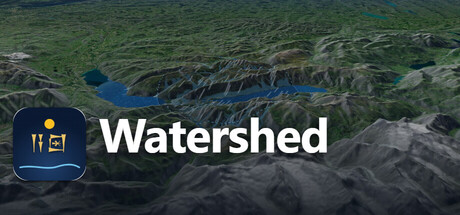
Parts of the source code and some store and marketing text were written with help from AI coding assistants during development. All terrain, water simulation, satellite imagery and map data come from real geographic datasets. No AI-generated artwork, audio or narrative ships with the app, and nothing is generated during play.
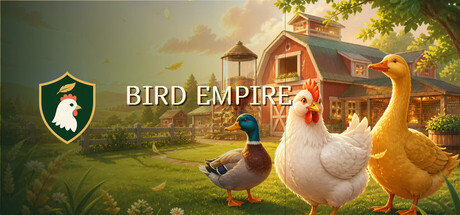
This game includes pre-generated AI-assisted artwork used in store and marketing materials and in some in-game 2D visuals. All such content was created and reviewed before release. The game does not use generative AI during gameplay and does not accept or transmit player prompts.
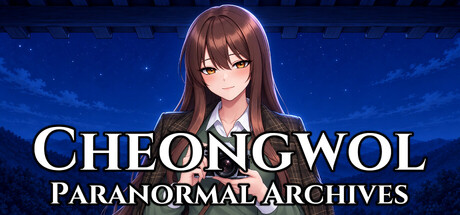
The game's visuals (backgrounds, character portraits, event CGs, and UI) were created with generative AI, then reviewed by hand and retouched where needed. The BGM and some sound effects were also generated with AI, and AI is used for translations. The original story and dialogue were written entirely by the author.
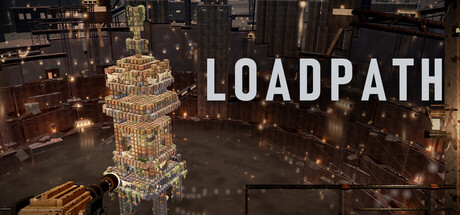
Generative AI tools assisted with LOADPATH’s development and the creation of game content, under the developer’s creative direction. The game was shaped through extensive iteration, selection and hands-on playtesting. The promotional trailer also uses AI-generated narration and music. All AI-generated content is prepared in advance; no generative AI runs during gameplay.
As a solo developer, generative AI tools were used to assist in creating promotional capsule artwork and achievement icons. All gameplay mechanics, coding, and game design were created directly by the developer.
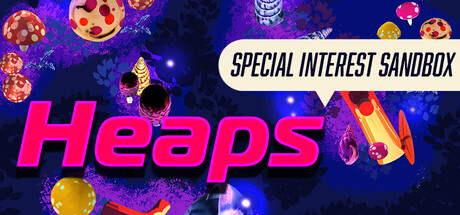
Software engineering is primarily by hand in C# and python, with local SLM's, run via Ollama, and occasional cloud-based LLM's used to research knowledge deficits and prototype code snippets for specific systems that map to those deficits. Any AI-generated code was reviewed line-by-line, hand-integrated and heavily modified.
The application requires local file access to files selected by the player from a standard operating system folder browser with permissions. It scans the user's system via the psutil and gputil standard python packages to ascertain the specifications of the user's system to select a model that will match their system's performance profile.
Pinocchio and Hunyuan were used to generate 3D models of mushrooms from 19th century public domain botanical illustrations, and the integrated SLM model is used to generate text labels and summaries at runtime.
The application has absolutely no chat interface. An SLM is integrated locally as a black-box system with robust system prompts to generate structured output in the form of JSON based on the player's file inputs. The JSON is consumed by the game to generate maps and levels.
Additional Specifications & Technical Notes:
- A localhost python server is back-compiled to a C executable and deployed with the main executable and invoked from its application domain to host the local model.
- The local model is downloaded from the Internet via Ollama.
- The end-user needs to have the Ollama client installed to run the model locally.
- The python server has robust internal system prompts to prevent violation of the Terms of Service on the Steam and Itch platforms regarding disallowed content.
- The python server is run from the main executable's application domain, in the same directory structure.
- The python server and main executable communicate via a local socket connection via IANA-approved port numbers according to RFC 6335. Ports are tested and iterated to ensure that they are available on the local system. If an IANA-approved port listed in RFC 6335 is not available, the application will not run.
Heaps adheres to the ARTS standard for AI labeling. A full accounting of our use of AI in this game can be found at:
droidknot.com/ARTS/Heaps_SIS_082726.pdf
This game incorporates AI assistance in its development. The overall vision and execution remain that of the developer.
All language translations were done using Claude. If there are any mistranslations, please contact me to fix them!
Generative AI was used during development to help create a limited number of assets, such as some 2D art, textures. All AI-assisted content was reviewed and edited by our team.
"Generative AI was used to create the game's cover art and the free scenario assets (such as character images). We plan to replace these art resources as soon as possible."
AI-assisted coding and editor automation tools were used during development for workflow efficiency.
Most of the art was hand-made by me. The remaining art generated by AI tools like icons or textures will be swapped to human-made art in the near future.
AI translation tools were used to create localization drafts, that are being reviewed by speakers of the language.
Regarding programming, this game was partially coded and translated using AI; however, AI is used only for marketing art. The game's international artwork is hand-drawn and vectorized based on unofficial rock band logos.
This game contains pre-generated AI content. Some collectible item models and several furniture and decor props were created with AI image-to-3D and text-to-3D generation, then optimized and placed by the developer. Some surface textures and decorative images were AI-generated. The store capsule and library artwork, logo and icons were created with AI image generation using the game's own screenshots as reference. In-game and store text, including translations, was drafted with AI assistance and edited by the developer. Gameplay screenshots are real in-game captures without AI editing. The game does not generate AI content or connect to AI services while running.
Generative AI was used to assist with localization and to create some sprites included in this demo. We plan to replace these icons with original artwork for the full release.
Generative AI tools were used during development to create some pre-generated 2D artwork, including item icons, characters and environments, as well as store and marketing materials, including the cinematic teaser. These assets were selected, prepared and integrated by the development team. The game does not generate content using AI during gameplay or connect to external AI services.
We don’t particularly like using AI.
Unfortunately, we are a small indie studio made of programmers and designers who are currently somewhere between “making a game” and “having existential crises”.
So, for now, we use AI to help us with some parts of our daily work and to bring some of our music, ideas, and inspirations to life.
But don’t worry, we haven’t handed over the steering wheel to the robots just yet.
Our project, its identity, and its originality are still created and directed by us. AI is simply one of the tools helping us survive the development process while our budget is busy pretending it doesn’t exist.
As soon as we have the resources to replace AI with our own human made work, we absolutely intend to do so.
Until then, we’re just a bunch of indie developers trying to make something cool before our refrigerators become purely decorative objects.
AI coding tools help write and maintain the game's plugin code, and parts of the in-game text like NPC combinatorial string banks and translations were written with AI assistance, all being reviewed manully by the developer.
The store page texts and the pixel-art game logo and icon (also used in the game) were created with the help of an AI assistant and reviewed by the developer. Screenshots and capsule backgrounds are rendered directly from the game.
Generative AI tools were used to assist in creating some pre-generated 3D models, textures, visual assets, and promotional artwork. All content is generated before gameplay, reviewed by the developer, and integrated into the finished game. No generative AI is used live during gameplay.
AI tools were used during development to create pre-made content such as images, voices, music and 3D model drafts. Everything was selected, edited and integrated into the game by the developer. The game does not generate any content with AI while you play and does not connect to AI services.
The English and German localization of in-game text was generated with the help of an AI language model (Claude) and reviewed by the developer. Store page texts were also drafted with AI assistance. All art, music and sound are made by humans or taken from licensed CC0/CC BY asset packs. No AI content is generated live while playing.
The developer used generative AI tools to help create some of the game's artwork and 3D models, sound effects and music, and text, including the store description and translations. All AI-assisted content was reviewed and edited by the developer before being included. The game does not generate any AI content while you play.
Character illustrations, backgrounds, cutscene videos, voice acting and music were created with generative AI tools, then selected and edited by our team. The story, dialogue and game systems were written and designed by the developer with AI assistance. No content is generated by AI during gameplay.
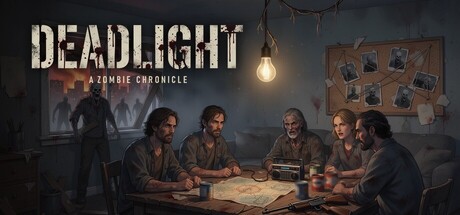
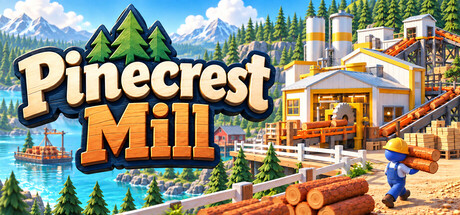
Some of Deadlight's artwork was created with the help of generative AI. This includes the key art, the store and library capsules, and the ten location paintings on the expedition screen. The images were generated with a locally run image model, then chosen, cleaned up and colour-graded by hand. The store page text and its translations were drafted with AI assistance and edited by the developer. No content is generated by AI while you play.
The character art, idle animations, icons and store images were created with locally run AI image tools, then selected and retouched by hand. Nothing is generated by AI while the game runs.
Generative AI tools were used to assist with the creation of some game and promotional content. All final content was reviewed and approved by the developer.
AI Generated Content Disclosure
AI tools were used to assist in drafting the written text of this game (in-game explanations, codex entries, the four language versions of the interface, and store page descriptions); all such text was reviewed and edited by the developer. All artwork is procedurally rendered by shaders written by the developer, the store capsule artwork was commissioned from a human artist, and all sound is synthesised by the developer's own code. The game does not use AI to generate any content at runtime.
Some sound effects and music were created with AI audio tools.
AI tools assisted in writing the game's code and some of its text (descriptions, hints and story notes), all reviewed and edited by the developer. The artwork is drawn procedurally by the game itself, not AI-generated, and no AI content is generated during gameplay.
Generative AI tools were used during development to create images and music. These are pre-generated assets included in the game and/or its store and promotional materials. The game does not generate AI content during gameplay or connect to external AI services while playing.
Generative AI tools assisted the creation of pre-generated visual assets, including artwork and textures used in the game, promotional art, and store descriptions and localization. These assets and texts are reviewed and integrated during development. The game does not generate AI content during gameplay or connect to an external AI service.
Use of Generative AI & AI Credits
This game uses AI to generate in-game dialogue text and small gameplay extension modules ("evolution modules"). AI features consume AI credits.
You can get AI credits via small in-game purchases processed by Steam, or connect your own AI service at no extra cost — the settings menu lets you enter a custom API URL and key (any OpenAI-compatible endpoint), in which case usage is billed directly by your provider and no credits are consumed.
AI-generated code runs in a strictly sandboxed environment with a limited set of game APIs, and every output must pass the game's validation and test gates before taking effect. AI features can be disabled at any time.
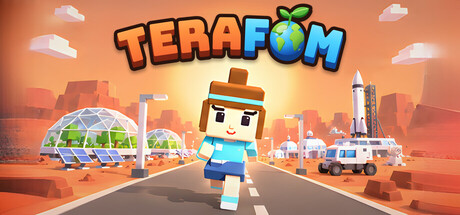
Terafom was developed with the help of generative AI tools. Some of the artwork, 3D models, in-game text and translations, voice, music and sound effects were created with AI assistance and reviewed by the developer. During gameplay, the in-game AI helper character answers players' questions about the game using third-party AI services (Google Gemini, DeepSeek, OpenAI), and its answers are spoken with an AI-generated voice.
AI helped with grammatical corrections for in-game text, which were then carefully reviewed and adjusted by hand.
We only consider AI to be a supportive tool. Every detail is meticulously crafted with human intent, as our creative process is still firmly anchored in manual craftsmanship.
Steam store and library artwork, including capsule images, the logo and icons, was created using generative AI. Gameplay screenshots were captured directly from the game.
Some of our store and marketing artwork (such as capsule images, library artwork and event banners) was created with the help of AI image-generation tools. Our art team used the game's own characters and hand-drawn art as the basis, and edited, reviewed and finalized every image before release.
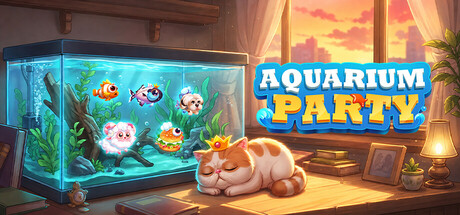
In the game, the high-resolution aquarium backgrounds used in the optional Zen (immersive) mode were produced by upscaling our original hand-drawn backgrounds with an AI super-resolution tool. No new artwork was generated; the upscaled images were reviewed by our team, and the standard backgrounds remain the original art.
All gameplay, characters, fish designs, story text and music were created by our team or licensed from human creators.
Parts of the source code and some store and marketing text were written with help from AI coding assistants during development. All terrain, water simulation, satellite imagery and map data come from real geographic datasets. No AI-generated artwork, audio or narrative ships with the app, and nothing is generated during play.
This game includes pre-generated AI-assisted artwork used in store and marketing materials and in some in-game 2D visuals. All such content was created and reviewed before release. The game does not use generative AI during gameplay and does not accept or transmit player prompts.
The game's visuals (backgrounds, character portraits, event CGs, and UI) were created with generative AI, then reviewed by hand and retouched where needed. The BGM and some sound effects were also generated with AI, and AI is used for translations. The original story and dialogue were written entirely by the author.
Generative AI tools assisted with LOADPATH’s development and the creation of game content, under the developer’s creative direction. The game was shaped through extensive iteration, selection and hands-on playtesting. The promotional trailer also uses AI-generated narration and music. All AI-generated content is prepared in advance; no generative AI runs during gameplay.
As a solo developer, generative AI tools were used to assist in creating promotional capsule artwork and achievement icons. All gameplay mechanics, coding, and game design were created directly by the developer.
Software engineering is primarily by hand in C# and python, with local SLM's, run via Ollama, and occasional cloud-based LLM's used to research knowledge deficits and prototype code snippets for specific systems that map to those deficits. Any AI-generated code was reviewed line-by-line, hand-integrated and heavily modified.
The application requires local file access to files selected by the player from a standard operating system folder browser with permissions. It scans the user's system via the psutil and gputil standard python packages to ascertain the specifications of the user's system to select a model that will match their system's performance profile.
Pinocchio and Hunyuan were used to generate 3D models of mushrooms from 19th century public domain botanical illustrations, and the integrated SLM model is used to generate text labels and summaries at runtime.
The application has absolutely no chat interface. An SLM is integrated locally as a black-box system with robust system prompts to generate structured output in the form of JSON based on the player's file inputs. The JSON is consumed by the game to generate maps and levels.
Additional Specifications & Technical Notes:
- A localhost python server is back-compiled to a C executable and deployed with the main executable and invoked from its application domain to host the local model.
- The local model is downloaded from the Internet via Ollama.
- The end-user needs to have the Ollama client installed to run the model locally.
- The python server has robust internal system prompts to prevent violation of the Terms of Service on the Steam and Itch platforms regarding disallowed content.
- The python server is run from the main executable's application domain, in the same directory structure.
- The python server and main executable communicate via a local socket connection via IANA-approved port numbers according to RFC 6335. Ports are tested and iterated to ensure that they are available on the local system. If an IANA-approved port listed in RFC 6335 is not available, the application will not run.
Heaps adheres to the ARTS standard for AI labeling. A full accounting of our use of AI in this game can be found at:
droidknot.com/ARTS/Heaps_SIS_082726.pdf
This game incorporates AI assistance in its development. The overall vision and execution remain that of the developer.
All language translations were done using Claude. If there are any mistranslations, please contact me to fix them!
Generative AI was used during development to help create a limited number of assets, such as some 2D art, textures. All AI-assisted content was reviewed and edited by our team.
"Generative AI was used to create the game's cover art and the free scenario assets (such as character images). We plan to replace these art resources as soon as possible."
AI-assisted coding and editor automation tools were used during development for workflow efficiency.
Most of the art was hand-made by me. The remaining art generated by AI tools like icons or textures will be swapped to human-made art in the near future.
AI translation tools were used to create localization drafts, that are being reviewed by speakers of the language.
Regarding programming, this game was partially coded and translated using AI; however, AI is used only for marketing art. The game's international artwork is hand-drawn and vectorized based on unofficial rock band logos.
This game contains pre-generated AI content. Some collectible item models and several furniture and decor props were created with AI image-to-3D and text-to-3D generation, then optimized and placed by the developer. Some surface textures and decorative images were AI-generated. The store capsule and library artwork, logo and icons were created with AI image generation using the game's own screenshots as reference. In-game and store text, including translations, was drafted with AI assistance and edited by the developer. Gameplay screenshots are real in-game captures without AI editing. The game does not generate AI content or connect to AI services while running.
Generative AI was used to assist with localization and to create some sprites included in this demo. We plan to replace these icons with original artwork for the full release.
Generative AI tools were used during development to create some pre-generated 2D artwork, including item icons, characters and environments, as well as store and marketing materials, including the cinematic teaser. These assets were selected, prepared and integrated by the development team. The game does not generate content using AI during gameplay or connect to external AI services.
We don’t particularly like using AI.
Unfortunately, we are a small indie studio made of programmers and designers who are currently somewhere between “making a game” and “having existential crises”.
So, for now, we use AI to help us with some parts of our daily work and to bring some of our music, ideas, and inspirations to life.
But don’t worry, we haven’t handed over the steering wheel to the robots just yet.
Our project, its identity, and its originality are still created and directed by us. AI is simply one of the tools helping us survive the development process while our budget is busy pretending it doesn’t exist.
As soon as we have the resources to replace AI with our own human made work, we absolutely intend to do so.
Until then, we’re just a bunch of indie developers trying to make something cool before our refrigerators become purely decorative objects.
AI coding tools help write and maintain the game's plugin code, and parts of the in-game text like NPC combinatorial string banks and translations were written with AI assistance, all being reviewed manully by the developer.
The store page texts and the pixel-art game logo and icon (also used in the game) were created with the help of an AI assistant and reviewed by the developer. Screenshots and capsule backgrounds are rendered directly from the game.
Generative AI tools were used to assist in creating some pre-generated 3D models, textures, visual assets, and promotional artwork. All content is generated before gameplay, reviewed by the developer, and integrated into the finished game. No generative AI is used live during gameplay.
AI tools were used during development to create pre-made content such as images, voices, music and 3D model drafts. Everything was selected, edited and integrated into the game by the developer. The game does not generate any content with AI while you play and does not connect to AI services.
The English and German localization of in-game text was generated with the help of an AI language model (Claude) and reviewed by the developer. Store page texts were also drafted with AI assistance. All art, music and sound are made by humans or taken from licensed CC0/CC BY asset packs. No AI content is generated live while playing.
The developer used generative AI tools to help create some of the game's artwork and 3D models, sound effects and music, and text, including the store description and translations. All AI-assisted content was reviewed and edited by the developer before being included. The game does not generate any AI content while you play.
Character illustrations, backgrounds, cutscene videos, voice acting and music were created with generative AI tools, then selected and edited by our team. The story, dialogue and game systems were written and designed by the developer with AI assistance. No content is generated by AI during gameplay.
Some of Deadlight's artwork was created with the help of generative AI. This includes the key art, the store and library capsules, and the ten location paintings on the expedition screen. The images were generated with a locally run image model, then chosen, cleaned up and colour-graded by hand. The store page text and its translations were drafted with AI assistance and edited by the developer. No content is generated by AI while you play.
The character art, idle animations, icons and store images were created with locally run AI image tools, then selected and retouched by hand. Nothing is generated by AI while the game runs.
Generative AI tools were used to assist with the creation of some game and promotional content. All final content was reviewed and approved by the developer.
AI Generated Content Disclosure
AI tools were used to assist in drafting the written text of this game (in-game explanations, codex entries, the four language versions of the interface, and store page descriptions); all such text was reviewed and edited by the developer. All artwork is procedurally rendered by shaders written by the developer, the store capsule artwork was commissioned from a human artist, and all sound is synthesised by the developer's own code. The game does not use AI to generate any content at runtime.
Some sound effects and music were created with AI audio tools.
AI tools assisted in writing the game's code and some of its text (descriptions, hints and story notes), all reviewed and edited by the developer. The artwork is drawn procedurally by the game itself, not AI-generated, and no AI content is generated during gameplay.
Generative AI tools were used during development to create images and music. These are pre-generated assets included in the game and/or its store and promotional materials. The game does not generate AI content during gameplay or connect to external AI services while playing.
Generative AI tools assisted the creation of pre-generated visual assets, including artwork and textures used in the game, promotional art, and store descriptions and localization. These assets and texts are reviewed and integrated during development. The game does not generate AI content during gameplay or connect to an external AI service.
Use of Generative AI & AI Credits
This game uses AI to generate in-game dialogue text and small gameplay extension modules ("evolution modules"). AI features consume AI credits.
You can get AI credits via small in-game purchases processed by Steam, or connect your own AI service at no extra cost — the settings menu lets you enter a custom API URL and key (any OpenAI-compatible endpoint), in which case usage is billed directly by your provider and no credits are consumed.
AI-generated code runs in a strictly sandboxed environment with a limited set of game APIs, and every output must pass the game's validation and test gates before taking effect. AI features can be disabled at any time.
Terafom was developed with the help of generative AI tools. Some of the artwork, 3D models, in-game text and translations, voice, music and sound effects were created with AI assistance and reviewed by the developer. During gameplay, the in-game AI helper character answers players' questions about the game using third-party AI services (Google Gemini, DeepSeek, OpenAI), and its answers are spoken with an AI-generated voice.
AI helped with grammatical corrections for in-game text, which were then carefully reviewed and adjusted by hand.
We only consider AI to be a supportive tool. Every detail is meticulously crafted with human intent, as our creative process is still firmly anchored in manual craftsmanship.
Steam store and library artwork, including capsule images, the logo and icons, was created using generative AI. Gameplay screenshots were captured directly from the game.
Some of our store and marketing artwork (such as capsule images, library artwork and event banners) was created with the help of AI image-generation tools. Our art team used the game's own characters and hand-drawn art as the basis, and edited, reviewed and finalized every image before release.
In the game, the high-resolution aquarium backgrounds used in the optional Zen (immersive) mode were produced by upscaling our original hand-drawn backgrounds with an AI super-resolution tool. No new artwork was generated; the upscaled images were reviewed by our team, and the standard backgrounds remain the original art.
All gameplay, characters, fish designs, story text and music were created by our team or licensed from human creators.