Public Steam disclosure research25,706 disclosures tracked
Where do games disclose AI use?
Search developers’ Steam disclosures, compare classified AI use across
games, and follow recorded changes.
This index adds cross-game classifications and statistics to
statements published on individual store pages.
Groups reflect automatic analysis of public disclosures; mature records are excluded. These counts do not measure AI use across all of Steam.
Missing or unclear statements cannot establish whether a game uses AI.
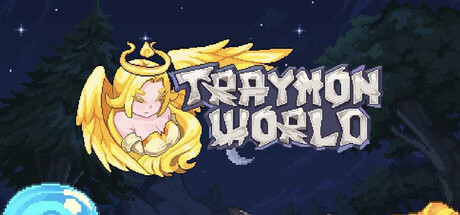
Generative AI was used to translate (localize) the original Korean text into other languages. The original text was written by the development team, and the AI translations were reviewed before use.
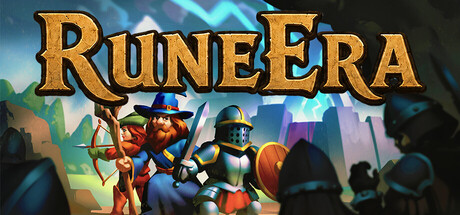
Generative AI tools were used during development to assist with portions of selected sprite artwork and to create some sound effects and background music. All AI-assisted content was generated before release, reviewed and curated by the developer, and edited or integrated into the final game as appropriate. RuneEra does not use AI to generate content while the game is running.
This game makes limited, supplementary use of generative AI tools during development. The primary uses are programming assistance (such as debugging), certain image and audio assets, and assistance with translating text into English.
Generated image and audio assets are not used as-is. The development team reviews their content and makes additions, revisions, edits, and other adjustments to ensure that they are appropriately refined and fit the game.
For text translated with the assistance of generative AI, the development team reviews the context and content and makes any necessary revisions before using it in the game. Please note that generative AI does not generate any game content during gameplay.
Some sprites started as AI-generated references before being rebuilt in the game's palette and resolution. All English writing is my own; the other nine languages are machine translated. No AI runs in the game itself. Nothing is generated while you play, and it never connects to an AI service.
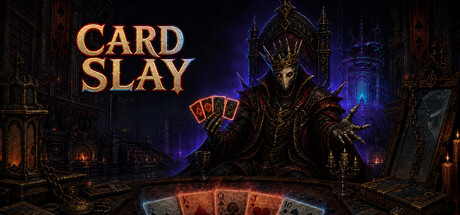
Some of Card Slay's pre-generated content was created with the help of generative AI tools and then reviewed and finished by hand. No content is generated by AI during gameplay.
This game's music was created with the assistance of generative AI. The interface and Enemy Guide text were also translated into multiple languages with AI assistance, alongside human review. No AI-generated artwork or gameplay code ships in the final game.
All 2D artwork in this game (characters, monsters, environments, icons) and the store/marketing images were pre-generated using AI image tools, then curated, edited, and integrated by the developer. Music was pre-generated with AI music tools; sound effects were pre-generated locally with an open-source AI audio model. Localization into some languages was produced with AI assistance and reviewed by the developer. The game does not generate any content with AI at runtime — all AI-generated content is pre-rendered and ships as fixed assets.
We use generative AI for text only: writing this store page and translating the game's in-game text into the supported languages. Everything else, including all art, animation and audio, is made by hand, and no content is generated while you play.
Some pre-rendered assets were created with generative AI tools and then curated, edited and integrated by hand: music tracks and their cover art, some sound effects and portions of 2d artwork (weapon, prop, and enemy sprites.) All generated content was reviewed by the developer before inclusion. No content is AI-generated at runtime.
AI (WAN 2.2) was used to help generate idle animation frames from 100% original, human-made art. All animations were reviewed and curated by the developer before being included in the game.
Some pre-generated visual assets used in Roulettegeddon, including portions of promotional artwork and certain in-game visual elements, were created or refined with the assistance of generative AI. The game's gameplay, mechanics, and player progression do not rely on AI-generated content during play.
Some 2D artwork shipping in this game was created with the assistance of generative AI image tools, then edited by hand before inclusion. This applies to a portion of card illustrations and UI decorative elements. All such assets were checked for quality and rights compliance prior to shipping.
This game does not generate any content with AI at runtime. The computer opponent is a conventional rules-based system, not a generative AI model.
Loop 9 uses generative AI to power text-only dialogue with Dragojlo, a fictional in-game coworker. Player-written messages and limited game-state context are sent through our backend to OpenAI to generate brief in-character replies. Some store marketing artwork was created with AI assistance and reviewed and edited by the developer. Player messages and generated replies are not shared with other players.
The in-game videos were created using AI tools. All dialogue writing, choices, characters, environments, game systems, minigames, UI design, and programming were handcrafted by the development team.
AI was primarily used in two sections of the game. To aid and assist with turning 2d sprites that were created into animated variations of them.
Steam store page pictures use AI to create variants of my logo. The background itself is AI the logo was designed by me and AI was used to adjust it in the photo.
A small number of textures in this game were generated with the assistance of AI tools. These are placeholders intended to be replaced with hand-made assets in future updates. As for the rest of the assets, they were hand made using 3D modelling and texturing software.
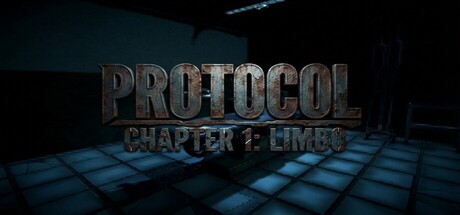
Generative AI tools were used during the development of Protocol as development assistance. AI was used to help with brainstorming, programming assistance, troubleshooting, and other development-related tasks. The final game content was reviewed, edited, and implemented by the developer.
The game is developed entirely by a solo developer. AI has therefore only been leveraged as a tool for productivity and efficiency - the overall game is fully imagined, designed, and brought together by the developer.
The game is primarily developed using Houdini, VEX and Godot. Generative AI assists with concept/reference artwork, initial 3D asset generation, and programming. Assets are further processed, optimized, rigged and animated in Houdini before integration into the game.
Generative AI was used to create selected store and library artwork, music, and sound-effect source material. The outputs were curated and edited by the developer before inclusion. No generative AI runs during gameplay, and players cannot generate AI content.
This game includes a small amount of generative AI content used only for optional tutorial and demonstration materials. These pre‑generated, G‑rated assets illustrate how the game’s IN‑OUT‑based timing loop works. They do not appear in normal gameplay and do not influence any game systems. All core mechanics, visuals, audio, and interactive content are fully handcrafted and do not use AI generation during play.
Standard C++ game code, written during development with the assistance of an AI programming assistant, used as a pair-programming tool. This includes gameplay systems (crafting, inventory, world simulation), rendering and UI code, and development tooling. It is ordinary, static game logic.
AI assistance was used only during development, directed by myself through specific requests, with every change reviewed, tested, and committed to version control by myself.
The shipped game contains no AI models and does not execute or generate any code or content via AI at runtime. The game is a fully offline, single-player experience.
AI was used to assist with writing the game source code.
All visual assets are handmade pixel art by the author.
All audio assets are licensed from 3rd party sample banks.
Generative AI was used for programming assistance and to create some BGM. The generated music was edited and remastered by the developer. All visual assets were created manually without generative AI. No live-generated AI is used during gameplay.
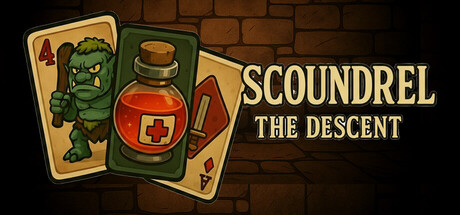
Some of the artwork in Scoundrel: The Descent, including the illustrated card art and background images, was created with the help of generative AI tools and then reviewed and edited by hand. No AI-generated content is produced while you play. If you would rather not see it, Settings includes a "No AI art" option that hides the card illustrations and shows only suit, rank, and frame.
There is no AI-generated art or audio anywhere in this game. Every sprite, animation and character design is hand-drawn by me. The game has no audio at all, and the music in the trailer is my own work too. Nothing is generated while the game runs, and it never connects to an AI service.
AI was used to help with text, in three places.
The store page description and short description, in all 11 languages.
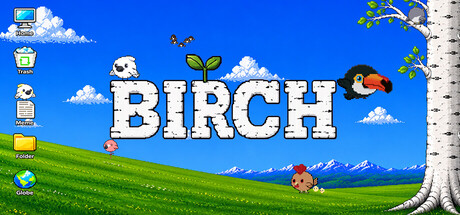
Translating the interface labels into the 10 languages other than English. There are only 24 strings in the whole game and no prose of any kind: 11 are labels like "Clear all" and "Cancel", and the other 13 are bird names, which are the real common names of each species, looked up per language rather than made up.
Some of our Steam community and marketing posts.
Chinese (both) I checked myself, and Japanese was checked at N2. Korean, Spanish, Russian, Brazilian Portuguese and German have not been checked by a native speaker.
Generative AI was used to create portions of the promotional trailer. The game itself does not contain AI-generated 3D assets; its 3D assets are commercially licensed assets.
SpaceBell was Agentically Engineered! The custom engine, game loop, and the entire process to make the game is documented on the studios' X page. Far from vibed, the game has been in active dev for 2yrs.
Generative AI tools were used during development to assist with creating and refining some pre-generated visual assets and promotional artwork. All AI-assisted content was reviewed before inclusion. The game does not generate AI content during gameplay and does not connect to external AI services.
Generative AI tools were used during development to assist in creating some pre-generated 2D visual assets, including character imagery and certain promotional and store page artwork.
All AI-assisted content is pre-generated, reviewed, selected, and edited by the developer before being included in the game or its marketing materials.
The game does not use live generative AI and no content is generated by AI during gameplay.
Some of the game's 2D artwork, including character, enemy and boss sprites, item icons, and backgrounds, was created using generative AI tools. All such assets were individually reviewed, selected, polished and integrated by the development team.
Our work incorporates commissioned artwork, licensed and publicly available assets, and AI-generated content. Regardless of the source materials used, the final product is the creative expression of our development team.
Generative AI was used during development to assist with coding and the creation of pre-generated visual assets. No AI content is generated during gameplay.
Generative AI was used to translate (localize) the original Korean text into other languages. The original text was written by the development team, and the AI translations were reviewed before use.
Generative AI tools were used during development to assist with portions of selected sprite artwork and to create some sound effects and background music. All AI-assisted content was generated before release, reviewed and curated by the developer, and edited or integrated into the final game as appropriate. RuneEra does not use AI to generate content while the game is running.
This game makes limited, supplementary use of generative AI tools during development. The primary uses are programming assistance (such as debugging), certain image and audio assets, and assistance with translating text into English.
Generated image and audio assets are not used as-is. The development team reviews their content and makes additions, revisions, edits, and other adjustments to ensure that they are appropriately refined and fit the game.
For text translated with the assistance of generative AI, the development team reviews the context and content and makes any necessary revisions before using it in the game. Please note that generative AI does not generate any game content during gameplay.
Some sprites started as AI-generated references before being rebuilt in the game's palette and resolution. All English writing is my own; the other nine languages are machine translated. No AI runs in the game itself. Nothing is generated while you play, and it never connects to an AI service.
Some of Card Slay's pre-generated content was created with the help of generative AI tools and then reviewed and finished by hand. No content is generated by AI during gameplay.
This game's music was created with the assistance of generative AI. The interface and Enemy Guide text were also translated into multiple languages with AI assistance, alongside human review. No AI-generated artwork or gameplay code ships in the final game.
All 2D artwork in this game (characters, monsters, environments, icons) and the store/marketing images were pre-generated using AI image tools, then curated, edited, and integrated by the developer. Music was pre-generated with AI music tools; sound effects were pre-generated locally with an open-source AI audio model. Localization into some languages was produced with AI assistance and reviewed by the developer. The game does not generate any content with AI at runtime — all AI-generated content is pre-rendered and ships as fixed assets.
We use generative AI for text only: writing this store page and translating the game's in-game text into the supported languages. Everything else, including all art, animation and audio, is made by hand, and no content is generated while you play.
Some pre-rendered assets were created with generative AI tools and then curated, edited and integrated by hand: music tracks and their cover art, some sound effects and portions of 2d artwork (weapon, prop, and enemy sprites.) All generated content was reviewed by the developer before inclusion. No content is AI-generated at runtime.
AI (WAN 2.2) was used to help generate idle animation frames from 100% original, human-made art. All animations were reviewed and curated by the developer before being included in the game.
Some pre-generated visual assets used in Roulettegeddon, including portions of promotional artwork and certain in-game visual elements, were created or refined with the assistance of generative AI. The game's gameplay, mechanics, and player progression do not rely on AI-generated content during play.
Some 2D artwork shipping in this game was created with the assistance of generative AI image tools, then edited by hand before inclusion. This applies to a portion of card illustrations and UI decorative elements. All such assets were checked for quality and rights compliance prior to shipping.
This game does not generate any content with AI at runtime. The computer opponent is a conventional rules-based system, not a generative AI model.
Loop 9 uses generative AI to power text-only dialogue with Dragojlo, a fictional in-game coworker. Player-written messages and limited game-state context are sent through our backend to OpenAI to generate brief in-character replies. Some store marketing artwork was created with AI assistance and reviewed and edited by the developer. Player messages and generated replies are not shared with other players.
The in-game videos were created using AI tools. All dialogue writing, choices, characters, environments, game systems, minigames, UI design, and programming were handcrafted by the development team.
AI was primarily used in two sections of the game. To aid and assist with turning 2d sprites that were created into animated variations of them.
Steam store page pictures use AI to create variants of my logo. The background itself is AI the logo was designed by me and AI was used to adjust it in the photo.
A small number of textures in this game were generated with the assistance of AI tools. These are placeholders intended to be replaced with hand-made assets in future updates. As for the rest of the assets, they were hand made using 3D modelling and texturing software.
Generative AI tools were used during the development of Protocol as development assistance. AI was used to help with brainstorming, programming assistance, troubleshooting, and other development-related tasks. The final game content was reviewed, edited, and implemented by the developer.
The game is developed entirely by a solo developer. AI has therefore only been leveraged as a tool for productivity and efficiency - the overall game is fully imagined, designed, and brought together by the developer.
The game is primarily developed using Houdini, VEX and Godot. Generative AI assists with concept/reference artwork, initial 3D asset generation, and programming. Assets are further processed, optimized, rigged and animated in Houdini before integration into the game.
Generative AI was used to create selected store and library artwork, music, and sound-effect source material. The outputs were curated and edited by the developer before inclusion. No generative AI runs during gameplay, and players cannot generate AI content.
This game includes a small amount of generative AI content used only for optional tutorial and demonstration materials. These pre‑generated, G‑rated assets illustrate how the game’s IN‑OUT‑based timing loop works. They do not appear in normal gameplay and do not influence any game systems. All core mechanics, visuals, audio, and interactive content are fully handcrafted and do not use AI generation during play.
Standard C++ game code, written during development with the assistance of an AI programming assistant, used as a pair-programming tool. This includes gameplay systems (crafting, inventory, world simulation), rendering and UI code, and development tooling. It is ordinary, static game logic.
AI assistance was used only during development, directed by myself through specific requests, with every change reviewed, tested, and committed to version control by myself.
The shipped game contains no AI models and does not execute or generate any code or content via AI at runtime. The game is a fully offline, single-player experience.
AI was used to assist with writing the game source code.
All visual assets are handmade pixel art by the author.
All audio assets are licensed from 3rd party sample banks.
Generative AI was used for programming assistance and to create some BGM. The generated music was edited and remastered by the developer. All visual assets were created manually without generative AI. No live-generated AI is used during gameplay.
Some of the artwork in Scoundrel: The Descent, including the illustrated card art and background images, was created with the help of generative AI tools and then reviewed and edited by hand. No AI-generated content is produced while you play. If you would rather not see it, Settings includes a "No AI art" option that hides the card illustrations and shows only suit, rank, and frame.
There is no AI-generated art or audio anywhere in this game. Every sprite, animation and character design is hand-drawn by me. The game has no audio at all, and the music in the trailer is my own work too. Nothing is generated while the game runs, and it never connects to an AI service.
AI was used to help with text, in three places.
The store page description and short description, in all 11 languages.
Translating the interface labels into the 10 languages other than English. There are only 24 strings in the whole game and no prose of any kind: 11 are labels like "Clear all" and "Cancel", and the other 13 are bird names, which are the real common names of each species, looked up per language rather than made up.
Some of our Steam community and marketing posts.
Chinese (both) I checked myself, and Japanese was checked at N2. Korean, Spanish, Russian, Brazilian Portuguese and German have not been checked by a native speaker.
Generative AI was used to create portions of the promotional trailer. The game itself does not contain AI-generated 3D assets; its 3D assets are commercially licensed assets.
SpaceBell was Agentically Engineered! The custom engine, game loop, and the entire process to make the game is documented on the studios' X page. Far from vibed, the game has been in active dev for 2yrs.
Generative AI tools were used during development to assist with creating and refining some pre-generated visual assets and promotional artwork. All AI-assisted content was reviewed before inclusion. The game does not generate AI content during gameplay and does not connect to external AI services.
Generative AI tools were used during development to assist in creating some pre-generated 2D visual assets, including character imagery and certain promotional and store page artwork.
All AI-assisted content is pre-generated, reviewed, selected, and edited by the developer before being included in the game or its marketing materials.
The game does not use live generative AI and no content is generated by AI during gameplay.
Some of the game's 2D artwork, including character, enemy and boss sprites, item icons, and backgrounds, was created using generative AI tools. All such assets were individually reviewed, selected, polished and integrated by the development team.
Our work incorporates commissioned artwork, licensed and publicly available assets, and AI-generated content. Regardless of the source materials used, the final product is the creative expression of our development team.
Generative AI was used during development to assist with coding and the creation of pre-generated visual assets. No AI content is generated during gameplay.