Public Steam disclosure research25,380 disclosures tracked
Where do games disclose AI use?
Search developers’ Steam disclosures, compare classified AI use across
games, and follow recorded changes.
This index adds cross-game classifications and statistics to
statements published on individual store pages.
Groups reflect automatic analysis of public disclosures; mature records are excluded. These counts do not measure AI use across all of Steam.
Missing or unclear statements cannot establish whether a game uses AI.
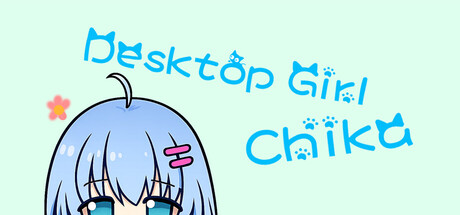
The protagonist in the game is driven by a large language model.Additionally, Chika’s initial character illustration was generated using AI, with subsequent manual modifications and refinements applied thereafter.
This game uses generative AI to create dynamic in-game dialogue (e.g., radio/operator lines) during gameplay. The player does not provide free-form text input; prompts are system-controlled. Outputs are filtered to avoid disallowed content (hate, sexual content, extreme violence, personal data). AI-generated dialogue is thematic and does not imitate real people.
This application includes an AI-powered terminal assistant that generates text responses in real-time based on user queries and commands. The AI assistant helps users understand commands, answer technical questions, and assist with terminal operations. All AI-generated content is created in real-time in response to user input and does not include pre-generated artwork, audio, or narrative content. The AI feature is optional, and users can fully utilize all core terminal functions without using the AI assistant.
AI-Enhanced Flight Immersion ✈️
inFlight uses pre-rendered AI-generated voice content to deliver immersive crew and passenger interactions during your flight.
Audio is produced to ensure consistent quality and reliable performance, while inFlight’s logic determines when each interaction is played based on live simulator data such as flight phase, altitude, weather, aircraft state, and pilot actions.
The result is a structured, realistic sound environment that enhances immersion without automation or scripted gameplay.
Just a more authentic flight atmosphere.
This game includes an AI opponent for practice battles. The opponent is a non-generative, scripted system that adjusts answer speed and accuracy. Generative AI tools were used only to create some pre-rendered marketing/store artwork; no generative AI is used to generate gameplay content at runtime.
This application uses AI technologies for real-time speech recognition, optional translation, and voice synthesis during gameplay.
User voice input is processed locally or via optional AI models to generate text and synthesized speech. No personal data is stored or shared without user consent.
AI is also used for some pre-generated assets such as icons or promotional images.
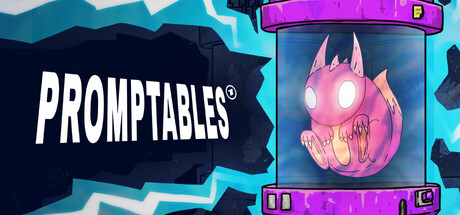
Promptable's core mechanic uses an LLM to evaluate creature's abilities and evaluate what happens in a certain situation when you and your opponent clash.
Players interview AI-generated startup founders through free-form text dialogue. All conversations are single-player and confined to fictional investment scenarios within the game.
This game utilizes Artificial Intelligence to generate dynamic text-based conversations with virtual desktop mascots, allowing them to react primarily to user input. The application supports for now local offline AI (via Ollama) A comprehensive local safety filter is implemented to prevent the generation of harmful or illegal content.
In Coffee Coffin, AI is used behind the scenes to enhance dialogue and audiovisual presentation for the player:
Reactive Dialogue:
AI is primarily used to generate real-time, context-aware dialogue lines between the player and in-game characters (wandering souls). These lines are created within fixed narrative frameworks and safety filters; players do not enter free-form prompts.
Art & Media Asset Generation:
Outside of dialogue, AI is mainly used to create and vary game art assets, including:
Character and illustration variants
Backgrounds and visual effects
Music and ambient soundscapes
Sound effects
Voice-over lines
Short in-game videos / cutscenes
All of these are delivered to the player as finished in-game content. Players never access AI models directly, cannot upload their own media, and do not interact with raw prompts or generation tools.
This game features an optional AI integration known as "The Oracle," which utilizes generative text technology to provide dynamic narrative commentary and sarcastic tactical analysis based on your real-time gameplay actions. This feature is powered by the Gemini API and operates on a "Bring Your Own Key" (BYOK) architecture, meaning users must provide their own personal API Key to enable this specific functionality. The AI generation is strictly cosmetic, text-based, and completely optional, ensuring that the core gameplay experience, mechanics, and balance remain fully intact and enjoyable whether or not the feature is active.
This application uses local AI technologies to enable interactive conversations with your desktop pet:
• Text Generation: The pet uses a local Large Language Model running entirely offline to generate conversational responses.
• Speech Recognition (STT): Voice input is processed locally using AI speech-to-text models to understand what you say to your pet.
• Speech Synthesis (TTS): The pet's voice responses are generated locally using AI text-to-speech models, supporting multiple languages.
All AI processing runs offline on your device. No internet connection required. No AI-generated content was used in creating game assets, artwork, or marketing materials.
How Does It Work? The Human-Led Creative Process
Players will start their game by participating in a time traveling Ritual.
AI doesn't write our story; it writes a story within a world which our creative team has designed. The Ritual takes what you describe and the world we’ve built – its art, biomes, enemy types, magic systems and overarching lore – and turns it into gameplay that’s personal to you.
These aren't AI suggestions; they are human-designed game mechanics and rules that AI must follow. During The Ritual, you describe your hero – their name, and how they look, plus curious nuggets about what they love, hate, are known for etc.
When you describe your hero as "a punk rocker who fears spiders and loves the color red," our platform triggers a process and system instructions that work hand-in-hand with Gemini AI. We send your input along with our own carefully crafted guidelines that tell Gemini exactly how to evaluate content appropriateness.
All storytelling is orchestrated by logic the engineering team designed, not AI deciding what happens next, alongside a story bible and character descriptions, creating assets, in real time, to craft your customized gaming experience.
All character visuals are generated using a custom AI model (LoRA) trained exclusively on our own artwork. It understands how we draw faces, hairstyles, armour, and bodies – the rules, proportions, and style choices behind the art – rather than copying individual images or creating its own.
This means when your character gets generated, it is not generic AI art; it is our artistic DNA interpreting your imagination. The result is a caricature of your hero, rendered in our visual language.
Similarly, character abilities aren't randomly generated; they follow strict mathematical systems. When Gemini generates a Unique Spell, for example, the damage, archetype, name, colours, and parameters, come from us.
While The Ritual could find anyone at all in the past, we’ve also implemented layers of safeguards to ensure only true heroes can be recruited to the war effort.
In RoleMIAster, a local AI acts as your personal Game Master. It creates worlds, characters, quests, and items in real time, interprets your actions, and narrates the consequences dynamically, offering a unique and ever-changing role-playing experience.
The core driver of this game is a large language model (LLM) that generates new gameplay and machanics, including their underlying logic. All AI-powered generation processes run entirely in the cloud. During this process, we do not collect or transmit any personal information.
Artificial intelligence was used in the game to process different processes for each player. Each player’s choices will shape how the game unfolds. In other words, the game’s Artificial Intelligence will produce different results each time.
You talk to characters in the game using a local LLM. There is no cost for tokens, and the model responds in a fun and interesting way. Art in the game is also AI generated (and you can generate your own art to decorate your apartment).
Our game uses light AI systems to enhance the fun — not to replace creativity.
In Sketch Royale, players are the true artists. The AI simply helps by generating fun, random drawing prompts (like “a penguin playing basketball” or “space sushi chef”) and managing matchmaking, scoring, and moderation.
The drawings themselves are 100% created by players using in-game tools — no AI image generation or automated artwork is used. The goal is to keep the experience creative, social, and entirely human-driven, with AI acting as a playful game host rather than the artist.
This title uses generative AI tools (such as Stable Diffusion) during development to create some 2D character images, background images, and promotional images used on the store page.
All AI-generated images are manually edited and reviewed by the developer before being included in the product.
The application also includes an optional conversation feature that can operate using either the OpenAI API or a local LLM configured by the user.
However, no new content is generated while the application is in use.
宣发图由 AI 参与创作,结合游戏世界观与核心玩法,生成风格统一、视觉张力拉满的宣传素材,直观呈现游戏魅力。
智能交互AI:适配你的玩法节奏:针对竞技或挑战类场景,AI对手/伙伴具备自适应战术调整能力:新手玩家体验时,AI会降低操作强度并提供引导提示;资深玩家进阶时,AI则会提升策略复杂度,甚至模拟真实玩家的战术习惯,带来更具挑战性的对抗体验。
Our game uses AI-powered NPCs that engage players in interactive conversations to solve specific puzzles, providing a dynamic and immersive gameplay experience. These NPCs follow carefully crafted dialogue scripts to guide players while ensuring consistent and appropriate content. Additionally, we leveraged AI tools to assist in creating some of the Steam capsules and promotional materials, helping us enhance the visual presentation of our game.
All art and animation in Amyria is hand-crafted by human artists. AI powers NPC dialogue and decision-making, enabling truly infinite conversations. You can say anything and get a real response. We believe AI belongs where it genuinely improves the experience, not where it replaces craftsmanship. NPC dialogue is exactly that use case.
Rift Investigations uses AI in three core ways: First, every mystery case is procedurally generated by AI,
creating unique investigations with original characters, clues, and solutions—no two cases are ever the same.
Second, you can interrogate NPCs using natural language questions; an AI system generates contextual, believable
responses based on what each character knows and their relationship to the crime. Third, all character portraits
and location backgrounds are AI-generated to visually bring each procedurally-created case to life. The power of AI enables infinite replayability
with genuinely different detective stories each time you play.
This title uses lightweight local AI to generate character conversations in real time.
Each playthrough features dynamic character interactions and evolving stories, letting you enjoy action within a living, breathing world.
There is an optional 100% local and open source AI to create an antagonistic voice taunting the player based on their actions, which can be disabled entirely.
This game uses generative AI to support certain NPC dialogue and voice interactions. AI-generated content operates within predefined gameplay systems and is moderated to ensure it complies with platform guidelines.
The game uses some AI-generated text to enhance immersion through short form responsive NPC dialogue and procedurally described events. Each character’s dialogue is contextually grounded in their role, knowledge, and surroundings, keeping interactions cohesive and authentic.
Generative AI is NOT used for world narrative writing, lore, game logic, audio, images, or calculating outcomes of any kind.
AI systems ensure every player’s experience feels distinct while remaining true to the game’s established lore and tone.
This feature is experimental, and is not part of the core game.
About the Use of AI
During the early stages of development, Project Substrata utilized generative AI tools (such as image generation) for concept art and idea exploration only.
All in-game assets, textures, audio, story elements, and code are manually created and refined by the development team.
Within the game world, autonomous drones and facility AIs operate as part of the gameplay and narrative systems, not as real AI services.
The game runs entirely offline, with no external data transmission or use of online AI APIs.
In the game, players can press the "G" key to open the AI communication panel, and interact with the two AIs—Doubao and DeepSeek—by typing text. Players can choose to chat with either Doubao or DeepSeek, and both AIs will respond based on the player's input.
Meanwhile, the AIs' decisions will influence the progression of the in-game storyline and their own specific behaviors. For instance, the AIs may determine the direction of storyline branches based on the content of the player's conversation, or change their movement paths in the game world and perform different actions. This creates a richer and more personalized gaming experience for players.
Players can optionally use AI-assisted world generation when creating new game worlds. Through a structured wizard
interface, players configure:
- World name and theme (e.g., "Classic Fantasy")
- Geographic bounds
- Optional location suggestions
The AI then generates points of interest (shrines, inns, guild halls, ruins), NPC characters with names and
personalities, dialogue (greetings, backstories, quest hooks), and story assignments.
Players do not have direct chat access to the AI. All generation flows through fixed game parameters and moderated
output. The feature is optional - players can also create worlds manually.
Halfway uses AI to generate every aspect of the player’s experience — from courtroom cases and character dialogue to evidence details and public reactions. The AI dynamically creates unique stories, adapting its tone and logic to each player’s decisions during interrogation and judgment. This means that every trial, conversation, and verdict is procedurally generated in real time.
Astral Wake incorporates AI tools, including large language models and image generation models, in both development and gameplay—for example, for dynamic storytelling and NPCs that learn over time.
Super Real AI reverses the traditional use of artificial intelligence.
Instead of AI serving humans, humans now serve AI.
A local LLM powers simulated users who constantly send unpredictable queries—while real players, acting as AI workers, must respond, classify, and adapt.
It’s not a game using AI; it’s a game about using AI.
Some visual assets, including banners and promotional materials, were created with the assistance of artificial intelligence.
Avatars uses AI to bring player-created characters to life, generating dynamic conversations and unique personalities based on the traits you define.
In SmarterWaysProductions: Andromeda, AI is used to provide intelligent behavior and assistance directly on your PC. The AI analyzes your input and helps with writing text, generating code, organizing tasks, and controlling the desktop.
All processing happens locally on your computer. Your data never leaves your system, and you choose which AI models to use. This gives you a private, versatile tool that adapts to your actions.
Sands of Avalon uses AI exclusively to give the gods unique personalities and dynamic voice lines. Each god reacts differently to the player’s choices, offering distinct blessings, curses, and dialogue that make every playthrough feel personal and immersive. No gameplay mechanics rely on AI and it is used only to enrich storytelling and deepen the connection between players and the divine beings in the game.
The process involves using FFmpeg to extract the system audio and forward it to Alibaba Cloud Bailian. Alibaba Cloud then employs its gummy-realtime model for Speech-to-Text (STT) conversion, followed by translating the resulting text into the specified output language.
AI Usage in Dream Nest
In Dream Nest, AI is at the heart of the entire creative process. Every element of the game is enhanced or generated by AI to give players a truly dynamic filmmaking experience:
AI Storytelling: Players select 12 storyboard frames, which the AI uses to generate a complete cinematic sequence.
AI Casting: All actors are AI-driven, bringing unique appearances, personalities, and performances to your film.
AI-Enhanced Outcomes: The “one-line ending” feature lets players write a single sentence, and the AI adapts the film’s finale accordingly.
AI Simulation: Budget allocation and box office outcomes are simulated by AI, reflecting efficiency and audience reception.
AI Assets: All images, sound effects, music, and voice acting in the game are AI-generated, creating a seamless and ever-changing movie-making world.
With AI as your collaborator, every playthrough of Dream Nest results in a one-of-a-kind film that could never exist without your direction.
The protagonist in the game is driven by a large language model.Additionally, Chika’s initial character illustration was generated using AI, with subsequent manual modifications and refinements applied thereafter.
This game uses generative AI to create dynamic in-game dialogue (e.g., radio/operator lines) during gameplay. The player does not provide free-form text input; prompts are system-controlled. Outputs are filtered to avoid disallowed content (hate, sexual content, extreme violence, personal data). AI-generated dialogue is thematic and does not imitate real people.
This application includes an AI-powered terminal assistant that generates text responses in real-time based on user queries and commands. The AI assistant helps users understand commands, answer technical questions, and assist with terminal operations. All AI-generated content is created in real-time in response to user input and does not include pre-generated artwork, audio, or narrative content. The AI feature is optional, and users can fully utilize all core terminal functions without using the AI assistant.
AI-Enhanced Flight Immersion ✈️
inFlight uses pre-rendered AI-generated voice content to deliver immersive crew and passenger interactions during your flight.
Audio is produced to ensure consistent quality and reliable performance, while inFlight’s logic determines when each interaction is played based on live simulator data such as flight phase, altitude, weather, aircraft state, and pilot actions.
The result is a structured, realistic sound environment that enhances immersion without automation or scripted gameplay.
Just a more authentic flight atmosphere.
This game includes an AI opponent for practice battles. The opponent is a non-generative, scripted system that adjusts answer speed and accuracy. Generative AI tools were used only to create some pre-rendered marketing/store artwork; no generative AI is used to generate gameplay content at runtime.
This application uses AI technologies for real-time speech recognition, optional translation, and voice synthesis during gameplay.
User voice input is processed locally or via optional AI models to generate text and synthesized speech. No personal data is stored or shared without user consent.
AI is also used for some pre-generated assets such as icons or promotional images.
Promptable's core mechanic uses an LLM to evaluate creature's abilities and evaluate what happens in a certain situation when you and your opponent clash.
Players interview AI-generated startup founders through free-form text dialogue. All conversations are single-player and confined to fictional investment scenarios within the game.
This game utilizes Artificial Intelligence to generate dynamic text-based conversations with virtual desktop mascots, allowing them to react primarily to user input. The application supports for now local offline AI (via Ollama) A comprehensive local safety filter is implemented to prevent the generation of harmful or illegal content.
In Coffee Coffin, AI is used behind the scenes to enhance dialogue and audiovisual presentation for the player:
Reactive Dialogue:
AI is primarily used to generate real-time, context-aware dialogue lines between the player and in-game characters (wandering souls). These lines are created within fixed narrative frameworks and safety filters; players do not enter free-form prompts.
Art & Media Asset Generation:
Outside of dialogue, AI is mainly used to create and vary game art assets, including:
Character and illustration variants
Backgrounds and visual effects
Music and ambient soundscapes
Sound effects
Voice-over lines
Short in-game videos / cutscenes
All of these are delivered to the player as finished in-game content. Players never access AI models directly, cannot upload their own media, and do not interact with raw prompts or generation tools.
This game features an optional AI integration known as "The Oracle," which utilizes generative text technology to provide dynamic narrative commentary and sarcastic tactical analysis based on your real-time gameplay actions. This feature is powered by the Gemini API and operates on a "Bring Your Own Key" (BYOK) architecture, meaning users must provide their own personal API Key to enable this specific functionality. The AI generation is strictly cosmetic, text-based, and completely optional, ensuring that the core gameplay experience, mechanics, and balance remain fully intact and enjoyable whether or not the feature is active.
This application uses local AI technologies to enable interactive conversations with your desktop pet:
• Text Generation: The pet uses a local Large Language Model running entirely offline to generate conversational responses.
• Speech Recognition (STT): Voice input is processed locally using AI speech-to-text models to understand what you say to your pet.
• Speech Synthesis (TTS): The pet's voice responses are generated locally using AI text-to-speech models, supporting multiple languages.
All AI processing runs offline on your device. No internet connection required. No AI-generated content was used in creating game assets, artwork, or marketing materials.
How Does It Work? The Human-Led Creative Process
Players will start their game by participating in a time traveling Ritual.
AI doesn't write our story; it writes a story within a world which our creative team has designed. The Ritual takes what you describe and the world we’ve built – its art, biomes, enemy types, magic systems and overarching lore – and turns it into gameplay that’s personal to you.
These aren't AI suggestions; they are human-designed game mechanics and rules that AI must follow. During The Ritual, you describe your hero – their name, and how they look, plus curious nuggets about what they love, hate, are known for etc.
When you describe your hero as "a punk rocker who fears spiders and loves the color red," our platform triggers a process and system instructions that work hand-in-hand with Gemini AI. We send your input along with our own carefully crafted guidelines that tell Gemini exactly how to evaluate content appropriateness.
All storytelling is orchestrated by logic the engineering team designed, not AI deciding what happens next, alongside a story bible and character descriptions, creating assets, in real time, to craft your customized gaming experience.
All character visuals are generated using a custom AI model (LoRA) trained exclusively on our own artwork. It understands how we draw faces, hairstyles, armour, and bodies – the rules, proportions, and style choices behind the art – rather than copying individual images or creating its own.
This means when your character gets generated, it is not generic AI art; it is our artistic DNA interpreting your imagination. The result is a caricature of your hero, rendered in our visual language.
Similarly, character abilities aren't randomly generated; they follow strict mathematical systems. When Gemini generates a Unique Spell, for example, the damage, archetype, name, colours, and parameters, come from us.
While The Ritual could find anyone at all in the past, we’ve also implemented layers of safeguards to ensure only true heroes can be recruited to the war effort.
In RoleMIAster, a local AI acts as your personal Game Master. It creates worlds, characters, quests, and items in real time, interprets your actions, and narrates the consequences dynamically, offering a unique and ever-changing role-playing experience.
The core driver of this game is a large language model (LLM) that generates new gameplay and machanics, including their underlying logic. All AI-powered generation processes run entirely in the cloud. During this process, we do not collect or transmit any personal information.
Artificial intelligence was used in the game to process different processes for each player. Each player’s choices will shape how the game unfolds. In other words, the game’s Artificial Intelligence will produce different results each time.
You talk to characters in the game using a local LLM. There is no cost for tokens, and the model responds in a fun and interesting way. Art in the game is also AI generated (and you can generate your own art to decorate your apartment).
Our game uses light AI systems to enhance the fun — not to replace creativity.
In Sketch Royale, players are the true artists. The AI simply helps by generating fun, random drawing prompts (like “a penguin playing basketball” or “space sushi chef”) and managing matchmaking, scoring, and moderation.
The drawings themselves are 100% created by players using in-game tools — no AI image generation or automated artwork is used. The goal is to keep the experience creative, social, and entirely human-driven, with AI acting as a playful game host rather than the artist.
This title uses generative AI tools (such as Stable Diffusion) during development to create some 2D character images, background images, and promotional images used on the store page.
All AI-generated images are manually edited and reviewed by the developer before being included in the product.
The application also includes an optional conversation feature that can operate using either the OpenAI API or a local LLM configured by the user.
However, no new content is generated while the application is in use.
宣发图由 AI 参与创作,结合游戏世界观与核心玩法,生成风格统一、视觉张力拉满的宣传素材,直观呈现游戏魅力。
智能交互AI:适配你的玩法节奏:针对竞技或挑战类场景,AI对手/伙伴具备自适应战术调整能力:新手玩家体验时,AI会降低操作强度并提供引导提示;资深玩家进阶时,AI则会提升策略复杂度,甚至模拟真实玩家的战术习惯,带来更具挑战性的对抗体验。
Our game uses AI-powered NPCs that engage players in interactive conversations to solve specific puzzles, providing a dynamic and immersive gameplay experience. These NPCs follow carefully crafted dialogue scripts to guide players while ensuring consistent and appropriate content. Additionally, we leveraged AI tools to assist in creating some of the Steam capsules and promotional materials, helping us enhance the visual presentation of our game.
All art and animation in Amyria is hand-crafted by human artists. AI powers NPC dialogue and decision-making, enabling truly infinite conversations. You can say anything and get a real response. We believe AI belongs where it genuinely improves the experience, not where it replaces craftsmanship. NPC dialogue is exactly that use case.
Rift Investigations uses AI in three core ways: First, every mystery case is procedurally generated by AI,
creating unique investigations with original characters, clues, and solutions—no two cases are ever the same.
Second, you can interrogate NPCs using natural language questions; an AI system generates contextual, believable
responses based on what each character knows and their relationship to the crime. Third, all character portraits
and location backgrounds are AI-generated to visually bring each procedurally-created case to life. The power of AI enables infinite replayability
with genuinely different detective stories each time you play.
This title uses lightweight local AI to generate character conversations in real time.
Each playthrough features dynamic character interactions and evolving stories, letting you enjoy action within a living, breathing world.
There is an optional 100% local and open source AI to create an antagonistic voice taunting the player based on their actions, which can be disabled entirely.
This game uses generative AI to support certain NPC dialogue and voice interactions. AI-generated content operates within predefined gameplay systems and is moderated to ensure it complies with platform guidelines.
The game uses some AI-generated text to enhance immersion through short form responsive NPC dialogue and procedurally described events. Each character’s dialogue is contextually grounded in their role, knowledge, and surroundings, keeping interactions cohesive and authentic.
Generative AI is NOT used for world narrative writing, lore, game logic, audio, images, or calculating outcomes of any kind.
AI systems ensure every player’s experience feels distinct while remaining true to the game’s established lore and tone.
This feature is experimental, and is not part of the core game.
About the Use of AI
During the early stages of development, Project Substrata utilized generative AI tools (such as image generation) for concept art and idea exploration only.
All in-game assets, textures, audio, story elements, and code are manually created and refined by the development team.
Within the game world, autonomous drones and facility AIs operate as part of the gameplay and narrative systems, not as real AI services.
The game runs entirely offline, with no external data transmission or use of online AI APIs.
In the game, players can press the "G" key to open the AI communication panel, and interact with the two AIs—Doubao and DeepSeek—by typing text. Players can choose to chat with either Doubao or DeepSeek, and both AIs will respond based on the player's input.
Meanwhile, the AIs' decisions will influence the progression of the in-game storyline and their own specific behaviors. For instance, the AIs may determine the direction of storyline branches based on the content of the player's conversation, or change their movement paths in the game world and perform different actions. This creates a richer and more personalized gaming experience for players.
Players can optionally use AI-assisted world generation when creating new game worlds. Through a structured wizard
interface, players configure:
- World name and theme (e.g., "Classic Fantasy")
- Geographic bounds
- Optional location suggestions
The AI then generates points of interest (shrines, inns, guild halls, ruins), NPC characters with names and
personalities, dialogue (greetings, backstories, quest hooks), and story assignments.
Players do not have direct chat access to the AI. All generation flows through fixed game parameters and moderated
output. The feature is optional - players can also create worlds manually.
Halfway uses AI to generate every aspect of the player’s experience — from courtroom cases and character dialogue to evidence details and public reactions. The AI dynamically creates unique stories, adapting its tone and logic to each player’s decisions during interrogation and judgment. This means that every trial, conversation, and verdict is procedurally generated in real time.
Astral Wake incorporates AI tools, including large language models and image generation models, in both development and gameplay—for example, for dynamic storytelling and NPCs that learn over time.
Super Real AI reverses the traditional use of artificial intelligence.
Instead of AI serving humans, humans now serve AI.
A local LLM powers simulated users who constantly send unpredictable queries—while real players, acting as AI workers, must respond, classify, and adapt.
It’s not a game using AI; it’s a game about using AI.
Some visual assets, including banners and promotional materials, were created with the assistance of artificial intelligence.
Avatars uses AI to bring player-created characters to life, generating dynamic conversations and unique personalities based on the traits you define.
In SmarterWaysProductions: Andromeda, AI is used to provide intelligent behavior and assistance directly on your PC. The AI analyzes your input and helps with writing text, generating code, organizing tasks, and controlling the desktop.
All processing happens locally on your computer. Your data never leaves your system, and you choose which AI models to use. This gives you a private, versatile tool that adapts to your actions.
Sands of Avalon uses AI exclusively to give the gods unique personalities and dynamic voice lines. Each god reacts differently to the player’s choices, offering distinct blessings, curses, and dialogue that make every playthrough feel personal and immersive. No gameplay mechanics rely on AI and it is used only to enrich storytelling and deepen the connection between players and the divine beings in the game.
The process involves using FFmpeg to extract the system audio and forward it to Alibaba Cloud Bailian. Alibaba Cloud then employs its gummy-realtime model for Speech-to-Text (STT) conversion, followed by translating the resulting text into the specified output language.
AI Usage in Dream Nest
In Dream Nest, AI is at the heart of the entire creative process. Every element of the game is enhanced or generated by AI to give players a truly dynamic filmmaking experience:
AI Storytelling: Players select 12 storyboard frames, which the AI uses to generate a complete cinematic sequence.
AI Casting: All actors are AI-driven, bringing unique appearances, personalities, and performances to your film.
AI-Enhanced Outcomes: The “one-line ending” feature lets players write a single sentence, and the AI adapts the film’s finale accordingly.
AI Simulation: Budget allocation and box office outcomes are simulated by AI, reflecting efficiency and audience reception.
AI Assets: All images, sound effects, music, and voice acting in the game are AI-generated, creating a seamless and ever-changing movie-making world.
With AI as your collaborator, every playthrough of Dream Nest results in a one-of-a-kind film that could never exist without your direction.