Public Steam disclosure research25,380 disclosures tracked
Where do games disclose AI use?
Search developers’ Steam disclosures, compare classified AI use across
games, and follow recorded changes.
This index adds cross-game classifications and statistics to
statements published on individual store pages.
Groups reflect automatic analysis of public disclosures; mature records are excluded. These counts do not measure AI use across all of Steam.
Missing or unclear statements cannot establish whether a game uses AI.
Generative AI was used during development to assist with brainstorming, coding assistance, and drafting certain written materials. All game content, gameplay implementation, testing, review, and final decisions were completed and verified by the developer before release.
Generative AI tools were used during development to assist with programming, translation/localization, and the creation of most of the game's artwork and music. All AI-assisted content was reviewed, selected, edited, and integrated by the developer. The game does not generate AI content during gameplay and does not connect to external AI services.
Some marketing materials for this game were made with generative AI: the trailer's narration uses an AI text-to-speech voice, and parts of this store page were drafted with AI assistance.
Nothing inside the game is AI-generated. The soundtrack is human-composed music licensed for commercial use, all artwork and logos are drawn programmatically by the game's own code, and every screenshot is captured from real gameplay. The game generates no AI content while you play.
Generative AI was used to create initial concept art, background environment artwork, and promotional marketing materials for the Steam Store page. All generated assets were subsequently refined, edited, and formatted by the developer before final implementation into the project
Generative AI tools were used during development to assist with selected pre-generated content,including some balance-object artwork, reflective text, localization, store-page copy, and selected marketing artwork. All generated outputs were manually reviewed, curated, and edited by the developer before being included. The game does not use generative AI at runtime and does not generate or modify player-facing content during play.
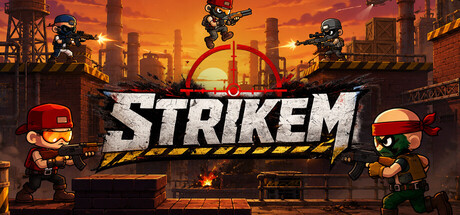
STRIKEM uses generative AI for some illustrated background art only. All gameplay sprites — characters, enemies, and tilesets — were hand-created without AI. All assets are pre-generated; nothing is AI-generated at runtime.
This game uses content created or assisted by generative AI. Generative AI was used to help create and edit some visual assets, music/sound materials, and scripts. All final content was reviewed, selected, and adjusted by the developer before being included in the game.
Parts of this game's assets were produced with the help of generative AI tools, then reviewed and edited by the developer before being included.
This applies to:
- Character and background artwork, UI art, and store/marketing images
- Portions of the dialogue text
- Translation into English, Simplified Chinese, Traditional Chinese, Korean, and Spanish
The game does not generate any content while you play, and it never connects to an external AI service. Everything you see and hear ships with the build.
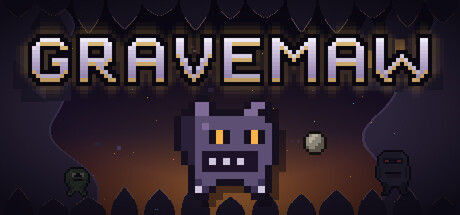
Gravemaw's music was generated with Suno AI and its sound effects with
Stable Audio Open, then edited by hand — trimmed, loop-pointed and mixed —
before being placed in the game. Some store and marketing artwork was also
produced with AI assistance.
Every generated asset was reviewed by the developer before shipping. Nothing
is generated while you play: the game runs fully offline and all content is
baked into the build.
We use generative AI for some of the following elements.
・Some of the in-game art
・Some of the code
・Some of the banners and trailers on the store page
Generative AI tools (ChatGPT Image Generation / DALL-E) were used during development to generate concepts and visual marketing assets, including some store page banners and promotional artwork. All core gameplay pixel-art, character animations, sound design, and code were created manually by the developer.
Partial artwork uses generative AI assistance. Scripts are fully original written by the developer. Background music is CC0 public domain material, no in-game real-time AI generation.
Character portraits are entirely hand-drawn by artists. Background assets are created using AI as preliminary sketches, then comprehensively revised and manually reworked to achieve consistent art style.
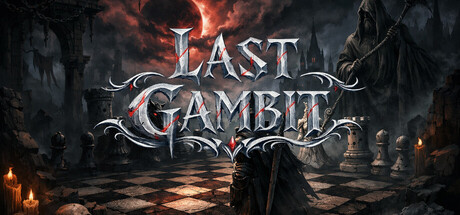
Some of Last Gambit's content was created with the help of generative AI tools. Specifically, part of the artwork for the pieces and skins was generated with AI and then reviewed and refined by us. We also used AI to assist with some cross-platform code porting.
All of this content is generated during development. The game does not use generative AI during matches and does not create content in real time.
This game uses AI-assisted tools solely for programming and logic development. AI helped generate some basic code frameworks, but all core game logic was manually written, tested, and optimized.
Some visual assets in this demo are AI-generated placeholders, used temporarily due to budget constraints as a solo developer. These are planned to be replaced with final hand-crafted art before the game's full release.
Developed under human creative direction with extensive generative AI assistance for game code, systems implementation, and visual/marketing assets. No generative AI runs live during play.
Some 2D character portraits, sprites, item and environment artwork, and store promotional images were created from drafts produced with generative AI tools. All assets were reviewed, curated, edited, and post-processed by the developer before being included. The game does not use AI to generate content in real time during gameplay.
Generative AI tools were used as production assistance for portions of the game's 2D artwork, character voices, and localization. All such content is pre-generated and manually reviewed before release. The game does not generate content with AI during play.
Generative AI tools were used during development to create most of the game's code and assist with localization, including some store-page text. All AI-assisted outputs were manually reviewed, edited, tested, and integrated by the developer. No artwork, character designs, animations, music, sound effects, or other visual or audio assets were generated using AI. The game does not use live-generated AI during gameplay.
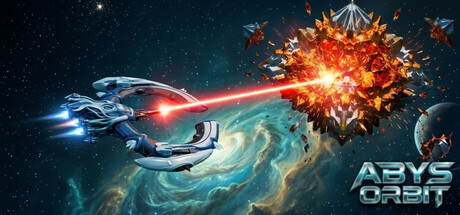
Most of the 2D art in Abys Orbit is AI-assisted, generated with Google Gemini
during development. Ship and NPC sprite sheets begin as Gemini concept images,
are converted to 3D meshes with Meshy.ai, and are then rendered to 2D sprites
in Blender. One dashboard background is a NASA public-domain photograph revised
with AI. All AI-generated assets are reviewed and edited by us before shipping.
The following content is NOT AI-generated: rank insignia (drawn by hand in
Adobe Illustrator), the Scout ship model (a commercially licensed 3D asset
rendered in 3ds Max), UI and research icons (licensed from CraftPix under their
commercial license), two NASA public-domain images, and all audio, which we
produced ourselves.
No AI-generated content is created at runtime; all generation happens during
development.
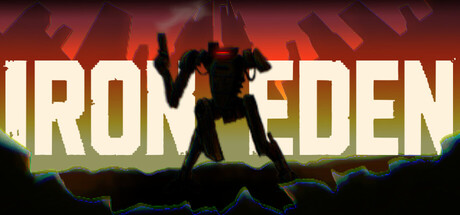
IRON EDEN uses AI as a development tool in a limited capacity.
AI has been used only for:
Programming assistance.
Sound effect generation.
All artwork, game design, mechanics, story, characters, worldbuilding, and visual assets were created by the developer.
Some of the game's resources (art assets, some promotional images on the store page, code, etc.) were completed with the help of AI to achieve better artistic effects.
Some in-game artwork—including characters, monsters, weapons, backgrounds, card illustrations, and UI assets—as well as some store page images, was created using pre-generated AI tools. All generated assets were selected, edited, adjusted, and reviewed by the developer before being included in the game. The game does not generate AI content during gameplay.
Some pre-generated visual assets and localization text were created with the assistance of generative AI and were reviewed and edited by the developer. The game does not generate AI content during gameplay.
Generative AI tools were used to assist in creating and refining some promotional artwork for the Steam store page and related marketing materials. All AI-assisted assets were reviewed and edited by the developer. No generative AI content is used in the game itself, and no content is generated during gameplay.
Artificial intelligence tools were used throughout development, assisting with the game’s programming as well as the creation of capsule artwork and other minor graphical assets.
This game was developed with the assistance of generative AI in the following areas:
Programming assistance: Claude Code (Anthropic) was used to assist with coding and debugging
BGM: Music was generated using Suno AI
Story illustration images: Some narrative artwork was generated using NanoBanana
During the development of this game, generative AI technologies were utilized as auxiliary tools to optimize production and enhance the overall quality of the final product. AI was used in the following areas:
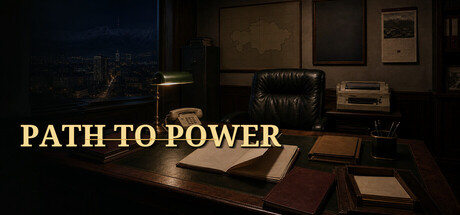
Visual Art & Assets: Generative tools were used during the concept art stage to create baseline character portraits, user interface elements, and background images of government offices. All AI-generated assets underwent manual digital painting, color correction, and stylization to fit the game's distinct, gritty political noir atmosphere.
Text & Narrative Design: AI assistants were employed for copyediting, historical context verification, dialogue polishing, and structuring large volumes of text to ensure the narrative feels immersive, realistic, and deeply engaging.
Coding & Scripting: AI tools helped optimize Godot engine source code, identify bugs, and accelerate the technical implementation of dynamic UI systems.
Important Note: The game contains only pre-generated content. There is no live-generated AI content running during gameplay. The game experience is fully deterministic, stable, and hardcoded within the final build by the developer.
Machine translation has been used for language localization.
Some background elements, such as grass and trees, were created using AI-generated images and then manually edited and refined.
Generative AI tools were used during development to assist with writing, reviewing, and optimizing portions of the game’s code. All AI-assisted code was manually reviewed, modified, and tested by the developer. Generative AI is not used to generate content while the game is running, nor was it used to create player-facing artwork, audio, narrative, or other text content.
During development of this game, generative AI was used to assist with writing portions of the source code. All AI-generated code was reviewed, modified, tested, and approved by the developer before being incorporated into the game. The game's design, functionality, and overall quality are the result of developer oversight and implementation.
Generative AI was used during development to assist with brainstorming, coding assistance, and drafting certain written materials. All game content, gameplay implementation, testing, review, and final decisions were completed and verified by the developer before release.
Generative AI tools were used during development to assist with programming, translation/localization, and the creation of most of the game's artwork and music. All AI-assisted content was reviewed, selected, edited, and integrated by the developer. The game does not generate AI content during gameplay and does not connect to external AI services.
Some marketing materials for this game were made with generative AI: the trailer's narration uses an AI text-to-speech voice, and parts of this store page were drafted with AI assistance.
Nothing inside the game is AI-generated. The soundtrack is human-composed music licensed for commercial use, all artwork and logos are drawn programmatically by the game's own code, and every screenshot is captured from real gameplay. The game generates no AI content while you play.
Generative AI was used to create initial concept art, background environment artwork, and promotional marketing materials for the Steam Store page. All generated assets were subsequently refined, edited, and formatted by the developer before final implementation into the project
Generative AI tools were used during development to assist with selected pre-generated content,including some balance-object artwork, reflective text, localization, store-page copy, and selected marketing artwork. All generated outputs were manually reviewed, curated, and edited by the developer before being included. The game does not use generative AI at runtime and does not generate or modify player-facing content during play.
STRIKEM uses generative AI for some illustrated background art only. All gameplay sprites — characters, enemies, and tilesets — were hand-created without AI. All assets are pre-generated; nothing is AI-generated at runtime.
This game uses content created or assisted by generative AI. Generative AI was used to help create and edit some visual assets, music/sound materials, and scripts. All final content was reviewed, selected, and adjusted by the developer before being included in the game.
Parts of this game's assets were produced with the help of generative AI tools, then reviewed and edited by the developer before being included.
This applies to:
- Character and background artwork, UI art, and store/marketing images
- Portions of the dialogue text
- Translation into English, Simplified Chinese, Traditional Chinese, Korean, and Spanish
The game does not generate any content while you play, and it never connects to an external AI service. Everything you see and hear ships with the build.
Gravemaw's music was generated with Suno AI and its sound effects with
Stable Audio Open, then edited by hand — trimmed, loop-pointed and mixed —
before being placed in the game. Some store and marketing artwork was also
produced with AI assistance.
Every generated asset was reviewed by the developer before shipping. Nothing
is generated while you play: the game runs fully offline and all content is
baked into the build.
We use generative AI for some of the following elements.
・Some of the in-game art
・Some of the code
・Some of the banners and trailers on the store page
Generative AI tools (ChatGPT Image Generation / DALL-E) were used during development to generate concepts and visual marketing assets, including some store page banners and promotional artwork. All core gameplay pixel-art, character animations, sound design, and code were created manually by the developer.
Partial artwork uses generative AI assistance. Scripts are fully original written by the developer. Background music is CC0 public domain material, no in-game real-time AI generation.
Character portraits are entirely hand-drawn by artists. Background assets are created using AI as preliminary sketches, then comprehensively revised and manually reworked to achieve consistent art style.
Some of Last Gambit's content was created with the help of generative AI tools. Specifically, part of the artwork for the pieces and skins was generated with AI and then reviewed and refined by us. We also used AI to assist with some cross-platform code porting.
All of this content is generated during development. The game does not use generative AI during matches and does not create content in real time.
This game uses AI-assisted tools solely for programming and logic development. AI helped generate some basic code frameworks, but all core game logic was manually written, tested, and optimized.
Some visual assets in this demo are AI-generated placeholders, used temporarily due to budget constraints as a solo developer. These are planned to be replaced with final hand-crafted art before the game's full release.
Developed under human creative direction with extensive generative AI assistance for game code, systems implementation, and visual/marketing assets. No generative AI runs live during play.
Some 2D character portraits, sprites, item and environment artwork, and store promotional images were created from drafts produced with generative AI tools. All assets were reviewed, curated, edited, and post-processed by the developer before being included. The game does not use AI to generate content in real time during gameplay.
Generative AI tools were used as production assistance for portions of the game's 2D artwork, character voices, and localization. All such content is pre-generated and manually reviewed before release. The game does not generate content with AI during play.
Generative AI tools were used during development to create most of the game's code and assist with localization, including some store-page text. All AI-assisted outputs were manually reviewed, edited, tested, and integrated by the developer. No artwork, character designs, animations, music, sound effects, or other visual or audio assets were generated using AI. The game does not use live-generated AI during gameplay.
Most of the 2D art in Abys Orbit is AI-assisted, generated with Google Gemini
during development. Ship and NPC sprite sheets begin as Gemini concept images,
are converted to 3D meshes with Meshy.ai, and are then rendered to 2D sprites
in Blender. One dashboard background is a NASA public-domain photograph revised
with AI. All AI-generated assets are reviewed and edited by us before shipping.
The following content is NOT AI-generated: rank insignia (drawn by hand in
Adobe Illustrator), the Scout ship model (a commercially licensed 3D asset
rendered in 3ds Max), UI and research icons (licensed from CraftPix under their
commercial license), two NASA public-domain images, and all audio, which we
produced ourselves.
No AI-generated content is created at runtime; all generation happens during
development.
IRON EDEN uses AI as a development tool in a limited capacity.
AI has been used only for:
Programming assistance.
Sound effect generation.
All artwork, game design, mechanics, story, characters, worldbuilding, and visual assets were created by the developer.
Some of the game's resources (art assets, some promotional images on the store page, code, etc.) were completed with the help of AI to achieve better artistic effects.
Some in-game artwork—including characters, monsters, weapons, backgrounds, card illustrations, and UI assets—as well as some store page images, was created using pre-generated AI tools. All generated assets were selected, edited, adjusted, and reviewed by the developer before being included in the game. The game does not generate AI content during gameplay.
Some pre-generated visual assets and localization text were created with the assistance of generative AI and were reviewed and edited by the developer. The game does not generate AI content during gameplay.
Generative AI tools were used to assist in creating and refining some promotional artwork for the Steam store page and related marketing materials. All AI-assisted assets were reviewed and edited by the developer. No generative AI content is used in the game itself, and no content is generated during gameplay.
Artificial intelligence tools were used throughout development, assisting with the game’s programming as well as the creation of capsule artwork and other minor graphical assets.
This game was developed with the assistance of generative AI in the following areas:
Programming assistance: Claude Code (Anthropic) was used to assist with coding and debugging
BGM: Music was generated using Suno AI
Story illustration images: Some narrative artwork was generated using NanoBanana
During the development of this game, generative AI technologies were utilized as auxiliary tools to optimize production and enhance the overall quality of the final product. AI was used in the following areas:
Visual Art & Assets: Generative tools were used during the concept art stage to create baseline character portraits, user interface elements, and background images of government offices. All AI-generated assets underwent manual digital painting, color correction, and stylization to fit the game's distinct, gritty political noir atmosphere.
Text & Narrative Design: AI assistants were employed for copyediting, historical context verification, dialogue polishing, and structuring large volumes of text to ensure the narrative feels immersive, realistic, and deeply engaging.
Coding & Scripting: AI tools helped optimize Godot engine source code, identify bugs, and accelerate the technical implementation of dynamic UI systems.
Important Note: The game contains only pre-generated content. There is no live-generated AI content running during gameplay. The game experience is fully deterministic, stable, and hardcoded within the final build by the developer.
Machine translation has been used for language localization.
Some background elements, such as grass and trees, were created using AI-generated images and then manually edited and refined.
Generative AI tools were used during development to assist with writing, reviewing, and optimizing portions of the game’s code. All AI-assisted code was manually reviewed, modified, and tested by the developer. Generative AI is not used to generate content while the game is running, nor was it used to create player-facing artwork, audio, narrative, or other text content.
During development of this game, generative AI was used to assist with writing portions of the source code. All AI-generated code was reviewed, modified, tested, and approved by the developer before being incorporated into the game. The game's design, functionality, and overall quality are the result of developer oversight and implementation.