Public Steam disclosure research25,710 disclosures tracked
Where do games disclose AI use?
Search developers’ Steam disclosures, compare classified AI use across
games, and follow recorded changes.
This index adds cross-game classifications and statistics to
statements published on individual store pages.
Groups reflect automatic analysis of public disclosures; mature records are excluded. These counts do not measure AI use across all of Steam.
Missing or unclear statements cannot establish whether a game uses AI.
This game was developed independently by a solo developer. Generative AI tools were used in a limited capacity during production, specifically to assist with the texturing of certain visual assets and the conception of some written content. All gameplay systems, models, game design, art direction, music, and core creative decisions were made entirely by the developer.
Some voice acting, music, and graphics(SVG) and game capsules/main menu art were created using AI generation tools All content was reviewed and curated by the developer.
We use Generative AI tools specifically for the voice acting (dialogue, radio transmissions, and environmental narration) of characters and story sequences.
For the development of The Bus, AI was used occasionally and to a limited extent as a supportive tool, for example for passenger voices or textures. All content was ultimately reviewed, revised, and integrated into the game by our team.
Generative AI tools are used solely to create certain pre-generated game content and marketing materials (including images, video advertisements, and narrative elements). In addition, AI-assisted tools may be used to support customer service operations, subject to appropriate oversight and quality controls. All AI-assisted content undergoes human review, editing, and approval prior to publication. No live or real-time AI generation occurs during gameplay, and users are not able to prompt or otherwise interact with any AI systems to generate content. Certain materials produced by third-party vendors may incorporate AI-assisted tools; however, all such materials are pre-rendered and subject to human review and approval prior to release.
Several post-release languages (specifically Bulgarian, Hungarian, Ukrainian, Slovak, and Latin) were experimentally translated using an AI model. The quality of these translations is not guaranteed, and they may contain mistakes.
All other languages were translated by a team of human translators.
Some visual assets in the game, such as icons, UI elements and loading screen images, were created with the assistance of AI tools and then edited and integrated into the game by the developer.
Some store artwork and promotional images were created with the assistance of AI image generation tools. All game logic, commentary text, fight simulation, and gameplay content are authored by the developer using traditional programming — no generative AI is used during gameplay.
Some in-game icons originated as AI-generated concept drafts and were subsequently heavily modified, refined, and finalized by the developer before being included in the final game.
AI was used in the production of this game:
• Programming — Anthropic Claude AI Code
• Music and some sound effects — Suno AI v5, Elevenlabs, Google Gemini (prompting support)
• Many graphic assets — Nano Banana Pro with Google Flow, Google Gemini (prompting support)
• Some graphic assets — Krea AI
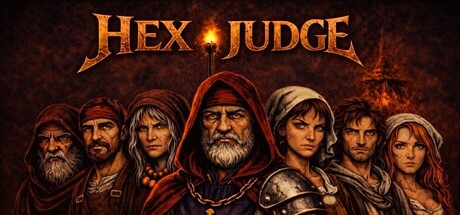
This game uses AI-assisted systems to support dynamic dialogue during interrogations with villagers. The AI helps generate variations in conversations to enhance immersion and replayability while maintaining the game’s narrative structure.
The game also uses AI-assisted systems to generate epilogues based on the player’s verdicts and the relationships between villagers. These epilogues help reflect the consequences of the player’s decisions and provide varied outcomes across playthroughs.
The dialogue and epilogue generation systems operate within structured prompts and developer-defined constraints to ensure consistency with the game’s design.
The AI systems are designed with safeguards to prevent inappropriate or harmful outputs. AI-assisted content is reviewed and refined during development to ensure it remains appropriate for the game’s setting and narrative.
Some visual assets were created with the assistance of generative AI tools. These assets were reviewed, edited, and refined by the developer before being implemented into the game.
All assets were checked to ensure they are appropriate and consistent with the game’s artistic direction.
Claude Code was used to develop this app. This software uses AI and machine learning in the following ways:
- Plant identification: User-uploaded photos are analyzed by AI to identify plant species, mushrooms, and insects.
- Disease detection: A trained machine learning model analyzes plant photos to detect and diagnose diseases. - Thermal imaging analysis: AI assesses plant health from user-uploaded thermal images.
- Garden import: AI vision interprets uploaded garden
photos and documents to auto-populate garden layouts.
All AI features are user-initiated tools that proces user-provided images. No AI was also used to populate the intitial set of image tiles, while I am paying an illustrator to replace them with hand created art.
BFM 26 uses AI-assisted tools during development, including AI-generated imagery for certain visual assets and AI code auditing during the development process. No generative AI is used to produce live or dynamic in-game content during gameplay. All AI-generated assets have been reviewed and approved by the developer before inclusion in the game.
This game has used AI as a coding assistant and to help build tooling and interconnections (think API development and unit-testing).
I've not used AI to make the premise of any function, utilize it for pure vibe-coding or anything beyond additional tooling for the asset and behaviors.
This game was developed using AI-assisted tools in multiple areas of development, including programming, writing, music, and visual assets. AI tools were used during the creation process to help generate and prototype content, which was then reviewed, edited, and integrated into the game by the developer.
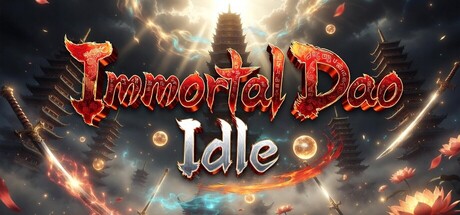
I love Xianxia/Wuxia light novels and I've looked everywhere for a good cultivation idler. When I couldn't find out, I decided to make one, but since I'm not a coder/videographer/digital animator etc I used AI for the artwork creation and used my background in IT to get AI to create the backend code.
Methodox uses AI-assisted tools during both development and gameplay, with human oversight at every stage.
During production, AI tools were used to help generate certain visual assets and explore design concepts. All assets were reviewed, curated, and integrated by human designers. Final artistic direction and implementation were handled by the development team.
In gameplay, characters use AI-driven systems to simulate conversation. These systems include multiple safety measures and have been thoroughly tested to help ensure generated content remains appropriate. If you encounter an issue, please report it to our support team at contact@methodox.io so we can review and address it.
The team will continue refining and improving gameplay systems and visual assets over time.
Thank you for your support!
I used a text-based generative AI (LLM) to assist with the English translation (localization) of all in-game text (dialogue, UI, system messages) and to help write the English descriptions for the Steam store page.
AI was used to generate some of the 2D assets and portraits. I have personally selected and verified all generated content to ensure it fits the game's historical theme.
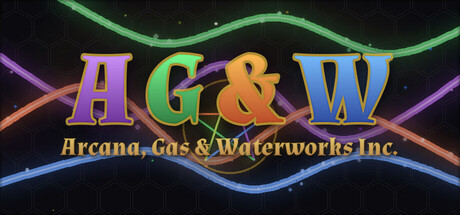
The pipes, ley lines, and gas mains of Arcana, Gas & Waterworks Inc. were designed, debated, and duct-taped together by a single developer. All music was licensed from real indie musicians, who did NOT use generative AI in any way, and who are credited in the game. Generative AI tools helped bring AGW Inc. to life by turning hand-drawn sketches into finished art, scripting sound effects, and contributing early drafts of in-game text. All of this content was rewritten, expanded, or replaced by the developer to fit the game's voice and world. Thanks to the help of these AI tools, I was able to finally answer the burning question, "What if fantasy worlds needed infrastructure?"
This game was developed independently by a solo developer. Generative AI tools were used in a limited capacity during production, specifically to assist with the texturing of certain visual assets and the conception of some written content. All gameplay systems, models, game design, art direction, music, and core creative decisions were made entirely by the developer.
Some voice acting, music, and graphics(SVG) and game capsules/main menu art were created using AI generation tools All content was reviewed and curated by the developer.
We use Generative AI tools specifically for the voice acting (dialogue, radio transmissions, and environmental narration) of characters and story sequences.
For the development of The Bus, AI was used occasionally and to a limited extent as a supportive tool, for example for passenger voices or textures. All content was ultimately reviewed, revised, and integrated into the game by our team.
Generative AI tools are used solely to create certain pre-generated game content and marketing materials (including images, video advertisements, and narrative elements). In addition, AI-assisted tools may be used to support customer service operations, subject to appropriate oversight and quality controls. All AI-assisted content undergoes human review, editing, and approval prior to publication. No live or real-time AI generation occurs during gameplay, and users are not able to prompt or otherwise interact with any AI systems to generate content. Certain materials produced by third-party vendors may incorporate AI-assisted tools; however, all such materials are pre-rendered and subject to human review and approval prior to release.
Several post-release languages (specifically Bulgarian, Hungarian, Ukrainian, Slovak, and Latin) were experimentally translated using an AI model. The quality of these translations is not guaranteed, and they may contain mistakes.
All other languages were translated by a team of human translators.
Some visual assets in the game, such as icons, UI elements and loading screen images, were created with the assistance of AI tools and then edited and integrated into the game by the developer.
Some store artwork and promotional images were created with the assistance of AI image generation tools. All game logic, commentary text, fight simulation, and gameplay content are authored by the developer using traditional programming — no generative AI is used during gameplay.
Some in-game icons originated as AI-generated concept drafts and were subsequently heavily modified, refined, and finalized by the developer before being included in the final game.
AI was used in the production of this game:
• Programming — Anthropic Claude AI Code
• Music and some sound effects — Suno AI v5, Elevenlabs, Google Gemini (prompting support)
• Many graphic assets — Nano Banana Pro with Google Flow, Google Gemini (prompting support)
• Some graphic assets — Krea AI
This game uses AI-assisted systems to support dynamic dialogue during interrogations with villagers. The AI helps generate variations in conversations to enhance immersion and replayability while maintaining the game’s narrative structure.
The game also uses AI-assisted systems to generate epilogues based on the player’s verdicts and the relationships between villagers. These epilogues help reflect the consequences of the player’s decisions and provide varied outcomes across playthroughs.
The dialogue and epilogue generation systems operate within structured prompts and developer-defined constraints to ensure consistency with the game’s design.
The AI systems are designed with safeguards to prevent inappropriate or harmful outputs. AI-assisted content is reviewed and refined during development to ensure it remains appropriate for the game’s setting and narrative.
Some visual assets were created with the assistance of generative AI tools. These assets were reviewed, edited, and refined by the developer before being implemented into the game.
All assets were checked to ensure they are appropriate and consistent with the game’s artistic direction.
Claude Code was used to develop this app. This software uses AI and machine learning in the following ways:
- Plant identification: User-uploaded photos are analyzed by AI to identify plant species, mushrooms, and insects.
- Disease detection: A trained machine learning model analyzes plant photos to detect and diagnose diseases. - Thermal imaging analysis: AI assesses plant health from user-uploaded thermal images.
- Garden import: AI vision interprets uploaded garden
photos and documents to auto-populate garden layouts.
All AI features are user-initiated tools that proces user-provided images. No AI was also used to populate the intitial set of image tiles, while I am paying an illustrator to replace them with hand created art.
BFM 26 uses AI-assisted tools during development, including AI-generated imagery for certain visual assets and AI code auditing during the development process. No generative AI is used to produce live or dynamic in-game content during gameplay. All AI-generated assets have been reviewed and approved by the developer before inclusion in the game.
This game has used AI as a coding assistant and to help build tooling and interconnections (think API development and unit-testing).
I've not used AI to make the premise of any function, utilize it for pure vibe-coding or anything beyond additional tooling for the asset and behaviors.
This game was developed using AI-assisted tools in multiple areas of development, including programming, writing, music, and visual assets. AI tools were used during the creation process to help generate and prototype content, which was then reviewed, edited, and integrated into the game by the developer.
I love Xianxia/Wuxia light novels and I've looked everywhere for a good cultivation idler. When I couldn't find out, I decided to make one, but since I'm not a coder/videographer/digital animator etc I used AI for the artwork creation and used my background in IT to get AI to create the backend code.
Methodox uses AI-assisted tools during both development and gameplay, with human oversight at every stage.
During production, AI tools were used to help generate certain visual assets and explore design concepts. All assets were reviewed, curated, and integrated by human designers. Final artistic direction and implementation were handled by the development team.
In gameplay, characters use AI-driven systems to simulate conversation. These systems include multiple safety measures and have been thoroughly tested to help ensure generated content remains appropriate. If you encounter an issue, please report it to our support team at contact@methodox.io so we can review and address it.
The team will continue refining and improving gameplay systems and visual assets over time.
Thank you for your support!
I used a text-based generative AI (LLM) to assist with the English translation (localization) of all in-game text (dialogue, UI, system messages) and to help write the English descriptions for the Steam store page.
AI was used to generate some of the 2D assets and portraits. I have personally selected and verified all generated content to ensure it fits the game's historical theme.
The pipes, ley lines, and gas mains of Arcana, Gas & Waterworks Inc. were designed, debated, and duct-taped together by a single developer. All music was licensed from real indie musicians, who did NOT use generative AI in any way, and who are credited in the game. Generative AI tools helped bring AGW Inc. to life by turning hand-drawn sketches into finished art, scripting sound effects, and contributing early drafts of in-game text. All of this content was rewritten, expanded, or replaced by the developer to fit the game's voice and world. Thanks to the help of these AI tools, I was able to finally answer the burning question, "What if fantasy worlds needed infrastructure?"