Public Steam disclosure research27,951 disclosures tracked
Where do games disclose AI use?
Search developers’ Steam disclosures, compare classified AI use across
games, and follow recorded changes.
This index adds cross-game classifications and statistics to
statements published on individual store pages.
Groups reflect automatic analysis of public disclosures; mature records are excluded. These counts do not measure AI use across all of Steam.
Missing or unclear statements cannot establish whether a game uses AI.
Some of this game's 3D models and textures were created ahead of time with AI tools. Every generated asset was selected and adjusted by the developer before inclusion.
No content is generated by AI while the game is running.
Some content in SIGNCLASH was created with generative AI tools and then reworked by hand. The 3D models of the fighters, the player avatars, the accessories and part of the scenery were generated with Tripo and Meshy, then rigged, corrected and animated by hand. Some interface art (the logo, the four hand-sign icons, the story mode frames and buttons) and the store capsule artwork were made with AI image generators, starting from our own in-game characters. The combat music was generated with AI. The French translation and parts of the in-game and store page text were written with the help of AI tools. No AI runs while you play: nothing is generated on your machine.
The reveal trailer on this Steam page uses pre-generated synthetic voice performances for three lines of Bosnian dialogue. The trailer also contains in-engine cinematics and recorded gameplay.
During Early Access we use AI-generated 2D concept art as temporary background images on some menu screens while we settle on the game's final art direction.
These are placeholders. Once we have feedback from players on the direction we are taking, our 2D artist will replace them with final, hand-made artwork created without AI.
No content is generated by AI while you play — the game ships with a fixed set of assets.
All artwork is free game assets by Quaternius. All ideas were mine with a few details worked out with the help of ai. Used ai for everything else; coding, audio, ui, shortcut/app icon and more.
ASTRAYA uses generative AI in two ways.
While you play: when you ask the companion VESPER for a move, AI understands your spoken request and composes a new move from thousands of possible combinations of the game's hand-made motions, powers and effects. It names the move and voices VESPER's reply. All animation is made by hand, never generated, and the game's rules balance every move before you can use it. Every name and line is filtered before anyone sees or hears it, and the game doesn't store your voice.
Made beforehand: some 3D models (the knights, the bosses and some arena props) were generated with AI tools, then rigged and corrected by hand. The story illustrations, sky backdrops, character voices, the narrator and some music were made with AI tools, and the logo began as AI concepts before being redrawn by hand. Some shots in our cinematic story teaser used AI video. The gameplay trailer and screenshots on this page are real recorded gameplay. Fighter animation is motion capture and hand-built animation, and the combat rules are designed by hand.
Connects to 3rd-Party Service for AI Content Generation: Language, speech and voice AI via OpenRouter
Some of the background music used in the game, as well as store page graphical assets (such as capsule images, headers, and icons) and parts of the trailer video, were created using generative AI tools. (All in-game screenshots are captured directly from actual gameplay.)
AI was used during the production of Mr. Police to support selected marketing and localization tasks. Specifically, we used AI tools to help create promotional materials, including Steam key art, and to assist with in-game translations.
Some of the game's content was created with the use of AI.
AI-generated music
The background music (BGM) was generated using an AI music generation service.
Assets generated by AI-written code
An AI coding assistant wrote Python scripts (including scripts run in Blender) that procedurally generate the following content:
In-game background 3D models
Battlefield visual effects
Sound effects
No AI image generation models were used for these assets; they are produced entirely by code. All AI-generated and code-generated content was reviewed, adjusted, and integrated by our team.
Human-made content
The shogi pieces, UI, character models, animations, and the other visual effects were created by human designers, modelers, and motion designers.
The game does not generate any AI content at runtime.
We combine human-created and AI-generated content, including maps, skins, textures and other artwork. Some third-party audio may also be AI-generated. No content is generated by AI during gameplay.
Generative AI was used during development to assist with some main-menu and title artwork, UI images and textures, Steam store capsules and library artwork, and portions of narrative text and Chinese/English localization. These are pre-generated assets shipped with the game or displayed on the store page. The game does not generate AI content at runtime and does not connect to third-party generative AI services.
Some visuals on the Steam store page were created with the assistance of generative AI tools. These tools also contributed to the translation of the game into certain Asian languages.
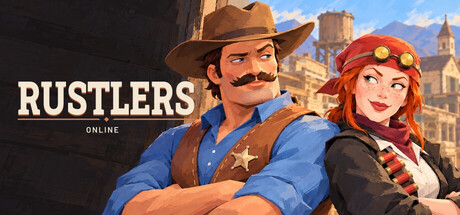
RUSTLERS is made by a small team with the help of generative AI tools. Every AI output was selected, edited and integrated into the game by the team.
Pre-generated AI content in the game and on this store page:
• Most character and weapon 3D models, generated with AI 3D tools and then cleaned up, rigged and adjusted by the team
• Some character animations
• Music, announcer and character voice lines, and some sound effects
• Promotional key art used in the menus and on the store page, including store page header images
• Store page text, drafted with AI assistance and edited by the team
Gameplay, game modes, maps and balancing are designed by the team. The game does not generate any AI content during gameplay.
Generative AI was used to create marketing images and to translate the store description and in-game text. These materials were generated in advance during development. The game does not generate AI content in real time during gameplay or connect to external AI services while playing.
This game was developed with the help of an AI coding assistant. The code, and the content built through it - voxel models, maps, logo, music and sound effects, interface, translations, and store text and images - were created with AI assistance and then reviewed, directed and adjusted by the developer.
No AI image, voice or music generators were used: all visuals are voxel models rendered by the game itself, and the music is composed note by note and played with recorded instrument samples.
No content is generated by AI during gameplay.
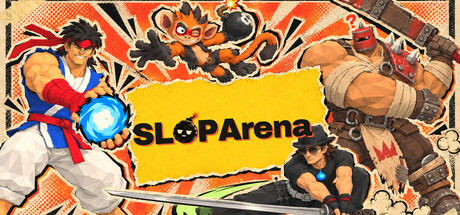
SlopArena is a non-profit open source game created by a solo developer. AI was used extensively during development for various tasks such as research, brainstorming, planning, coding, analysing. Some assets were bought, some were generated to reduce costs. Generated assets are seen as placeholder, especially character models.
We used AI tools to assist with parts of development: writing some of the game code, changing the colors of existing 2D textures, and localizing the game's text into other languages. All AI-assisted results were reviewed and edited by our team.
Generative AI was used to create some of the game's content. The illustrations and the characters (character designs and artwork and models) were created with the help of generative AI tools, then selected, edited and integrated by the developer. Some English localization text (UI and character descriptions) and the store page description were also drafted with an AI assistant and reviewed and edited by the developer. The game does not generate any content with AI while it is running.
Disclosure regarding Generative AI
This game utilizes artificial intelligence (AI) tools to assist in generating some of the promotional materials on the store page, as well as certain in-game visual assets.
Pre-generated AI-assisted art and text are used. Tencent Hunyuan 3D helped create initial models and textures; OpenAI image tools helped create UI art and reference images. Assets were edited and optimized for the game. Some fixed UI text, incident captions and translations were drafted with AI assistance. No AI content is generated during gameplay.
我们游戏在进入游戏的加载页过程中使用到了AI技术生成精细化的游戏背景图(即游戏加载界面背景图图1、2、3、4),其他游戏内容中未能使用AI技术,我们使用AI技术的初衷是为了提高游戏进入的界面精美度,无其他不良引导及不良内容。
Name of AI model included with the game: 游戏加载界面背景图是使用了即梦AI图像技术生成。
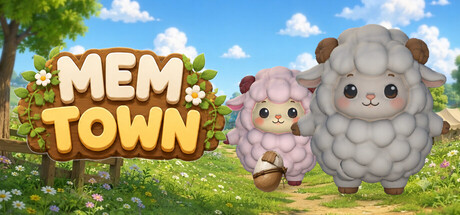
Some 3D models and textures in MemTown were created or converted with the assistance of generative AI during development. These assets are used for certain tools, capture capsules, resource objects, and production facilities in the territory.
Generative AI tools were utilized to generate base assets for various 3D models and musical tracks. All AI-generated content was subsequently edited, refined, and integrated manually to match the vision of the game.
Pre-generated generative AI was used in the development of game code, visual assets, character portraits, promotional artwork, and portions of text and localization.
A small number of weapon assets were created with generative AI during development and are included in the shipped game as well as the store and library assets minus the logo.
Mythbound features a small portion of generated assets in the form of environmental props for it's Early Access period. No generated assets will be featured in the final release of the game.
Generative AI tools assisted in creating some of Purrtaliation’s character artwork, textures, promotional images, story, dialogue, and original music, as well as portions of its code and procedural 3D models and animations. This content was created during development. The game does not use generative AI to create new content during gameplay or send player input to generative AI services.
Generative AI tools were used during the development of Forgotten Horizons to assist with the creation of some content. AI-generated content was reviewed and edited by the development team before being included in the game or its store and marketing materials. The game does not generate AI content in real time during gameplay.
This game was developed solo by an independent developer. Some UI visuals and artwork used for the Steam store page were created with the help of generative AI. Original sound effects were also created with AI assistance to match the game's atmosphere. This content is fixed and built into the game.
AI is not used to generate content in real time during gameplay.
The game uses pre-generated AI-generated voice acting for character dialogue, narration, and promotional trailer voice-over.
All AI-generated voice content is produced in advance and reviewed by the development team before being included in the game or its Steam store assets. No AI content is generated live while the game is running.
Generative AI (Google Gemini) was used to draft, translate, and refine the store descriptions and in-game text based on the developer's concepts. Every output was reviewed and edited by the developer to ensure accuracy and alignment with the game's vision.
Tug-O-War Wrestling uses a locally-run AI model (Llama) to control enemy wrestler behaviour and decision-making during matches. This AI is not used to generate any art, audio, dialogue, or other player-facing content - all in-game content is human-created.