Public Steam disclosure research27,951 disclosures tracked
Where do games disclose AI use?
Search developers’ Steam disclosures, compare classified AI use across
games, and follow recorded changes.
This index adds cross-game classifications and statistics to
statements published on individual store pages.
Groups reflect automatic analysis of public disclosures; mature records are excluded. These counts do not measure AI use across all of Steam.
Missing or unclear statements cannot establish whether a game uses AI.
Vortex DJ itself contains no AI and generates nothing while it runs. The program code, the interface text, its translations and this store page were made with AI assistance and checked by the developer. The store and library artwork, including the logo, was generated with AI.
We are two person team and we have been working on this game for two years. Some assets and scenes were generated, others were sourced from real world scans and photos and lifted into 3D
Some of the game's content was made with the help of AI tools and then selected, edited and integrated by the developer. This includes the music tracks, some 2D art (venue backdrops, crowd and poster art, per-song art) and some boss sound effects. The gameplay, code, design, enemy and boss choreography, visual effects and the vector art style are the developer's own work.
Lyrica uses AI in the following areas:
- Translation of in-app text and store page descriptions from Japanese into other languages
- Proofreading of in-app text (e.g., making terminology and spelling consistent)
Product design and specification, UI/UX design, effect design, all artwork including the character illustrations, the bundled demo music, and the original Japanese text are created by humans. I do not train AI models, nor do I fine-tune existing ones, and I do not use material owned by others without permission.
The application itself contains no AI model and does not generate anything while running. Data you import into Lyrica is never used to train AI. Unless the material you bring in is itself AI-generated, nothing in the work you export from Lyrica is AI-generated.
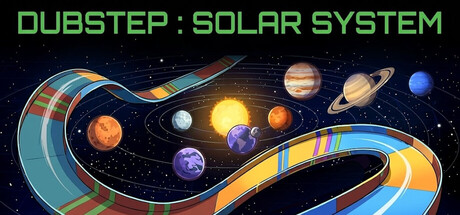
Dubstep: Solar System is an AI-assisted indie game — the studio name, Vibe Coded Reality, wears it proudly. Here is exactly how generative AI was used:
MUSIC: The entire 46-track original dubstep soundtrack was generated with Suno under a paid commercial license, from prompts written by the developer — every track hand-picked from multiple takes and play-tested against the game's beat-gate timing.
CODE: Much of the game's code was written with AI coding assistants working under the developer's direction; all game design, difficulty tuning, and play-testing are human work.
STORE ARTWORK: The cover and capsule artwork were created with AI image tools, then composed and typeset by the developer.
All in-game visuals are drawn procedurally by the game's own code — no AI-generated images appear inside the game itself, and nothing is generated by AI at runtime while you play.
AI tools were used during development to assist with writing code, and to produce two categories of content shipped with the game: the original synthwave soundtrack (composed with AI music generation, curated and selected by the developer) and the interface translations for the non-English languages (reviewed by the developer). Some store page text was also drafted with AI assistance. All in-game worlds are generated procedurally by hand-written algorithms — no AI content is generated at runtime.
Pre-rendered AI imagery was used to create some background looping elements, for example an in-game TV screen. All other artwork, narrative and character art and animation is created by hand.
Pre-generated only. 24 of the application's 36 theme selector icons, the LaryWaves logo, and the app icon were created with generative-AI image tools (OpenAI) during development and ship as static images, in all cases hand-edited afterward. All other content (visualizers, characters, the remaining theme icons, background effects, and audio) is hand-authored. No AI-generated content is produced at runtime, and no generative AI runs inside the app.
Generative AI has been used when creating some of the images in the menu and the backgrounds in the game. The technology has also been used when creating and editing some of the audio tracks.
The character artwork and voice recordings used in this application were created using AI.
This application also utilizes AI tools in the MIDI converter for recorded audio data provided by AI Transcriber.
rAIdio.bot is an AI music creation tool. Players use text prompts, style tags, and lyrics to generate original music
tracks in real time using the ACE-Step audio generation model, which runs entirely on the player's local GPU — no
cloud connection required. AI is also used for vocal synthesis, stem separation, and audio effects processing. All
AI-generated content is created on-demand by the player and is unique to their session.
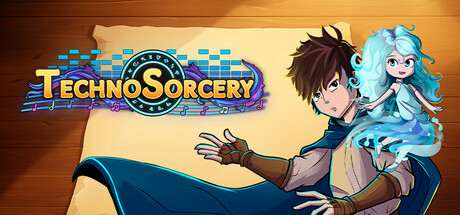
TechnoSorcery used AI tooling to assist in the creation of its Textures. These include User Interface widgets (such as buttons and panels), Backgrounds, and Characters.
The music was pre-rendered content using generative artificial intelligence with the use of general commercial terms allowed. Some of the store assets were also created using pre-rendered art from generative artificial intelligence and customized by the developer in another software to create a personalized touch.
PatchWorld includes optional generative AI tools that players can use to create custom content for their worlds and devices.
Players can generate images, 360° skyboxes, 3D meshes, and audio samples by entering text prompts using in-game tools such as the GenieBox device or scripting blocks. Each generation is initiated directly by the player and takes a short amount of time to complete.
Generated content can be used to decorate worlds, create sound effects, and build custom musical instruments. By default, all generated content remains private to the creator and is only shared with others if the player chooses to publish their world.
Generative AI features are entirely optional and are designed to support creativity, experimentation, and collaborative world-building.
In order to empower a single developer to achieve results that would otherwise not be possible, the developer utilizes a variety of AI tools to help in the creation of specific texture designs, translations as well as incorporating text-to-speech voice models for voice narration within the game.