Public Steam disclosure research27,953 disclosures tracked
Where do games disclose AI use?
Search developers’ Steam disclosures, compare classified AI use across
games, and follow recorded changes.
This index adds cross-game classifications and statistics to
statements published on individual store pages.
Groups reflect automatic analysis of public disclosures; mature records are excluded. These counts do not measure AI use across all of Steam.
Missing or unclear statements cannot establish whether a game uses AI.
The game's art, including characters, boards, backgrounds, icons and store artwork, was made with the help of generative AI image tools, then edited and put together by the developer. The game design, rules, minigames, board games and balancing are the developer's own work, tuned through play-testing with real stream chats. Nothing is generated by AI while you play, and no chat or player data is sent to any AI service.
The developers used generative AI tools to help create some pre-made content, including hero illustrations, some 3D character models, store and marketing artwork, and parts of the translated text. All AI-assisted content was reviewed and edited by the team. The game does not generate any content with AI during gameplay.
Localization - The localization is made by a mix of various contractors, crowd localization websites and volunteers. They might or might not used AI (LLM) or Machine Translation (statistical analysis) to do it in full or in part. I have no way of knowing or verifying this. In short, I have no clue. Note: v1.13 uses (in part) placeholder low quality locale (Machine Translation).
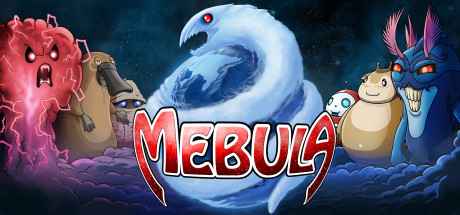
Mebula has been around for a long time: we have been developing the game since 2013, and it launched in 2017. The Mebulys and the game world are carefully drawn by hand. Today we use generative AI to translate the game texts into other languages. AI tools also help us write, revise and proofread texts for the game, the store page and announcements. The short intro and ending of our trailer (clouds, motion and sound) were created with AI. All content was selected, edited and reviewed by our team.
The music (songs) in this game was created with generative AI tools, then selected and edited by the developer. AI tools were also used to help translate the in-game text into other languages (localization), and all output was reviewed and edited by the developer. No content is generated by AI during gameplay.
Visual art and UI were created with the help of AI tools. Everything else was made by hand by a solo developer: the gameplay, the evolution stages, quests, puzzles, lore and many more. Nothing in the game is generated by AI while you play.
The in-game text (names and descriptions, in Japanese and English) and its translations into ten more languages, the store page text and the trailer captions were written with the help of a generative AI assistant (Claude). The illustration, 3D model, music and sound effect assets used in the game are human-made.
Kingslayers has been in development for about six years, and the multiplayer game with all 10 characters was playable before generative AI existed.
Human-made: everything purchasable, all playable units, all VFX, the story, character abilities, the menu theme and artwork, about 90% of the voice acting and most card artwork.
AI-generated: encounter images, some music, some boss and snake models, and the remaining voice lines and card art.
I’m replacing the AI elements over the coming months and will update this list as I go.
No generative AI is used in the game: every Robot, card illustration, animation, sound and piece of music is made by people, and our developers write the code without AI assistants, which matters a lot to them. Our marketing uses AI tools, always with our own art, gameplay footage and recorded voices: they help write and update the store page and marketing texts, lay out banners and event images, and make the titles, effects, subtitles and sound mixes of our videos. That is how a team of five can make the game and still get it in front of players.
The game was originally coded using javascript and canvas around 10 years back. This was my first attempt at building the game but I never had time to finish it. Recently I decided to revive this project with the help of Anthropic's Claude. Most of the current version of the code is created using AI, and graphics including models and artwork are created using other AI tools. The server component has been reinforced for security and reliability with the help of AI.
Artificial intelligence was used to help write the code for the game.
Years ago, I started working on Fade Basic, which is a language inspired by my love for Dark Basic Pro (sadly now defunct). I am a MonoGame supporter, and I wrote a 2D engine with MonoGame, and built bindings for Fade Basic.
Then, I used AI to write the Fade Basic code itself, using the engine bindings I wrote. I like building the game this way, because MonoGame is open source, and since I made Fade Basic open source, I own the game engine layer entirely. I know that the engine provides pretty intense constraints on how games can be made, so it is harder for the AI to do things in silly ways.
Also, AI was used for translating the game from English into non-English languages.
One More Room uses AI-generated content made during development. Nothing is generated while you play.
3D models: the heroes and their awakened forms, the enemies, the Wardens, the battlefields and the city's buildings and props were generated with Meshy, and rigged and animated with Meshy's tools. Many were cleaned up afterwards in Blender (lighter meshes, open hands closed around their weapons) and colour-graded in the engine. The weapons the fighters hold were modelled by script in Blender, not generated by AI.
Images: the concept paintings, the story paintings, the world and city backdrops, the skill-tree paintings, item and interface art, icons, medallions and the logos were generated with AI image models (GPT Image, Nano Banana and Seedream) through OpenArt, Meshy, Google Gemini and ElevenLabs, and a few interface icons with Grok Imagine. They were then cut out, resized and fitted into the game. The tarot cards and the concept images for some enemy models were generated with Stable Diffusion XL (Juggernaut XL) in Fooocus.
Music: the soundtrack was generated with ElevenLabs Eleven Music.
Sound: most sound effects (Warden abilities, Signature skills, enemy attacks and deaths, rewards, the city and the world ambience) were generated with ElevenLabs. The basic hit and interface sounds come from a licensed royalty-free sound library, not AI.
Voice: the narrator's voice, in the game and its trailers, and the lines a few Wardens speak were generated with ElevenLabs.
Trailers: the painted story stills were generated with AI image models through OpenArt and ElevenLabs.
Text: the game's writing and this store page were drafted with Claude, an AI assistant, and reviewed by the developer.
Store art: the store and library artwork is captured from the game, so it shows the AI-generated models above, and carries the AI-generated logo.
The game's design, rules and balance were directed by its developer, and the AI tools made assets to that direction.
Almost all of the art in the game and on the store page was made with AI image generation, then chosen by the developer and adjusted to fit the game.
No generative AI is used while the game runs. Endless puzzles are made automatically by the game's own program, not by generative AI.
The game's artwork, including character images, icons and store art, was created with the AI image tool Meshy. Some in-game text, such as ability names and descriptions, was drafted with AI and edited by the developer.
Visual assets: Generative AI output was used in the creation of creature and environment art assets. That output was reduced to a 1-bit palette, hand-corrected at the pixel level, and assembled into final sprites and tilesets in-house.
Audio: Ambient audio is synthesized procedurally at runtime by a custom DSP synthesizer — no AI model runs in the shipped game. Generative AI was used during development to explore the synthesizer's parameter space; the resulting presets were selected and tuned by ear.
Writing: All narrative, item text, and dialogue is written and edited in-house; where AI tools assisted with drafting, the result was rewritten and approved by hand.
Store page and marketing assets: Marketing imagery uses art assets from the game, produced as described above. AI tools assisted with drafting and formatting store page copy.
No AI model runs while the game is playing. All AI use occurred during development, and every result was human reviewed and edited before shipping.
We use AI tools to help translate the game's text into its supported languages, and translations are reviewed before release. Some images were made with AI assistance. All gameplay, characters, screenshots and store capsules come from the game itself, rendered in our engine.
The game's translations from English into other languages were created with the help of AI tools, and AI assisted in drafting the store page text. The game does not generate any content with AI during play.
Generative AI tools were used to assist with the creation and refinement of some visual content during development. All content is prepared before release. No generative AI is used during gameplay.
Hirelings uses AI-generated content in these places:
- Text: most of the in-game English text (descriptions, tooltips, tutorial tips) was written with AI assistance, and some of it was rewritten by the developer. The store page text was also written with AI. All translations into other languages were made with AI.
- Art: some 3D models and textures, and many of the shaders and visual effects (in the game world and in the interface), were made with AI assistance.
The game uses no AI while you play. The characters and their animations, most of the environment art, the music and the sound effects were made by human artists.
This game uses generative AI in the creation of its illustrations, animations, voices, music, and code. All AI-generated content has been selected and edited by the developer, and the game design, stage composition, and balance tuning were done by the developer. The game does not generate any new content with AI during play.
Generative AI was used in this game for prototyping, helping with bug finding, language translations, and helping create the Steam store page art. Every aspect of this game, including art, sound effects, music, and overall design was completely controlled by human passion and creativity. This game does NOT and will never use live generated AI.
To deliver high-quality products at an affordable price for our customers, we use AI tools to support parts of our creative and development process.
All artwork is designed by hand by our art team, with approximately 25% of our game art incorporating Photoshop’s generative AI tools for editing and refinement. Every piece is carefully checked by our team to ensure it meets our creative vision and quality standards.
We also use AI tools to support marketing activities and Rider’s built-in AI code completion tool to assist with development. Our team retains creative control and responsibility for the final work.
Generative AI assisted in creating level illustrations, main menu backgrounds, monster animations, background music, some interface and store text and translations, and promotional artwork, logos, and icons. These materials were prepared during development for the game and its Steam store and marketing assets. No AI content is generated during gameplay, and the game does not connect to third-party AI services.
Generative AI was used during development to help create and refine some of the 2D game artwork, Steam promotional artwork, and English story and interface text, as well as to assist with translation and localization. The content was selected, reviewed, and edited for the game. No AI-generated content is created during gameplay, and the game does not connect to external AI services.
Generative AI tools were used during development. Every AI output was hand-selected and edited by the developer before it went into the game:
- Art: character portraits, title and interface art, maps, battlefield backgrounds and props, the source art for battlefield unit sprites, technique icons and ink-effect textures, story scene backdrops and full-screen backgrounds, base/camp backgrounds and the key art were generated with AI image tools, then hand-selected and edited (cropping, color grading, cleaning up garbled text and fake seals, touch-ups) before use. Unit walking and attack animations are generated procedurally from a bone rig.
- Music: some background music was generated locally with the open-source AI music model ACE-Step 1.5, then selected, edited, mixed and looped by hand.
- Text: story and dialogue were drafted with the help of AI writing tools and revised and finalized by the developer; the story is adapted from the classic Chinese novel Water Margin. English, Japanese and Korean translations were first drafted by AI, then reviewed and revised by hand.
No content is generated by AI while the game is running. Sound effects come from CC0 public-domain libraries and were edited and layered by hand. Fonts are not AI-generated.
Character, monster, boss and tile art was generated with Grok (xAI) from text prompts, aiming for the look of classic early-2000s handheld pixel games, then downscaled to a small pixel grid and edited by hand. Our store artwork was made the same way, and the first drafts of the non-Korean translations were written with AI help and then reviewed. Music and sound effects are generated by the game's own code. No AI is used while you play.
Created with Grok.
Tools were used during development to assist with structuring and formatting JSON data for the game's extensive item database. All generated data was individually reviewed, verified, and adjusted by the developer before implementation.
Vantage Tactics is the result of years of work by a solo developer. The vast majority of art assets were purchased from several different artists. Generative AI has been used to generate art for the store page, some minor visual and sound effects, and to explore ideas and directions, and therefore has had some influence on the game design, marketing and style.
Mythia Wild Bonds was designed and built by a solo developer; the game design, art direction, sound direction, and architecture were all created by the developer. AI-generated tools were used to speed up production, and the code was also developed with AI assistance through pair programming, with all game systems designed by the developer. No content is generated by AI at runtime.
The in-game illustrations (player portraits, card art, coaches, crests, card frames and backs, badges, pitch board and menu backgrounds) as well as the logo and store artwork were created with the help of generative AI image tools, then selected, edited and assembled by the team. The interface translations were created with AI assistance. No content is generated by AI during gameplay.
Generative AI was used to assist in creating some 2D backgrounds, character artwork, object artwork, UI assets, and illustrations for cutscenes. All assets included in the game were reviewed and selected by the developer and were edited or adjusted as needed to fit the game. The game does not generate any AI content during gameplay.
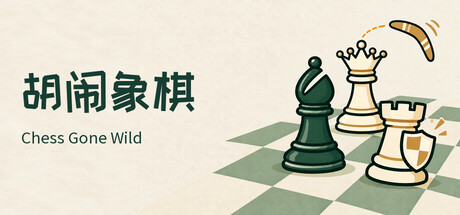
- Crazy Chess was designed and directed by our developer. During development, AI tools were used to support programming and to help create some of the game's assets. All AI-assisted content was reviewed, edited and approved by the developer before being included in the game.
- The game does not generate content with AI while it is running: there is no real-time AI generation of text, images, audio or levels. The puzzle levels were created with our own deterministic level design tools, and were reviewed and adjusted by hand.
- AI tools used: Claude Code (programming support) and Suno (music).
Generative AI tools were used during development to help create some of the game's assets, including much of the artwork and some of the 3D models. All AI-assisted assets were selected, edited and integrated by the developer. The game's concept, design, objectives and story were created by the developer without AI. No generative AI is used inside the game: nothing is generated by AI while you play, and computer opponents and all difficulty levels are driven by programmatic game logic.
Some artwork, music, and store promotional materials for this game were created using generative AI. All such content was generated in advance during development.
Some of the game's content, including artwork, music, voices, and text, was created with the help of generative AI tools and reviewed by the developer. No AI content is generated during gameplay.
Most of the game's pictures were generated with OpenAI image models during development, then cut out, framed and finished with the developer's own tools. That covers the character and monster portraits, item icons, town buildings and interiors, dungeon wall and floor textures, combat backdrops, story scenes and the game's emblem. The depth maps that give portraits and buildings their slight movement were made from those pictures with the Depth Anything model. The 3D buildings, the plaster and glass textures and the status icons were made with the developer's own scripts.
The sound effects, creature sounds, town ambience, the party's combat voices and the opening narration were generated with ElevenLabs. The rain, wind and thunder come from a licensed sound library. All of the music was made by the developer with Stable Audio.
Some in-game text, such as the help pages and item descriptions, was drafted with an AI writing assistant and edited by the developer.
The store capsule art is composed from the generated portraits and emblem. Nothing is generated while the game runs.
Generative AI was used to prepare the game description on the Steam store page, the short game description, and to translate and localize these texts into the supported languages. The final selection, editing, and publication of the materials are carried out entirely by the developer. Generative AI is not used within the game itself, and no content is generated in real time.
this game contains AI generated content, in particular the in-game texts and localization are built with AI assistance, the graphics, music or sounds are not AI generated. in future the AI generated content will be progressively removed in favor of human generated content.
Some of this game's content was made with the help of generative AI. The heroes started as AI concept images and AI-generated 3D models (made with Meshy from our own character designs); we then cleaned them up and animate them with our own code. The English texts of the game and of this store page were written with the help of an AI assistant. The sounds and music are synthesized by our own code. Nothing is generated by AI while you play.
AI-assisted tools were used to help draft and translate text into localized languages. Otherwise, the game would be unavailable in any other languages besides English.
Generative AI tools were used to assist with the translation and localization of the Steam store page text. All AI-assisted content was reviewed and edited before publication. No AI-generated content is created during gameplay.