Public Steam disclosure research25,376 disclosures tracked
Where do games disclose AI use?
Search developers’ Steam disclosures, compare classified AI use across
games, and follow recorded changes.
This index adds cross-game classifications and statistics to
statements published on individual store pages.
Groups reflect automatic analysis of public disclosures; mature records are excluded. These counts do not measure AI use across all of Steam.
Missing or unclear statements cannot establish whether a game uses AI.
AI-assisted tools were used during the development of Tidy Up Her Toys as part of the creative and production workflow.
AI was utilized to assist with certain aspects of programming and development, music creation, and the production of selected graphical and visual elements. These tools were used to support the development process, experimentation, iteration, and creative production.
The overall game design, direction, implementation, integration, editing, and final creative decisions were handled by the developer. AI-generated and AI-assisted content was reviewed, adapted, and integrated into the game as part of the development process.
The in-game Japanese and Simplified Chinese translations were created with the help of AI tools. AI coding assistants were also used during development. All artwork, from pitches to character designs, was made by hand, and the music was created by the credited artists.
This game utilizes pre-rendered content assisted by generative AI tools exclusively for a few specific background songs, character voice acting, and minor conceptual art references.
The ambient sound design, audio effects, and liminal soundscapes were crafted by human artists. Certain 3D models and environmental props were acquired under license from creators on the Unreal Engine Marketplace. All narrative writing, game design, level composition, programming, story, and creative direction are original works created and directed entirely by the author.
Parts of the store-page text and a few short interface lines were drafted with an AI writing assistant and reviewed and edited by the developer. The game's literary text, English narration, music, sound design and visual design are human-made.
The audio in the game is not produced by machine learning models. The game images are divided into two categories: ① The vast majority are generated programmatically and not by machine learning models; ② The character illustrations are generated by machine learning and then selected, cropped, and post-processed by humans. The game text (environmental narration, entry descriptions, achievement descriptions) is drafted by AI with assistance and then revised by humans before being included; developers conduct fact and expression reviews of all game images and text before release. The game does not have an AI system for real-time generation of content, and player input will not be used for training or content generation.
Eldritch Tricks was not dealt by human hands alone: we lean on procedural and AI-assisted tools during development to help draft what you see and hear. Every card that reaches the table is chosen, shaped, and finished by the Iron Tower Press team, and the game you play is ours.
This game uses generative AI to create the following content:
- Images (backgrounds, character portraits, item art, UI, and store capsule art): image generation models
- Music: Suno
- Sound effects: procedural synthesis, plus OpenMOSS MOSS-SoundEffect v2 (Apache-2.0)
- Text and code: created with the assistance of generative AI
All of the above were pre-generated during development. No AI runs at runtime.
This game uses generative AI for part of its artwork and its voice lines.
The hunter portraits were created with a generative AI image model, then selected, retouched and approved by hand. The voices you hear over the radio were produced with an AI voice model, speaking scripts written by the developer.
All of this was generated during development and is fixed in the build. No generative AI runs while you play: nothing is created live, and the game never contacts an AI service.
Some of the 3D props in this game — the ritual items players carry and place, and a few pieces of set dressing — were created with an AI-assisted 3D generation tool from text prompts. Every generated model was reviewed, cleaned up and integrated by hand before it shipped. Nothing is generated by AI while you play.
We used an AI diffusion tool in Krita to help create the background for the small capsule shown in search results. Our artist then worked over it with several extra layers, a bit like matte painting. For now, it's a placeholder until our artist finishes the hand-painted version of the small capsule.
The logo and the other capsule images were already hand-painted by our artist. The in-game portraits were also drawn by another artist on our team.
We have a devlog on our website about how we made the capsule artwork and hero portraits, and we'll share the full process on the Steam Community soon too.
The playtest build also includes a few placeholder assets made with AI tools in Krita. Our new UI artist is working on a new UI, so we'll be replacing those placeholders soon. As mentioned above, the hero portraits are also hand-drawn by our artist.
Uses voice cloning by Speechify.
Uses AI generated images uploaded by other users to Pixabay when there wasn't a better alternative available.
Most such images are for character portraits and similar placeholder assets of secondary importance.
There is no prompt or direct AI usage.
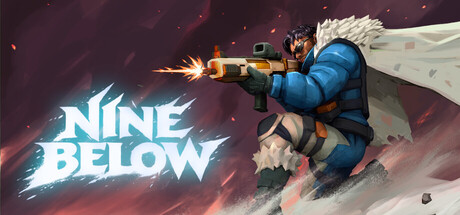
Generative AI tools were used during development as part of the early creative and production process, including generating mood boards, visual references, and some base meshes.
These materials were used as starting points rather than finished game content. Any AI-assisted assets included in Nine Below were substantially reworked, modified, refined, and polished by hand before being included in the final game.
AI was used to support iteration and production, while the final game was designed, built, and finished by the developer. No AI-generated content is created during gameplay.
Character and environment art and animations are AI-generated as a starting point (PixelLab, ComfyUI), then reworked, corrected and integrated by hand by the solo developer. The same applies to store page and marketing artwork. All AI-assisted content is pre-generated and finalized before shipping — no content is generated at runtime on the player's machine.
As an indie dev, I leveraged AI to create this game. Some voices are AI-generated. Concept art was generated for inspiration and then built from scratch.
Generative AI tools were used in parts of this game's development, always under human creative direction.
Art: The game's visual design is led by a classically trained 2D artist acting as art director. The UI style, overall color palette, character art, and environment style are all conceived and directed by a human, starting from hand-drawn sketches and detailed art direction. Generative AI is used only as an execution tool carrying out that direction—the distinctive style and texture of the game come from human artistic judgment, and every asset is directed, selected, and refined by the artist.
Music: The main melodies are composed by us by ear. Generative AI is then directed—with specific guidance on mood, instrumentation, and arrangement—to help realize the finished tracks.
Code: The game's code was generated using AI coding tools.
All content is reviewed and integrated by the developers before inclusion. The game contains no content generated live by AI during gameplay.
Generative AI tools were used during development to create and refine portions of the game’s pre-generated visual artwork, including character and enemy art, environments, UI elements, icons, effects, and cutscene imagery. Generative AI was also used for sound effects and as an assistant during programming and development. All generated material was reviewed, edited, and integrated by the developer.
Some images used in the game’s development and promotional materials were initially generated with the assistance of AI tools. These images were not used as final untouched AI output: they were reviewed, edited, adjusted, and finalized by human artists.
AI was used only as a production aid to speed up early visual exploration and reduce iteration time. It was not used to replace the work of human artists, but rather as part of a broader art pipeline that still relies on human direction, editing, and final approval.
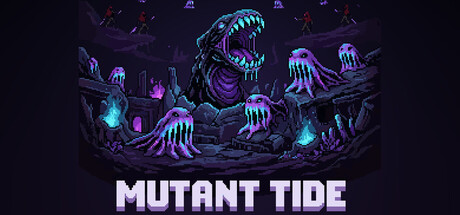
Some 2D art assets in MutantTide (including promotional key art) were created with the assistance of AI based pixel art tools. All game design, code, systems, and gameplay were hand crafted by the developer. No AI generated content is produced live during gameplay.
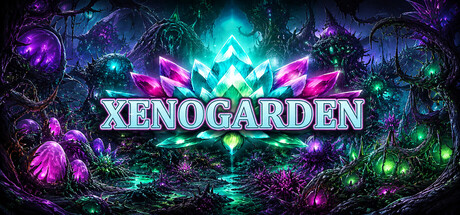
Generative AI-assisted tools were used as part of the development process for Xenogarden.
This includes support in creating and refining selected visual content such as concept art, artwork, textures, marketing materials and store page assets, as well as assistance with text, localization, sound/music ideas and creative drafts.
All content included in the game is pre-generated, selected, reviewed and curated. The game does not generate new AI content during gameplay and does not connect to external AI services during gameplay.
Generative AI was used during the development of this game to assist with:
- Generating static illustrations for in-game achievement icons.
- Generating placeholder sound effects to be swapped before exiting EA
This game uses pre-generated AI-assisted content.
Most of the visual assets used in the game and its promotional materials were created with the help of generative AI tools, including character images, background images, key visual materials, and video/trailer assets.
All AI-assisted outputs were reviewed, selected, edited, and integrated by the developer before being included in the game. The game does not generate AI content in real time during gameplay.
Generative AI was used only for limited enhancements to marketing visuals, texture edits, and selected SFX.
Gameplay systems and mechanics do not rely on AI-generated content.
All generated assets are owned and licensed by us.
AI DISCLOSURE
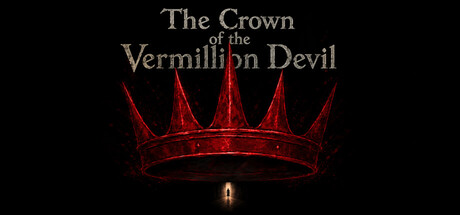
Crown of the Vermillion Devil uses AI-generated imagery for its location artwork. All writing, game design, systems, music, and narrative content are original human-authored work. We are a small independent project and have been transparent about this from the start. If that affects your purchasing decision, we respect it.
This game uses generative AI during development for pre-rendered visual assets, store capsule and library artwork, icons, textures, and supporting marketing images. AI-generated material is reviewed and edited before inclusion. The game does not generate AI content for players during gameplay.
Generative AI Disclosure
Some visual concepts, promotional images, text drafts, and background music were created or edited with the assistance of generative AI tools. The final materials were reviewed, selected, modified, and integrated by the developer.
The game does not include real-time generative AI features during gameplay.
All of the game's text was written by hand by Yohan Dupuy and translated by a qualified professional to achieve high-quality literary English (not AI). AI is only used partially for the visual and audio presentation.
To make the game accessible to as many regions as possible, all translations besides English were produced using advanced generative AI localization tools. We are committed to updating these translations based on player feedback.
During the development of Hell Cleaners, AI tools were used to create early concepts and references to help explore the visual direction of the game. All final art assets that ship in the game were created, painted, or reworked by hand by our art team. No AI-generated audio, voice, or narrative text is used in the shipped product. We believe games should be made by humans!
AI-assisted tools were used during the development of Tidy Up Her Toys as part of the creative and production workflow.
AI was utilized to assist with certain aspects of programming and development, music creation, and the production of selected graphical and visual elements. These tools were used to support the development process, experimentation, iteration, and creative production.
The overall game design, direction, implementation, integration, editing, and final creative decisions were handled by the developer. AI-generated and AI-assisted content was reviewed, adapted, and integrated into the game as part of the development process.
The in-game Japanese and Simplified Chinese translations were created with the help of AI tools. AI coding assistants were also used during development. All artwork, from pitches to character designs, was made by hand, and the music was created by the credited artists.
This game utilizes pre-rendered content assisted by generative AI tools exclusively for a few specific background songs, character voice acting, and minor conceptual art references.
The ambient sound design, audio effects, and liminal soundscapes were crafted by human artists. Certain 3D models and environmental props were acquired under license from creators on the Unreal Engine Marketplace. All narrative writing, game design, level composition, programming, story, and creative direction are original works created and directed entirely by the author.
Parts of the store-page text and a few short interface lines were drafted with an AI writing assistant and reviewed and edited by the developer. The game's literary text, English narration, music, sound design and visual design are human-made.
The audio in the game is not produced by machine learning models. The game images are divided into two categories: ① The vast majority are generated programmatically and not by machine learning models; ② The character illustrations are generated by machine learning and then selected, cropped, and post-processed by humans. The game text (environmental narration, entry descriptions, achievement descriptions) is drafted by AI with assistance and then revised by humans before being included; developers conduct fact and expression reviews of all game images and text before release. The game does not have an AI system for real-time generation of content, and player input will not be used for training or content generation.
Eldritch Tricks was not dealt by human hands alone: we lean on procedural and AI-assisted tools during development to help draft what you see and hear. Every card that reaches the table is chosen, shaped, and finished by the Iron Tower Press team, and the game you play is ours.
This game uses generative AI to create the following content:
- Images (backgrounds, character portraits, item art, UI, and store capsule art): image generation models
- Music: Suno
- Sound effects: procedural synthesis, plus OpenMOSS MOSS-SoundEffect v2 (Apache-2.0)
- Text and code: created with the assistance of generative AI
All of the above were pre-generated during development. No AI runs at runtime.
This game uses generative AI for part of its artwork and its voice lines.
The hunter portraits were created with a generative AI image model, then selected, retouched and approved by hand. The voices you hear over the radio were produced with an AI voice model, speaking scripts written by the developer.
All of this was generated during development and is fixed in the build. No generative AI runs while you play: nothing is created live, and the game never contacts an AI service.
Some of the 3D props in this game — the ritual items players carry and place, and a few pieces of set dressing — were created with an AI-assisted 3D generation tool from text prompts. Every generated model was reviewed, cleaned up and integrated by hand before it shipped. Nothing is generated by AI while you play.
We used an AI diffusion tool in Krita to help create the background for the small capsule shown in search results. Our artist then worked over it with several extra layers, a bit like matte painting. For now, it's a placeholder until our artist finishes the hand-painted version of the small capsule.
The logo and the other capsule images were already hand-painted by our artist. The in-game portraits were also drawn by another artist on our team.
We have a devlog on our website about how we made the capsule artwork and hero portraits, and we'll share the full process on the Steam Community soon too.
The playtest build also includes a few placeholder assets made with AI tools in Krita. Our new UI artist is working on a new UI, so we'll be replacing those placeholders soon. As mentioned above, the hero portraits are also hand-drawn by our artist.
Uses voice cloning by Speechify.
Uses AI generated images uploaded by other users to Pixabay when there wasn't a better alternative available.
Most such images are for character portraits and similar placeholder assets of secondary importance.
There is no prompt or direct AI usage.
Generative AI tools were used during development as part of the early creative and production process, including generating mood boards, visual references, and some base meshes.
These materials were used as starting points rather than finished game content. Any AI-assisted assets included in Nine Below were substantially reworked, modified, refined, and polished by hand before being included in the final game.
AI was used to support iteration and production, while the final game was designed, built, and finished by the developer. No AI-generated content is created during gameplay.
Character and environment art and animations are AI-generated as a starting point (PixelLab, ComfyUI), then reworked, corrected and integrated by hand by the solo developer. The same applies to store page and marketing artwork. All AI-assisted content is pre-generated and finalized before shipping — no content is generated at runtime on the player's machine.
As an indie dev, I leveraged AI to create this game. Some voices are AI-generated. Concept art was generated for inspiration and then built from scratch.
Generative AI tools were used in parts of this game's development, always under human creative direction.
Art: The game's visual design is led by a classically trained 2D artist acting as art director. The UI style, overall color palette, character art, and environment style are all conceived and directed by a human, starting from hand-drawn sketches and detailed art direction. Generative AI is used only as an execution tool carrying out that direction—the distinctive style and texture of the game come from human artistic judgment, and every asset is directed, selected, and refined by the artist.
Music: The main melodies are composed by us by ear. Generative AI is then directed—with specific guidance on mood, instrumentation, and arrangement—to help realize the finished tracks.
Code: The game's code was generated using AI coding tools.
All content is reviewed and integrated by the developers before inclusion. The game contains no content generated live by AI during gameplay.
Generative AI tools were used during development to create and refine portions of the game’s pre-generated visual artwork, including character and enemy art, environments, UI elements, icons, effects, and cutscene imagery. Generative AI was also used for sound effects and as an assistant during programming and development. All generated material was reviewed, edited, and integrated by the developer.
Some images used in the game’s development and promotional materials were initially generated with the assistance of AI tools. These images were not used as final untouched AI output: they were reviewed, edited, adjusted, and finalized by human artists.
AI was used only as a production aid to speed up early visual exploration and reduce iteration time. It was not used to replace the work of human artists, but rather as part of a broader art pipeline that still relies on human direction, editing, and final approval.
Some 2D art assets in MutantTide (including promotional key art) were created with the assistance of AI based pixel art tools. All game design, code, systems, and gameplay were hand crafted by the developer. No AI generated content is produced live during gameplay.
Generative AI-assisted tools were used as part of the development process for Xenogarden.
This includes support in creating and refining selected visual content such as concept art, artwork, textures, marketing materials and store page assets, as well as assistance with text, localization, sound/music ideas and creative drafts.
All content included in the game is pre-generated, selected, reviewed and curated. The game does not generate new AI content during gameplay and does not connect to external AI services during gameplay.
Generative AI was used during the development of this game to assist with:
- Generating static illustrations for in-game achievement icons.
- Generating placeholder sound effects to be swapped before exiting EA
This game uses pre-generated AI-assisted content.
Most of the visual assets used in the game and its promotional materials were created with the help of generative AI tools, including character images, background images, key visual materials, and video/trailer assets.
All AI-assisted outputs were reviewed, selected, edited, and integrated by the developer before being included in the game. The game does not generate AI content in real time during gameplay.
Generative AI was used only for limited enhancements to marketing visuals, texture edits, and selected SFX.
Gameplay systems and mechanics do not rely on AI-generated content.
All generated assets are owned and licensed by us.
AI DISCLOSURE
Crown of the Vermillion Devil uses AI-generated imagery for its location artwork. All writing, game design, systems, music, and narrative content are original human-authored work. We are a small independent project and have been transparent about this from the start. If that affects your purchasing decision, we respect it.
This game uses generative AI during development for pre-rendered visual assets, store capsule and library artwork, icons, textures, and supporting marketing images. AI-generated material is reviewed and edited before inclusion. The game does not generate AI content for players during gameplay.
Generative AI Disclosure
Some visual concepts, promotional images, text drafts, and background music were created or edited with the assistance of generative AI tools. The final materials were reviewed, selected, modified, and integrated by the developer.
The game does not include real-time generative AI features during gameplay.
All of the game's text was written by hand by Yohan Dupuy and translated by a qualified professional to achieve high-quality literary English (not AI). AI is only used partially for the visual and audio presentation.
To make the game accessible to as many regions as possible, all translations besides English were produced using advanced generative AI localization tools. We are committed to updating these translations based on player feedback.
During the development of Hell Cleaners, AI tools were used to create early concepts and references to help explore the visual direction of the game. All final art assets that ship in the game were created, painted, or reworked by hand by our art team. No AI-generated audio, voice, or narrative text is used in the shipped product. We believe games should be made by humans!