Public Steam disclosure research25,376 disclosures tracked
Where do games disclose AI use?
Search developers’ Steam disclosures, compare classified AI use across
games, and follow recorded changes.
This index adds cross-game classifications and statistics to
statements published on individual store pages.
Groups reflect automatic analysis of public disclosures; mature records are excluded. These counts do not measure AI use across all of Steam.
Missing or unclear statements cannot establish whether a game uses AI.
The original 100 000+ word story was written by me in German. I used the AI ChatGPT to help me with localising that into English. This translation was prepared, guided and proof-read by me, to ensure that certain fantastic elements of the story and the world within the game carried over into English. Despite that, much of the actual translating was done by the AI.
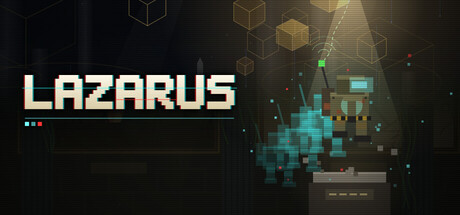
LAZARUS was developed with the help of generative AI tools. AI assisted in writing the game's code — including the code that draws every visual and synthesizes all music and sound effects in real time — as well as drafting the story, dialogue, in-game text, English/Chinese localization and store page text. All content was directed, reviewed and edited by the developer. The game does not use AI to generate any content while it is running.
The original story was written by a human author. AI was used to write AI speech in the game. It was also used in localization as a supportive tool. We gladly work with the community to bring the game to more languages.
Parts of the store-page text and a few short interface lines were drafted with an AI writing assistant and reviewed and edited by the developer. The game's literary text, English narration, music, sound design and visual design are human-made.
The use of AI is limited to select visual assets, which were manually reviewed, repainted, and integrated to fit the art direction. The project features original artwork hand-drawn by my artistic partner alongside an original acoustic piano score, entirely composed and performed by me.
This is an independent, completely free passion project with zero monetization, made out of a genuine love for game development. Thank you for playing.
The music in this game was created using the Suno AI music generation tool. All other content — including all art and pixel art, level and puzzle design, mechanics, writing, — was created by hand by the developer, without generative AI.
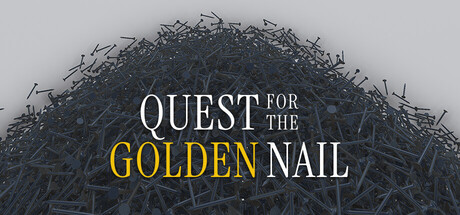
Quest for the Golden Nail was made with extensive use of generative AI. All creative, design and production decisions were made by a human developer.
Generative AI was used for:
Code and implementation support: OpenAI Codex and Anthropic Claude
3D Art & Textures: Codex, ChatGPT / Imagen, Meshy.ai
Writing and translation support: ChatGPT
Sounds and voices were recorded by humans.
Every part of the game was directed, reviewed, tested and refined by hand.
This game and store contains 2D artwork pieces created with the assistance of generative AI. These images are used as static artwork in story-driven cutscenes to help illustrate and convey the game's narrative.
No AI-generated content is created during gameplay, all other game content was created without generative AI.
This game uses some pre-generated content created with generative AI tools. It does not use generative AI to generate content in real time in response to player actions.
Artwork
Generative AI tools were used to create some in-game graphics, as well as images for the Steam store page and promotional and marketing materials. Generated assets are reviewed by the developer and edited or adjusted when necessary. Some assets are used without additional editing.
Translation
AI tools are used to assist with translation and localization for some languages other than Japanese. Translations are reviewed and corrected by the developer.
This game's early development utilized local AI systems for generating initial ideas and imagery surrounding the stage layouts and the initial musical passages, then further edited manually through various pieces of software (Art software and DAWs + numerous VSTs).
All textual copy, dialogue, and scripts in this game are entirely handcrafted and written by the developer without the use of AI. The background music and sound effects are licensed from Pixabay under commercial-use terms. Generative AI (Leonardo.ai) was utilized strictly to pre-generate initial CG illustrations and concept art, which were subsequently edited and refined manually by the developer before being built into the game.
The developer first created a visual guide for the character NULL. Based on that guide, Meshy AI was used to create one pre-generated 3D character model. No AI-generated content is created during gameplay. All other game content, music, audiovisual works, film, website, and Unreal Engine and Wwise systems were created by the developer.
Some voice lines, sound effects, and music in the game and its trailer were
created with generative AI tools (ElevenLabs, Suno), then reviewed, edited,
and finalized by the developer. No content is generated by AI during gameplay.
In the interest of transparency, illustrations were created with the help of AI-assisted tools, used as creative support within a human-led artistic process.
Artificial intelligence was used to generate artwork for the game's Steam page and the game's logo, as well as to translate and improve the game's dialogue. No AI-generated artwork was used in the game itself.
Generative AI tools were used during the development process to assist with writing script dialogues and to generate background music and songs for the game. All AI assets were pre-generated prior to release, and no AI content is generated in real time during gameplay.
Hi everyone. I want to be open about how this game was made and why generative AI was used.
Aika Was Supposed to Die began as a story that I wrote and developed over more than two years. The world, characters, dialogue, themes, and narrative direction were all written by me. I cared deeply about this story, and eventually I felt that a visual novel would be the best way to bring it to life.
As an independent developer working with a limited budget, hiring a full team of artists is not financially possible for me right now. I greatly value human-made art and the work of professional artists. I am also a 3D artist who works with Unreal Engine, so this is something I genuinely care about.
Rather than leave the story untold, I chose to use generative AI as part of the visual production process. The game’s images and video assets were created with the assistance of generative AI tools. However, I did not want that to become an excuse for delivering something careless or low-quality. In fact, having access to these tools encouraged me to be as ambitious as possible with the project.
I created and refined a large number of images and animated sequences to give the game a richer and more cinematic presentation. Every asset was carefully directed, selected, edited, revised, and manually integrated into the story, with the goal of providing players with a cohesive, polished, and emotionally engaging experience.
The writing, narrative design, scene direction, timing, editing, and final creative decisions were all handled by humans. Generative AI was used as a production tool, not as a replacement for authorship, creative direction, or care. No AI content is generated during gameplay.
If the game becomes successful enough to support a larger production, I would love to work with professional artists on future chapters. Until then, this approach has allowed me to share a story that means a great deal to me while doing everything within my reach to make the final experience cohesive, personal, and emotionally meaningful.
Thank you for giving this story a chance.
Generative AI tools were used during development to assist with creating promotional images for the Steam store page, early concept art, and voiceovers for character dialogues. No AI content is generated in real-time during gameplay. All in-game models, code, and environments were manually created, processed, and integrated by the developer.
In a particularly fitting twist for a game about artificial intelligence whose protagonist is herself an artificial intelligence, generative AI tools were used during development to assist with some pre-generated visual assets, music, and portions of the text and localization. All AI-assisted content was reviewed, edited, and curated by the developer. No generative AI is used during gameplay.
ORACLE uses generative AI in two ways: some marketing artwork was created with generative tools, and an optional bundled local language model can generate short, context-aware ORACLE narration during play. Live generation runs locally on the player's PC and is limited to text; it does not generate code, images, audio, or gameplay rules.
Generative AI was used to assist in creating pre-generated visual assets for the game and its promotional materials, including character artwork and event illustrations. It was also used to assist with portions of the game's text and localization. All included content was reviewed and curated by the developer. No content is generated by AI during gameplay.
Generative AI was used during development to assist with editing and reviewing some narrative text and with localization. AI-assisted text was reviewed and edited manually by the developer before being included in the game. No AI-generated content is created live during gameplay.
As a small indie studio, we set out to bring as many of our ideas to life as possible and deliver a deep gaming experience. To turn these ambitions into reality, we utilized AI as an assistant tool. Neural networks helped us write code, create some of the art, and voice the characters. However, the entire creative concept, the design of the interactive diary, the shadow theater sequence, and the overall atmosphere of the project are completely the result of our human imagination and direction.
This game uses generative AI in a limited way. Some in-game and store-page text was drafted, edited, or partially translated with the help of an AI model, then reviewed, adapted, and finalized by the developer. None of the game's art, sprites, animation, music or sound is AI-generated.
Generative AI was used to produce the English voice-over for the in-game AI character. This was an intentional creative choice because the character itself is an artificial intelligence. AI also assisted with localization; however, responsibility for the final content rests with a human.
Cover art, store page imagery and music were created with AI generation tools. All game design, writing and gameplay systems were created by the developer.
AI helped with some writing, troubleshooting, localization, and the Steam store page. All art, animation, music, sound effects, and level design were created entirely by me. I reviewed and edited everything AI assisted with, and several translations were also checked by native speakers. The game does not generate AI content during gameplay and does not connect to any external AI services.
Generative AI tools were used during development to assist with selected pre-generated content,including some balance-object artwork, reflective text, localization, store-page copy, and selected marketing artwork. All generated outputs were manually reviewed, curated, and edited by the developer before being included. The game does not use generative AI at runtime and does not generate or modify player-facing content during play.
The original 100 000+ word story was written by me in German. I used the AI ChatGPT to help me with localising that into English. This translation was prepared, guided and proof-read by me, to ensure that certain fantastic elements of the story and the world within the game carried over into English. Despite that, much of the actual translating was done by the AI.
LAZARUS was developed with the help of generative AI tools. AI assisted in writing the game's code — including the code that draws every visual and synthesizes all music and sound effects in real time — as well as drafting the story, dialogue, in-game text, English/Chinese localization and store page text. All content was directed, reviewed and edited by the developer. The game does not use AI to generate any content while it is running.
The original story was written by a human author. AI was used to write AI speech in the game. It was also used in localization as a supportive tool. We gladly work with the community to bring the game to more languages.
Parts of the store-page text and a few short interface lines were drafted with an AI writing assistant and reviewed and edited by the developer. The game's literary text, English narration, music, sound design and visual design are human-made.
The use of AI is limited to select visual assets, which were manually reviewed, repainted, and integrated to fit the art direction. The project features original artwork hand-drawn by my artistic partner alongside an original acoustic piano score, entirely composed and performed by me.
This is an independent, completely free passion project with zero monetization, made out of a genuine love for game development. Thank you for playing.
The music in this game was created using the Suno AI music generation tool. All other content — including all art and pixel art, level and puzzle design, mechanics, writing, — was created by hand by the developer, without generative AI.
Quest for the Golden Nail was made with extensive use of generative AI. All creative, design and production decisions were made by a human developer.
Generative AI was used for:
Code and implementation support: OpenAI Codex and Anthropic Claude
3D Art & Textures: Codex, ChatGPT / Imagen, Meshy.ai
Writing and translation support: ChatGPT
Sounds and voices were recorded by humans.
Every part of the game was directed, reviewed, tested and refined by hand.
This game and store contains 2D artwork pieces created with the assistance of generative AI. These images are used as static artwork in story-driven cutscenes to help illustrate and convey the game's narrative.
No AI-generated content is created during gameplay, all other game content was created without generative AI.
This game uses some pre-generated content created with generative AI tools. It does not use generative AI to generate content in real time in response to player actions.
Artwork
Generative AI tools were used to create some in-game graphics, as well as images for the Steam store page and promotional and marketing materials. Generated assets are reviewed by the developer and edited or adjusted when necessary. Some assets are used without additional editing.
Translation
AI tools are used to assist with translation and localization for some languages other than Japanese. Translations are reviewed and corrected by the developer.
This game's early development utilized local AI systems for generating initial ideas and imagery surrounding the stage layouts and the initial musical passages, then further edited manually through various pieces of software (Art software and DAWs + numerous VSTs).
All textual copy, dialogue, and scripts in this game are entirely handcrafted and written by the developer without the use of AI. The background music and sound effects are licensed from Pixabay under commercial-use terms. Generative AI (Leonardo.ai) was utilized strictly to pre-generate initial CG illustrations and concept art, which were subsequently edited and refined manually by the developer before being built into the game.
The developer first created a visual guide for the character NULL. Based on that guide, Meshy AI was used to create one pre-generated 3D character model. No AI-generated content is created during gameplay. All other game content, music, audiovisual works, film, website, and Unreal Engine and Wwise systems were created by the developer.
Some voice lines, sound effects, and music in the game and its trailer were
created with generative AI tools (ElevenLabs, Suno), then reviewed, edited,
and finalized by the developer. No content is generated by AI during gameplay.
In the interest of transparency, illustrations were created with the help of AI-assisted tools, used as creative support within a human-led artistic process.
Artificial intelligence was used to generate artwork for the game's Steam page and the game's logo, as well as to translate and improve the game's dialogue. No AI-generated artwork was used in the game itself.
Generative AI tools were used during the development process to assist with writing script dialogues and to generate background music and songs for the game. All AI assets were pre-generated prior to release, and no AI content is generated in real time during gameplay.
Hi everyone. I want to be open about how this game was made and why generative AI was used.
Aika Was Supposed to Die began as a story that I wrote and developed over more than two years. The world, characters, dialogue, themes, and narrative direction were all written by me. I cared deeply about this story, and eventually I felt that a visual novel would be the best way to bring it to life.
As an independent developer working with a limited budget, hiring a full team of artists is not financially possible for me right now. I greatly value human-made art and the work of professional artists. I am also a 3D artist who works with Unreal Engine, so this is something I genuinely care about.
Rather than leave the story untold, I chose to use generative AI as part of the visual production process. The game’s images and video assets were created with the assistance of generative AI tools. However, I did not want that to become an excuse for delivering something careless or low-quality. In fact, having access to these tools encouraged me to be as ambitious as possible with the project.
I created and refined a large number of images and animated sequences to give the game a richer and more cinematic presentation. Every asset was carefully directed, selected, edited, revised, and manually integrated into the story, with the goal of providing players with a cohesive, polished, and emotionally engaging experience.
The writing, narrative design, scene direction, timing, editing, and final creative decisions were all handled by humans. Generative AI was used as a production tool, not as a replacement for authorship, creative direction, or care. No AI content is generated during gameplay.
If the game becomes successful enough to support a larger production, I would love to work with professional artists on future chapters. Until then, this approach has allowed me to share a story that means a great deal to me while doing everything within my reach to make the final experience cohesive, personal, and emotionally meaningful.
Thank you for giving this story a chance.
Generative AI tools were used during development to assist with creating promotional images for the Steam store page, early concept art, and voiceovers for character dialogues. No AI content is generated in real-time during gameplay. All in-game models, code, and environments were manually created, processed, and integrated by the developer.
In a particularly fitting twist for a game about artificial intelligence whose protagonist is herself an artificial intelligence, generative AI tools were used during development to assist with some pre-generated visual assets, music, and portions of the text and localization. All AI-assisted content was reviewed, edited, and curated by the developer. No generative AI is used during gameplay.
ORACLE uses generative AI in two ways: some marketing artwork was created with generative tools, and an optional bundled local language model can generate short, context-aware ORACLE narration during play. Live generation runs locally on the player's PC and is limited to text; it does not generate code, images, audio, or gameplay rules.
Generative AI was used to assist in creating pre-generated visual assets for the game and its promotional materials, including character artwork and event illustrations. It was also used to assist with portions of the game's text and localization. All included content was reviewed and curated by the developer. No content is generated by AI during gameplay.
Generative AI was used during development to assist with editing and reviewing some narrative text and with localization. AI-assisted text was reviewed and edited manually by the developer before being included in the game. No AI-generated content is created live during gameplay.
As a small indie studio, we set out to bring as many of our ideas to life as possible and deliver a deep gaming experience. To turn these ambitions into reality, we utilized AI as an assistant tool. Neural networks helped us write code, create some of the art, and voice the characters. However, the entire creative concept, the design of the interactive diary, the shadow theater sequence, and the overall atmosphere of the project are completely the result of our human imagination and direction.
This game uses generative AI in a limited way. Some in-game and store-page text was drafted, edited, or partially translated with the help of an AI model, then reviewed, adapted, and finalized by the developer. None of the game's art, sprites, animation, music or sound is AI-generated.
Generative AI was used to produce the English voice-over for the in-game AI character. This was an intentional creative choice because the character itself is an artificial intelligence. AI also assisted with localization; however, responsibility for the final content rests with a human.
Cover art, store page imagery and music were created with AI generation tools. All game design, writing and gameplay systems were created by the developer.
AI helped with some writing, troubleshooting, localization, and the Steam store page. All art, animation, music, sound effects, and level design were created entirely by me. I reviewed and edited everything AI assisted with, and several translations were also checked by native speakers. The game does not generate AI content during gameplay and does not connect to any external AI services.
Generative AI tools were used during development to assist with selected pre-generated content,including some balance-object artwork, reflective text, localization, store-page copy, and selected marketing artwork. All generated outputs were manually reviewed, curated, and edited by the developer before being included. The game does not use generative AI at runtime and does not generate or modify player-facing content during play.