Public Steam disclosure research28,028 disclosures tracked
Where do games disclose AI use?
Search developers’ Steam disclosures, compare classified AI use across
games, and follow recorded changes.
This index adds cross-game classifications and statistics to
statements published on individual store pages.
Groups reflect automatic analysis of public disclosures; mature records are excluded. These counts do not measure AI use across all of Steam.
Missing or unclear statements cannot establish whether a game uses AI.
Pre-Generated AI Content:
Characters: The five playable characters' sprite animations (idle, walk, attack, entrance) are AI-assisted. Each character's base sprite was drawn by our own code (written with the AI coding assistant described under Code) and retouched by hand by the developer. The animation frames were then generated from those base sprites with Retro Diffusion (a paid pixel-art generation service with commercial rights) and edited by hand by the developer (cleanup, color keying, frame fixes). Everything else you see is drawn by our own code: all 112 enemies, 700+ equipment icons, UI glyphs, backgrounds, skill icons and effects are procedurally rendered pixel art with no AI-generated images.
Text: In-game text (item, enemy and collectible descriptions, the in-game manual, UI strings) was drafted with an AI language model (Anthropic Claude) and reviewed and approved by the developer. Translations into 10 languages were produced with the same AI model and checked in-game by the developer.
Code: The game is programmed with the help of an AI coding assistant (Anthropic Claude Code), working from the developer's design, instructions and review. All game design decisions, balance values and asset approvals were made by the developer.
Audio: Music is generated at runtime by our own non-AI procedural engine using open-licensed instrument samples (credited in-game); all sound effects are synthesized in-engine. No AI-generated audio or voices are used.
Store assets: Store-page images are made from in-game rendering, so some of them include the same AI-assisted character sprites.
We have reviewed all AI-assisted content and confirm that the game does not contain illegal or infringing content. Prompts did not reference living artists' names, existing IPs, or trademarked material.
Live-Generated AI Content: None. The game does not generate any content with AI at runtime, and it has no network AI features.
AI tools were used to help write the store page text and to create some promotional images. The in-game characters and backgrounds are drawn by the developer’s own code.
During the development of Omenwheel, generative AI was used as an auxiliary tool to create visual references and initial concepts for characters, backgrounds, props, and icons. The final in-game assets were refined, adapted, and implemented by the developer.
AI was also used for character voice synthesis and to assist with writing certain portions of the game's code.
No generative AI is used during gameplay.
Generative AI was used in the development of this game. Character portraits (Retro Diffusion) and the title screen background, logo and story illustrations (Google Gemini) are based on images created with AI image-generation tools, then selected and adjusted by the developer. The animation of the story illustrations, the extra art drawn for the 3D maps (cliff and wall faces) and the program code were made with the help of Claude (Anthropic). AI was also used as a writing aid for the script and its English translation. The map tiles, music and sound effects were made by the developer without AI. No content is generated by AI during gameplay.
Generative AI is used to assist with the initial English translation of the game's text. All AI-generated translations are reviewed, edited, and finalized by the development team to ensure accuracy and quality before being included in the game.
Each creature (Echo) is inspired by real animals, objects and myths of its era, following real evolution: the Greek lion is a descendant of the prehistoric sabre-tooth, the Gaulish bull of the aurochs. Some creature and character sprites and animations started from AI pixel-art generators (PixelLab, SpriteCook). Others were drawn procedurally with code or adapted from CC0 resources. All were hand-edited and refined by the developer.
Buildings and environments are based on real-world historical architecture and on permissively licensed open-source assets (CC0, CC-BY and other non-copyleft licenses), adapted, recreated and hand-edited into pixel art. No AI tools were used to generate the architectural artwork.
The soundtrack is built upon open-source and Creative Commons compositions sourced from OpenGameArt, transformed, given new timbres and procedurally processed with custom Python scripts and algorithmic audio tools to fit each historical era.
The storyline, dialogues, creature descriptions and English translation were drafted with the assistance of AI writing tools, then directed, manually reviewed and rewritten by the developer.
No AI content is generated while the game runs.
Name of AI model included with the game: PixelLab and SpriteCook (pixel-art sprites and animations); Claude by Anthropic (writing assistance and English translation)
AI has been used during development for HUD/Menu design and coding infrastructure as well as certain gameplay elements. No AI content is generated during gameplay.
This game includes content created with generative AI during development: artwork and branding (including Steam promotional images), selected clothing textures, character-model assets, and Japanese synthetic voice performances. These assets are prepared in advance and included as fixed game files. No content is generated by AI during gameplay.
Generative AI tools were used in the developer's workflows to create many of the visual assets (both in the game and in promotion), as well as a small handful of audio assets (primarily music). These assets were then carefully reviewed, edited, modified and iterated on by the developers to match the style and artistic vision of the game. No content is generated by AI during gameplay.
Generative AI tools were used during development to assist in creating some artwork, text, and localization used in the game. All AI-assisted content was reviewed, selected, and edited by the developer before being included in the game. No generative AI is used during gameplay.
All visual assets, audio, text, and promotional materials in this game were created using generative AI tools. The developer selected, edited, refined, and integrated the generated content into the final game. The game does not use generative AI to generate content in real time during gameplay.
This game contains content created with the assistance of AI tools. AI was used during development to assist with programming, visual assets, and other creative elements. All generated content was reviewed, edited, and integrated by the dev.
Generative AI tools were used during development, and every output was reviewed, edited and integrated by the developer. AI contributed to: parts of the code, the English translation and store copy, some tower and enemy 3D models and textures, UI icons, co-op stickers, title and loading screen illustrations, the opening and ending cinematics, the store key art, the promotional mascot, and the background music and some sound effects. Game design, levels, balance and overall direction were decided by the developer. Nothing is generated by AI while you play.
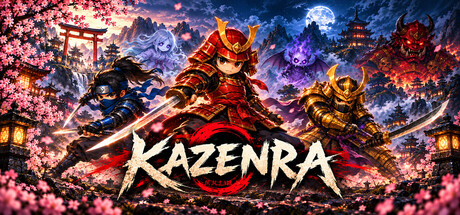
Some visual and text content in KAZENRA was created or refined with the assistance of generative AI tools during development. All such content was reviewed, selected, edited, and integrated by the developer before release. The game does not generate AI content during gameplay.
This game was created by a real human, using the Codex development environment. Contains lots of generated artwork and descriptive text, as well as gameplay refinements gained through AI powered balance testing.
This game uses generative AI to assist with multilingual translation and to create some of its in-game music. All related content was generated in advance during development and reviewed and edited by the development team.
Some visual assets in this game — including character portraits, illustrations, and marketing images — were created with the assistance of generative AI tools. All AI-generated material was reviewed, edited, and finalized by the developer. No AI content is generated during gameplay.
Some character, costume, and promotional artwork was created with the assistance of generative AI image tools, then selected, edited, and assembled by the developer. There is no live AI generation during gameplay, and the game does not connect to external AI services.
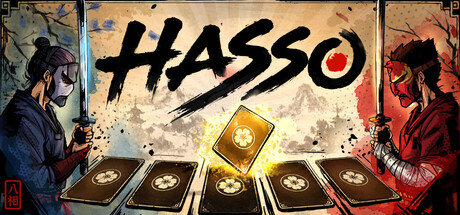
HASSO uses generative AI tools for part of its pre-produced content: the card illustrations, and the translation of the game's text into the languages it supports. All AI-generated content is reviewed and curated before it is included in the game. The user interface icons, the music and the sound effects are not AI-generated. No content is generated by AI at runtime: the player never sends prompts and never receives live AI output.
Development Toolchain developed by AI with human guided R&D. The engine and all game code are hand-written (custom C++ engine, no third-party game engine). 2D graphical assets — character, NPC, and enemy art, portraits, environment and UI artwork — and the pre-rendered cinematic videos were created using locally-run AI image/video generation tools trained on our own styles, then manually reviewed, edited, and integrated by the developer. All AI content was pre-generated during development; nothing is generated by AI at runtime.
This game uses generative AI tools to help create some of its visual assets, such as background art, characters, and the logo. All such assets were generated during development and were reviewed, curated, and hand-adjusted by the developer before being included in the game. No generative AI runs while you play, and no player input or personal data is ever sent to any AI service.
Machine translation has been used for language localization.
Some background elements, such as grass and trees, were created using AI-generated images and then manually edited and refined.
This game uses generative AI to assist with parts of the localization process. All AI-assisted translations are reviewed and edited by the developer before being included in the game.
Pre-generated content: Some in-game visual content is produced by procedural code written with the assistance of an AI coding assistant (Anthropic Claude). This includes certain 3D building shapes (e.g., palace halls, storehouses, pagodas), procedural textures (roof tiles, rammed-earth walls), town layouts, and terrain painting. No AI image or 3D-model generators were used for shipped art; character and unit art was made by the developer. All AI-assisted output was reviewed and edited by the developer.
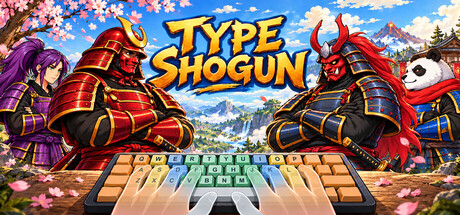
Type Shogun uses pre-generated AI-assisted artwork for some stylized visual assets, including Steam store/library artwork and selected marketing/capsule images. Some in-game background or presentation artwork may also include AI-assisted elements. All AI-assisted content was reviewed, selected, and curated by NH Media LLC before inclusion.
Type Shogun does not use live generative AI during gameplay. Players cannot generate AI images, text, audio, or other AI content inside the game.
Some art, music, and 3D assets in this game were created with the help of generative AI tools. Every AI-generated asset was carefully reviewed, refined, and hand-curated by the developer to fit the game's art direction and tone. The game does not use any live-generated (runtime) AI content.
This game uses generative AI tools during development to create or assist with some pre-generated content. This includes code assistance, visual asset creation, and music creation.
Generative AI tools are used to assist with programming during development, to create or assist with character artwork, background artwork, store page graphics, Steam community assets, and marketing materials, and to create or assist with background music.
AI-assisted assets and code are reviewed, edited, and integrated by the developer before release. The game does not use generative AI to generate real-time content during gameplay, and players do not directly interact with a generative AI system.
The “combat AI” described in the game is a gameplay system that controls enemy behavior and tactical decision-making. It is not generative AI.
Real-Time Generation: This game does not feature any live or real-time AI content generation.
External Connectivity: The game runs entirely locally and does not connect to external AI services or servers while playing.
Pre-Generated Content: Generative AI tools were used to create the game's background music, and to generate source material for portions of the sound and art, refined by the developer.
The developers used generative AI tools in the creation of this game. Portions of the game's content — including visual art and 3D assets, audio, in-game narrative and text, and translations into the supported languages — were produced with the assistance of generative AI and then reviewed, edited, and curated by the developer. All AI-assisted content is generated ahead of time and is fixed in the shipped game. Builder Bros does not generate any content using AI during gameplay, and does not connect to any external AI service.
This title makes assistive use of generative AI tools in the following areas. All AI-generated outputs are manually reviewed, edited, and curated by the development team before being incorporated as final assets, and we have taken care to ensure that they do not infringe on the rights of third parties. No real-time AI generation occurs during gameplay.[Pre-Rendered Content — AI-Assisted Areas]- Production support for a portion of the in-game visual assets- Production support for a portion of the in-game music (BGM) and sound effects- Translation support for store page localization across supported languages (with human proofreading)[Live Generation]The game does not invoke generative AI in real time at any point during gameplay.
AI is used to create codes for the game, also used to create some graphical elements, like usage of upscayl to create larger map, some character may also created with ai. Texture etc is hand made, (see full disclosure in credits page within the game, this page also available in demo)
This game uses AI-generated content during its development. Some of the 2D artwork and promotional images were created with the assistance of AI tools. All such content is pre-generated, curated by the developer, and remains static within the final product. The game does not feature real-time AI content generation during gameplay.