Public Steam disclosure research25,376 disclosures tracked
Where do games disclose AI use?
Search developers’ Steam disclosures, compare classified AI use across
games, and follow recorded changes.
This index adds cross-game classifications and statistics to
statements published on individual store pages.
Groups reflect automatic analysis of public disclosures; mature records are excluded. These counts do not measure AI use across all of Steam.
Missing or unclear statements cannot establish whether a game uses AI.
Part of the game were created with the help of generative AI tools, then reviewed, edited and assembled by the developer:
• visual art — the ambient background images and the animated background loop
• audio — background music and sound effects
Generative AI is used only during development to produce these assets. The game does NOT use any AI at runtime — there is no live AI generation while you play.
Puzzles and word lists are hand-curated, and level layouts are produced by our own deterministic algorithm (not AI).
This game includes content created with the help of AI during development.
Images (34): backgrounds, the logo and in-game objects were created using OpenAI's image generation (gpt-image), then edited by the developer.
34 of the 66 sprites in the shipping build originate this way.
UI elements and one texture (13) and sound effects (21): these were designed by AI (Claude) and implemented as the developer's own program code. They are not the output of an image or audio generation model; the shapes and waveforms are produced by deterministic processing.
The game does not generate any content with AI at runtime.
Music is licensed from a purchased royalty-free library and involves no
AI. Stage design is the developer's own work.
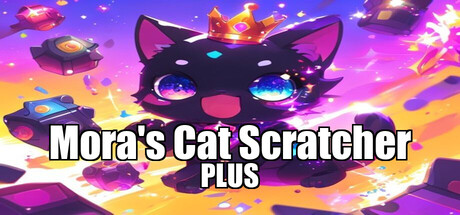
Cat & Fox Studios used generative AI image tools (Pollinations FLUX) to create the store-page art assets for this game, including:
the Main Capsule, Library Hero, Library Logo, Vertical Capsule, Page Background, small/header capsules, and the character illustrations of Mora the cat shown on the store page and in gallery posts.
These AI-generated assets are used for marketing imagery and Steam store presentation only. The original music in the game was composed by Dr. Jenna Fox of Cat & Fox Studios.
The game itself does not call any AI service during gameplay — all play is fully deterministic.
Some of the game's visual elements were created using AI tools during the development stage (for example, the design of Albums). Artists manually refined all such materials. Generative AI is not used in the gameplay and does not generate any content during the game.
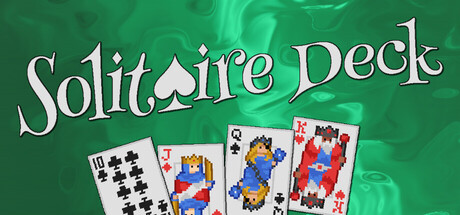
AI tools were used to localize Solitaire Deck's text into multiple languages, this is the only AI content in the game. As a solo developer, it was my only feasible way to support players who prefer games in their native language. Some translations have been reviewed by native speakers, and I'm working to get more checked over time. If you spot anything off, please let me know through the Steam discussions and I'll get it fixed.
Some of the game's visual elements were created using AI tools during the development stage (for example, the design of Albums). Artists manually refined all such materials. Generative AI is not used in the gameplay and does not generate any content during the game.
Some of the game's visual elements were created using AI tools during the development stage (for example, the design of Albums). Artists manually refined all such materials. Generative AI is not used in the gameplay and does not generate any content during the game.
Some of the game's visual elements were created using AI tools during the development stage (for example, the design of Albums). Artists manually refined all such materials. Generative AI is not used in the gameplay and does not generate any content during the game.
Some of the game's icons were generated using AI image generation software. All icons were reviewed and adapted by the development team to fit the game's style
Some of the game's visual elements were created using AI tools during the development stage (for example, the design of Albums). Artists manually refined all such materials. Generative AI is not used in the gameplay and does not generate any content during the game.
Some of the game's visual elements were created using AI tools during the development stage (for example, the design of Albums). Artists manually refined all such materials. Generative AI is not used in the gameplay and does not generate any content during the game.
Some of the game's visual elements were created using AI tools during the development stage (for example, the design of Albums). Artists manually refined all such materials. Generative AI is not used in the gameplay and does not generate any content during the game.
There is some writing which is provided for the player to simulate the conversational style of LLMs when the player is pretending to be the ship's computer. This text was generated via LLM.
Some of the game's visual elements were created using AI tools during the development stage (for example, the design of Albums). Artists manually refined all such materials. Generative AI is not used in the gameplay and does not generate any content during the game.
Some of the game's visual elements were created using AI tools during the development stage (for example, the design of Albums). Artists manually refined all such materials. Generative AI is not used in the gameplay and does not generate any content during the game.
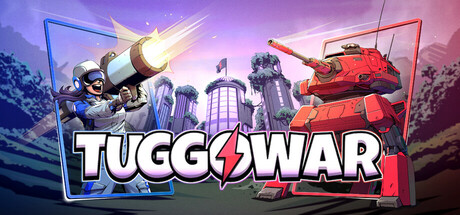
Tuggowar artwork is created through a process of creative design by artists who used AI-assisted rendering and manual work. As a small independent studio, hiring a team of full-time artists was not within our means. All use of AI is commercially licensed.
Part of the game were created with the help of generative AI tools, then reviewed, edited and assembled by the developer:
• visual art — the ambient background images and the animated background loop
• audio — background music and sound effects
Generative AI is used only during development to produce these assets. The game does NOT use any AI at runtime — there is no live AI generation while you play.
Puzzles and word lists are hand-curated, and level layouts are produced by our own deterministic algorithm (not AI).
This game includes content created with the help of AI during development.
Images (34): backgrounds, the logo and in-game objects were created using OpenAI's image generation (gpt-image), then edited by the developer.
34 of the 66 sprites in the shipping build originate this way.
UI elements and one texture (13) and sound effects (21): these were designed by AI (Claude) and implemented as the developer's own program code. They are not the output of an image or audio generation model; the shapes and waveforms are produced by deterministic processing.
The game does not generate any content with AI at runtime.
Music is licensed from a purchased royalty-free library and involves no
AI. Stage design is the developer's own work.
Cat & Fox Studios used generative AI image tools (Pollinations FLUX) to create the store-page art assets for this game, including:
the Main Capsule, Library Hero, Library Logo, Vertical Capsule, Page Background, small/header capsules, and the character illustrations of Mora the cat shown on the store page and in gallery posts.
These AI-generated assets are used for marketing imagery and Steam store presentation only. The original music in the game was composed by Dr. Jenna Fox of Cat & Fox Studios.
The game itself does not call any AI service during gameplay — all play is fully deterministic.
Some of the game's visual elements were created using AI tools during the development stage (for example, the design of Albums). Artists manually refined all such materials. Generative AI is not used in the gameplay and does not generate any content during the game.
AI tools were used to localize Solitaire Deck's text into multiple languages, this is the only AI content in the game. As a solo developer, it was my only feasible way to support players who prefer games in their native language. Some translations have been reviewed by native speakers, and I'm working to get more checked over time. If you spot anything off, please let me know through the Steam discussions and I'll get it fixed.
Some of the game's visual elements were created using AI tools during the development stage (for example, the design of Albums). Artists manually refined all such materials. Generative AI is not used in the gameplay and does not generate any content during the game.
Some of the game's visual elements were created using AI tools during the development stage (for example, the design of Albums). Artists manually refined all such materials. Generative AI is not used in the gameplay and does not generate any content during the game.
Some of the game's visual elements were created using AI tools during the development stage (for example, the design of Albums). Artists manually refined all such materials. Generative AI is not used in the gameplay and does not generate any content during the game.
Some of the game's icons were generated using AI image generation software. All icons were reviewed and adapted by the development team to fit the game's style
Some of the game's visual elements were created using AI tools during the development stage (for example, the design of Albums). Artists manually refined all such materials. Generative AI is not used in the gameplay and does not generate any content during the game.
Some of the game's visual elements were created using AI tools during the development stage (for example, the design of Albums). Artists manually refined all such materials. Generative AI is not used in the gameplay and does not generate any content during the game.
Some of the game's visual elements were created using AI tools during the development stage (for example, the design of Albums). Artists manually refined all such materials. Generative AI is not used in the gameplay and does not generate any content during the game.
There is some writing which is provided for the player to simulate the conversational style of LLMs when the player is pretending to be the ship's computer. This text was generated via LLM.
Some of the game's visual elements were created using AI tools during the development stage (for example, the design of Albums). Artists manually refined all such materials. Generative AI is not used in the gameplay and does not generate any content during the game.
Some of the game's visual elements were created using AI tools during the development stage (for example, the design of Albums). Artists manually refined all such materials. Generative AI is not used in the gameplay and does not generate any content during the game.
Tuggowar artwork is created through a process of creative design by artists who used AI-assisted rendering and manual work. As a small independent studio, hiring a team of full-time artists was not within our means. All use of AI is commercially licensed.