Public Steam disclosure research25,867 disclosures tracked
Where do games disclose AI use?
Search developers’ Steam disclosures, compare classified AI use across
games, and follow recorded changes.
This index adds cross-game classifications and statistics to
statements published on individual store pages.
Groups reflect automatic analysis of public disclosures; mature records are excluded. These counts do not measure AI use across all of Steam.
Missing or unclear statements cannot establish whether a game uses AI.
This game contains pre-generated AI-assisted visual assets, including promotional store images, character illustrations, icons, backgrounds, and other artwork used in the game. All AI-generated assets have been reviewed, selected, and edited by the developer before being included in the final product. The game does not use live or runtime AI or external AI services during gameplay.
Some visual assets (store artwork and logo) and localization text in this app were created with the assistance of generative AI tools. All AI-assisted content was reviewed and edited by the developer. The app does not generate any content with AI at runtime.
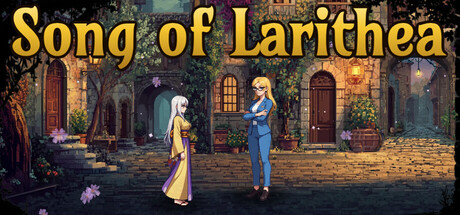
Song of Larithea is made by a solo developer using generative AI across the pipeline: the artwork is AI-generated and then hand-edited in Photoshop, and the voice lines, music, and sound are AI-generated as well. The story is the author's own, adapted from her own novel, with AI helping polish the English text - and future translations will be AI-assisted too. Every asset is reviewed, corrected, and finished by hand before it ships.
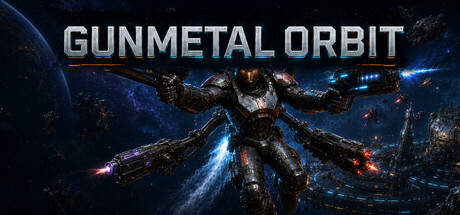
Some of Gunmetal Orbit's art and audio assets - including concept art used to build 3D models, UI icons, sound effects, and the store page key art - were created during development with the help of generative AI tools, then curated, edited, and integrated by the developers. All gameplay code and game design are human-made, and the game does not generate any AI content while you play.
We used generative AI tools (such as Midjourney) to pre-generate some background illustrations and story artworks. All generated assets have been carefully reviewed and edited to ensure they do not violate any copyright or community guidelines.
Pre-generated AI content:
Some of the game's 2D illustrations — world and game-mode cover art, story-scene illustrations, character portraits, and store/promotional images — were created with the assistance of generative AI image tools. Every image was prompted, curated, selected and edited by the developer.
Portions of the game's source code were written with the assistance of an AI coding tool, always under direct human direction, review and testing.
Gameplay sprites, user interface, and fonts come from licensed third-party asset packs or were made by hand.
The game does NOT generate any content with AI at runtime: all content is fixed at development time, and no player data is sent to any AI service.
Generative AI was used to assist with the creation of code-based 3D geometry built in Three.js, as well as some sound assets included in the game. These assets are reviewed, adjusted, and integrated by the developer, and may be revised or replaced throughout development.
The game's art and audio content — including visual assets, UI elements, and store page artwork — was generated with the assistance of AI tools during development and then refined by the team. All AI-generated content was created during development; the game does not generate content while you play.
Generative AI was used for brainstorming concepts and ideas during the design process, as well as for creating a few 2D visual assets and posters within the game environment.
Our game, Neo-Exodus: Last Bastion, utilizes generative AI tools to assist in the creation of certain visual assets. Specifically, AI-generated content is used for some static background images, textures, and promotional art displayed on the store page and within the game. All AI-generated content is pre-generated; there is no real-time generation of content during gameplay. We have manually reviewed and curated all AI-assisted assets to ensure they meet our quality and safety standards.
Some icons and pictures in the game or store page are generated using AI. During gameplay AI does not render anything. AI items are pre-rendered and hard-coded into the game.
Programming: AI tools (Cursor) were utilized to assist with drafting partial code blocks and isolated scripts. The overall core logic, architecture, and system design were manually programmed by the developer.
Art Assets: An AI image generator (PixelLab) was used to help conceptualize and generate some of the pixel art assets. These assets were manually reviewed and integrated to fit the game's retro aesthetic.
Localization / Translation: AI translation tools were used to assist in translating in-game text and store page descriptions into multiple languages.
This game may use AI tools to help create some map and UI assets used inside the game, along with sound effects, since the small development team does not include a dedicated UI or sound designer. All content assisted by AI is reviewed and adjusted by the developer before being included in the game. No AI is used to generate content in real time during gameplay, and core visual art is created without AI. We are working to remove all AI visuals before the full release.
During development, generative AI was used for programming assistance, drafting UI text and English localization, and assisting with the layout and composition of graphical assets for Steam. Any content incorporated into the final product was reviewed and edited by the developer. No AI-generated content is produced while the game is running.
AI tools were used to assist in creating some promotional artwork and supporting language localization. All outputs were reviewed and edited by the developer before use. The game does not use AI to generate gameplay or in-game content.
Prismals is a hand-crafted project built by a dedicated one-man band. To bring this project to life, AI tools were utilized strictly as a collaborative assistant, refining original coding, polishing hand-drawn artwork and mastering the soundtrack. Every core idea, story beat and artistic vision is entirely human-made.
Generative AI was used to assist in the creation of certain artwork, background music, sound effects, and translations. All AI-assisted content was reviewed, edited, and integrated by the developer. No content is generated by AI during gameplay.
This game was developed using generative AI during production. Generative AI was used to create the game's code, artwork, visual assets, user interface, music, sound effects, and text. All AI-generated content was reviewed, tested, curated, and integrated into the final game by the developer. The game does not generate AI content during gameplay.
Some objects, textures, images, and audio assets in this game were created or enhanced using generative artificial intelligence. All AI-generated content has been reviewed, edited, and integrated by the developer as part of the game's artistic vision.
During the process of production, generative AI may be used in following processes: coding and debugging, production of conceptual art of game assets, production of rough models of game assets, production of simple animation effects, restoration of image, audio or video quality, localization and translation. All AI generated game assets that appear directly in game are revised and finalized by real human artists.
This is a text-based game; the illustrative background images were created using a combination of AI technology and Photoshop, the character sprites were hand-drawn and colored using AI, and the music was composed and produced using AI tools.
Generative AI was used to assist in creating translations, marketing materials, music, artwork, and some 3D models. VisApex does not use generative AI during operation. Head tracking runs locally using built-in machine learning models.
Generative AI was used in the game for (a) Generating dialogs and translations (b) Generating game backgrounds, character art and tiles etc (c) Generating Music.
This game contains pre-generated AI-assisted content created during development, including selected visual PNG assets, music tracks, and some localization/rules text. No generative AI is used during gameplay. All AI-assisted content was reviewed, selected, and included as fixed game assets before release.
We use generative AI to generate and enchance existing UI Assets as well as helping us generate our logos and sprites as we don't have a artist for this.
Art Assets: We use generative AI tools to assist in the creation of store page assets (capsules).
Localization: We use AI-powered tools to assist in translating and localizing game text into various languages.
Some of the 2D artwork for this game was created with the assistance of
generative AI image tools. This includes the Steam store page capsule and
library images, the game logo, and some small 2D product icons used in-game.
All AI-generated output was manually reviewed, edited and composited by the
developer before use. All 3D models, environments, gameplay systems and code
were created without generative AI. No content is generated by AI while the
game is running.
Most of the art assets in this game are human-made, but there are some AI-generated portraits of African, Indian, and East Asian characters, since the (human-made) portrait packs used did not contain all ethnic groups represented in the game.
All dialogue in the game is human-directed and edited, but some was AI-generated in order to flesh out the world with unique dialogue for every region and situation.
This game contains pre-generated AI-assisted visual assets, including promotional store images, character illustrations, icons, backgrounds, and other artwork used in the game. All AI-generated assets have been reviewed, selected, and edited by the developer before being included in the final product. The game does not use live or runtime AI or external AI services during gameplay.
Some visual assets (store artwork and logo) and localization text in this app were created with the assistance of generative AI tools. All AI-assisted content was reviewed and edited by the developer. The app does not generate any content with AI at runtime.
Song of Larithea is made by a solo developer using generative AI across the pipeline: the artwork is AI-generated and then hand-edited in Photoshop, and the voice lines, music, and sound are AI-generated as well. The story is the author's own, adapted from her own novel, with AI helping polish the English text - and future translations will be AI-assisted too. Every asset is reviewed, corrected, and finished by hand before it ships.
Some of Gunmetal Orbit's art and audio assets - including concept art used to build 3D models, UI icons, sound effects, and the store page key art - were created during development with the help of generative AI tools, then curated, edited, and integrated by the developers. All gameplay code and game design are human-made, and the game does not generate any AI content while you play.
We used generative AI tools (such as Midjourney) to pre-generate some background illustrations and story artworks. All generated assets have been carefully reviewed and edited to ensure they do not violate any copyright or community guidelines.
Pre-generated AI content:
Some of the game's 2D illustrations — world and game-mode cover art, story-scene illustrations, character portraits, and store/promotional images — were created with the assistance of generative AI image tools. Every image was prompted, curated, selected and edited by the developer.
Portions of the game's source code were written with the assistance of an AI coding tool, always under direct human direction, review and testing.
Gameplay sprites, user interface, and fonts come from licensed third-party asset packs or were made by hand.
The game does NOT generate any content with AI at runtime: all content is fixed at development time, and no player data is sent to any AI service.
Generative AI was used to assist with the creation of code-based 3D geometry built in Three.js, as well as some sound assets included in the game. These assets are reviewed, adjusted, and integrated by the developer, and may be revised or replaced throughout development.
The game's art and audio content — including visual assets, UI elements, and store page artwork — was generated with the assistance of AI tools during development and then refined by the team. All AI-generated content was created during development; the game does not generate content while you play.
Generative AI was used for brainstorming concepts and ideas during the design process, as well as for creating a few 2D visual assets and posters within the game environment.
Our game, Neo-Exodus: Last Bastion, utilizes generative AI tools to assist in the creation of certain visual assets. Specifically, AI-generated content is used for some static background images, textures, and promotional art displayed on the store page and within the game. All AI-generated content is pre-generated; there is no real-time generation of content during gameplay. We have manually reviewed and curated all AI-assisted assets to ensure they meet our quality and safety standards.
Some icons and pictures in the game or store page are generated using AI. During gameplay AI does not render anything. AI items are pre-rendered and hard-coded into the game.
Programming: AI tools (Cursor) were utilized to assist with drafting partial code blocks and isolated scripts. The overall core logic, architecture, and system design were manually programmed by the developer.
Art Assets: An AI image generator (PixelLab) was used to help conceptualize and generate some of the pixel art assets. These assets were manually reviewed and integrated to fit the game's retro aesthetic.
Localization / Translation: AI translation tools were used to assist in translating in-game text and store page descriptions into multiple languages.
This game may use AI tools to help create some map and UI assets used inside the game, along with sound effects, since the small development team does not include a dedicated UI or sound designer. All content assisted by AI is reviewed and adjusted by the developer before being included in the game. No AI is used to generate content in real time during gameplay, and core visual art is created without AI. We are working to remove all AI visuals before the full release.
During development, generative AI was used for programming assistance, drafting UI text and English localization, and assisting with the layout and composition of graphical assets for Steam. Any content incorporated into the final product was reviewed and edited by the developer. No AI-generated content is produced while the game is running.
AI tools were used to assist in creating some promotional artwork and supporting language localization. All outputs were reviewed and edited by the developer before use. The game does not use AI to generate gameplay or in-game content.
Prismals is a hand-crafted project built by a dedicated one-man band. To bring this project to life, AI tools were utilized strictly as a collaborative assistant, refining original coding, polishing hand-drawn artwork and mastering the soundtrack. Every core idea, story beat and artistic vision is entirely human-made.
Generative AI was used to assist in the creation of certain artwork, background music, sound effects, and translations. All AI-assisted content was reviewed, edited, and integrated by the developer. No content is generated by AI during gameplay.
This game was developed using generative AI during production. Generative AI was used to create the game's code, artwork, visual assets, user interface, music, sound effects, and text. All AI-generated content was reviewed, tested, curated, and integrated into the final game by the developer. The game does not generate AI content during gameplay.
Some objects, textures, images, and audio assets in this game were created or enhanced using generative artificial intelligence. All AI-generated content has been reviewed, edited, and integrated by the developer as part of the game's artistic vision.
During the process of production, generative AI may be used in following processes: coding and debugging, production of conceptual art of game assets, production of rough models of game assets, production of simple animation effects, restoration of image, audio or video quality, localization and translation. All AI generated game assets that appear directly in game are revised and finalized by real human artists.
This is a text-based game; the illustrative background images were created using a combination of AI technology and Photoshop, the character sprites were hand-drawn and colored using AI, and the music was composed and produced using AI tools.
Generative AI was used to assist in creating translations, marketing materials, music, artwork, and some 3D models. VisApex does not use generative AI during operation. Head tracking runs locally using built-in machine learning models.
Generative AI was used in the game for (a) Generating dialogs and translations (b) Generating game backgrounds, character art and tiles etc (c) Generating Music.
This game contains pre-generated AI-assisted content created during development, including selected visual PNG assets, music tracks, and some localization/rules text. No generative AI is used during gameplay. All AI-assisted content was reviewed, selected, and included as fixed game assets before release.
We use generative AI to generate and enchance existing UI Assets as well as helping us generate our logos and sprites as we don't have a artist for this.
Art Assets: We use generative AI tools to assist in the creation of store page assets (capsules).
Localization: We use AI-powered tools to assist in translating and localizing game text into various languages.
Some of the 2D artwork for this game was created with the assistance of
generative AI image tools. This includes the Steam store page capsule and
library images, the game logo, and some small 2D product icons used in-game.
All AI-generated output was manually reviewed, edited and composited by the
developer before use. All 3D models, environments, gameplay systems and code
were created without generative AI. No content is generated by AI while the
game is running.
Most of the art assets in this game are human-made, but there are some AI-generated portraits of African, Indian, and East Asian characters, since the (human-made) portrait packs used did not contain all ethnic groups represented in the game.
All dialogue in the game is human-directed and edited, but some was AI-generated in order to flesh out the world with unique dialogue for every region and situation.