Public Steam disclosure research25,981 disclosures tracked
Where do games disclose AI use?
Search developers’ Steam disclosures, compare classified AI use across
games, and follow recorded changes.
This index adds cross-game classifications and statistics to
statements published on individual store pages.
Groups reflect automatic analysis of public disclosures; mature records are excluded. These counts do not measure AI use across all of Steam.
Missing or unclear statements cannot establish whether a game uses AI.
AI is used to help generate some icons and visual elements to improve the player experience, and to assist with drafting certain text, which is then reviewed and edited by the developer.
AI does not affect gameplay or player behavior.
This game includes a small number of pre-generated visual assets created with the assistance of generative AI tools during development.
All gameplay systems, mechanics, balance, progression, and design decisions are fully human-designed and authored.
No generative AI is used during gameplay, and no content is generated dynamically or at runtime.
At the time of release, the final product will not contain any elements created using generative artificial intelligence. AI is used solely for the creation of demonstration graphical content. The final in-game content will be created by human authors.
This game utilizes AI image generation tools in the creation process of visual assets, specifically for card illustrations, relic images, and background images. All generated images have been manually reviewed, retouched, and edited by the developer before being implemented in the game. We have verified that these assets do not contain any illegal content or infringe upon any third-party rights.
The game itself was developed without the use of generative AI.
During the development and release process, we may use AI-based tools to assist with the creation of certain store marketing materials (such as Steam banners). In all such cases, the final materials reflect the creativity and expression of our own development team.
AI is used in order to create a better background and focus on the core parts of the game, we use AI to help create some background art and minor NPCs in the story.
After the AI generates these images, our artists still need to refine them to ensure that the style of the background and minor NPCs matches the environment, UI, and main characters drawn by our talented artists.
Generative AI tools were used to create the illustrations and assist with multilingual localization. All AI-generated content was manually reviewed, edited, and adjusted by the developer. The game design and creative direction were handled by a human.
Only a portion of the visual materials used AI tools for assistance. Every piece has been meticulously hand-edited and adjusted to meet the specific stylistic needs of the story.
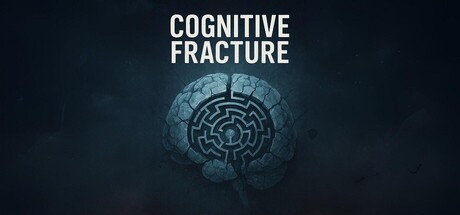
During the development of Cognitive Fracture, AI tools were used as assistants to support the creation of certain elements, such as text-to-speech voices, cover artwork, some non-interactable objects, and parts of the music. All final assets, design decisions, and gameplay remain the original work of our development team.
Generative AI has been used during development for concept art, UI mockups, and marketing materials.
No generative AI is used during gameplay, and all in-game content is authored and controlled by the developer. AI-generated assets are used only as illustrative or promotional material and do not impersonate real individuals or infringe on copyrighted works.
Ghostwriter's Pact uses AI as an engine to enable gameplay that would be impossible to achieve with traditional game development methods.
The game is built on a "Hybrid AI" system designed to maximize player creativity while minimizing environmental impact and latency:
1. Pre-generated Content: To allow players to combine word cards into valid sentences, we used LLMs to pre-generate and validate a database of over 1 million properly structured sentences. It would be humanly impossible for a writing team to manually author this volume of text. By pre-generating this data, we ensure the core gameplay is instant, responsive, and does not require constant, energy-intensive API calls for every move the player makes.
2. Live Generation: When a player finalizes a story arc, the game connects to a live LLM to weave their sentences into a cohesive story. A secondary AI acts as a "Critic," evaluating the player's story for cohesiveness and creativity. Pre-generation of stories is impossible here, since players can mix sentences to create a near infinite amount of stories.
3. Visual Assets: The game's imagery was generated locally on developer hardware using custom-trained models (LoRAs) and workflows to ensure a consistent, stylized aesthetic that fits the game's theme.
The entire source code of this game was developed with the assistance of generative AI to overcome programming limitations. Additionally, the store assets (capsules, headers, and backgrounds) were created using generative AI tools. The development process, showing how AI was used as a tool to realize this project, is documented on the developer's YouTube channel (Momo_Ger).
[AI Content Disclosure]This game utilizes generative AI tools to assist in the creation of visual assets (backgrounds, characters), background music, and parts of the narrative script.All AI-generated content has been manually reviewed, edited, and refined by the human developer to ensure it aligns with the game's "Japanese Gothic" aesthetic and story. We define this collaborative process between human creativity and AI as "Vibe Coding."
Large menu background images (menus) and various derelict images were generated with AI and then edited and refined by hand (Photoshop and Aseprite) before being used in-game.
An AI voice was used for Juno as a placeholder.
Throughout the development of my game, I have (ironically) leveraged AI-based tools to assist myself with the code and made visual placeholders. The game was translated by AI. Many parts of the code were written by an AI and some problems were debugged with it's help.
Thank You for your understanding :D
Hello guys I am updating the storepage and letting you know I used AI to help me with the STOREPAGE capsules... as well as use it as research to improve m coding skills!
Some content was created with the help of generative AI. In-game: parts of the UI and skybox/background textures. Out-of-game: the game logo and some store/marketing images. The game does not generate AI content during gameplay and does not use third-party AI services while running.
This game was built using a blend of digital tools, custom created datasets and software, and AI asset generation.
Human creativity and ingenuity can be positively amplified using AI. I hope this game can inspire independent creators and game designers to realize their own magic fairy fun dreams.
AI tools were used during development to assist a solo developer.
This includes AI-generated voice-overs and the creation of initial base assets for background environments, which were subsequently manually adapted, animated, and refined to fit the game's specific style.
No AI systems are used to generate content, dialogue, or code dynamically during gameplay.
The game’s story, characters, core gameplay, logic, animations, effects, music, and the overall artistic composition were created manually.
Skippable (and so optional) videos are made with the help of A. I.
Most musical re-arrangements (and ALL the vocals) are made with the help of A. I.
Some of the big wall posters you can see in-game are made with the help of A. I.
"We use generative AI tools to assist in the creation of concept art, marketing capsules, UI mockups, and store page assets. All AI-generated assets are manually reviewed and edited by the developer to ensure they align with the game's artistic vision."
Generative AI was used during development to assist with the creation of some 2D images, audio assets, and the initial translation of text. All AI-generated content was reviewed, edited, and approved by the developer before being included in the game.
I used generative AI tools to create various 2D art assets used in the game, including character concepts, background textures, and UI elements. Additionally, the store page assets, such as the capsule images and library artwork, were generated using AI and then manually edited/refined to fit the game's theme.
As a solo developer, I have used AI to generate text descriptions and some images related to the game. 99% of the game has been hand crafted by Jacob Colvin or sourced and licensed from the FAB Marketplace.
AI is used to help generate some icons and visual elements to improve the player experience, and to assist with drafting certain text, which is then reviewed and edited by the developer.
AI does not affect gameplay or player behavior.
This game includes a small number of pre-generated visual assets created with the assistance of generative AI tools during development.
All gameplay systems, mechanics, balance, progression, and design decisions are fully human-designed and authored.
No generative AI is used during gameplay, and no content is generated dynamically or at runtime.
At the time of release, the final product will not contain any elements created using generative artificial intelligence. AI is used solely for the creation of demonstration graphical content. The final in-game content will be created by human authors.
This game utilizes AI image generation tools in the creation process of visual assets, specifically for card illustrations, relic images, and background images. All generated images have been manually reviewed, retouched, and edited by the developer before being implemented in the game. We have verified that these assets do not contain any illegal content or infringe upon any third-party rights.
The game itself was developed without the use of generative AI.
During the development and release process, we may use AI-based tools to assist with the creation of certain store marketing materials (such as Steam banners). In all such cases, the final materials reflect the creativity and expression of our own development team.
AI is used in order to create a better background and focus on the core parts of the game, we use AI to help create some background art and minor NPCs in the story.
After the AI generates these images, our artists still need to refine them to ensure that the style of the background and minor NPCs matches the environment, UI, and main characters drawn by our talented artists.
Generative AI tools were used to create the illustrations and assist with multilingual localization. All AI-generated content was manually reviewed, edited, and adjusted by the developer. The game design and creative direction were handled by a human.
Only a portion of the visual materials used AI tools for assistance. Every piece has been meticulously hand-edited and adjusted to meet the specific stylistic needs of the story.
During the development of Cognitive Fracture, AI tools were used as assistants to support the creation of certain elements, such as text-to-speech voices, cover artwork, some non-interactable objects, and parts of the music. All final assets, design decisions, and gameplay remain the original work of our development team.
Generative AI has been used during development for concept art, UI mockups, and marketing materials.
No generative AI is used during gameplay, and all in-game content is authored and controlled by the developer. AI-generated assets are used only as illustrative or promotional material and do not impersonate real individuals or infringe on copyrighted works.
Ghostwriter's Pact uses AI as an engine to enable gameplay that would be impossible to achieve with traditional game development methods.
The game is built on a "Hybrid AI" system designed to maximize player creativity while minimizing environmental impact and latency:
1. Pre-generated Content: To allow players to combine word cards into valid sentences, we used LLMs to pre-generate and validate a database of over 1 million properly structured sentences. It would be humanly impossible for a writing team to manually author this volume of text. By pre-generating this data, we ensure the core gameplay is instant, responsive, and does not require constant, energy-intensive API calls for every move the player makes.
2. Live Generation: When a player finalizes a story arc, the game connects to a live LLM to weave their sentences into a cohesive story. A secondary AI acts as a "Critic," evaluating the player's story for cohesiveness and creativity. Pre-generation of stories is impossible here, since players can mix sentences to create a near infinite amount of stories.
3. Visual Assets: The game's imagery was generated locally on developer hardware using custom-trained models (LoRAs) and workflows to ensure a consistent, stylized aesthetic that fits the game's theme.
The entire source code of this game was developed with the assistance of generative AI to overcome programming limitations. Additionally, the store assets (capsules, headers, and backgrounds) were created using generative AI tools. The development process, showing how AI was used as a tool to realize this project, is documented on the developer's YouTube channel (Momo_Ger).
[AI Content Disclosure]This game utilizes generative AI tools to assist in the creation of visual assets (backgrounds, characters), background music, and parts of the narrative script.All AI-generated content has been manually reviewed, edited, and refined by the human developer to ensure it aligns with the game's "Japanese Gothic" aesthetic and story. We define this collaborative process between human creativity and AI as "Vibe Coding."
Large menu background images (menus) and various derelict images were generated with AI and then edited and refined by hand (Photoshop and Aseprite) before being used in-game.
An AI voice was used for Juno as a placeholder.
Throughout the development of my game, I have (ironically) leveraged AI-based tools to assist myself with the code and made visual placeholders. The game was translated by AI. Many parts of the code were written by an AI and some problems were debugged with it's help.
Thank You for your understanding :D
Hello guys I am updating the storepage and letting you know I used AI to help me with the STOREPAGE capsules... as well as use it as research to improve m coding skills!
Some content was created with the help of generative AI. In-game: parts of the UI and skybox/background textures. Out-of-game: the game logo and some store/marketing images. The game does not generate AI content during gameplay and does not use third-party AI services while running.
This game was built using a blend of digital tools, custom created datasets and software, and AI asset generation.
Human creativity and ingenuity can be positively amplified using AI. I hope this game can inspire independent creators and game designers to realize their own magic fairy fun dreams.
AI tools were used during development to assist a solo developer.
This includes AI-generated voice-overs and the creation of initial base assets for background environments, which were subsequently manually adapted, animated, and refined to fit the game's specific style.
No AI systems are used to generate content, dialogue, or code dynamically during gameplay.
The game’s story, characters, core gameplay, logic, animations, effects, music, and the overall artistic composition were created manually.
Skippable (and so optional) videos are made with the help of A. I.
Most musical re-arrangements (and ALL the vocals) are made with the help of A. I.
Some of the big wall posters you can see in-game are made with the help of A. I.
"We use generative AI tools to assist in the creation of concept art, marketing capsules, UI mockups, and store page assets. All AI-generated assets are manually reviewed and edited by the developer to ensure they align with the game's artistic vision."
Generative AI was used during development to assist with the creation of some 2D images, audio assets, and the initial translation of text. All AI-generated content was reviewed, edited, and approved by the developer before being included in the game.
I used generative AI tools to create various 2D art assets used in the game, including character concepts, background textures, and UI elements. Additionally, the store page assets, such as the capsule images and library artwork, were generated using AI and then manually edited/refined to fit the game's theme.
As a solo developer, I have used AI to generate text descriptions and some images related to the game. 99% of the game has been hand crafted by Jacob Colvin or sourced and licensed from the FAB Marketplace.