Public Steam disclosure research25,867 disclosures tracked
Where do games disclose AI use?
Search developers’ Steam disclosures, compare classified AI use across
games, and follow recorded changes.
This index adds cross-game classifications and statistics to
statements published on individual store pages.
Groups reflect automatic analysis of public disclosures; mature records are excluded. These counts do not measure AI use across all of Steam.
Missing or unclear statements cannot establish whether a game uses AI.
How We Used AI in When The Sun Dies
When developing When The Sun Dies, we leveraged artificial intelligence to enrich your experience and create a truly immersive world. AI is integrated into many different aspects of the game, playing significant roles both visibly and behind the scenes.
Areas Where AI Was Used:
Visual and Audio Design: We utilized AI-powered tools in the creation of some of the game's textures, 3D models, and sounds. This allowed our artists and sound designers to bring their visions to life more quickly and efficiently, enhancing the unique and unsettling atmosphere of the world.
Code Optimization and Development: AI-assisted processes were used in the development and optimization of certain parts of the game's core code. This helped us deliver a more stable, efficient, and seamless gameplay experience.
Story and World Building: AI-based suggestion systems contributed to detailing certain elements of our post-apocalyptic world's rich story and lore, as well as refining characters and events. This increased the depth of the world and the layers of narrative waiting to be discovered.
Our goal was to use AI as a tool to make When The Sun Dies the best and most unforgettable survival experience possible. We hope you enjoy these innovative approaches!
We've used AI tools to assist in creating certain visual assets for Challenger X, including in-game visuals, the game's logo, and its cover art. Our priority is to deliver a compelling experience, and AI helps us achieve that by enhancing the game's presentation. We are committed to transparency and ensuring all core gameplay elements are crafted with care.
Some of the marketing and promotional images used on this store page were created using AI tools to visually represent the game concept. The actual game content, including gameplay mechanics and in-game assets, was entirely developed by the team without any generative AI assistance.
Our game utilizes neural networks for creating visually stunning and immersive environments. AI technology is employed in the production pipeline to assist in rendering backgrounds and character designs, ensuring a unique and high-quality artistic style. While AI aids in the creative process, all generated content is carefully reviewed, refined, and finalized by our team of professional artists to meet the highest standards of originality and quality.
This game includes some icons and images that were created with the assistance of AI tools. No AI is used during gameplay or for generating real-time content.
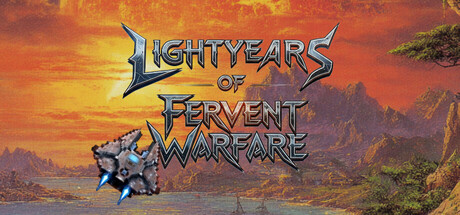
As a one-person indie dev on a small island, with a clear idea, some programming skillz, minimal artistic talent, and practically zero funding, using AI has helped me actually to finish developing Lightyears of Fervent Warfare.
I started developing LoFW during COVID-19, when I began learning game development as a hobby during Seychelles' lockdown. I had coded my MSc project in C# and was able to code everything by hand. I was even able to design the pixel graphics on my own. Then COVID-19 ended, life continued, and LoFW was left in the dust.
This year, I experimented with the Cursor and Midjourney AIs and discovered that I could leverage them to continue developing my game part-time. Using Cursor to modify my existing code and generate new code via vibe coding helped me implement features quickly. This gave me the time to focus on the actual game design, the feature set, and testing. And while I still work on most of the pixel graphics by hand, using Midjourney to generate more complex graphics has helped me save time and resources that I don't yet have.
Sure, using AI still takes time; I can be pedantic and tend to modify and optimise everything manually. Chastising AIs, reviewing code, and doing manual edits to the graphics are now part of my workflow. AI shenanigans notwithstanding, I do hope that you'll support my game!
AI was used to enhance the cover art and during the iteration phase of designing textures and object details. It provided design ideas but not finished products or assets.
There is no AI present in FLH which generates content or produces output of any kind.
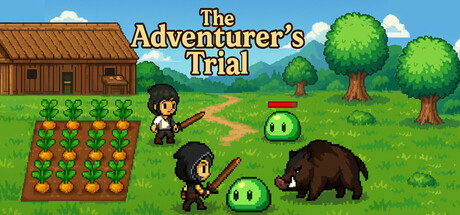
Some of the visual assets in The Adventurer’s Trial were initially created with the help of AI tools, and then carefully modified, refined, and integrated by hand to fit the game’s art style. All final in-game content has been reviewed and adjusted by the developer to ensure consistency and quality.
This game uses generative AI tools in certain aspects of its development process, including:
Music Design: Some background music and sound effects were generated using AI tools, then edited and finalized by human composers.
Visual Assets: Selected textures and 3D models were created with reference to AI-generated concepts and were manually refined and integrated by artists.
Programming Support: Generative AI was used to assist in debugging and refining small portions of the game code, with all output reviewed and tested by developers.
No generative AI is used during gameplay. The game does not generate new AI content at runtime.
Some store page images were created with the help of AI. Our game artist uses AI tools as part of the design process to speed up and enhance creativity.
a few lines of the dialog were generated using AI and is currently used only as a placeholder.
the concept of some icons was generated using AI, but they were largely edited.
Googunners uses upgrade card art that is generated by Midjourney, and then authored in post.
Outiside of the updgrade cards art, everything else is human created.
We used generative AI (Leonardo AI) during the development process solely to generate some of the game’s artwork. These images are static and were created before release. The game does not include any runtime generative AI features, and no new AI-generated content is created during gameplay. All AI-generated assets are licensed for commercial use.
This game uses AI technology to create detailed and authentic 3D meshes of game pieces and components, enhancing the visual experience and making the digital board feel as close to the physical version as possible. It also leverages AI to generate background images for game menus and to create capsule images for Steam
The game's development was assisted by AI in specific areas: for upscaling some background textures and for generating visual reference material not used in the final version.
The game uses AI to generate content for the game and its store page, as well as marketing materials. The AI-generated content is manually reviewed by developers. If you find that this content infringes your copyright or contains illegal content, please contact the developers for deletion.
We use AI tools only for marketing concept development and brainstorming. All game content, assets, code, and gameplay systems are created entirely by our human development team. AI helps us explore marketing ideas and generate reference drafts for promotional materials, which are then recreated by our human designers ♥
This app uses AI model to generate anime-like artworks, to help artists and players make their ideas and original characters or pets into anime just from describing them.
I used AI as a creative assistant during the development of this game — to generate ideas, speed up workflows, and support visual and textual content creation.
Examples include:
– Generating concept art for locations, equipment and magical symbols
– Creating stylized icons and background illustrations in an anime-fantasy style
– Drafting and refining text content (including English descriptions)
– Structuring design ideas
All in-game assets used in the build (models, animations, UI, gameplay systems) were assembled manually using UE5 and legally sourced content.
AI supported the creative process, but did not replace core development work.
Generative AI was utilized during development to create Steam capsule designs, in-game UI assets, and the trailer music. All assets produced using AI are fully owned and licensed for commercial use by us.
The entire game is coded by hand without any AI.
Midjourney is used for card art. The game is a solo side-project, and this was to one thing I could not do myself.
The capsule art was partially generated using AI based on original character model renders and hand drawn references. They were then modified in Blender and finalized in Gimp.
As an independent developer, I have used artificial intelligence to create some of the card images, as I do not have the necessary skills to make them myself; however, the plans for future releases include having enough capital for a real artist to create the graphics.
How We Used AI in When The Sun Dies
When developing When The Sun Dies, we leveraged artificial intelligence to enrich your experience and create a truly immersive world. AI is integrated into many different aspects of the game, playing significant roles both visibly and behind the scenes.
Areas Where AI Was Used:
Visual and Audio Design: We utilized AI-powered tools in the creation of some of the game's textures, 3D models, and sounds. This allowed our artists and sound designers to bring their visions to life more quickly and efficiently, enhancing the unique and unsettling atmosphere of the world.
Code Optimization and Development: AI-assisted processes were used in the development and optimization of certain parts of the game's core code. This helped us deliver a more stable, efficient, and seamless gameplay experience.
Story and World Building: AI-based suggestion systems contributed to detailing certain elements of our post-apocalyptic world's rich story and lore, as well as refining characters and events. This increased the depth of the world and the layers of narrative waiting to be discovered.
Our goal was to use AI as a tool to make When The Sun Dies the best and most unforgettable survival experience possible. We hope you enjoy these innovative approaches!
We've used AI tools to assist in creating certain visual assets for Challenger X, including in-game visuals, the game's logo, and its cover art. Our priority is to deliver a compelling experience, and AI helps us achieve that by enhancing the game's presentation. We are committed to transparency and ensuring all core gameplay elements are crafted with care.
Some of the marketing and promotional images used on this store page were created using AI tools to visually represent the game concept. The actual game content, including gameplay mechanics and in-game assets, was entirely developed by the team without any generative AI assistance.
Our game utilizes neural networks for creating visually stunning and immersive environments. AI technology is employed in the production pipeline to assist in rendering backgrounds and character designs, ensuring a unique and high-quality artistic style. While AI aids in the creative process, all generated content is carefully reviewed, refined, and finalized by our team of professional artists to meet the highest standards of originality and quality.
This game includes some icons and images that were created with the assistance of AI tools. No AI is used during gameplay or for generating real-time content.
As a one-person indie dev on a small island, with a clear idea, some programming skillz, minimal artistic talent, and practically zero funding, using AI has helped me actually to finish developing Lightyears of Fervent Warfare.
I started developing LoFW during COVID-19, when I began learning game development as a hobby during Seychelles' lockdown. I had coded my MSc project in C# and was able to code everything by hand. I was even able to design the pixel graphics on my own. Then COVID-19 ended, life continued, and LoFW was left in the dust.
This year, I experimented with the Cursor and Midjourney AIs and discovered that I could leverage them to continue developing my game part-time. Using Cursor to modify my existing code and generate new code via vibe coding helped me implement features quickly. This gave me the time to focus on the actual game design, the feature set, and testing. And while I still work on most of the pixel graphics by hand, using Midjourney to generate more complex graphics has helped me save time and resources that I don't yet have.
Sure, using AI still takes time; I can be pedantic and tend to modify and optimise everything manually. Chastising AIs, reviewing code, and doing manual edits to the graphics are now part of my workflow. AI shenanigans notwithstanding, I do hope that you'll support my game!
AI was used to enhance the cover art and during the iteration phase of designing textures and object details. It provided design ideas but not finished products or assets.
There is no AI present in FLH which generates content or produces output of any kind.
Some of the visual assets in The Adventurer’s Trial were initially created with the help of AI tools, and then carefully modified, refined, and integrated by hand to fit the game’s art style. All final in-game content has been reviewed and adjusted by the developer to ensure consistency and quality.
This game uses generative AI tools in certain aspects of its development process, including:
Music Design: Some background music and sound effects were generated using AI tools, then edited and finalized by human composers.
Visual Assets: Selected textures and 3D models were created with reference to AI-generated concepts and were manually refined and integrated by artists.
Programming Support: Generative AI was used to assist in debugging and refining small portions of the game code, with all output reviewed and tested by developers.
No generative AI is used during gameplay. The game does not generate new AI content at runtime.
Some store page images were created with the help of AI. Our game artist uses AI tools as part of the design process to speed up and enhance creativity.
a few lines of the dialog were generated using AI and is currently used only as a placeholder.
the concept of some icons was generated using AI, but they were largely edited.
Googunners uses upgrade card art that is generated by Midjourney, and then authored in post.
Outiside of the updgrade cards art, everything else is human created.
We used generative AI (Leonardo AI) during the development process solely to generate some of the game’s artwork. These images are static and were created before release. The game does not include any runtime generative AI features, and no new AI-generated content is created during gameplay. All AI-generated assets are licensed for commercial use.
This game uses AI technology to create detailed and authentic 3D meshes of game pieces and components, enhancing the visual experience and making the digital board feel as close to the physical version as possible. It also leverages AI to generate background images for game menus and to create capsule images for Steam
The game's development was assisted by AI in specific areas: for upscaling some background textures and for generating visual reference material not used in the final version.
The game uses AI to generate content for the game and its store page, as well as marketing materials. The AI-generated content is manually reviewed by developers. If you find that this content infringes your copyright or contains illegal content, please contact the developers for deletion.
We use AI tools only for marketing concept development and brainstorming. All game content, assets, code, and gameplay systems are created entirely by our human development team. AI helps us explore marketing ideas and generate reference drafts for promotional materials, which are then recreated by our human designers ♥
This app uses AI model to generate anime-like artworks, to help artists and players make their ideas and original characters or pets into anime just from describing them.
I used AI as a creative assistant during the development of this game — to generate ideas, speed up workflows, and support visual and textual content creation.
Examples include:
– Generating concept art for locations, equipment and magical symbols
– Creating stylized icons and background illustrations in an anime-fantasy style
– Drafting and refining text content (including English descriptions)
– Structuring design ideas
All in-game assets used in the build (models, animations, UI, gameplay systems) were assembled manually using UE5 and legally sourced content.
AI supported the creative process, but did not replace core development work.
Generative AI was utilized during development to create Steam capsule designs, in-game UI assets, and the trailer music. All assets produced using AI are fully owned and licensed for commercial use by us.
The entire game is coded by hand without any AI.
Midjourney is used for card art. The game is a solo side-project, and this was to one thing I could not do myself.
The capsule art was partially generated using AI based on original character model renders and hand drawn references. They were then modified in Blender and finalized in Gimp.
As an independent developer, I have used artificial intelligence to create some of the card images, as I do not have the necessary skills to make them myself; however, the plans for future releases include having enough capital for a real artist to create the graphics.