Public Steam disclosure research25,394 disclosures tracked
Where do games disclose AI use?
Search developers’ Steam disclosures, compare classified AI use across
games, and follow recorded changes.
This index adds cross-game classifications and statistics to
statements published on individual store pages.
Groups reflect automatic analysis of public disclosures; mature records are excluded. These counts do not measure AI use across all of Steam.
Missing or unclear statements cannot establish whether a game uses AI.
Most audio speech in the game is AI generated.
Unit portraits were all enhanced using a diffusion based generative AI model by taking pictures of low polygon 3d meshes and using Stable Diffusion to make them more life-like.
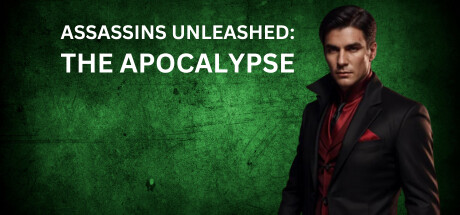
The only uses of AI was a background remover for the logos, and to generate the assassin I use on the store page, there are some AI generated 2d elements inside of the game, but none of the 3d elements or map design is AI generated.
# AI Usage in Our Game
In our game, we have utilized generative artificial intelligence (AI) technology to enhance certain aspects of the visual experience. Specifically, we have employed AI-powered tools to assist in the creation of some background images and textures.
Key points about our AI usage:
1. **Pre-rendered Content**: The AI-generated elements are pre-rendered during the development process. This means that the images you see in the game are not being created in real-time as you play.
2. **Limited Scope**: AI has been used primarily for non-essential background elements and textures. All main characters, story-critical environments, and core gameplay elements are hand-crafted by our artists.
3. **Human Oversight**: While AI tools have been used to generate initial ideas or base images, our art team carefully reviews, edits, and refines all AI-assisted content to ensure it meets our quality standards and fits seamlessly into the game's aesthetic.
4. **No Live Generation**: Our game does not use AI to generate any content during gameplay. All AI-assisted elements are fixed and do not change dynamically.
5. **Copyright Compliance**: We have taken great care to ensure that all AI-generated content is original and does not infringe on existing copyrights. Our use of AI tools is in compliance with their terms of service and licensing agreements.
We believe that the thoughtful use of AI in our development process has allowed us to create richer, more detailed environments for players to explore, while maintaining the artistic integrity and vision of our game. As always, we welcome player feedback and are committed to providing a high-quality gaming experience.
Some card illustrations in the game are AI-generated and post-processed in Photoshop, including those based on original images and commercially licensed resources purchased in the assets store. All AI generated images are all carefully manually modified.
Scavenger T.O.M utilizes AI-based environment generation technology to explore and reconstruct the radiation-ravaged surface in real-time. In hazardous areas where players cannot venture directly, AI acts as T.O.M’s eyes and analytical core, dynamically processing the environment based on movement paths.
The Diffusion model-based AI system goes beyond simple image generation, creating explorable spaces at the object level and seamlessly integrating them into the game environment to enhance interactivity.
Through this technology, Scavenger T.O.M provides a unique survival environment that evolves with the player's exploration. Step into the AI-generated wasteland and craft your own survival strategy.
I've used AI to generate landscapes used in the "battle" cards within the game, that were then touched up by hand. The rest of the art in the game is licensed from artists.
This game uses AI to generate text, game mechanics, images, and sound effects on the fly based on the player's world description. Some in-world interactions are also powered by an LLM in real time.
The key idea behind this game is to allow players to generate their own situations, scenarios, effects etc, and for that content to be visible by other players. This demands the use of AI and without AI this game can't exist.
The specific art and style shown so far is subject to change based on the general player feedback.
The skill display images are all generated using the text description of VIP Midjourney, based on the creative ideas of the author (myself). Not referencing any copyrighted images. Having specificity and uniqueness. There are no copyright related issues.
Generative AI was only used to create image references during the creation of promotionnal artworks :
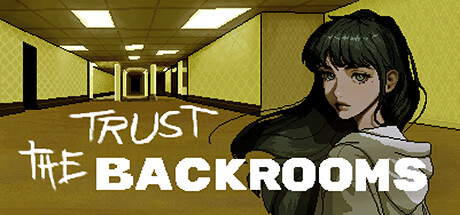
The main promotional artwork shows a hallway where the pillars and the lights are arranged to form the word : DON'T.
The artist who drew these promotional artworks used generative AI to get reference images on how to integrate text with natural elements of a scene so that the elements of the scene seems to be forming letters.
The final artwork is purely derivative and original and was made by the artist from zero, with the help of the AI generated images as inspiration for placing the letters on the final drawing.
"Uncanny Valley: Machine" uses images and music generated by neural networks.
Images are generated using stable diffusion. When creating the models used, commercial use of the generated images is permitted.
When creating the images, no names of any authors or companies were indicated.
Most of the images were edited using photo editors.
The following types of images were generated by II:
Characters;
Backgrounds;
Interior objects.
All music in "Uncanny Valley: Machine" was generated by the MusicGen AI, which allows the generated music to be used for commercial purposes.
Some visual assets, such as icons and background art, are based on AI-generated images that have been manually edited. All final materials have been carefully curated and adjusted by human creators to ensure quality and consistency.
Due to limited development costs, in this game, we use AI to generate the map background and 2D buildings on the large map when building the map. We will replace all hand drawn materials within the official version in one year.
A few images have been made with AI for marketing / store images as we plan to have our artist finalize the final images that we will then upload before Early Access is over.
The game does not contain any AI-generated content in real-time, but it does feature music produced using AI. The game's music was created through suno.ai, where I am a paying member. The website assures that paying members have the right to use the generated music for commercial purposes.
In terms of images, the game uses a picture of a dog in a suit that is AI-generated. For the shop interface, all images related to appearances are also AI-generated. The AI images were created on https://www.artbreeder.com, and I am a paid member of that website.
During the early development of Astro Felix, limited AI generated visuals were used specifically for select Steam artwork and a few temporary in-game placeholders. These assets were used solely to support of prototyping and vision shaping.
Our goal is to replace all placeholder material with original art as development progresses.
AI tools were utilized during development to assist in creating various art and audio assets, including concept art, icons, textures, and temporary content. These tools helped speed up production and explore creative options, but all final assets were selected, refined, and implemented by the developer.
Our design team used generative AI to create preliminary concept images to effectively communicate ideas with our art team. However, all of the final game artwork was crafted by our human artists without the use of AI
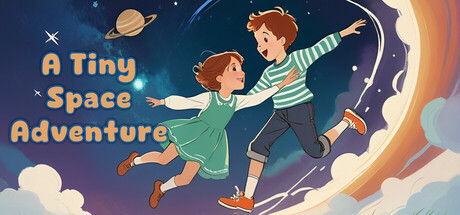
AI-Generated Artwork in A Tiny Space Adventure
In A Tiny Space Adventure, we have used AI technology to create the majority of the visual elements, including backgrounds, characters, and in-game scenes. This approach allows us to bring a unique and imaginative visual style to the game, enhancing the storytelling and creating an engaging atmosphere for players.
All interface elements like buttons, indicators, and HUD elements were created manually to ensure smooth gameplay and user experience.
We are committed to delivering a high-quality experience, and the use of AI art has allowed us to explore creative possibilities while maintaining the charm and fun of the game.
Most audio speech in the game is AI generated.
Unit portraits were all enhanced using a diffusion based generative AI model by taking pictures of low polygon 3d meshes and using Stable Diffusion to make them more life-like.
The only uses of AI was a background remover for the logos, and to generate the assassin I use on the store page, there are some AI generated 2d elements inside of the game, but none of the 3d elements or map design is AI generated.
# AI Usage in Our Game
In our game, we have utilized generative artificial intelligence (AI) technology to enhance certain aspects of the visual experience. Specifically, we have employed AI-powered tools to assist in the creation of some background images and textures.
Key points about our AI usage:
1. **Pre-rendered Content**: The AI-generated elements are pre-rendered during the development process. This means that the images you see in the game are not being created in real-time as you play.
2. **Limited Scope**: AI has been used primarily for non-essential background elements and textures. All main characters, story-critical environments, and core gameplay elements are hand-crafted by our artists.
3. **Human Oversight**: While AI tools have been used to generate initial ideas or base images, our art team carefully reviews, edits, and refines all AI-assisted content to ensure it meets our quality standards and fits seamlessly into the game's aesthetic.
4. **No Live Generation**: Our game does not use AI to generate any content during gameplay. All AI-assisted elements are fixed and do not change dynamically.
5. **Copyright Compliance**: We have taken great care to ensure that all AI-generated content is original and does not infringe on existing copyrights. Our use of AI tools is in compliance with their terms of service and licensing agreements.
We believe that the thoughtful use of AI in our development process has allowed us to create richer, more detailed environments for players to explore, while maintaining the artistic integrity and vision of our game. As always, we welcome player feedback and are committed to providing a high-quality gaming experience.
Some card illustrations in the game are AI-generated and post-processed in Photoshop, including those based on original images and commercially licensed resources purchased in the assets store. All AI generated images are all carefully manually modified.
Scavenger T.O.M utilizes AI-based environment generation technology to explore and reconstruct the radiation-ravaged surface in real-time. In hazardous areas where players cannot venture directly, AI acts as T.O.M’s eyes and analytical core, dynamically processing the environment based on movement paths.
The Diffusion model-based AI system goes beyond simple image generation, creating explorable spaces at the object level and seamlessly integrating them into the game environment to enhance interactivity.
Through this technology, Scavenger T.O.M provides a unique survival environment that evolves with the player's exploration. Step into the AI-generated wasteland and craft your own survival strategy.
I've used AI to generate landscapes used in the "battle" cards within the game, that were then touched up by hand. The rest of the art in the game is licensed from artists.
This game uses AI to generate text, game mechanics, images, and sound effects on the fly based on the player's world description. Some in-world interactions are also powered by an LLM in real time.
The key idea behind this game is to allow players to generate their own situations, scenarios, effects etc, and for that content to be visible by other players. This demands the use of AI and without AI this game can't exist.
The specific art and style shown so far is subject to change based on the general player feedback.
The skill display images are all generated using the text description of VIP Midjourney, based on the creative ideas of the author (myself). Not referencing any copyrighted images. Having specificity and uniqueness. There are no copyright related issues.
Generative AI was only used to create image references during the creation of promotionnal artworks :
The main promotional artwork shows a hallway where the pillars and the lights are arranged to form the word : DON'T.
The artist who drew these promotional artworks used generative AI to get reference images on how to integrate text with natural elements of a scene so that the elements of the scene seems to be forming letters.
The final artwork is purely derivative and original and was made by the artist from zero, with the help of the AI generated images as inspiration for placing the letters on the final drawing.
"Uncanny Valley: Machine" uses images and music generated by neural networks.
Images are generated using stable diffusion. When creating the models used, commercial use of the generated images is permitted.
When creating the images, no names of any authors or companies were indicated.
Most of the images were edited using photo editors.
The following types of images were generated by II:
Characters;
Backgrounds;
Interior objects.
All music in "Uncanny Valley: Machine" was generated by the MusicGen AI, which allows the generated music to be used for commercial purposes.
Some visual assets, such as icons and background art, are based on AI-generated images that have been manually edited. All final materials have been carefully curated and adjusted by human creators to ensure quality and consistency.
Due to limited development costs, in this game, we use AI to generate the map background and 2D buildings on the large map when building the map. We will replace all hand drawn materials within the official version in one year.
A few images have been made with AI for marketing / store images as we plan to have our artist finalize the final images that we will then upload before Early Access is over.
The game does not contain any AI-generated content in real-time, but it does feature music produced using AI. The game's music was created through suno.ai, where I am a paying member. The website assures that paying members have the right to use the generated music for commercial purposes.
In terms of images, the game uses a picture of a dog in a suit that is AI-generated. For the shop interface, all images related to appearances are also AI-generated. The AI images were created on https://www.artbreeder.com, and I am a paid member of that website.
During the early development of Astro Felix, limited AI generated visuals were used specifically for select Steam artwork and a few temporary in-game placeholders. These assets were used solely to support of prototyping and vision shaping.
Our goal is to replace all placeholder material with original art as development progresses.
AI tools were utilized during development to assist in creating various art and audio assets, including concept art, icons, textures, and temporary content. These tools helped speed up production and explore creative options, but all final assets were selected, refined, and implemented by the developer.
Our design team used generative AI to create preliminary concept images to effectively communicate ideas with our art team. However, all of the final game artwork was crafted by our human artists without the use of AI
AI-Generated Artwork in A Tiny Space Adventure
In A Tiny Space Adventure, we have used AI technology to create the majority of the visual elements, including backgrounds, characters, and in-game scenes. This approach allows us to bring a unique and imaginative visual style to the game, enhancing the storytelling and creating an engaging atmosphere for players.
All interface elements like buttons, indicators, and HUD elements were created manually to ensure smooth gameplay and user experience.
We are committed to delivering a high-quality experience, and the use of AI art has allowed us to explore creative possibilities while maintaining the charm and fun of the game.