Public Steam disclosure research27,951 disclosures tracked
Where do games disclose AI use?
Search developers’ Steam disclosures, compare classified AI use across
games, and follow recorded changes.
This index adds cross-game classifications and statistics to
statements published on individual store pages.
Groups reflect automatic analysis of public disclosures; mature records are excluded. These counts do not measure AI use across all of Steam.
Missing or unclear statements cannot establish whether a game uses AI.
Music in the game is created using AI-generated samples.
I also used AI-based tool to assist me with final touch of some environment backgrounds. Specifically as a filter tool to make the lines more shaky.
We provide an AI assisted tool for players to create their own cosmetics for our game. It exclusively is used as a UGC tool, so players do not need to achieve high technical skills to be able to create new content for DFUSE.
In "Stay Alive My Son," artificial intelligence (AI) plays a crucial role at two distinct points in the game to enhance player immersion and emotional engagement. Specifically, AI is employed during an interaction with Yathay Pin's digital replica in Level 01 and once again in Level 06. This is programmed directly using existing Unreal Engine Blueprints nodes.
The AI integration is meticulously designed to enable Yathay's digital eyes to follow the player's movements continuously. This technology ensures that Yathay appears to be directly engaging with the player, fostering a deeper emotional connection. The purpose behind this AI application is to intensify the sense of direct communication and interaction with Yathay, thereby amplifying the player's emotional investment and empathy towards his journey and experiences.
The content for the game (images of objects, ships, UI elements) was generated by artificial intelligence at the game development stage. The content does not change in any way during the game.
Most audio speech in the game is AI generated.
Unit portraits were all enhanced using a diffusion based generative AI model by taking pictures of low polygon 3d meshes and using Stable Diffusion to make them more life-like.
The only uses of AI was a background remover for the logos, and to generate the assassin I use on the store page, there are some AI generated 2d elements inside of the game, but none of the 3d elements or map design is AI generated.
# AI Usage in Our Game
In our game, we have utilized generative artificial intelligence (AI) technology to enhance certain aspects of the visual experience. Specifically, we have employed AI-powered tools to assist in the creation of some background images and textures.
Key points about our AI usage:
1. **Pre-rendered Content**: The AI-generated elements are pre-rendered during the development process. This means that the images you see in the game are not being created in real-time as you play.
2. **Limited Scope**: AI has been used primarily for non-essential background elements and textures. All main characters, story-critical environments, and core gameplay elements are hand-crafted by our artists.
3. **Human Oversight**: While AI tools have been used to generate initial ideas or base images, our art team carefully reviews, edits, and refines all AI-assisted content to ensure it meets our quality standards and fits seamlessly into the game's aesthetic.
4. **No Live Generation**: Our game does not use AI to generate any content during gameplay. All AI-assisted elements are fixed and do not change dynamically.
5. **Copyright Compliance**: We have taken great care to ensure that all AI-generated content is original and does not infringe on existing copyrights. Our use of AI tools is in compliance with their terms of service and licensing agreements.
We believe that the thoughtful use of AI in our development process has allowed us to create richer, more detailed environments for players to explore, while maintaining the artistic integrity and vision of our game. As always, we welcome player feedback and are committed to providing a high-quality gaming experience.
Some card illustrations in the game are AI-generated and post-processed in Photoshop, including those based on original images and commercially licensed resources purchased in the assets store. All AI generated images are all carefully manually modified.
Scavenger T.O.M utilizes AI-based environment generation technology to explore and reconstruct the radiation-ravaged surface in real-time. In hazardous areas where players cannot venture directly, AI acts as T.O.M’s eyes and analytical core, dynamically processing the environment based on movement paths.
The Diffusion model-based AI system goes beyond simple image generation, creating explorable spaces at the object level and seamlessly integrating them into the game environment to enhance interactivity.
Through this technology, Scavenger T.O.M provides a unique survival environment that evolves with the player's exploration. Step into the AI-generated wasteland and craft your own survival strategy.
I've used AI to generate landscapes used in the "battle" cards within the game, that were then touched up by hand. The rest of the art in the game is licensed from artists.
This game uses AI to generate text, game mechanics, images, and sound effects on the fly based on the player's world description. Some in-world interactions are also powered by an LLM in real time.
The key idea behind this game is to allow players to generate their own situations, scenarios, effects etc, and for that content to be visible by other players. This demands the use of AI and without AI this game can't exist.
The specific art and style shown so far is subject to change based on the general player feedback.
The skill display images are all generated using the text description of VIP Midjourney, based on the creative ideas of the author (myself). Not referencing any copyrighted images. Having specificity and uniqueness. There are no copyright related issues.
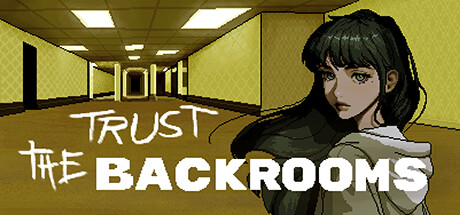
Generative AI was only used to create image references during the creation of promotionnal artworks :
The main promotional artwork shows a hallway where the pillars and the lights are arranged to form the word : DON'T.
The artist who drew these promotional artworks used generative AI to get reference images on how to integrate text with natural elements of a scene so that the elements of the scene seems to be forming letters.
The final artwork is purely derivative and original and was made by the artist from zero, with the help of the AI generated images as inspiration for placing the letters on the final drawing.
"Uncanny Valley: Machine" uses images and music generated by neural networks.
Images are generated using stable diffusion. When creating the models used, commercial use of the generated images is permitted.
When creating the images, no names of any authors or companies were indicated.
Most of the images were edited using photo editors.
The following types of images were generated by II:
Characters;
Backgrounds;
Interior objects.
All music in "Uncanny Valley: Machine" was generated by the MusicGen AI, which allows the generated music to be used for commercial purposes.