Public Steam disclosure research27,816 disclosures tracked
Where do games disclose AI use?
Search developers’ Steam disclosures, compare classified AI use across
games, and follow recorded changes.
This index adds cross-game classifications and statistics to
statements published on individual store pages.
Groups reflect automatic analysis of public disclosures; mature records are excluded. These counts do not measure AI use across all of Steam.
Missing or unclear statements cannot establish whether a game uses AI.
This game uses generative AI during its development to create a limited number of pre-rendered assets. Specifically, some of the static loading screen art was created with the assistance of AI tools.
All of these assets were finalized and reviewed by our team before the game's release to ensure they meet quality standards and adhere to Steam's content policies. There is no live or real-time AI generation of content while the game is running.
Some of the store artwork (Steam capsules) are designed with assistance of generative AI.
The game itself - includding the music, levels, code and all artwork - is "hand made" without any of this AI stuff.
AI tools were used in the production process of some graphical assets. In these cases AI is mainly used as a middleman to add detail between first drafts and final product.
AI was used to assist with minor code segments and some dialogue lines.
Background images in this game partially contains AI generated content that is post-processed by hand and given final touches to best suit the game's thematics. "The City" does not conform to this, and is created from the ground up by the fine hands of the creators and artists.
Nothorian is an original work developed by our creative team. Some artwork and promotional text were assisted by AI tools (GPT) during development. No AI content is generated during gameplay, and all content has been carefully reviewed and adapted by humans.
We use it as a support tool for some things (as almost everyone does these days), but our team designed the story and the entire game and oversaw everything. There is no crazy or dangerous real-time generation.
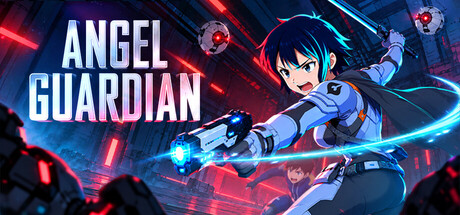
Angel Guardian has been in development for over eight years, long before the rise of modern generative AI. During that time, more than 150 artists, designers, programmers, musicians, writers, and other contributors have helped shape its world.
As development evolved, we incorporated AI tools into parts of our creative pipeline including story development, dialogue iteration, enemy balancing, difficulty tuning, concept art exploration, animation prototyping, music experimentation, and voice prototyping to accelerate iteration and explore ideas more efficiently.
Every AI-assisted asset and system was reviewed, directed, refined, or recreated by our development team. AI was one tool among many used to help bring our long-standing vision to life.
The game uses some AI generated and manually modified content only for paitings and photographs as well as for some of the text content (modified and reworded).
Generative AI is used for translations into languages I do not master and to create early 3D model prototypes. These prototypes are manually refined before being integrated into the game. No generative AI is used during gameplay or to dynamically generate in-game content.
**Disclosure on Use of Generative AI in Development**
*Lost Traces: False Awakening* and *Lost Traces: Genesis* are ambitious projects developed by a **small indie team**. To efficiently achieve the large scope and detail of the game's world, we made selective use of pre-generated tools during development.
This approach was strictly limited to foundational elements which were then heavily refined by human artists and engineers:
* **Character Designs (Images):** A portion of the initial character design concepts and visual elements (used on the store page and in-game) were informed by licensed image generation tools, such as **Stable Diffusion**. Every single piece of content has since been **manually edited, digitally painted, and extensively refined** by our artists to ensure unique visual identity and high quality.
* **Voice Dialogue (Audio):** A portion of the in-game voice dialogue was generated using licensed text-to-speech or AI voice tools. This audio was subsequently run through **professional editing, mastering, and processing** to ensure vocal quality, pacing, and consistency across the game's soundscape.
Our team maintains **full creative and artistic control** over all final assets. We did not use any AI tools to generate content *live* during gameplay.
We have used open source LLMs trained on our game's lore and dialogue to generate quests.
We have used our own private NeRF systems to generate some 3D models.
Some of our marketing materials, game icons, and concept art was generated using art we had designers create under contract for this game. That art was used to train an open source generative system.
During development, our team MAY use assistive AI design tools to support the creation of certain static visual graphic elements, such as logos, graphics, and UI. Any such materials are further refined and shaped by our artists to ensure they align with the creative direction and standards of Method of Entry.
These tools allow us to maintain a high level of visual quality for the best experience possible from our small development team.
* Contents below are copied from the game, the soundtrack does not use any Generative AI technology.
User will be able to talk in freeform with the NPCs within the game world according to the environment given to them.
Some of the evidence (photos on the wall, book covers) have been created using AI tools
Some images in the game were partly designed by artificial intelligence image generation. They were adapted in a unique way to fit in the general theme.
We used generative AI for: art on the store page, and some in-game textures. Each AI-generated content was then manually adjusted by our in-house artist to ensure the presence of human input in the art and high quality of the game.
There was AI image generation used for creating bases for some environment textures, those bases were heavily modified by hand to fit the game from the original texture spit out by AI.
The cover art and character poses and expressions in our game were initially generated using AI during the development phase to enhance the creative process. These elements were then redrawn by our art team to ensure quality and originality. Additionally, the story text within the game was refined, proofread, and translated with the assistance of AI tools. No real-time AI content is generated during gameplay, ensuring players receive a consistent and controlled gaming experience.
A few background concepts were generated with AI that retains respect to artist copyright (Adobe Firefly) but we are still working on reworking these few instances with our art team!
This game uses AI-generated content for:
Store capsule artwork
All AI content has been reviewed and edited by our development team to ensure quality and appropriateness.
For the MVP of the Development version of the game 3D models, 2D sprites, sound and music are part wise AI generated. These assets will not be used for the release of the game but instead replaced by human-made assets.
Some object textures are AI generated to apparently look AI generated as a commentary, distorted and non human (dreamtexture plugin for Blender with prompts like "AI looking alien food" and such.
Pictures of faces have been generated with this-person-does-not-exist.com to look like conventionnaly beautiful but generic portraits, again foreshadowing the idea what a person looks like, from an AI, algorithmically driven system.
We have used AI-generated content for player-selectable BGM and cover images in the game lobby, as well as voice-overs. Among these, all voice-overs have been completely replaced with professional voice actors' recordings in time for the Early Access release. We are currently conducting an internal investigation regarding unconfirmed content, and all confirmed AI-generated assets will be replaced with human-created assets by the official 1.0 release.
A tiny number of in-world 2D assets (poster designs and paintings) were created with limited AI assistance and refined by a graphic designer. All 3D art, characters, music, voice work, writing, design, VFX, and SFX were made entirely by humans, meaning over 99.99% of the game was crafted by real people.