Public Steam disclosure research25,383 disclosures tracked
Where do games disclose AI use?
Search developers’ Steam disclosures, compare classified AI use across
games, and follow recorded changes.
This index adds cross-game classifications and statistics to
statements published on individual store pages.
Groups reflect automatic analysis of public disclosures; mature records are excluded. These counts do not measure AI use across all of Steam.
Missing or unclear statements cannot establish whether a game uses AI.
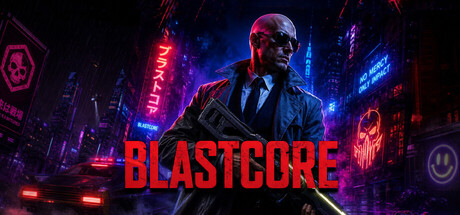
Artificial intelligence was used as a supportive developer tool. It helped create conceptual background environment art. It also generated ambient layers for the soundtrack. This was done solely to enhance the neon synthwave atmosphere. All content underwent manual selection and final refinement.
AI tools assisted in developing certain visual and audio elements, design references, and translations. The development team reviewed and finalized all published content.
Levels, game design, boss patterns and story are entirely hand-made in a custom level editor built by the developer. The game code is written with AI coding assistants under the developer's direction. Character and environment sprites started as AI-generated sprite sheets and were hand-retouched frame by frame. Music is created with Suno. Most sound effects are synthesized procedurally by code written with an AI coding assistant, then selected and tuned by the developer; a few come from CC0 and royalty-free libraries (Kenney, OpenGameArt, Mixkit). No AI runs at play time.
This game's marketing materials include AI-generated voice narration created with ElevenLabs. The game itself does not use live-generated AI, and gameplay content is not generated by AI.
Generative AI tools were used throughout development: the game's code and its in-game text, the paintings, icons and interface art, the 3D models, and the music and sound effects. Everything was reviewed, edited and tested, and ships as fixed content. Nothing is generated while you play: the game runs no model and makes no network call.
Some cosmetic artwork and icons, and the original music soundtrack, were created with generative AI tools during development. These assets are pre-generated. The game does not generate AI content during gameplay or connect to an AI service.
This game started with my own ideas. Its development, design, sound, and graphics were all created using AI. AI-generated content was created during development. The game does not generate AI content during gameplay or connect to external AI services.
Generative AI was used to create pre-rendered story illustrations, horror encounter images, promotional artwork and music. AI tools also assisted with narrative text and localization. These assets are prepared in advance; the game does not generate AI content during play.
NBD2 is an AI game development studio. As a solo indie dev who is unlikely to ever make a dime from any of my games, there's no other way I could bring my ideas to life.
Tooth and Tusk was created using generative AI throughout development, including its artwork and visuals, music, sound effects, character voices, text and dialogue, and game code. All AI generation took place during development. The game does not generate AI content or code during play or connect to an external AI service.
I recognize AI in game development is an extremely sensitive topic and I appreciate both sides. I only hope the game is fun.
The goal should always be making something that human beings will enjoy.
Generative AI tools were used during development across visual assets, audio, and written content. AI-assisted outputs were substantially edited, composited, photobashed and hand-painted by the developer before inclusion in the game. No generative AI is used at runtime.
Generative AI tools were used during the development of the game to create and assist with certain pieces of content.
AI was used to generate some visual elements, including individual icons, as well as some sound effects. Some generated assets were further edited and adapted for use in the game.
AI was also used as an assisting tool for creating text content and localizing the game into other languages.
Generative AI tools were used during development to help create some 3D models and textures, UI and icon artwork, character voice recordings, sound effects, promotional artwork, and store-page text. These are pre-generated assets and text.
Pre-generated content: some character and venue artwork, some 3D props, the cast voice lines, the intro films and the translations were created with AI tools and reviewed by the developer. No content is generated at runtime.
Due to budget constraints, I’ve had to rely on AI to create the soundtrack and translate the game into languages I don’t speak (all languages except English and Spanish).
I know it’s not the same as working with professional musicians and translators, and I’d really like to change that in the future. If the game is well received and gets enough support, I’ll be more than happy to invest part of that support into working with professionals and replacing these AI-generated elements.
Thank you for giving the game a chance and for supporting this indie project.
Generative AI tools were used during development to help create selected artwork, audio assets, and promotional materials. These materials were reviewed and selected by the developer. Wreckums does not generate AI content during gameplay or connect to external AI services while you play.
This game is a polished and updated version of a limited-time game released in August 2026, and only available for a single month.
The objective for the original was to create a game in as short a time as possible. Development was finished in three weeks, and to achieve this goal, Suno(AI) was used to create some of the sound assets.
If you would prefer not to support this game due to this use of AI, we fully understand. Regardless, thank you for taking the time to consider it!
Generative AI was used during development to assist in creating and refining some pre-generated artwork, audio elements, text, and localized text. All content included with the game was selected, edited, and reviewed by the developer. The game does not generate AI content during gameplay and does not connect to external AI services.
All content was meticulously reviewed and curated by the developer. Some coding, sound and art were created using AI tools, but all were edited and finalized by the developer.
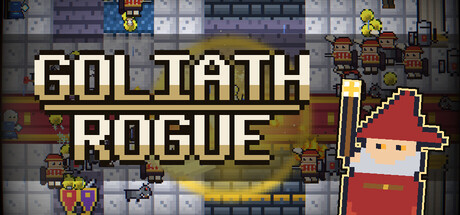
Goliath Rogue was made with the help of generative AI. The 2D art, the music and the sound effects were AI-generated — some of the art was then retouched by hand — and the Spanish and French translations were AI-assisted. All of it ships as fixed assets in the game; nothing is generated while you play. AI coding tools were also used during development to help write the game's code.
Generative AI was used during development to help create images, background music, and sound effects, assist with programming, and translate in-game text. All voice performances were recorded by human performers. No AI content is generated during gameplay.
Generative AI was used during development to help create images, background music, and sound effects, assist with programming, and translate in-game text. All voice performances were recorded by human performers. No AI content is generated during gameplay.
Generative AI was used during development to help create images, background music, and sound effects, assist with programming, and translate in-game text. All voice performances were recorded by human performers. No AI content is generated during gameplay.
Generative AI tools were used extensively during the development of this game, including assistance with programming and the creation of much of its artwork, music, and localized text. All AI-assisted content was reviewed and edited by the developer before being included. The game does not use generative AI at runtime and does not generate content during gameplay.
Pre-generated AI tools were used during the development of this game, including assistance with programming and the creation of substantial portions of its artwork, music, and localized text. All AI-assisted content included in the game was reviewed by the developer and edited where appropriate. The game does not use generative AI at runtime, and no content is generated during gameplay.
Some of this game's user-interface text, its Korean, English, Japanese and
Simplified Chinese translations, parts of this store page, and the on-screen text
in the trailer were written with the assistance of generative AI tools, then
reviewed and edited by the developer.
All 3D models, user-interface art and sound effects are licensed from commercial
asset stores. All artwork made for this game, including the app icon, store art
and trailer, is rendered or captured from the game itself rather than produced by
an image- or video-generation model. The game does not generate any content at
runtime and does not connect to any AI service during play.
Generative AI tools were used during development to assist with selected promotional artwork and pre-generated voice-over audio. All AI-assisted content is created and reviewed before inclusion in the game or store materials. The game does not use generative AI during gameplay and does not generate content in real time.
We used AI to generate initial music tracks, concept art, and temporary translations into some languages.
All materials were then thoroughly edited, reworked, and finalized by humans.
Nothing went straight from the generator into the game.
This game uses generative AI to help create pre-generated content. Artwork (character art, backgrounds, card illustrations, icons) is produced with AI image generation as base material, then hand-curated, edited and integrated by the developer before it is finalized. Text is drafted with AI assistance and edited by hand. Cinematics and store videos are assembled from AI-generated footage and edited by hand. Background music and stingers are produced with AI music generation and hand-selected. The game contains no AI content generated at runtime and does not connect to any external AI service.
The game was 100% designed and tested by me and my kids. I did use AI tools to help create the logo, some of the 3d objects in the game (portion of the buildings) and the voice narration in the trailer.
Some music tracks included in the game were created using generative AI tools by third-party music providers. These tracks are used under licenses that permit their inclusion in commercial projects.
The game's visual assets, 3D environments, characters, animations and other artwork are primarily human-created assets, including original work and commercially licensed asset packs or free asset packs.
The game does not generate AI content while running.
Generative AI tools were used for selected visual assets, promotional artwork, trailer voices, and text/localization drafts. This content is pre-generated and reviewed during development. The game does not generate AI content during play or connect to an external AI service.
Generative AI has been used in the development of Companion Baduk for occasional placeholder graphics, elements of companion character backstories, the promotional trailer, and some sound effects.
Scriptura uses pre-generated AI content for ambient music, sound effects, and some artwork used on the store page and in marketing. The Race Friends trailer includes AI-generated music and sound effects. Certain optional DLC texts include AI-generated translations, identified in their edition information. Scriptura does not generate AI content during gameplay or connect to an AI service while you play.
Generative AI tools were used to help create some pre-made sound effects and marketing materials, including store-page text and promotional artwork. These are fixed assets prepared during development. The game does not generate AI content during gameplay; its random holes and boundaries are created by procedural game code.
AI-assisted programming tools were used during development to help write game code. Generative AI was also used to create or assist with portions of the artwork and logo, music, sound effects, written text, and localization in the game and its store and marketing materials. These uses take place during development and content production. The game does not use AI to generate content or code during gameplay and does not connect to external AI services during gameplay.
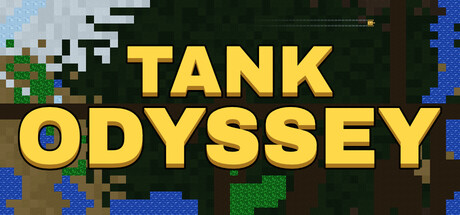
This game is developed under the direction of an independent developer. Its core tank mechanics, combat system, UI design, and mission system were all implemented using Godot, with AI-assisted tools incorporated to improve development efficiency.
AI tools are primarily used in asset creation, including background images, vehicle images, sound effects, and UI elements.
The game’s core design philosophy, gameplay mechanics, and programming logic were all personally conceived and implemented by the developer. AI serves only as a supporting tool and is not the primary source of creation.
With the assistance of AI tools, we are able to focus more closely on gameplay and overall quality, allowing our limited resources to be invested in the most important aspects of the player experience.
AI-assisted tools were used during development to create some visual assets and textures, music and sound effects, and to assist with English localization. Generated promotional illustrations and pre-generated synthetic voice performances are also used in the Steam store materials and trailers. These assets were selected, edited and integrated during production. The game does not generate AI content while it is running.
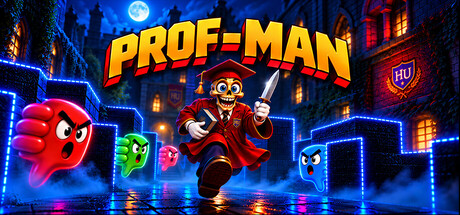
PROF-MAN contains pre-generated visual artwork and voice audio created with the assistance of generative AI tools. Visual assets were created and directed by the developer and subsequently edited and refined as part of the game's art production process. The Professor's voice was created using ElevenLabs. No AI-generated content is created during gameplay.
Generative AI was used during development to create some pre-rendered artwork and music, as well as store and promotional artwork. These are pre-created assets. The game does not generate AI content or connect to external AI services during gameplay.
Generative AI used as developer tool for code, testing, modeling, and sound.
Generative AI used directly for campaign mission brief and victory screen full screen background art.
Some pre-production assets were generated with AI tools and then hand-finished by the team: 3D character bodies (Tripo) that were re-rigged, textured and animated by hand; concept and brand imagery (OpenAI image generation) redrawn or composited by hand; voice lines and sound effects (ElevenLabs); and music (Suno) under a commercial licence. No AI content is generated during gameplay, and the game connects to no AI service.
Artificial intelligence was used as a supportive developer tool. It helped create conceptual background environment art. It also generated ambient layers for the soundtrack. This was done solely to enhance the neon synthwave atmosphere. All content underwent manual selection and final refinement.
AI tools assisted in developing certain visual and audio elements, design references, and translations. The development team reviewed and finalized all published content.
Levels, game design, boss patterns and story are entirely hand-made in a custom level editor built by the developer. The game code is written with AI coding assistants under the developer's direction. Character and environment sprites started as AI-generated sprite sheets and were hand-retouched frame by frame. Music is created with Suno. Most sound effects are synthesized procedurally by code written with an AI coding assistant, then selected and tuned by the developer; a few come from CC0 and royalty-free libraries (Kenney, OpenGameArt, Mixkit). No AI runs at play time.
This game's marketing materials include AI-generated voice narration created with ElevenLabs. The game itself does not use live-generated AI, and gameplay content is not generated by AI.
Generative AI tools were used throughout development: the game's code and its in-game text, the paintings, icons and interface art, the 3D models, and the music and sound effects. Everything was reviewed, edited and tested, and ships as fixed content. Nothing is generated while you play: the game runs no model and makes no network call.
Some cosmetic artwork and icons, and the original music soundtrack, were created with generative AI tools during development. These assets are pre-generated. The game does not generate AI content during gameplay or connect to an AI service.
This game started with my own ideas. Its development, design, sound, and graphics were all created using AI. AI-generated content was created during development. The game does not generate AI content during gameplay or connect to external AI services.
Generative AI was used to create pre-rendered story illustrations, horror encounter images, promotional artwork and music. AI tools also assisted with narrative text and localization. These assets are prepared in advance; the game does not generate AI content during play.
NBD2 is an AI game development studio. As a solo indie dev who is unlikely to ever make a dime from any of my games, there's no other way I could bring my ideas to life.
Tooth and Tusk was created using generative AI throughout development, including its artwork and visuals, music, sound effects, character voices, text and dialogue, and game code. All AI generation took place during development. The game does not generate AI content or code during play or connect to an external AI service.
I recognize AI in game development is an extremely sensitive topic and I appreciate both sides. I only hope the game is fun.
The goal should always be making something that human beings will enjoy.
Generative AI tools were used during development across visual assets, audio, and written content. AI-assisted outputs were substantially edited, composited, photobashed and hand-painted by the developer before inclusion in the game. No generative AI is used at runtime.
Generative AI tools were used during the development of the game to create and assist with certain pieces of content.
AI was used to generate some visual elements, including individual icons, as well as some sound effects. Some generated assets were further edited and adapted for use in the game.
AI was also used as an assisting tool for creating text content and localizing the game into other languages.
Generative AI tools were used during development to help create some 3D models and textures, UI and icon artwork, character voice recordings, sound effects, promotional artwork, and store-page text. These are pre-generated assets and text.
Pre-generated content: some character and venue artwork, some 3D props, the cast voice lines, the intro films and the translations were created with AI tools and reviewed by the developer. No content is generated at runtime.
Due to budget constraints, I’ve had to rely on AI to create the soundtrack and translate the game into languages I don’t speak (all languages except English and Spanish).
I know it’s not the same as working with professional musicians and translators, and I’d really like to change that in the future. If the game is well received and gets enough support, I’ll be more than happy to invest part of that support into working with professionals and replacing these AI-generated elements.
Thank you for giving the game a chance and for supporting this indie project.
Generative AI tools were used during development to help create selected artwork, audio assets, and promotional materials. These materials were reviewed and selected by the developer. Wreckums does not generate AI content during gameplay or connect to external AI services while you play.
This game is a polished and updated version of a limited-time game released in August 2026, and only available for a single month.
The objective for the original was to create a game in as short a time as possible. Development was finished in three weeks, and to achieve this goal, Suno(AI) was used to create some of the sound assets.
If you would prefer not to support this game due to this use of AI, we fully understand. Regardless, thank you for taking the time to consider it!
Generative AI was used during development to assist in creating and refining some pre-generated artwork, audio elements, text, and localized text. All content included with the game was selected, edited, and reviewed by the developer. The game does not generate AI content during gameplay and does not connect to external AI services.
All content was meticulously reviewed and curated by the developer. Some coding, sound and art were created using AI tools, but all were edited and finalized by the developer.
Goliath Rogue was made with the help of generative AI. The 2D art, the music and the sound effects were AI-generated — some of the art was then retouched by hand — and the Spanish and French translations were AI-assisted. All of it ships as fixed assets in the game; nothing is generated while you play. AI coding tools were also used during development to help write the game's code.
Generative AI was used during development to help create images, background music, and sound effects, assist with programming, and translate in-game text. All voice performances were recorded by human performers. No AI content is generated during gameplay.
Generative AI was used during development to help create images, background music, and sound effects, assist with programming, and translate in-game text. All voice performances were recorded by human performers. No AI content is generated during gameplay.
Generative AI was used during development to help create images, background music, and sound effects, assist with programming, and translate in-game text. All voice performances were recorded by human performers. No AI content is generated during gameplay.
Generative AI tools were used extensively during the development of this game, including assistance with programming and the creation of much of its artwork, music, and localized text. All AI-assisted content was reviewed and edited by the developer before being included. The game does not use generative AI at runtime and does not generate content during gameplay.
Pre-generated AI tools were used during the development of this game, including assistance with programming and the creation of substantial portions of its artwork, music, and localized text. All AI-assisted content included in the game was reviewed by the developer and edited where appropriate. The game does not use generative AI at runtime, and no content is generated during gameplay.
Some of this game's user-interface text, its Korean, English, Japanese and
Simplified Chinese translations, parts of this store page, and the on-screen text
in the trailer were written with the assistance of generative AI tools, then
reviewed and edited by the developer.
All 3D models, user-interface art and sound effects are licensed from commercial
asset stores. All artwork made for this game, including the app icon, store art
and trailer, is rendered or captured from the game itself rather than produced by
an image- or video-generation model. The game does not generate any content at
runtime and does not connect to any AI service during play.
Generative AI tools were used during development to assist with selected promotional artwork and pre-generated voice-over audio. All AI-assisted content is created and reviewed before inclusion in the game or store materials. The game does not use generative AI during gameplay and does not generate content in real time.
We used AI to generate initial music tracks, concept art, and temporary translations into some languages.
All materials were then thoroughly edited, reworked, and finalized by humans.
Nothing went straight from the generator into the game.
This game uses generative AI to help create pre-generated content. Artwork (character art, backgrounds, card illustrations, icons) is produced with AI image generation as base material, then hand-curated, edited and integrated by the developer before it is finalized. Text is drafted with AI assistance and edited by hand. Cinematics and store videos are assembled from AI-generated footage and edited by hand. Background music and stingers are produced with AI music generation and hand-selected. The game contains no AI content generated at runtime and does not connect to any external AI service.
The game was 100% designed and tested by me and my kids. I did use AI tools to help create the logo, some of the 3d objects in the game (portion of the buildings) and the voice narration in the trailer.
Some music tracks included in the game were created using generative AI tools by third-party music providers. These tracks are used under licenses that permit their inclusion in commercial projects.
The game's visual assets, 3D environments, characters, animations and other artwork are primarily human-created assets, including original work and commercially licensed asset packs or free asset packs.
The game does not generate AI content while running.
Generative AI tools were used for selected visual assets, promotional artwork, trailer voices, and text/localization drafts. This content is pre-generated and reviewed during development. The game does not generate AI content during play or connect to an external AI service.
Generative AI has been used in the development of Companion Baduk for occasional placeholder graphics, elements of companion character backstories, the promotional trailer, and some sound effects.
Scriptura uses pre-generated AI content for ambient music, sound effects, and some artwork used on the store page and in marketing. The Race Friends trailer includes AI-generated music and sound effects. Certain optional DLC texts include AI-generated translations, identified in their edition information. Scriptura does not generate AI content during gameplay or connect to an AI service while you play.
Generative AI tools were used to help create some pre-made sound effects and marketing materials, including store-page text and promotional artwork. These are fixed assets prepared during development. The game does not generate AI content during gameplay; its random holes and boundaries are created by procedural game code.
AI-assisted programming tools were used during development to help write game code. Generative AI was also used to create or assist with portions of the artwork and logo, music, sound effects, written text, and localization in the game and its store and marketing materials. These uses take place during development and content production. The game does not use AI to generate content or code during gameplay and does not connect to external AI services during gameplay.
This game is developed under the direction of an independent developer. Its core tank mechanics, combat system, UI design, and mission system were all implemented using Godot, with AI-assisted tools incorporated to improve development efficiency.
AI tools are primarily used in asset creation, including background images, vehicle images, sound effects, and UI elements.
The game’s core design philosophy, gameplay mechanics, and programming logic were all personally conceived and implemented by the developer. AI serves only as a supporting tool and is not the primary source of creation.
With the assistance of AI tools, we are able to focus more closely on gameplay and overall quality, allowing our limited resources to be invested in the most important aspects of the player experience.
AI-assisted tools were used during development to create some visual assets and textures, music and sound effects, and to assist with English localization. Generated promotional illustrations and pre-generated synthetic voice performances are also used in the Steam store materials and trailers. These assets were selected, edited and integrated during production. The game does not generate AI content while it is running.
PROF-MAN contains pre-generated visual artwork and voice audio created with the assistance of generative AI tools. Visual assets were created and directed by the developer and subsequently edited and refined as part of the game's art production process. The Professor's voice was created using ElevenLabs. No AI-generated content is created during gameplay.
Generative AI was used during development to create some pre-rendered artwork and music, as well as store and promotional artwork. These are pre-created assets. The game does not generate AI content or connect to external AI services during gameplay.
Generative AI used as developer tool for code, testing, modeling, and sound.
Generative AI used directly for campaign mission brief and victory screen full screen background art.
Some pre-production assets were generated with AI tools and then hand-finished by the team: 3D character bodies (Tripo) that were re-rigged, textured and animated by hand; concept and brand imagery (OpenAI image generation) redrawn or composited by hand; voice lines and sound effects (ElevenLabs); and music (Suno) under a commercial licence. No AI content is generated during gameplay, and the game connects to no AI service.