Public Steam disclosure research25,508 disclosures tracked
Where do games disclose AI use?
Search developers’ Steam disclosures, compare classified AI use across
games, and follow recorded changes.
This index adds cross-game classifications and statistics to
statements published on individual store pages.
Groups reflect automatic analysis of public disclosures; mature records are excluded. These counts do not measure AI use across all of Steam.
Missing or unclear statements cannot establish whether a game uses AI.
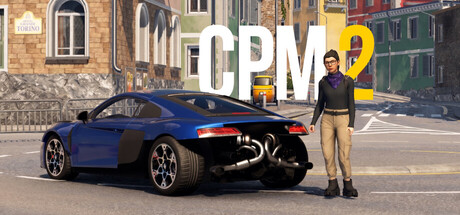
In game development, artificial intelligence is used solely as a supporting tool. We employ neural networks to enhance and refine 2D art (loading screens and promo banners) created using our in-game screenshots, after which they undergo manual color correction and artifact removal. AI also assists us with translating in-game text and generating the announcer's voice for racing modes. All key game elements, including 3D car models, tuning, and the open world, are created entirely by hand by our team.
Generative AI tools were used during development to assist in the creation of certain visual and audio assets. This includes some concept art, textures, UI elements, loading screens, promotional artwork, graphical assets, music, and sound effects.
AI-assisted content may be edited, modified, retouched, mixed, or otherwise integrated by the development team before being included in the game or promotional materials.
Generative AI is not used to dynamically generate content during gameplay.
AI was used only to generate the music and sound effects for BitBeasts. No AI was used to generate the game's visual assets, gameplay systems, code, or other core game content.
Generative AI tools were used during development to create portions of the game’s artwork,sound and localization. Each AI-assisted asset was reviewed, edited, palette-matched, and curated by the developer.
PER MY LAST EMAIL contains pre-generated AI content. Its music is created with generative audio tools; its sound effects are CC0 recordings, not generated. Its narrative text is human-AI co-written and human-edited under the author's direction; the game design is the author's. Its store artwork uses AI-generated background plates, composed and finished programmatically; the game's own user-interface elements are drawn in code and contain no AI-generated images. No AI content is generated at runtime, and the game contains no AI-generated depictions of real people.
Parts of this game's code were written with the assistance of AI programming tools; all output was reviewed, tested and integrated by the developer. Store page texts and localizations were also produced with AI assistance and reviewed by the developer. [Some music and sound assets were created using AI generation tools and curated by the developer.] [Some marketing artwork (e.g. capsule images) was created with AI image tools and edited by the developer.] All in-game 3D models and simulation content are authored procedurally or by hand. The game does not generate any content with AI at runtime, and it does not connect to any external AI services.
Rockinforged is a studio that develops games with an AI-assisted production pipeline. Generative AI tools are used across development — including 2D art, cinematic and video footage, sound, localization, store page text, and marketing materials — always under the developer's direct authorship, curation, and review. The game does not generate any content with AI at runtime.
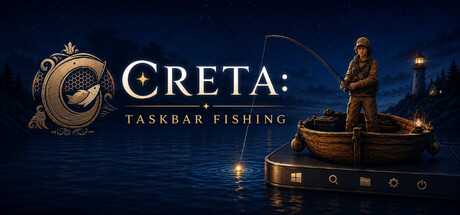
CRETA: Taskbar Fishing uses generative AI tools to assist with the creation of some visual and audio assets used in the game. AI was used as a supporting tool during development, while the game's design, gameplay systems, programming, and overall creative direction were created by the developer.
Music and certain in-game UI icons were created using generative AI tools. All AI-generated assets were reviewed, selected, and, where necessary, edited by the developer before being included in the game. The game does not generate any AI content during gameplay.
Some of the game's 2D illustration assets and sound reference material were
created with the help of AI tools during development, then reviewed,
edited and validated by hand before shipping.
No content is generated at runtime.
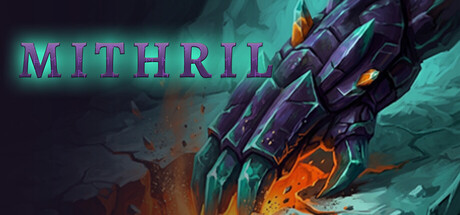
Mithril uses generative AI in much of its art and audio. This includes 3D models, textures and materials throughout the game — cave and terrain surfaces, environment art and interface textures — 2D item and UI icons, store page and marketing images, music and sound effects. All of it was edited and finalised by hand against the game's art direction.
No AI-generated voice is used, and no generative AI runs while you play — the game generates nothing at runtime.
Not AI-generated: world generation (hand-written procedural algorithms, not AI), model animations, game code, and level and systems design.
This software uses generative artificial intelligence to create custom voice output based on user‑provided text or prompts. The AI system analyzes the input and produces natural‑sounding speech in real time.
Some sound effects and decorative artwork in this game were created using generative AI tools. The game's design, mechanics, level structure, and written content were created by the developer. AI-generated content is limited to supporting assets only.
The card illustrations, background art and background music in this game were created with generative AI tools during development. All of it is produced ahead of time, reviewed and selected by the developer, and shipped as fixed asset files. The game does not generate any content at runtime and does not connect to any AI service while you play.
Some art and audio in this game were created with generative AI tools during development. All such content was reviewed before release. No generative AI runs during gameplay.
Generative AI tools are used to create part of the game's artwork, music soundtrack and programming auxiliary content. All AI-generated materials have been manually reviewed, adjusted and optimized by our team to match the game's overall style and gameplay experience.
This work is fully developed and produced with the assistance of AI: character animations, scene maps, interface UI, sound effects, music and other art and audio materials are all generated by AI; The core gameplay mechanism of the game relies on manual planning to complete the development outline, and the implementation of segmented content and function building are all assisted by AI to complete the development work.
We use generative AI tools during the pre-production phase to create specific pre-rendered assets for the final game build. Specifically, AI assistance was utilized to generate elements of the instrumental soundtrack, ambient sound effects, and select minor environment/prop assets within the game world. No AI content is generated live or dynamically during gameplay, and all assets have been thoroughly reviewed to ensure they do not infringe on existing copyrights.
Ski Lines is a solo-developed indie game created with the help of generative AI tools. AI was used throughout production to support artwork creation, music and sound design, code assistance, prototyping, iteration, and marketing assets.
Every AI-assisted element was curated, edited, and integrated by the developer to fit the game’s minimalist ski-map aesthetic and gameplay vision. The use of AI helped accelerate production while preserving human creative direction, design decisions, quality control, and final authorship.
Generative AI tools were used during development to assist with portions of programming and to create selected pre-generated audio and visual assets. These include some character and commentator voice lines and branding artwork. All AI-assisted content was reviewed and integrated by the developer. No generative AI runs during gameplay, and no player input or personal data is sent to AI services.
This game was developed with the assistance of AI tools. Some visual and audio assets were created using generative AI tools, then reviewed, selected, and refined by the developer. Portions of the game's code were written with the assistance of AI coding tools under the developer's direction and review. Game design, systems, balance, and all final decisions are the developer's own. No AI content is generated live within the game.
Generated code is applied to:
Create some shaders (like smoke and vertex snapping)
Procedurally draw billboard objects like pins and balls.
Procedurally produce sfx like pin knock sounds.
Some Store art is temporary generative concept art.
In-game Graffiti is hand drawn and not a product of generative AI.
As a solo developer working with a limited budget, I used generative AI tools to help bring my vision to life and add more variety to the game. Specifically, AI generated 10-20 graphical assets and assisted in creating about half of the game's music tracks. The vast majority of the game (over 95%) - including all core design, programming, and mechanics was created entirely by hand.
Generative AI tools were used during development to create selected pre-generated visual assets, including the application icon, HUD texture, Property Marketplace illustrations, and Legacy Vault artwork. Four background-music tracks were also created using Google Gemini. All AI-assisted content was reviewed by the developer and packaged with the game. Hero Investor does not generate AI content during gameplay or send player data to an AI service.
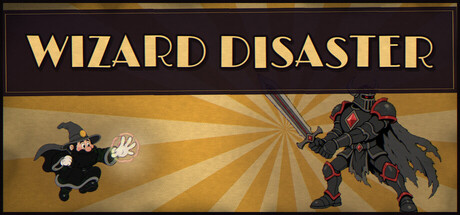
Wizard Disaster was made by a solo developer, using generative AI tools as part of the production pipeline.
Art. Character, boss and background artwork, and the source frames the animations are built from, were produced with generative image and video tools. Everything was then cut, keyed, aligned, retimed and composited by hand into the sheets the game actually plays. The generated output is the raw material, not the finished asset. Concept passes were made the same way.
Audio. The music and most of the sound effects were generated with Suno, then trimmed, pitched, levelled and fitted to the length of the action each one accompanies. Not all of the audio is generated: a number of the effects are synthesised procedurally in code from a 1930s orchestra-pit palette, and the wizard's own voice (his cries and shouts) are human recordings.
Code. Generative AI was used as a programming assistant during development, and to build and run the automated test harnesses that measure boss pacing, damage output and medal times. Those harnesses are development-only tooling and are not part of the shipped game.
The game contains no live-generated AI content. Nothing is generated while you play, and the game makes no network or AI service calls at runtime.
Generative AI tools were used during development to create pre-generated visual assets, UI graphics, in-game text, character content, fictional file contents, audio, and localization. All AI-generated content was reviewed and edited by the development team before being included in the game. The game does not use generative AI at runtime or generate content live for players.
Generative AI Disclosure:
This game utilizes generative AI tools to assist in creating player-facing assets, including base visual artwork, narrative script drafts, and voiceover audio (via ElevenLabs).
All AI-assisted dialogue, visuals, and audio undergo significant manual editing, human curation, and design to ensure high production quality and artistic cohesion before shipping with the game. No live or dynamic generative AI is executed while the game is running.
We used Gemini AI during the development process to assist in generating some ambient background music tracks. Additionally, AI tools were used for minor assistance in refining some visual components and lighting enhancements for marketing assets. All components have been carefully curated, hand-edited, and integrated by the developer to comply with Steam's content policies.
Verilight incorporates generative AI as part of its development pipeline for creating draft artwork, music, text, and programming assistance. All AI-generated material is manually reviewed, edited, refined, and integrated by the developer before being included in the final game. Artwork is transformed into the game's pixel-art style, music is manually arranged and adapted for each biome, and code is reviewed and modified before implementation. The game does not generate AI content during gameplay and does not connect to external AI services.
Some of the music in this game was created using generative AI tools. All other content — art, animation, writing and design — is made without generative AI.
Crownsink is a hand-crafted game built the modern way: the developer writes and directs the code with the support of AI tools, while every sprite, sound and note of music springs from the game's own hand-written algorithms.
Development is AI-assisted: source code, the procedural asset factories (meshes, MetaSound hero sounds, code-driven UMG) and docs are written with AI tooling under human review in-repo. No external generative-AI image/audio assets are imported; everything ships from the code-authored pipeline.
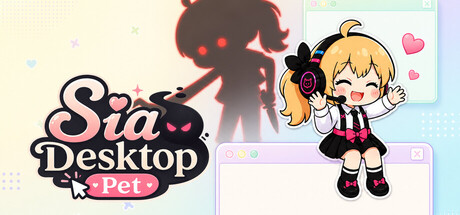
Sia's art and sound - her sprites, the outfits, the tarot cards, the item and monster icons, the sound effects - were produced with the help of generative AI tools and then edited and assembled by hand. The store images were made the same way. The game's text was written in Korean by hand; the seven other language translations were AI-assisted and reviewed by a human.
Nothing is generated while you play. The game ships as fixed image, sound and text files and never contacts an AI service.
The capsule artwork, logo, some card illustrations, and soundtrack were created with the assistance of generative AI tools. All other in-game content — including UI, effects, and text — is hand-crafted without AI generation. No AI content is generated during gameplay.
In game development, artificial intelligence is used solely as a supporting tool. We employ neural networks to enhance and refine 2D art (loading screens and promo banners) created using our in-game screenshots, after which they undergo manual color correction and artifact removal. AI also assists us with translating in-game text and generating the announcer's voice for racing modes. All key game elements, including 3D car models, tuning, and the open world, are created entirely by hand by our team.
Generative AI tools were used during development to assist in the creation of certain visual and audio assets. This includes some concept art, textures, UI elements, loading screens, promotional artwork, graphical assets, music, and sound effects.
AI-assisted content may be edited, modified, retouched, mixed, or otherwise integrated by the development team before being included in the game or promotional materials.
Generative AI is not used to dynamically generate content during gameplay.
AI was used only to generate the music and sound effects for BitBeasts. No AI was used to generate the game's visual assets, gameplay systems, code, or other core game content.
Generative AI tools were used during development to create portions of the game’s artwork,sound and localization. Each AI-assisted asset was reviewed, edited, palette-matched, and curated by the developer.
PER MY LAST EMAIL contains pre-generated AI content. Its music is created with generative audio tools; its sound effects are CC0 recordings, not generated. Its narrative text is human-AI co-written and human-edited under the author's direction; the game design is the author's. Its store artwork uses AI-generated background plates, composed and finished programmatically; the game's own user-interface elements are drawn in code and contain no AI-generated images. No AI content is generated at runtime, and the game contains no AI-generated depictions of real people.
Parts of this game's code were written with the assistance of AI programming tools; all output was reviewed, tested and integrated by the developer. Store page texts and localizations were also produced with AI assistance and reviewed by the developer. [Some music and sound assets were created using AI generation tools and curated by the developer.] [Some marketing artwork (e.g. capsule images) was created with AI image tools and edited by the developer.] All in-game 3D models and simulation content are authored procedurally or by hand. The game does not generate any content with AI at runtime, and it does not connect to any external AI services.
Rockinforged is a studio that develops games with an AI-assisted production pipeline. Generative AI tools are used across development — including 2D art, cinematic and video footage, sound, localization, store page text, and marketing materials — always under the developer's direct authorship, curation, and review. The game does not generate any content with AI at runtime.
CRETA: Taskbar Fishing uses generative AI tools to assist with the creation of some visual and audio assets used in the game. AI was used as a supporting tool during development, while the game's design, gameplay systems, programming, and overall creative direction were created by the developer.
Music and certain in-game UI icons were created using generative AI tools. All AI-generated assets were reviewed, selected, and, where necessary, edited by the developer before being included in the game. The game does not generate any AI content during gameplay.
Some of the game's 2D illustration assets and sound reference material were
created with the help of AI tools during development, then reviewed,
edited and validated by hand before shipping.
No content is generated at runtime.
Mithril uses generative AI in much of its art and audio. This includes 3D models, textures and materials throughout the game — cave and terrain surfaces, environment art and interface textures — 2D item and UI icons, store page and marketing images, music and sound effects. All of it was edited and finalised by hand against the game's art direction.
No AI-generated voice is used, and no generative AI runs while you play — the game generates nothing at runtime.
Not AI-generated: world generation (hand-written procedural algorithms, not AI), model animations, game code, and level and systems design.
This software uses generative artificial intelligence to create custom voice output based on user‑provided text or prompts. The AI system analyzes the input and produces natural‑sounding speech in real time.
Some sound effects and decorative artwork in this game were created using generative AI tools. The game's design, mechanics, level structure, and written content were created by the developer. AI-generated content is limited to supporting assets only.
The card illustrations, background art and background music in this game were created with generative AI tools during development. All of it is produced ahead of time, reviewed and selected by the developer, and shipped as fixed asset files. The game does not generate any content at runtime and does not connect to any AI service while you play.
Some art and audio in this game were created with generative AI tools during development. All such content was reviewed before release. No generative AI runs during gameplay.
Generative AI tools are used to create part of the game's artwork, music soundtrack and programming auxiliary content. All AI-generated materials have been manually reviewed, adjusted and optimized by our team to match the game's overall style and gameplay experience.
This work is fully developed and produced with the assistance of AI: character animations, scene maps, interface UI, sound effects, music and other art and audio materials are all generated by AI; The core gameplay mechanism of the game relies on manual planning to complete the development outline, and the implementation of segmented content and function building are all assisted by AI to complete the development work.
We use generative AI tools during the pre-production phase to create specific pre-rendered assets for the final game build. Specifically, AI assistance was utilized to generate elements of the instrumental soundtrack, ambient sound effects, and select minor environment/prop assets within the game world. No AI content is generated live or dynamically during gameplay, and all assets have been thoroughly reviewed to ensure they do not infringe on existing copyrights.
Ski Lines is a solo-developed indie game created with the help of generative AI tools. AI was used throughout production to support artwork creation, music and sound design, code assistance, prototyping, iteration, and marketing assets.
Every AI-assisted element was curated, edited, and integrated by the developer to fit the game’s minimalist ski-map aesthetic and gameplay vision. The use of AI helped accelerate production while preserving human creative direction, design decisions, quality control, and final authorship.
Generative AI tools were used during development to assist with portions of programming and to create selected pre-generated audio and visual assets. These include some character and commentator voice lines and branding artwork. All AI-assisted content was reviewed and integrated by the developer. No generative AI runs during gameplay, and no player input or personal data is sent to AI services.
This game was developed with the assistance of AI tools. Some visual and audio assets were created using generative AI tools, then reviewed, selected, and refined by the developer. Portions of the game's code were written with the assistance of AI coding tools under the developer's direction and review. Game design, systems, balance, and all final decisions are the developer's own. No AI content is generated live within the game.
Generated code is applied to:
Create some shaders (like smoke and vertex snapping)
Procedurally draw billboard objects like pins and balls.
Procedurally produce sfx like pin knock sounds.
Some Store art is temporary generative concept art.
In-game Graffiti is hand drawn and not a product of generative AI.
As a solo developer working with a limited budget, I used generative AI tools to help bring my vision to life and add more variety to the game. Specifically, AI generated 10-20 graphical assets and assisted in creating about half of the game's music tracks. The vast majority of the game (over 95%) - including all core design, programming, and mechanics was created entirely by hand.
Generative AI tools were used during development to create selected pre-generated visual assets, including the application icon, HUD texture, Property Marketplace illustrations, and Legacy Vault artwork. Four background-music tracks were also created using Google Gemini. All AI-assisted content was reviewed by the developer and packaged with the game. Hero Investor does not generate AI content during gameplay or send player data to an AI service.
Wizard Disaster was made by a solo developer, using generative AI tools as part of the production pipeline.
Art. Character, boss and background artwork, and the source frames the animations are built from, were produced with generative image and video tools. Everything was then cut, keyed, aligned, retimed and composited by hand into the sheets the game actually plays. The generated output is the raw material, not the finished asset. Concept passes were made the same way.
Audio. The music and most of the sound effects were generated with Suno, then trimmed, pitched, levelled and fitted to the length of the action each one accompanies. Not all of the audio is generated: a number of the effects are synthesised procedurally in code from a 1930s orchestra-pit palette, and the wizard's own voice (his cries and shouts) are human recordings.
Code. Generative AI was used as a programming assistant during development, and to build and run the automated test harnesses that measure boss pacing, damage output and medal times. Those harnesses are development-only tooling and are not part of the shipped game.
The game contains no live-generated AI content. Nothing is generated while you play, and the game makes no network or AI service calls at runtime.
Generative AI tools were used during development to create pre-generated visual assets, UI graphics, in-game text, character content, fictional file contents, audio, and localization. All AI-generated content was reviewed and edited by the development team before being included in the game. The game does not use generative AI at runtime or generate content live for players.
Generative AI Disclosure:
This game utilizes generative AI tools to assist in creating player-facing assets, including base visual artwork, narrative script drafts, and voiceover audio (via ElevenLabs).
All AI-assisted dialogue, visuals, and audio undergo significant manual editing, human curation, and design to ensure high production quality and artistic cohesion before shipping with the game. No live or dynamic generative AI is executed while the game is running.
We used Gemini AI during the development process to assist in generating some ambient background music tracks. Additionally, AI tools were used for minor assistance in refining some visual components and lighting enhancements for marketing assets. All components have been carefully curated, hand-edited, and integrated by the developer to comply with Steam's content policies.
Verilight incorporates generative AI as part of its development pipeline for creating draft artwork, music, text, and programming assistance. All AI-generated material is manually reviewed, edited, refined, and integrated by the developer before being included in the final game. Artwork is transformed into the game's pixel-art style, music is manually arranged and adapted for each biome, and code is reviewed and modified before implementation. The game does not generate AI content during gameplay and does not connect to external AI services.
Some of the music in this game was created using generative AI tools. All other content — art, animation, writing and design — is made without generative AI.
Crownsink is a hand-crafted game built the modern way: the developer writes and directs the code with the support of AI tools, while every sprite, sound and note of music springs from the game's own hand-written algorithms.
Development is AI-assisted: source code, the procedural asset factories (meshes, MetaSound hero sounds, code-driven UMG) and docs are written with AI tooling under human review in-repo. No external generative-AI image/audio assets are imported; everything ships from the code-authored pipeline.
Sia's art and sound - her sprites, the outfits, the tarot cards, the item and monster icons, the sound effects - were produced with the help of generative AI tools and then edited and assembled by hand. The store images were made the same way. The game's text was written in Korean by hand; the seven other language translations were AI-assisted and reviewed by a human.
Nothing is generated while you play. The game ships as fixed image, sound and text files and never contacts an AI service.
The capsule artwork, logo, some card illustrations, and soundtrack were created with the assistance of generative AI tools. All other in-game content — including UI, effects, and text — is hand-crafted without AI generation. No AI content is generated during gameplay.