Public Steam disclosure research25,514 disclosures tracked
Where do games disclose AI use?
Search developers’ Steam disclosures, compare classified AI use across
games, and follow recorded changes.
This index adds cross-game classifications and statistics to
statements published on individual store pages.
Groups reflect automatic analysis of public disclosures; mature records are excluded. These counts do not measure AI use across all of Steam.
Missing or unclear statements cannot establish whether a game uses AI.
All materials and assets used in this game were created by hand. Generative AI tools were used only as a supportive enhancement tool, for example to refine, polish, or improve certain elements. The final content, including visual assets, story elements, audio direction, and overall creative design, remains the result of human creation and artistic direction.
Some assets in BRICK BUSTERS were created with the help of generative AI tools — including parts of the pixel art, some sound effects and music, and the translations of the in-game text. All AI-assisted content was reviewed and edited by hand before release.
Some background sound effects and ambient audio clips used in the game were sourced from Pixabay, where they were flagged as AI-generated by their respective creators. No graphics, code, or core gameplay elements were generated by AI; all other assets were developed entirely by me.
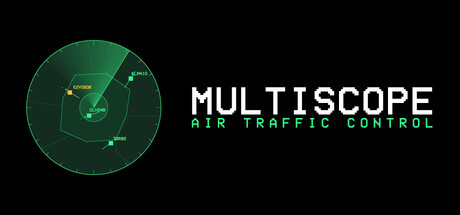
MultiScope Air Traffic Control uses a local neural text-to-speech model (Piper) to generate the pilot voice read-backs in real time on your own machine. It runs entirely offline, no voice input or player data is sent anywhere or used to train any AI model. Your spoken commands are recognized locally by your operating system, not by generative AI.
AI-assisted tools were used only to help create some sound assets. All audio was carefully reviewed and approved by the developer before being included in the game.
This game uses generative AI tools during development to create or assist with some pre-generated content. This includes code assistance, visual asset creation, and music creation.
Generative AI tools are used to assist with programming during development, to create or assist with character artwork, background artwork, store page graphics, Steam community assets, and marketing materials, and to create or assist with background music.
AI-assisted assets and code are reviewed, edited, and integrated by the developer before release. The game does not use generative AI to generate real-time content during gameplay, and players do not directly interact with a generative AI system.
The “combat AI” described in the game is a gameplay system that controls enemy behavior and tactical decision-making. It is not generative AI.
AI-Generated Content Disclosure:
Pre-Generated Content: Generative AI tools were used to create the game's background music, and to generate source material for portions of the sound and art, refined by the developer.
No Real-Time Generation: This game does not feature any live or real-time AI content generation.
No External Connectivity: The game runs entirely locally and does not connect to external AI services or servers while playing.
Ashen Crown was built almost entirely with the help of generative AI. The game's code was written through conversation with an AI assistant (Claude), with me directing, correcting, testing, and deciding what the game should be. All in-game visuals are drawn in code rather than created by an artist, and the sound and music were generated with AI as well. No third-party art, audio, or text assets were used. AI was a tool throughout development; the design, direction, and final decisions are mine.
This game uses generative AI as part of the asset creation process. Some artwork, textures, music, and sound effects were generated with AI-assisted tools and subsequently modified, curated, and integrated by the developer. All gameplay design, game systems, balancing, programming, and final implementation were created and controlled by the developer.
The development of this game made use of AI-generated content. Specifically, some of the in-game images, video sequences and character voice-over were created with the help of generative AI tools. All AI-generated assets were reviewed, curated and edited by the development team before inclusion in the final product
Some art and music in Cookiesaner were created with AI-assisted tools: Image generation for sprites and backdrops, and AI-assisted music, then curated, edited, and finished by the solo developer alongside hand-craft and original composition. No AI-generated content is created at runtime; every asset is fixed and reviewed before it ships.
Art assets in this game, such as achievement icons, were created with the assistance of GPT-based image generation tools. The background music was composed using Suno AI. All AI-generated content has been reviewed and approved by human developers.
This game uses text-to-speech to generate character voices, image-to-3D tools to create ship models, and image-to-video tools to produce cinematic sequences you may encounter during gameplay.
AI-generated content has been used to enhance and enrich the in-game experience.
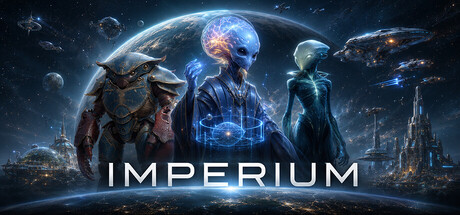
Imperium is a solo-developed game that makes extensive use of generative AI
to create its content:
• Visual art and graphical assets — planet surfaces, buildings, species and
ship artwork, interface art, and store/marketing imagery — were generated
using Midjourney and ChatGPT, then extensively edited, composited, and
refined by hand in Photoshop (including Photoshop's AI tools) to fit the
game's art direction.
• Music was generated using Suno.
• Sound effects were generated using ElevenLabs.
Every asset is reviewed, edited, and approved by the developer before it
ships, and the game's design, systems, and balance are the developer's own.
Imperium's in-game opponents use traditional algorithmic AI, not generative AI.
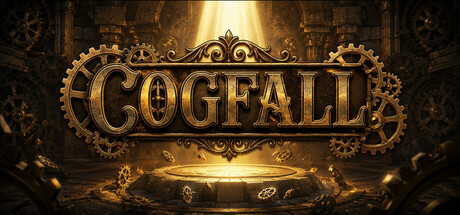
Cogfall was developed solo by Nodding Panda Studios. To bring the steampunk Clockwork Kingdom to life, AI tools were used to generate artwork and music under the creative direction of the developer. Every image and track was intentionally prompted, selected, and refined to fit the game's vision — AI served as a creative tool, not a replacement for creative decisions. All gameplay systems, code, game design, writing, and balancing were created entirely by the developer.
"AI tools (Leonardo AI) were used to generate some concept art and UI textures during development. AI tools (Gemini) were used to generate background music assets. All assets were pre-generated before being integrated into the game."
AI tools were only used in the development phase for code, textures, texts, audio and music production. There is no player-accessible AI generation feature or external AI service connection in the released game, and all built-in content has passed full manual compliance review.
Some visual/audio assets, text content, and development assistance were created with AI tools and then reviewed, modified, and integrated by the developer.
Generative AI tools were used during the development process to assist in writing code, creating speech, sound effects, and 3D assets. No generative AI is used during actual gameplay.
Some pre-rendered movie scenes, character artwork, and background music in this game were created as original assets with the assistance of generative AI tools, then reviewed and edited by the developer. The game does not use live generative AI to create content during gameplay.
We currently use AI for some of the audio dialogue as well as some of the placeholder 2D art assets. Our goal is to get art made for these where possible and we already have a voice actor and musician on board who is working on our audio.
Generative AI tools were used in a supporting role during certain parts of the development of this game. Their primary uses included programming assistance (such as code generation and debugging), the creation of some image assets used on the Steam Store page and in the game, the creation of source material for some background music and sound effects, and assistance with the translation and refinement of certain text.
AI-generated image and audio materials were not used as-is. The development team reviewed all such materials and, where necessary, retouched, cropped, color-corrected, resized, adjusted, or otherwise edited them to ensure they were suitable for the game.
Any text for which generative AI was used to assist with translation or wording was reviewed by the development team for context and accuracy, and revised as necessary before being used.
We understand that some players may have questions or concerns about the use of generative AI, and that it may be an important factor when deciding whether to purchase or play a game. By describing the extent of its use in this title as clearly as possible, we hope to provide helpful information for making that decision.
Please note that generative AI is not used during gameplay to generate new text, images, audio, dialogue, quests, or other game content in response to player input.
We utilize generative AI for most of our artwork and some of our music.
A little (5%) of the game was coded with AI assistance - this includes sdk integrations mostly for steam API.
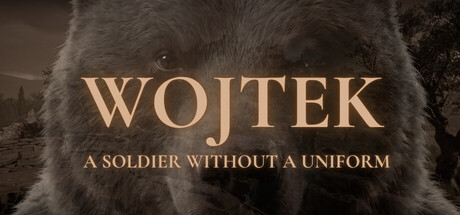
Generative AI technology was used to create high-quality voice-overs for the game's characters. This allowed this independent project to feature full voice acting, providing a more immersive narrative experience and bringing the historical journey of Wojtek the Bear to life. All AI-generated audio assets are pre-rendered and have been manually reviewed and edited to ensure high quality and consistency with the game's emotional tone.
This game uses generative AI to assist with parts of the creative process, including some artwork, voice/audio content, written text, localization, and marketing materials. AI-assisted content is reviewed, edited, and selected by the developer before being included in the game.
The overall story direction, game design, character concepts, and final creative decisions are made by the developer.
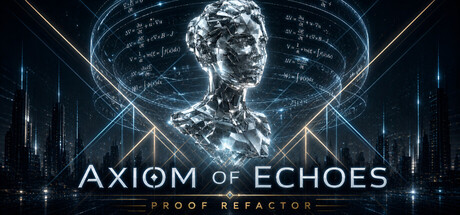
Axiom of Echoes uses generative AI for part of its assets. The store and library artwork (capsule, header, and library images) was created with AI image-generation tools and then curated and edited by hand.
Portions of the soundtrack, sound effects, and voice narration were produced with AI audio tools. All AI-assisted content is reviewed by a human before it ships. The gameplay itself — the 3D voxel puzzles, their target shapes and solutions — is generated procedurally from mathematical formulas, not by AI.
Silver Creek Town uses generative AI to support live NPC dialogue text during gameplay. Player text input may be processed by an AI service to generate in-character fictional NPC responses within the world of Silver Creek Town. Some background music, concept art, character images, text drafts, and marketing materials may also be created or assisted by AI tools during development. We review AI-assisted content before use and apply prompts, content rules, and safety restrictions to reduce inappropriate, illegal, hateful, sexually explicit, infringing, or unsafe output.
This game uses AI-generated content solely for the creation of artificial voices in which voices where either generated with text-to-speech software or AI-generated voices were applied on top of human-recorded voice actors and actresses.
Generative AI was used in this game’s development and related asset creation, including the game code, three music tracks, selected visual assets, and multilingual localization translation.
All materials and assets used in this game were created by hand. Generative AI tools were used only as a supportive enhancement tool, for example to refine, polish, or improve certain elements. The final content, including visual assets, story elements, audio direction, and overall creative design, remains the result of human creation and artistic direction.
Some assets in BRICK BUSTERS were created with the help of generative AI tools — including parts of the pixel art, some sound effects and music, and the translations of the in-game text. All AI-assisted content was reviewed and edited by hand before release.
Some background sound effects and ambient audio clips used in the game were sourced from Pixabay, where they were flagged as AI-generated by their respective creators. No graphics, code, or core gameplay elements were generated by AI; all other assets were developed entirely by me.
MultiScope Air Traffic Control uses a local neural text-to-speech model (Piper) to generate the pilot voice read-backs in real time on your own machine. It runs entirely offline, no voice input or player data is sent anywhere or used to train any AI model. Your spoken commands are recognized locally by your operating system, not by generative AI.
AI-assisted tools were used only to help create some sound assets. All audio was carefully reviewed and approved by the developer before being included in the game.
This game uses generative AI tools during development to create or assist with some pre-generated content. This includes code assistance, visual asset creation, and music creation.
Generative AI tools are used to assist with programming during development, to create or assist with character artwork, background artwork, store page graphics, Steam community assets, and marketing materials, and to create or assist with background music.
AI-assisted assets and code are reviewed, edited, and integrated by the developer before release. The game does not use generative AI to generate real-time content during gameplay, and players do not directly interact with a generative AI system.
The “combat AI” described in the game is a gameplay system that controls enemy behavior and tactical decision-making. It is not generative AI.
AI-Generated Content Disclosure:
Pre-Generated Content: Generative AI tools were used to create the game's background music, and to generate source material for portions of the sound and art, refined by the developer.
No Real-Time Generation: This game does not feature any live or real-time AI content generation.
No External Connectivity: The game runs entirely locally and does not connect to external AI services or servers while playing.
Ashen Crown was built almost entirely with the help of generative AI. The game's code was written through conversation with an AI assistant (Claude), with me directing, correcting, testing, and deciding what the game should be. All in-game visuals are drawn in code rather than created by an artist, and the sound and music were generated with AI as well. No third-party art, audio, or text assets were used. AI was a tool throughout development; the design, direction, and final decisions are mine.
This game uses generative AI as part of the asset creation process. Some artwork, textures, music, and sound effects were generated with AI-assisted tools and subsequently modified, curated, and integrated by the developer. All gameplay design, game systems, balancing, programming, and final implementation were created and controlled by the developer.
The development of this game made use of AI-generated content. Specifically, some of the in-game images, video sequences and character voice-over were created with the help of generative AI tools. All AI-generated assets were reviewed, curated and edited by the development team before inclusion in the final product
Some art and music in Cookiesaner were created with AI-assisted tools: Image generation for sprites and backdrops, and AI-assisted music, then curated, edited, and finished by the solo developer alongside hand-craft and original composition. No AI-generated content is created at runtime; every asset is fixed and reviewed before it ships.
Art assets in this game, such as achievement icons, were created with the assistance of GPT-based image generation tools. The background music was composed using Suno AI. All AI-generated content has been reviewed and approved by human developers.
This game uses text-to-speech to generate character voices, image-to-3D tools to create ship models, and image-to-video tools to produce cinematic sequences you may encounter during gameplay.
AI-generated content has been used to enhance and enrich the in-game experience.
Imperium is a solo-developed game that makes extensive use of generative AI
to create its content:
• Visual art and graphical assets — planet surfaces, buildings, species and
ship artwork, interface art, and store/marketing imagery — were generated
using Midjourney and ChatGPT, then extensively edited, composited, and
refined by hand in Photoshop (including Photoshop's AI tools) to fit the
game's art direction.
• Music was generated using Suno.
• Sound effects were generated using ElevenLabs.
Every asset is reviewed, edited, and approved by the developer before it
ships, and the game's design, systems, and balance are the developer's own.
Imperium's in-game opponents use traditional algorithmic AI, not generative AI.
Cogfall was developed solo by Nodding Panda Studios. To bring the steampunk Clockwork Kingdom to life, AI tools were used to generate artwork and music under the creative direction of the developer. Every image and track was intentionally prompted, selected, and refined to fit the game's vision — AI served as a creative tool, not a replacement for creative decisions. All gameplay systems, code, game design, writing, and balancing were created entirely by the developer.
"AI tools (Leonardo AI) were used to generate some concept art and UI textures during development. AI tools (Gemini) were used to generate background music assets. All assets were pre-generated before being integrated into the game."
AI tools were only used in the development phase for code, textures, texts, audio and music production. There is no player-accessible AI generation feature or external AI service connection in the released game, and all built-in content has passed full manual compliance review.
Some visual/audio assets, text content, and development assistance were created with AI tools and then reviewed, modified, and integrated by the developer.
Generative AI tools were used during the development process to assist in writing code, creating speech, sound effects, and 3D assets. No generative AI is used during actual gameplay.
Some pre-rendered movie scenes, character artwork, and background music in this game were created as original assets with the assistance of generative AI tools, then reviewed and edited by the developer. The game does not use live generative AI to create content during gameplay.
We currently use AI for some of the audio dialogue as well as some of the placeholder 2D art assets. Our goal is to get art made for these where possible and we already have a voice actor and musician on board who is working on our audio.
Generative AI tools were used in a supporting role during certain parts of the development of this game. Their primary uses included programming assistance (such as code generation and debugging), the creation of some image assets used on the Steam Store page and in the game, the creation of source material for some background music and sound effects, and assistance with the translation and refinement of certain text.
AI-generated image and audio materials were not used as-is. The development team reviewed all such materials and, where necessary, retouched, cropped, color-corrected, resized, adjusted, or otherwise edited them to ensure they were suitable for the game.
Any text for which generative AI was used to assist with translation or wording was reviewed by the development team for context and accuracy, and revised as necessary before being used.
We understand that some players may have questions or concerns about the use of generative AI, and that it may be an important factor when deciding whether to purchase or play a game. By describing the extent of its use in this title as clearly as possible, we hope to provide helpful information for making that decision.
Please note that generative AI is not used during gameplay to generate new text, images, audio, dialogue, quests, or other game content in response to player input.
We utilize generative AI for most of our artwork and some of our music.
A little (5%) of the game was coded with AI assistance - this includes sdk integrations mostly for steam API.
Generative AI technology was used to create high-quality voice-overs for the game's characters. This allowed this independent project to feature full voice acting, providing a more immersive narrative experience and bringing the historical journey of Wojtek the Bear to life. All AI-generated audio assets are pre-rendered and have been manually reviewed and edited to ensure high quality and consistency with the game's emotional tone.
This game uses generative AI to assist with parts of the creative process, including some artwork, voice/audio content, written text, localization, and marketing materials. AI-assisted content is reviewed, edited, and selected by the developer before being included in the game.
The overall story direction, game design, character concepts, and final creative decisions are made by the developer.
Axiom of Echoes uses generative AI for part of its assets. The store and library artwork (capsule, header, and library images) was created with AI image-generation tools and then curated and edited by hand.
Portions of the soundtrack, sound effects, and voice narration were produced with AI audio tools. All AI-assisted content is reviewed by a human before it ships. The gameplay itself — the 3D voxel puzzles, their target shapes and solutions — is generated procedurally from mathematical formulas, not by AI.
Silver Creek Town uses generative AI to support live NPC dialogue text during gameplay. Player text input may be processed by an AI service to generate in-character fictional NPC responses within the world of Silver Creek Town. Some background music, concept art, character images, text drafts, and marketing materials may also be created or assisted by AI tools during development. We review AI-assisted content before use and apply prompts, content rules, and safety restrictions to reduce inappropriate, illegal, hateful, sexually explicit, infringing, or unsafe output.
This game uses AI-generated content solely for the creation of artificial voices in which voices where either generated with text-to-speech software or AI-generated voices were applied on top of human-recorded voice actors and actresses.
Generative AI was used in this game’s development and related asset creation, including the game code, three music tracks, selected visual assets, and multilingual localization translation.