Public Steam disclosure research25,514 disclosures tracked
Where do games disclose AI use?
Search developers’ Steam disclosures, compare classified AI use across
games, and follow recorded changes.
This index adds cross-game classifications and statistics to
statements published on individual store pages.
Groups reflect automatic analysis of public disclosures; mature records are excluded. These counts do not measure AI use across all of Steam.
Missing or unclear statements cannot establish whether a game uses AI.
This game uses generative AI in parts of the development process. Claude was used for programming assistance, ChatGPT Images for creating and refining some visual assets, and Suno for producing some music.
All AI-assisted content was reviewed, selected, and modified as necessary by the developer before being included in the game.
The game does not generate content or code with AI during gameplay and does not connect to external AI services.
This app uses live generative AI to create dynamic in-game content such as dialogue and voice output. AI features are processed through developer-managed servers. Players are not required to provide API keys or maintain third-party accounts.
Vtuber Assistant uses generative AI to create live text responses and voice output as a customizable co-host companion. It reacts to your voice/text input, screen audio/visuals, and Twitch chat with fun, contextual commentary.
All core functionality runs through a secure built-in proxy by default (Grok + ElevenLabs integration) — no external API keys or setup required to use the app. Free limited daily uses are included.
Optional premium features (unlimited generations, premium voices) are handled via Steam microtransactions (AI Credits packs). Local fallback models (bundled SmolLM2 + Piper TTS) provide offline functionality when needed.
Twitch chat integration is read-only — the AI consumes incoming messages and produces in-app responses only.
All outputs are moderated by a built-in Safety Guard to help prevent inappropriate content.
This game uses generative AI in the following ways:
• Music: Background music and audio tracks were created with AI music generation tools
• Images: Some promotional images and visual assets were created or enhanced with AI image generation
• Text: Portions of in-game text, descriptions, and dialogue were written or refined with AI assistance
All AI-generated content has been reviewed and edited by the development team to ensure quality and alignment with the game's vision. The core gameplay, puzzle design, and mechanics are human-created.
AI assisted with raw audio foundations, but humans manually rearranged and mastered every sound. Nothing went straight from the algorithm to your headphones.
Generative AI tools were used in the creation of player-facing audio and visual assets in this game. This includes AI-assisted music generation and AI-assisted image/animation processing used for in-game materials. The game does not generate content live during play.
The images were refined by artificial intelligence based on real photos taken in the city of Aix-les-Bains. The music was also arranged using an artificial intelligence tool.
This product includes AI-assisted content creation. AI tools were used to generate certain images, music, voice lines, sound effects, and an introductory video. All AI-generated materials were curated, edited, refined, and implemented by the developer. The developer retains full rights to the final content included in the game.
The Legend of Wijaya utilizes pre-generated AI tools strictly as an assistive foundation for a minor portion of background environmental assets and foundational music tracks. All AI-assisted content is heavily manually edited, polished, and arranged by the developer to ensure it strictly matches the handcrafted pixel-art aesthetic and historical tone of the game.
AI coding assistants were used during development to help write and debug game code. All game content — visuals, audio, color palettes, recipes, and gameplay mechanics — is procedurally generated by the game's own algorithms, not by generative AI.
A small selection (approx. 15-20%) of the environmental wallpapers were AI-assisted to provide visual variety, while the majority of the 30+ artworks and the core 'Dojo' aesthetic are custom-designed. AI was also used to help master and refine the lofi soundtrack and assist with initial marketing drafts.
The game contains some AI generated background music tracks (e.g. background music blasting from an apartment or an old radio playing from a vehicle, user interface background music)
This game was developed with the assistance of AI tools. Character sprites and visual assets were generated using AI image tools and further edited using image editing software. The game's soundtrack was created using AI music generation tools. Game code was written with AI coding assistance. The game's story, narrative, and gameplay design are entirely original and created by the developer.
I was the archaic and fragmented DNA in the amber bound insect. AI was the frog DNA.
Original Card Game: All card art is original, hand painted on canvas and physically printed on real cards (5,000 in total). The face images are scans of those pained canvas prints/ cards. AI was used to generate the card's backs and some of the playing surfaces/backgrounds.
Coding: While I on and off experience in JavaScript since 2002, AI was used to help generate and debug portions of the code. I especially used AI when predicting potential conflicts and integration problems (especially Steam integration) before implementing new code. I found it very helpful when changing long sets of repetitive blocks of code. The volume of human error that was cut down was tremendous.
Localization: Localization will be finalized in Beta. Initial translations were done with AI. Corrections and finalization will be done after input from the community (new game, some new terms).
Music: We are Streamer first. Streamer need background music that won't affect their monetization. From the beginning, music that was all original, was critical to me. I wanted Streamers to have no worries when letting our background music play for hours. Musicians want astronomical payments and deals that will leave me perpetually paying them. I generated all of our music in Suno and own it all. I plan on releasing more, in two hour blocks, that will be available as free DLC's.
All AI I used was after human talent quoted cost ineffective numbers or outright turned me down. This is a simple card game. A vehicle for a game and art I have made. I set out to make an affordable, sturdy, reliable, user focused game. AI helped me make the best product I could.
Some graphical assets and sounds were created using generative AI tools during development. These were manually refined to ensure quality and unique identity.
This game uses AI-generated voice performances for certain in-game recordings. All narrative design, gameplay systems, and environmental content were created and implemented by the developer.
This game uses Generative AI in two ways:
1. During Development (Pre-development): Approximately 75% of the game's code was written using AI (Godot GDScript), with the remaining 25% hand-written. Additionally, all of the game's soundtrack and some pixel art backgrounds (only the trees and red crystals) were created using AI. The rest of the artwork was entirely hand-drawn.
2.During Gameplay (Live-generated): The game features a "Card Fusion" mechanic that uses a local AI model (Stable Diffusion) running on the player's hardware to dynamically generate new card illustrations. A strict keyword filtering system is in place to prevent the generation of NSFW or inappropriate content.
Some assets used during development were created with the assistance of AI tools, including background music, background images, character illustration support, and programming assistance.
All AI-assisted content was reviewed, edited, and integrated into the game by the developer.
The game does not generate AI content during gameplay and does not use generative AI systems at runtime.
Original assets such as UI elements and pixel characters were created directly by the developer.
Generative AI tools were used during development to create some supporting materials, including store page and promotional text, as well as certain marketing/community images.
In addition, the in-game music was generated using Suno.
Generative AI is not used in real time during gameplay; all content was reviewed and, where necessary, edited by the developer.
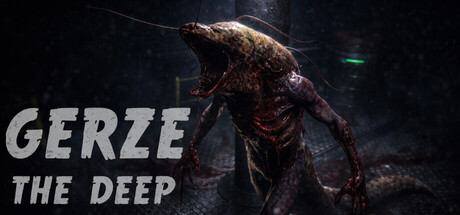
Some visual and audio assets in Gerze: The Deep were created or enhanced with the assistance of AI-based tools during development. These tools helped generate or refine certain textures, images, sound elements, and environmental details. All AI-assisted content was reviewed, edited, and integrated by the developer. AI was not used to generate gameplay, code, or real-time content.
This game uses AI-generated content. Marketing artwork and store capsule images were created using image generation. Voice narration audio was generated using text-to-speech AI. Game code was developed with AI assistance. All AI-generated content was reviewed and curated by the developer.
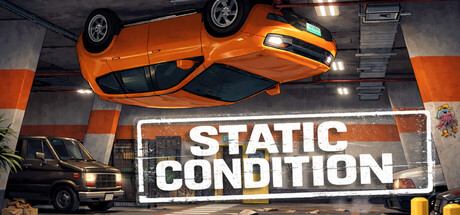
Static Condition utilizes generative AI to assist in creating certain environmental textures, audio elements, and localization translations. All AI-generated content has been curated and refined by the developer to ensure quality and consistency with the game's aesthetic.
All assets in this game were created by me, except for the background music, which is currently generated with the help of AI. The music will also be fully composed by me before release, so please stay tuned!
This game includes pre-generated visual assets created and edited using MidJourney.
Written content was developed with AI assistance (ChatGPT, GitHub Copilot) and edited by the developer.
Voice-over generated by ElevenLabs.
I am a software engineer with over 20 years of professional experience in fields from robotics to AI (writing actual neural networks, not typing prompts) to healthcare. I used some generated content for scaffolding of UI/UX, as well as music and some background VFX, but I am responsible for and able to understand and modify every line of code. The game itself is built on a program I wrote by hand several months ago from time of release.
This game feature a fictional AI entity, and developer of this game uses AI voice acting for this AI entity, although final sound files are heavily edited by the developer for better result.
Level backgrounds and logo were created using generative AI. Icons, character sprites, and music were purchased from an artist on Itch.io - if you or someone you know is able to create pixel art backgrounds that align with the game design - please reach out as I am happy to pay for their services.
This game uses pre-rendered assets and sound effects created with the assistance of generative AI tools. These tools were used during the development process to create static image sprites and audio files that are included in the final game build. No content is generated live during gameplay, and no external AI services are accessed by the game client.
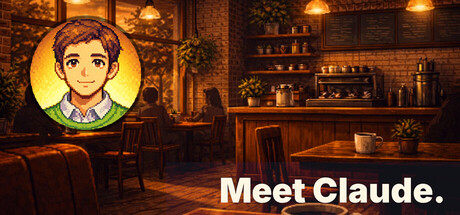
This game was made entirely with AI. The writing, code, art, music, and deployment were all created using generative AI tools — primarily Claude by Anthropic. That's not a disclaimer, it's the premise. Meet Claude is a satire about AI dependency, built with AI, by someone still figuring out where the line is.
AI Disclosure for "Lake Town Stories"
We use generative AI to assist in the creation of the following game assets:
Artwork: Background environments and character concepts were generated and refined with the assistance of AI tools.
Audio: Background music tracks and ambient sounds were created with the assistance of AI audio generation tools.
All AI-assisted content has been manually reviewed and integrated by the developer to ensure it aligns with the game's artistic vision.
This game uses generative AI in parts of the development process. Claude was used for programming assistance, ChatGPT Images for creating and refining some visual assets, and Suno for producing some music.
All AI-assisted content was reviewed, selected, and modified as necessary by the developer before being included in the game.
The game does not generate content or code with AI during gameplay and does not connect to external AI services.
This app uses live generative AI to create dynamic in-game content such as dialogue and voice output. AI features are processed through developer-managed servers. Players are not required to provide API keys or maintain third-party accounts.
Vtuber Assistant uses generative AI to create live text responses and voice output as a customizable co-host companion. It reacts to your voice/text input, screen audio/visuals, and Twitch chat with fun, contextual commentary.
All core functionality runs through a secure built-in proxy by default (Grok + ElevenLabs integration) — no external API keys or setup required to use the app. Free limited daily uses are included.
Optional premium features (unlimited generations, premium voices) are handled via Steam microtransactions (AI Credits packs). Local fallback models (bundled SmolLM2 + Piper TTS) provide offline functionality when needed.
Twitch chat integration is read-only — the AI consumes incoming messages and produces in-app responses only.
All outputs are moderated by a built-in Safety Guard to help prevent inappropriate content.
This game uses generative AI in the following ways:
• Music: Background music and audio tracks were created with AI music generation tools
• Images: Some promotional images and visual assets were created or enhanced with AI image generation
• Text: Portions of in-game text, descriptions, and dialogue were written or refined with AI assistance
All AI-generated content has been reviewed and edited by the development team to ensure quality and alignment with the game's vision. The core gameplay, puzzle design, and mechanics are human-created.
AI assisted with raw audio foundations, but humans manually rearranged and mastered every sound. Nothing went straight from the algorithm to your headphones.
Generative AI tools were used in the creation of player-facing audio and visual assets in this game. This includes AI-assisted music generation and AI-assisted image/animation processing used for in-game materials. The game does not generate content live during play.
The images were refined by artificial intelligence based on real photos taken in the city of Aix-les-Bains. The music was also arranged using an artificial intelligence tool.
This product includes AI-assisted content creation. AI tools were used to generate certain images, music, voice lines, sound effects, and an introductory video. All AI-generated materials were curated, edited, refined, and implemented by the developer. The developer retains full rights to the final content included in the game.
The Legend of Wijaya utilizes pre-generated AI tools strictly as an assistive foundation for a minor portion of background environmental assets and foundational music tracks. All AI-assisted content is heavily manually edited, polished, and arranged by the developer to ensure it strictly matches the handcrafted pixel-art aesthetic and historical tone of the game.
AI coding assistants were used during development to help write and debug game code. All game content — visuals, audio, color palettes, recipes, and gameplay mechanics — is procedurally generated by the game's own algorithms, not by generative AI.
A small selection (approx. 15-20%) of the environmental wallpapers were AI-assisted to provide visual variety, while the majority of the 30+ artworks and the core 'Dojo' aesthetic are custom-designed. AI was also used to help master and refine the lofi soundtrack and assist with initial marketing drafts.
The game contains some AI generated background music tracks (e.g. background music blasting from an apartment or an old radio playing from a vehicle, user interface background music)
This game was developed with the assistance of AI tools. Character sprites and visual assets were generated using AI image tools and further edited using image editing software. The game's soundtrack was created using AI music generation tools. Game code was written with AI coding assistance. The game's story, narrative, and gameplay design are entirely original and created by the developer.
I was the archaic and fragmented DNA in the amber bound insect. AI was the frog DNA.
Original Card Game: All card art is original, hand painted on canvas and physically printed on real cards (5,000 in total). The face images are scans of those pained canvas prints/ cards. AI was used to generate the card's backs and some of the playing surfaces/backgrounds.
Coding: While I on and off experience in JavaScript since 2002, AI was used to help generate and debug portions of the code. I especially used AI when predicting potential conflicts and integration problems (especially Steam integration) before implementing new code. I found it very helpful when changing long sets of repetitive blocks of code. The volume of human error that was cut down was tremendous.
Localization: Localization will be finalized in Beta. Initial translations were done with AI. Corrections and finalization will be done after input from the community (new game, some new terms).
Music: We are Streamer first. Streamer need background music that won't affect their monetization. From the beginning, music that was all original, was critical to me. I wanted Streamers to have no worries when letting our background music play for hours. Musicians want astronomical payments and deals that will leave me perpetually paying them. I generated all of our music in Suno and own it all. I plan on releasing more, in two hour blocks, that will be available as free DLC's.
All AI I used was after human talent quoted cost ineffective numbers or outright turned me down. This is a simple card game. A vehicle for a game and art I have made. I set out to make an affordable, sturdy, reliable, user focused game. AI helped me make the best product I could.
Some graphical assets and sounds were created using generative AI tools during development. These were manually refined to ensure quality and unique identity.
This game uses AI-generated voice performances for certain in-game recordings. All narrative design, gameplay systems, and environmental content were created and implemented by the developer.
This game uses Generative AI in two ways:
1. During Development (Pre-development): Approximately 75% of the game's code was written using AI (Godot GDScript), with the remaining 25% hand-written. Additionally, all of the game's soundtrack and some pixel art backgrounds (only the trees and red crystals) were created using AI. The rest of the artwork was entirely hand-drawn.
2.During Gameplay (Live-generated): The game features a "Card Fusion" mechanic that uses a local AI model (Stable Diffusion) running on the player's hardware to dynamically generate new card illustrations. A strict keyword filtering system is in place to prevent the generation of NSFW or inappropriate content.
Some assets used during development were created with the assistance of AI tools, including background music, background images, character illustration support, and programming assistance.
All AI-assisted content was reviewed, edited, and integrated into the game by the developer.
The game does not generate AI content during gameplay and does not use generative AI systems at runtime.
Original assets such as UI elements and pixel characters were created directly by the developer.
Generative AI tools were used during development to create some supporting materials, including store page and promotional text, as well as certain marketing/community images.
In addition, the in-game music was generated using Suno.
Generative AI is not used in real time during gameplay; all content was reviewed and, where necessary, edited by the developer.
Some visual and audio assets in Gerze: The Deep were created or enhanced with the assistance of AI-based tools during development. These tools helped generate or refine certain textures, images, sound elements, and environmental details. All AI-assisted content was reviewed, edited, and integrated by the developer. AI was not used to generate gameplay, code, or real-time content.
This game uses AI-generated content. Marketing artwork and store capsule images were created using image generation. Voice narration audio was generated using text-to-speech AI. Game code was developed with AI assistance. All AI-generated content was reviewed and curated by the developer.
Static Condition utilizes generative AI to assist in creating certain environmental textures, audio elements, and localization translations. All AI-generated content has been curated and refined by the developer to ensure quality and consistency with the game's aesthetic.
All assets in this game were created by me, except for the background music, which is currently generated with the help of AI. The music will also be fully composed by me before release, so please stay tuned!
This game includes pre-generated visual assets created and edited using MidJourney.
Written content was developed with AI assistance (ChatGPT, GitHub Copilot) and edited by the developer.
Voice-over generated by ElevenLabs.
I am a software engineer with over 20 years of professional experience in fields from robotics to AI (writing actual neural networks, not typing prompts) to healthcare. I used some generated content for scaffolding of UI/UX, as well as music and some background VFX, but I am responsible for and able to understand and modify every line of code. The game itself is built on a program I wrote by hand several months ago from time of release.
This game feature a fictional AI entity, and developer of this game uses AI voice acting for this AI entity, although final sound files are heavily edited by the developer for better result.
Level backgrounds and logo were created using generative AI. Icons, character sprites, and music were purchased from an artist on Itch.io - if you or someone you know is able to create pixel art backgrounds that align with the game design - please reach out as I am happy to pay for their services.
This game uses pre-rendered assets and sound effects created with the assistance of generative AI tools. These tools were used during the development process to create static image sprites and audio files that are included in the final game build. No content is generated live during gameplay, and no external AI services are accessed by the game client.
This game was made entirely with AI. The writing, code, art, music, and deployment were all created using generative AI tools — primarily Claude by Anthropic. That's not a disclaimer, it's the premise. Meet Claude is a satire about AI dependency, built with AI, by someone still figuring out where the line is.
AI Disclosure for "Lake Town Stories"
We use generative AI to assist in the creation of the following game assets:
Artwork: Background environments and character concepts were generated and refined with the assistance of AI tools.
Audio: Background music tracks and ambient sounds were created with the assistance of AI audio generation tools.
All AI-assisted content has been manually reviewed and integrated by the developer to ensure it aligns with the game's artistic vision.