Public Steam disclosure research25,512 disclosures tracked
Where do games disclose AI use?
Search developers’ Steam disclosures, compare classified AI use across
games, and follow recorded changes.
This index adds cross-game classifications and statistics to
statements published on individual store pages.
Groups reflect automatic analysis of public disclosures; mature records are excluded. These counts do not measure AI use across all of Steam.
Missing or unclear statements cannot establish whether a game uses AI.
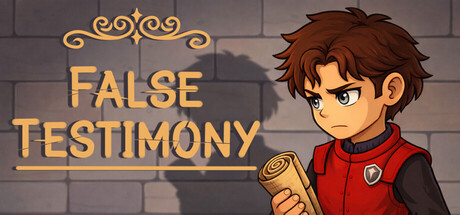
During the development of False Testimony, generative AI tools were used to create certain graphical elements and musical compositions. However, all AI-generated content has been carefully edited, refined, and adjusted manually to match the game's artistic style and atmosphere.
This game includes content created with generative AI during development. No content is generated live during gameplay.
Music: Some background music tracks were created using music generation AI (e.g. Suno AI).
Images: Some illustrations and background images were created using image generation AI.
This includes works created by the developer as well as works submitted by third parties through an open call and individual commissions. For submitted works, contributors confirmed the AI tools and external assets used, their ownership of necessary rights, that no third-party rights are infringed, and that commercial use is permitted.
AI Usage in Visual Assets and Audio
All AI-generated content has been manually reviewed, edited, and integrated by the developer to ensure quality and coherence.
Reel Talk is made by Lost Rabbit Digital: two siblings who handle all the coding, music, writing, and playtesting ourselves, with help from one additional artist, and one musician. We're a tiny team with no outside funding. To keep up, we sometimes use AI tools to brainstorm or generate rough drafts. But nothing ships without our hands on it. Every line of code, every sprite, every track is reviewed, rewritten, and refined by us.
This product uses generative AI to create selected assets, including visual content such as background images, map illustrations, and character portraits, as well as background music. The AI-generated content is partially edited and integrated into the game’s overall design.
AI was used as a supporting tool for specific visual and audio elements and is not used in gameplay, story, mechanics, or coding. All final decisions remain with the developer.
We use AI for both development and creative support. Assets generated by both AI and humans are collaboratively refined by AI and humans before being used in the game.
No AI generated content is used to dynamically change gameplay or other ingame mechanics. However, this game includes music tracks created using AI. As a solo developer with a limited budget, I chose to use AI generated music to ensure the game feels full and engaging rather than empty. These AI generated songs are part of the ingame experience and contribute to the player’s enjoyment.
Generative AI was used during development to help create some pre-rendered audio, store/marketing visuals, and concept art. All such content is curated by the developer, and the game does not generate AI content at runtime. Some store page text was also drafted with AI assistance and edited by the developer.
In the development of this work,
-Some of the still backgrounds include AI-generated materials that have been added and corrected.
・In addition to free illustrations and assets, AI-generated materials are included for reference for some still compositions.
・About 3 of the 19 songs included in the soundtrack,
After composing by the creator himself, some of the arrangements are based on AI-generated material.
Marketing assets (Capsule Art, Headers) and in-game 2D assets (sprites, icons, UI elements, backgrounds) were conceptualized and generated using AI tools (Nano Banana Pro), then manually edited, animated, and composited by the developer.
Sound Effects were generated using AI-based synthesis tools (ElevenLabs).
Background Music was generated using AI composition tools (Soundraw).
No AI is used for live generation during gameplay.
For this project, AI tools were used in art direction and soundtrack production. As an independent team, this has allowed us to achieve a visual and sonic scale that would otherwise be impossible. However, every asset has been manually supervised, edited, and curated to ensure the author's artistic vision and narrative remain intact. We believe in AI as a tool that amplifies the potential of independent creators.
Generative AI was used for the production of SOME art assets. Some are completely handmade, Some are almost entirely AI with additional human editing. This normally varies by game where one will have lots of AI and one will be completely handmade.
Art assets refer to images and music.
No AI ever runs during runtime.
I used AI helped me to design the main character; however, the final looking is vastly different then the AI generated. I also plan to use Ai to generate background music for my game.
I use AI to supplement as a stand in for what will eventually become human made content, currently its just music at the main menu and some parts of images in advertisements
Some visual assets on the store page and parts of the in-game art were created with the assistance of generative AI tools and then curated, edited, and integrated by the developer (Cag).
Portions of the store page text and the game’s music were created with the assistance of generative AI tools.
This game uses generative AI during development to assist with the creation of visual assets and music. AI was also used to assist with certain marketing materials (e.g., trailer and store assets). All AI-assisted content is reviewed and edited by the developer before release. The game does not generate content from player inputs at runtime, and no player data is used to train AI models.
AI-based voice conversion is used for a single cameo character to respectfully recreate and restore the voice of a deceased person from archival recordings, while all dialogue is written manually.
AI-Enhanced Flight Immersion ✈️
inFlight uses pre-rendered AI-generated voice content to deliver immersive crew and passenger interactions during your flight.
Audio is produced to ensure consistent quality and reliable performance, while inFlight’s logic determines when each interaction is played based on live simulator data such as flight phase, altitude, weather, aircraft state, and pilot actions.
The result is a structured, realistic sound environment that enhances immersion without automation or scripted gameplay.
Just a more authentic flight atmosphere.
Generating some of the children's drawings used in the game.
Generating sound effects (SFX).
Supporting localization, including the translation of in-game text into multiple languages.
AI was not used for modeling or software development; the entire design process is original and created by the team.
Since this game is older than “Reflection Of Sin”, I was inexperienced when it came to finding good ambient music. For this reason, I used AI to create ambient music in only a few levels.
This game uses generative AI as part of the development process. AI tools are utilized to help create or modify certain sound effects, visual assets, and concept materials. All AI-generated content is reviewed, edited, and integrated by the development team. No generative AI systems are used during live gameplay.
During the development of False Testimony, generative AI tools were used to create certain graphical elements and musical compositions. However, all AI-generated content has been carefully edited, refined, and adjusted manually to match the game's artistic style and atmosphere.
This game includes content created with generative AI during development. No content is generated live during gameplay.
Music: Some background music tracks were created using music generation AI (e.g. Suno AI).
Images: Some illustrations and background images were created using image generation AI.
This includes works created by the developer as well as works submitted by third parties through an open call and individual commissions. For submitted works, contributors confirmed the AI tools and external assets used, their ownership of necessary rights, that no third-party rights are infringed, and that commercial use is permitted.
AI Usage in Visual Assets and Audio
All AI-generated content has been manually reviewed, edited, and integrated by the developer to ensure quality and coherence.
Reel Talk is made by Lost Rabbit Digital: two siblings who handle all the coding, music, writing, and playtesting ourselves, with help from one additional artist, and one musician. We're a tiny team with no outside funding. To keep up, we sometimes use AI tools to brainstorm or generate rough drafts. But nothing ships without our hands on it. Every line of code, every sprite, every track is reviewed, rewritten, and refined by us.
This product uses generative AI to create selected assets, including visual content such as background images, map illustrations, and character portraits, as well as background music. The AI-generated content is partially edited and integrated into the game’s overall design.
AI was used as a supporting tool for specific visual and audio elements and is not used in gameplay, story, mechanics, or coding. All final decisions remain with the developer.
We use AI for both development and creative support. Assets generated by both AI and humans are collaboratively refined by AI and humans before being used in the game.
No AI generated content is used to dynamically change gameplay or other ingame mechanics. However, this game includes music tracks created using AI. As a solo developer with a limited budget, I chose to use AI generated music to ensure the game feels full and engaging rather than empty. These AI generated songs are part of the ingame experience and contribute to the player’s enjoyment.
Generative AI was used during development to help create some pre-rendered audio, store/marketing visuals, and concept art. All such content is curated by the developer, and the game does not generate AI content at runtime. Some store page text was also drafted with AI assistance and edited by the developer.
In the development of this work,
-Some of the still backgrounds include AI-generated materials that have been added and corrected.
・In addition to free illustrations and assets, AI-generated materials are included for reference for some still compositions.
・About 3 of the 19 songs included in the soundtrack,
After composing by the creator himself, some of the arrangements are based on AI-generated material.
Marketing assets (Capsule Art, Headers) and in-game 2D assets (sprites, icons, UI elements, backgrounds) were conceptualized and generated using AI tools (Nano Banana Pro), then manually edited, animated, and composited by the developer.
Sound Effects were generated using AI-based synthesis tools (ElevenLabs).
Background Music was generated using AI composition tools (Soundraw).
No AI is used for live generation during gameplay.
For this project, AI tools were used in art direction and soundtrack production. As an independent team, this has allowed us to achieve a visual and sonic scale that would otherwise be impossible. However, every asset has been manually supervised, edited, and curated to ensure the author's artistic vision and narrative remain intact. We believe in AI as a tool that amplifies the potential of independent creators.
Generative AI was used for the production of SOME art assets. Some are completely handmade, Some are almost entirely AI with additional human editing. This normally varies by game where one will have lots of AI and one will be completely handmade.
Art assets refer to images and music.
No AI ever runs during runtime.
I used AI helped me to design the main character; however, the final looking is vastly different then the AI generated. I also plan to use Ai to generate background music for my game.
I use AI to supplement as a stand in for what will eventually become human made content, currently its just music at the main menu and some parts of images in advertisements
Some visual assets on the store page and parts of the in-game art were created with the assistance of generative AI tools and then curated, edited, and integrated by the developer (Cag).
Portions of the store page text and the game’s music were created with the assistance of generative AI tools.
This game uses generative AI during development to assist with the creation of visual assets and music. AI was also used to assist with certain marketing materials (e.g., trailer and store assets). All AI-assisted content is reviewed and edited by the developer before release. The game does not generate content from player inputs at runtime, and no player data is used to train AI models.
AI-based voice conversion is used for a single cameo character to respectfully recreate and restore the voice of a deceased person from archival recordings, while all dialogue is written manually.
AI-Enhanced Flight Immersion ✈️
inFlight uses pre-rendered AI-generated voice content to deliver immersive crew and passenger interactions during your flight.
Audio is produced to ensure consistent quality and reliable performance, while inFlight’s logic determines when each interaction is played based on live simulator data such as flight phase, altitude, weather, aircraft state, and pilot actions.
The result is a structured, realistic sound environment that enhances immersion without automation or scripted gameplay.
Just a more authentic flight atmosphere.
Generating some of the children's drawings used in the game.
Generating sound effects (SFX).
Supporting localization, including the translation of in-game text into multiple languages.
AI was not used for modeling or software development; the entire design process is original and created by the team.
Since this game is older than “Reflection Of Sin”, I was inexperienced when it came to finding good ambient music. For this reason, I used AI to create ambient music in only a few levels.
This game uses generative AI as part of the development process. AI tools are utilized to help create or modify certain sound effects, visual assets, and concept materials. All AI-generated content is reviewed, edited, and integrated by the development team. No generative AI systems are used during live gameplay.