Public Steam disclosure research25,380 disclosures tracked
Where do games disclose AI use?
Search developers’ Steam disclosures, compare classified AI use across
games, and follow recorded changes.
This index adds cross-game classifications and statistics to
statements published on individual store pages.
Groups reflect automatic analysis of public disclosures; mature records are excluded. These counts do not measure AI use across all of Steam.
Missing or unclear statements cannot establish whether a game uses AI.
This game began with my idea, brought to life over many weeks using generative AI to create its code, artwork, audio, and promotional materials. These tools made it possible for me to build the game without a programming background.
All AI-generated content was created during development. The game does not generate AI content while you build towards your achievements.
The Therapist was developed with the assistance of generative AI tools. AI was used to assist with programming and to generate certain visual and audio assets included in the game. The game's core concept, narrative direction, game design, mechanics, and creative direction were conceived and developed by the game's creator. AI-generated assets were selected, edited, integrated, and directed as part of the game's overall creative process.
We are using AI to help write, structure, and/or review written code by the team. Some of the artwork in this game was produced with the help of generative AI tools.
Generative AI was used extensively during development to assist with localization, text review, and selected production/reference workflows. All code and most image assets and models were created with generative AI. All AI-assisted content included in the game was reviewed and curated by the developer. The game does not use live generative AI during gameplay.
This game utilized generative AI tools to assist with code writing. All AI-generated content has been strictly tested, reviewed, and optimized to ensure game quality and stability.
During the development of this title, generative AI was used as an assistive tool for writing some code, as well as for text polishing and translation. Other elements—including core artwork, character and environment designs, and the overall visual presentation—were created entirely by the developers themselves.
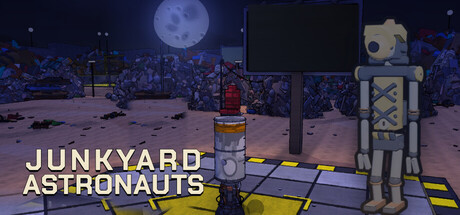
Junkyard Astronauts was developed with substantial help from an AI coding assistant (Claude), directed and reviewed by the developer. Specifically: the game's code was largely written with AI assistance; the 3D models, textures and yard layouts are produced by procedural generator scripts written with AI assistance; the sound effects are built from licensed, human-recorded sound libraries (Sonniss GDC bundles, Kenney) assembled and mixed by scripted tools written with AI assistance; the soundtrack is composed and rendered by a music engine written with AI assistance; parts of the store text and the achievement names were drafted with AI assistance. Everything was reviewed, edited and play-tested by the developer before shipping. No AI service is used during gameplay, and no content is generated at runtime. No AI-generated content imitates a real person or a third party's protected work.
Part of the audio in this game is generated with AI: the music and some of the sound effects.
Part of the source code was also created with the help of AI during development, particularly to generate certain portions of code, fix errors, and assist with the implementation of certain features. The code used in the game is then reviewed, modified, and integrated manually.
Everything else is handmade: the monsters are drawn by hand and then recreated in 3D, the textures are hand-painted and sometimes slightly enhanced, the 3D models are procedural, every line of text in the game is written by me, the farmer's voice is mine, etc.
This game uses generative AI in parts of its development.
- Code — an AI coding assistant was used to help write the source code.
- Text translation — AI was used to translate the game's text into each supported language.
All of the above was reviewed and adjusted by the developer before release.
No content is generated by AI while the game is running.
During development, an AI coding assistant was used to help write the game's code, including the code that renders its vector graphics, and to help create the game's music.
AI tools were used in a limited capacity to support coding, early prototyping, and the creation of a small number of icons. All AI-assisted elements were reviewed and refined by us.
We build Last Treasure Online with AI tools. Much of the code is written with AI, including shaders, scripts that model props and furniture in Blender, and scripts that synthesize sound effects and ambience. Most text in the game is AI generated, but all names, personalities, schedules, stories, lore, knowledge, etc is strongly scaffolded and enforced by us as designers. In play, NPCs speak through an AI language model on our server in order to talk about hundreds of subjects in different ways depending on what they know about them, you, the world, etc.... The model only rewords lines and facts we wrote: it cannot invent places, items, prices or quests, and players never type text into it. No images, textures, 3D models, music or sounds come from diffusion image, 3D or audio models. Characters and clothing are hand-painted, and the world's textures are photographs.
This game is made by one developer working with AI assistants. AI tools helped write the game's code and much of its English text, including this store page.
The folktales the game retells are traditional Mongolian üliger, not machine-invented, and every Mongolian word in the game is checked by a native speaker before it ships.
Nothing is generated while you play. The game runs offline, creates no content at runtime, and connects to no AI service.
Usage of AI-assisted coding tools were used to help debug, and write some lengthy aspects of the game. But all creative work (art, animation, music, sound effects, and all writing and dialogue) is made by hand, without any generative AI whatsoever.
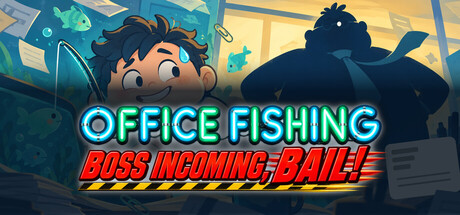
Art assets in this game - the fish, environments, UI icons, achievement icons
and store page artwork - were created with the help of generative AI tools.
Every asset was then hand-picked, edited, resized and colour-corrected before
being brought into the game, and all of it was checked against a fixed art
direction and a locked colour palette.
Some of the code was written with AI assistance. All of it was reviewed by the
developer and is covered by automated tests.
The game itself never generates anything while you play, and never connects to
an AI service. Everything you see ships with the build and is the same for
every player.
This game has been created by a solo developer with 30 years of experience. It is not until now with the assistance of generative AI coding that I have been able to truly bring my visions to life in a timely manor. I hope you enjoy it.
AI was used as a coding assistant during development, and for translations.
I’m a software engineer with 25 years of programming experience. I used AI to help with technical implementation while I focused on the game’s design, systems, balance, and overall feel.
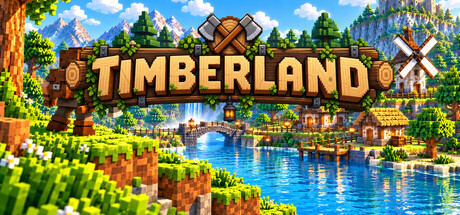
The store page images for Timberland — the key art, capsules, logo and icon — were created with generative AI tools and then edited by hand. The screenshots are real gameplay, unretouched.
Part of the code was also written with the help of an AI assistant. Game design, world generation, mechanics and the remaining textures are the developer's own work.
Valdrys uses AI-generated content in one place: the login screen
background, a single static image of a moonlit ridge over a conifer
forest, generated with Google Gemini. It does not appear in gameplay.
Everything else in the game is hand-drawn, generated procedurally by
our own tools, or licensed from third-party artists under CC0, CC-BY
or commercial licences. All of it is credited on the in-game Credits
screen.
Parts of the game's code were written with the help of an AI coding
assistant. No AI-generated art, audio or written content ships in
Valdrys beyond the single background image described above.
Nothing in Valdrys generates content while the game is running.
Generative AI tools were used as development aids to help draft and iterate on portions of the game’s code, written content, and Steam store description. All AI-assisted material was reviewed, modified, and approved by the developer. The game does not use live-generated AI during gameplay.
AI coding assistance was used in developing some parts of the game's code and in drafting in-game text, all of it directed and reviewed by the developer.
Generative AI was used to assist in coding and translations for different languages.
Some graphical store assets also used AI in its design, mostly as a composition tool to combine game scenes with human made art.
All code and art assets in this game are created with generative‑AI assistance and manually modified. Thanks to AI, I can realize my ideas without programming or art skills.
Generative AI tools were used during development to assist with programming, debugging, drafting and editing written content, and creating or developing some marketing and store-page artwork. All AI-assisted material is reviewed, edited, and integrated by the developer. The game does not use generative AI during gameplay or connect to external AI services while running.
Generative AI tools are used during development to write and revise game code, create artwork, music and sound effects, and assist with writing and localization. This includes content in the game and its store and promotional materials. The developer directs and reviews the work before inclusion. No content is generated using generative AI during gameplay.
AI is not used for any aspect of music creation or sound. And no actual game art was created with AI (Inventory items, decals, portraits, etc. All of that was fully painted by a human.)
AI was used for code work and project management. ONLY a small amount of the textures (less than 10) used in the world were created with the help of AI.
Generative AI was used during development to assist with some text content and programming code, and to create some 3D models and textures used in the game. All AI-generated and AI-assisted content was reviewed and edited by the developer before being included in the game. Generative AI is not used to create content during gameplay.
I've been using Generative AI tools as part of development for things like programming assistance, troubleshooting, research, brainstorming, and some concept exploration.
ECHO//syntax is a work of mechanics made from love of the beat-em-up genre from CHROMAGEM. It is designed, directed, assembled, tested, and curated by me. I make the first and final decisions on the game's mechanics, characters, levels, visual direction, and overall design.
As a designer that's looking to get a particular feel and experience with this game, I'm looking through and making sure you're getting a good game to play and enjoy.
Generative AI tools were used during development to help create character artwork, menu backgrounds, some 3D assets, and pre-rendered cinematic videos. AI-assisted tools were also used for programming and debugging. These assets are prepared before release and incorporated into the game.
Deepworks was made with the help of AI tools. Some of the game's art and audio were generated with AI and then reviewed and edited by the developer, and AI assisted with writing code. Nothing in the game is generated by AI while you play.
I'm an indie dev with a day job. Using AI made building this game possible. I built this game for the fun of it and have no interest in paying thousands or even hundreds of dollars to artists for a little side hobby.
An AI assistant helped write the code, the translations and the store page texts; everything was reviewed and tested by the developer. All in-game visuals and sounds are generated procedurally by the game's own code. AI is not used at runtime.
About Generative AI Content
We want to be transparent with our players about how AI was used during the development of this game:
Visual Art: Certain visual assets and background elements in this game were created with the assistance of generative AI tools, then reviewed and integrated by our team.
Code & Development: We utilized AI-powered coding assistant and large language models to help prototype, write, and optimize parts of the game's code to speed up development efficiency.
All AI-generated outputs shipped to players have been curated to ensure they meet our quality standards for your experience.
This game uses generative AI in the following ways:
Music — tracks were built from AI-generated material, then edited and arranged by hand.
Title artwork — an AI-generated rough was used as reference and redrawn by hand as pixel art.
English localization — the English text was machine-translated and then reviewed and corrected by the developer.
Code — parts of the game's code were written with AI assistance.
Everything else is made by the developer by hand: all 145 in-game icons, every UI image, the cigarette package illustrations, and the achievement icons.
CyberSprawl: Survivors contains pre-generated visual art, written content, sound effects, and other assets created or assisted with generative AI tools, then curated and integrated by the development team. Generative AI also assists development, including code. No AI generates content during gameplay, and the game does not connect to external AI services while you play.
Crappy Corp uses a small amount of pre-generated AI content, all created
during development and shipped as fixed assets: the looping background
video on the main menu, and the game's achievement icons. Both were made
with AI image and video tools and then edited and finished by hand.
Parts of the game's code were also written with AI assistance.
Everything else is not AI generated. The 3D models, characters,
environments and animations are licensed commercial asset packs or made
by us, and all sound effects and music come from licensed sound
libraries. The in-game crew voice is Steam voice chat between real
players, not synthesized speech.
No AI content is generated while you play.
We used AI tools during development: part of the source code was written with an AI
assistant, and part of the pixel art was generated with PixelLab. Everything was
reviewed, edited and tested by the developer by hand. The game generates nothing at
runtime — all content is fixed in the build and identical for every player.
AI was used for some code generation and as part of a technique for cleaning-up of 3D scans. 3D scans were created of real lightguns using both a laser based scanner and photogrammetry, and then both models were combined using a frontier AI model for a final clean 3D scan results with higher quality game-ready topography and polycounts.
The key art was developed by hand by our art team but some AI generated content may have been included via store asses. A coding agent was used to help write features.
This game began with my idea, brought to life over many weeks using generative AI to create its code, artwork, audio, and promotional materials. These tools made it possible for me to build the game without a programming background.
All AI-generated content was created during development. The game does not generate AI content while you build towards your achievements.
The Therapist was developed with the assistance of generative AI tools. AI was used to assist with programming and to generate certain visual and audio assets included in the game. The game's core concept, narrative direction, game design, mechanics, and creative direction were conceived and developed by the game's creator. AI-generated assets were selected, edited, integrated, and directed as part of the game's overall creative process.
We are using AI to help write, structure, and/or review written code by the team. Some of the artwork in this game was produced with the help of generative AI tools.
Generative AI was used extensively during development to assist with localization, text review, and selected production/reference workflows. All code and most image assets and models were created with generative AI. All AI-assisted content included in the game was reviewed and curated by the developer. The game does not use live generative AI during gameplay.
This game utilized generative AI tools to assist with code writing. All AI-generated content has been strictly tested, reviewed, and optimized to ensure game quality and stability.
During the development of this title, generative AI was used as an assistive tool for writing some code, as well as for text polishing and translation. Other elements—including core artwork, character and environment designs, and the overall visual presentation—were created entirely by the developers themselves.
Junkyard Astronauts was developed with substantial help from an AI coding assistant (Claude), directed and reviewed by the developer. Specifically: the game's code was largely written with AI assistance; the 3D models, textures and yard layouts are produced by procedural generator scripts written with AI assistance; the sound effects are built from licensed, human-recorded sound libraries (Sonniss GDC bundles, Kenney) assembled and mixed by scripted tools written with AI assistance; the soundtrack is composed and rendered by a music engine written with AI assistance; parts of the store text and the achievement names were drafted with AI assistance. Everything was reviewed, edited and play-tested by the developer before shipping. No AI service is used during gameplay, and no content is generated at runtime. No AI-generated content imitates a real person or a third party's protected work.
Part of the audio in this game is generated with AI: the music and some of the sound effects.
Part of the source code was also created with the help of AI during development, particularly to generate certain portions of code, fix errors, and assist with the implementation of certain features. The code used in the game is then reviewed, modified, and integrated manually.
Everything else is handmade: the monsters are drawn by hand and then recreated in 3D, the textures are hand-painted and sometimes slightly enhanced, the 3D models are procedural, every line of text in the game is written by me, the farmer's voice is mine, etc.
This game uses generative AI in parts of its development.
- Code — an AI coding assistant was used to help write the source code.
- Text translation — AI was used to translate the game's text into each supported language.
All of the above was reviewed and adjusted by the developer before release.
No content is generated by AI while the game is running.
During development, an AI coding assistant was used to help write the game's code, including the code that renders its vector graphics, and to help create the game's music.
AI tools were used in a limited capacity to support coding, early prototyping, and the creation of a small number of icons. All AI-assisted elements were reviewed and refined by us.
We build Last Treasure Online with AI tools. Much of the code is written with AI, including shaders, scripts that model props and furniture in Blender, and scripts that synthesize sound effects and ambience. Most text in the game is AI generated, but all names, personalities, schedules, stories, lore, knowledge, etc is strongly scaffolded and enforced by us as designers. In play, NPCs speak through an AI language model on our server in order to talk about hundreds of subjects in different ways depending on what they know about them, you, the world, etc.... The model only rewords lines and facts we wrote: it cannot invent places, items, prices or quests, and players never type text into it. No images, textures, 3D models, music or sounds come from diffusion image, 3D or audio models. Characters and clothing are hand-painted, and the world's textures are photographs.
This game is made by one developer working with AI assistants. AI tools helped write the game's code and much of its English text, including this store page.
The folktales the game retells are traditional Mongolian üliger, not machine-invented, and every Mongolian word in the game is checked by a native speaker before it ships.
Nothing is generated while you play. The game runs offline, creates no content at runtime, and connects to no AI service.
Usage of AI-assisted coding tools were used to help debug, and write some lengthy aspects of the game. But all creative work (art, animation, music, sound effects, and all writing and dialogue) is made by hand, without any generative AI whatsoever.
Art assets in this game - the fish, environments, UI icons, achievement icons
and store page artwork - were created with the help of generative AI tools.
Every asset was then hand-picked, edited, resized and colour-corrected before
being brought into the game, and all of it was checked against a fixed art
direction and a locked colour palette.
Some of the code was written with AI assistance. All of it was reviewed by the
developer and is covered by automated tests.
The game itself never generates anything while you play, and never connects to
an AI service. Everything you see ships with the build and is the same for
every player.
This game has been created by a solo developer with 30 years of experience. It is not until now with the assistance of generative AI coding that I have been able to truly bring my visions to life in a timely manor. I hope you enjoy it.
AI was used as a coding assistant during development, and for translations.
I’m a software engineer with 25 years of programming experience. I used AI to help with technical implementation while I focused on the game’s design, systems, balance, and overall feel.
The store page images for Timberland — the key art, capsules, logo and icon — were created with generative AI tools and then edited by hand. The screenshots are real gameplay, unretouched.
Part of the code was also written with the help of an AI assistant. Game design, world generation, mechanics and the remaining textures are the developer's own work.
Valdrys uses AI-generated content in one place: the login screen
background, a single static image of a moonlit ridge over a conifer
forest, generated with Google Gemini. It does not appear in gameplay.
Everything else in the game is hand-drawn, generated procedurally by
our own tools, or licensed from third-party artists under CC0, CC-BY
or commercial licences. All of it is credited on the in-game Credits
screen.
Parts of the game's code were written with the help of an AI coding
assistant. No AI-generated art, audio or written content ships in
Valdrys beyond the single background image described above.
Nothing in Valdrys generates content while the game is running.
Generative AI tools were used as development aids to help draft and iterate on portions of the game’s code, written content, and Steam store description. All AI-assisted material was reviewed, modified, and approved by the developer. The game does not use live-generated AI during gameplay.
AI coding assistance was used in developing some parts of the game's code and in drafting in-game text, all of it directed and reviewed by the developer.
Generative AI was used to assist in coding and translations for different languages.
Some graphical store assets also used AI in its design, mostly as a composition tool to combine game scenes with human made art.
All code and art assets in this game are created with generative‑AI assistance and manually modified. Thanks to AI, I can realize my ideas without programming or art skills.
Generative AI tools were used during development to assist with programming, debugging, drafting and editing written content, and creating or developing some marketing and store-page artwork. All AI-assisted material is reviewed, edited, and integrated by the developer. The game does not use generative AI during gameplay or connect to external AI services while running.
Generative AI tools are used during development to write and revise game code, create artwork, music and sound effects, and assist with writing and localization. This includes content in the game and its store and promotional materials. The developer directs and reviews the work before inclusion. No content is generated using generative AI during gameplay.
AI is not used for any aspect of music creation or sound. And no actual game art was created with AI (Inventory items, decals, portraits, etc. All of that was fully painted by a human.)
AI was used for code work and project management. ONLY a small amount of the textures (less than 10) used in the world were created with the help of AI.
Generative AI was used during development to assist with some text content and programming code, and to create some 3D models and textures used in the game. All AI-generated and AI-assisted content was reviewed and edited by the developer before being included in the game. Generative AI is not used to create content during gameplay.
I've been using Generative AI tools as part of development for things like programming assistance, troubleshooting, research, brainstorming, and some concept exploration.
ECHO//syntax is a work of mechanics made from love of the beat-em-up genre from CHROMAGEM. It is designed, directed, assembled, tested, and curated by me. I make the first and final decisions on the game's mechanics, characters, levels, visual direction, and overall design.
As a designer that's looking to get a particular feel and experience with this game, I'm looking through and making sure you're getting a good game to play and enjoy.
Generative AI tools were used during development to help create character artwork, menu backgrounds, some 3D assets, and pre-rendered cinematic videos. AI-assisted tools were also used for programming and debugging. These assets are prepared before release and incorporated into the game.
Deepworks was made with the help of AI tools. Some of the game's art and audio were generated with AI and then reviewed and edited by the developer, and AI assisted with writing code. Nothing in the game is generated by AI while you play.
I'm an indie dev with a day job. Using AI made building this game possible. I built this game for the fun of it and have no interest in paying thousands or even hundreds of dollars to artists for a little side hobby.
An AI assistant helped write the code, the translations and the store page texts; everything was reviewed and tested by the developer. All in-game visuals and sounds are generated procedurally by the game's own code. AI is not used at runtime.
About Generative AI Content
We want to be transparent with our players about how AI was used during the development of this game:
Visual Art: Certain visual assets and background elements in this game were created with the assistance of generative AI tools, then reviewed and integrated by our team.
Code & Development: We utilized AI-powered coding assistant and large language models to help prototype, write, and optimize parts of the game's code to speed up development efficiency.
All AI-generated outputs shipped to players have been curated to ensure they meet our quality standards for your experience.
This game uses generative AI in the following ways:
Music — tracks were built from AI-generated material, then edited and arranged by hand.
Title artwork — an AI-generated rough was used as reference and redrawn by hand as pixel art.
English localization — the English text was machine-translated and then reviewed and corrected by the developer.
Code — parts of the game's code were written with AI assistance.
Everything else is made by the developer by hand: all 145 in-game icons, every UI image, the cigarette package illustrations, and the achievement icons.
CyberSprawl: Survivors contains pre-generated visual art, written content, sound effects, and other assets created or assisted with generative AI tools, then curated and integrated by the development team. Generative AI also assists development, including code. No AI generates content during gameplay, and the game does not connect to external AI services while you play.
Crappy Corp uses a small amount of pre-generated AI content, all created
during development and shipped as fixed assets: the looping background
video on the main menu, and the game's achievement icons. Both were made
with AI image and video tools and then edited and finished by hand.
Parts of the game's code were also written with AI assistance.
Everything else is not AI generated. The 3D models, characters,
environments and animations are licensed commercial asset packs or made
by us, and all sound effects and music come from licensed sound
libraries. The in-game crew voice is Steam voice chat between real
players, not synthesized speech.
No AI content is generated while you play.
We used AI tools during development: part of the source code was written with an AI
assistant, and part of the pixel art was generated with PixelLab. Everything was
reviewed, edited and tested by the developer by hand. The game generates nothing at
runtime — all content is fixed in the build and identical for every player.
AI was used for some code generation and as part of a technique for cleaning-up of 3D scans. 3D scans were created of real lightguns using both a laser based scanner and photogrammetry, and then both models were combined using a frontier AI model for a final clean 3D scan results with higher quality game-ready topography and polycounts.
The key art was developed by hand by our art team but some AI generated content may have been included via store asses. A coding agent was used to help write features.