Public Steam disclosure research25,497 disclosures tracked
Where do games disclose AI use?
Search developers’ Steam disclosures, compare classified AI use across
games, and follow recorded changes.
This index adds cross-game classifications and statistics to
statements published on individual store pages.
Groups reflect automatic analysis of public disclosures; mature records are excluded. These counts do not measure AI use across all of Steam.
Missing or unclear statements cannot establish whether a game uses AI.
Some of Pick Playground's development was assisted by generative AI tools, including parts of the code and some of the art. Everything in the game was reviewed and finalized by the developer.
AI-assisted tools were used during development to help produce some 2D art assets (character and enemy artwork, UI icons), sound effects, voice lines, and supporting code. All AI-assisted content was created before release and reviewed by the development team. The game does not generate any content or code in real time during gameplay, and it does not connect to any external AI service while playing.
Generative AI was used in this game to assist with the creation of some character voiceovers and in the coding process. The game's visual and narrative design were created by our team.
Generative AI tools assisted with portions of development, including some player-facing UI, tutorial and campaign text, and implementation code.
All output was reviewed and edited by the developer. The game does not generate AI content while running.
Maps and terrain are generated using deterministic procedural algorithms and public-domain geographic data. Audio uses licensed recordings and conventional synthesis/editing, not generative AI.
Ai was used to develop the code, artwork, various events, and dialogue in the game. Most player-facing text was reviewed by humans and many of the events and conversations were approved, improved, or rewritten by humans. There is no run-time AI usage, everything was created before the game runs, only standard computer actions are done at runtime. ex. selections and randomization of existing content.
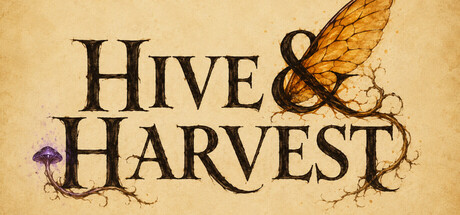
Most of the art for Hive & Harvest has been initially generated by AI models, which has then been manually edited to achieve the desired tessellation look.
Coding of the game involved AI models for the purpose of quality control.
Code: I'm a solo developer and I use AI coding agents. The architecture, game design, systems, and direction are mine; the agents write code to my spec, under my review. That includes the UI, which agents build from my own designs and styles.
3D art: Made by a professional artist. No AI.
Music and SFX: Currently placeholders, licensed from Ocular Sounds, who state their sounds are crafted from original source recordings by their in-house sound design team. To be replaced with commissioned work.
Writing: Written by me. AI agents help me edit and apply corrections; I approve every word that ships. A professional writer will be brought on as development continues.
Illustrations: Not in the game yet. They will be commissioned from professional artists.
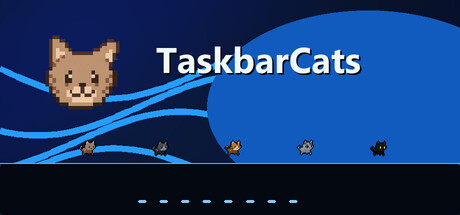
Generative AI tools were used during development to assist with programming and drafts of some user-interface text and localization. All shipped content was reviewed and edited by the developer. The animated cat artwork is licensed human-created pixel art. Taskbar Cats does not generate AI content during use and does not connect to external AI services.
Pre-release, temporary audio and visual publicly available assets have been used that may be AI generated. Programming and localization are LLM assisted. Custom creative content (artwork, sprites, narrative, etc.) is all handcrafted.
Artificial Intelligence was used primarily for generating Steam capsule artwork, specific gameplay sounds, and assistance with mathematical code functions. All AI-generated content was manually edited and reviewed throughout every stage of development.
This project is human-led and human-authored. The core concept, research direction, cultural framing, interactive decisions, visual judgement, source selection, and the final content of the work were all determined by me.
AI was used as a supporting production tool, mainly for: debugging Unity and C# errors; suggesting code structure for prototype scripts; organising local folders and repository structure; searching for public references and technical resources; and drafting editable documentation outlines that I then reviewed and revised.
AI was not used as an autonomous author. It did not decide the research direction, cultural interpretation, aesthetic intention, or final meaning of the work. AI-generated text and code were treated as working material - selected, edited, corrected, rejected, or rewritten. The personal reflection was written by me; no AI-generated text is presented as personal reflective writing.
Generative AI tools were used during development to assist with writing, reviewing, and optimizing portions of the game’s code. All AI-assisted code was manually reviewed, modified, and tested by the developer. Generative AI is not used to generate content while the game is running, nor was it used to create player-facing artwork, audio, narrative, or other text content.
The developer used generative AI tools during the development process to assist in coding, generate and retouch art assets, write game text, and create background music, voiceovers, and sound effects. All AI-generated assets have been reviewed, edited, and curated by the developer.
Generative AI tools were used during development to assist with selected pre-generated visual assets and portions of the programming work. All AI-assisted content is manually reviewed, edited, and integrated by the developer. Visual assets are repainted, adjusted, and brought into a consistent art style before being used in the game or promotional materials. The game does not generate AI content during gameplay and does not connect to any external AI services.
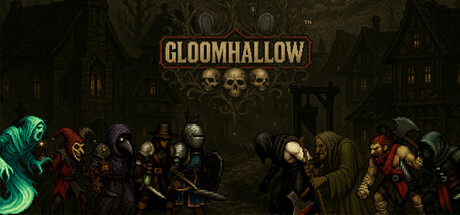
While a vast majority of Gloomhallow was human created, it was created by a solo developer (single person) - AI assisted in very specific fields such as;
- C# Coding
- SFX Generation
- OST Creation
- Very select UI Animations
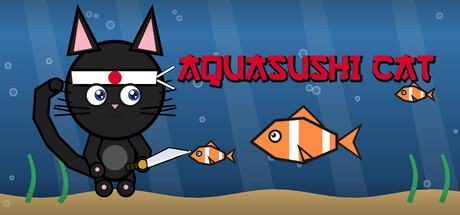
Aquasushi Cat was created in collaboration between a human developer and AI tools.
• Music and songs were generated locally using AI (ComfyUI).
• Parts of the game's code — including the code that procedurally draws the hand-styled vector graphics — were written with the help of an AI assistant (Claude).
• The in-game localization (English and Japanese) and store text were produced with AI assistance.
• A small number of sound effects were AI-generated; most sounds were recorded by the developer.
All content was directed, reviewed and finalized by a human developer. No AI content is generated live during gameplay.
Generative AI tools were used to produce the game's source code and assist with music, localisation, store artwork, and some in-game text. The developer created the original concept, defined the intended gameplay and voxel-based presentation, and continuously reviewed, tested, corrected, refined, and approved the implementation. The game does not generate AI content during gameplay.
This game uses AI tools in the following ways:
Music: Composed using Suno.
Code: Written and debugged with AI assistance.
Art: Created with AI assistance.
All AI-assisted content was reviewed, edited, and finalized by the developer.
During development of this game, generative AI was used to assist with writing portions of the source code. All AI-generated code was reviewed, modified, tested, and approved by the developer before being incorporated into the game. The game's design, functionality, and overall quality are the result of developer oversight and implementation.
Gemfire Survival was developed with assistance from generative AI tools (such as Large Language Models) to help write and structure the source code and draft store descriptions. All AI-generated content was reviewed, edited, and integrated manually. The game does not feature live, runtime generative AI or external API connections during gameplay.
Generative AI tools were used throughout development to assist in creating and refining game code, 2D artwork, UI assets, audio, music, and written content, and Steam promotional materials. All AI-assisted content included in the released product is selected, reviewed, integrated, and tested by the developer. The game does not use generative AI at runtime and does not generate content or code during gameplay.
Pre-generated AI content:
Some of the game's 2D illustrations — world and game-mode cover art, story-scene illustrations, character portraits, and store/promotional images — were created with the assistance of generative AI image tools. Every image was prompted, curated, selected and edited by the developer.
Portions of the game's source code were written with the assistance of an AI coding tool, always under direct human direction, review and testing.
Gameplay sprites, user interface, and fonts come from licensed third-party asset packs or were made by hand.
The game does NOT generate any content with AI at runtime: all content is fixed at development time, and no player data is sent to any AI service.
Generative AI was used as a supporting tool during solo development, mainly to find technical information faster, compare possible solutions, check code, organize notes, and explore early ideas. It saves a lot of time that would otherwise be spent searching through browser tabs and documentation. I also use it to help with translations. The game’s design, development decisions, implementation, and final content remain entirely under my control.. The game does not generate AI content during gameplay.
Programming: AI tools (Cursor) were utilized to assist with drafting partial code blocks and isolated scripts. The overall core logic, architecture, and system design were manually programmed by the developer.
Art Assets: An AI image generator (PixelLab) was used to help conceptualize and generate some of the pixel art assets. These assets were manually reviewed and integrated to fit the game's retro aesthetic.
Localization / Translation: AI translation tools were used to assist in translating in-game text and store page descriptions into multiple languages.
During development, generative AI was used for programming assistance, drafting UI text and English localization, and assisting with the layout and composition of graphical assets for Steam. Any content incorporated into the final product was reviewed and edited by the developer. No AI-generated content is produced while the game is running.
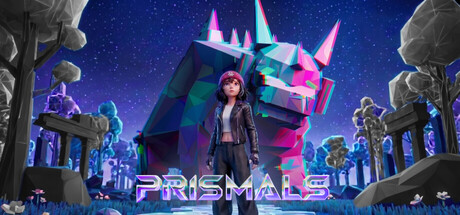
Prismals is a hand-crafted project built by a dedicated one-man band. To bring this project to life, AI tools were utilized strictly as a collaborative assistant, refining original coding, polishing hand-drawn artwork and mastering the soundtrack. Every core idea, story beat and artistic vision is entirely human-made.
This game was developed using generative AI during production. Generative AI was used to create the game's code, artwork, visual assets, user interface, music, sound effects, and text. All AI-generated content was reviewed, tested, curated, and integrated into the final game by the developer. The game does not generate AI content during gameplay.
During the process of production, generative AI may be used in following processes: coding and debugging, production of conceptual art of game assets, production of rough models of game assets, production of simple animation effects, restoration of image, audio or video quality, localization and translation. All AI generated game assets that appear directly in game are revised and finalized by real human artists.
During development, generative AI was used to assist with creating placeholder artwork, text, and portions of the game's code. All AI-generated content was reviewed, edited, and integrated by the development team, and we confirm that the final content does not knowingly infringe the intellectual property rights of others.
Generative AI tools were used solely for programming assistance, code review, debugging, and technical problem-solving during development. They were not used to generate visual or audio assets. No content or code is generated by AI during gameplay, and the game does not connect to external AI services. All AI-assisted code was reviewed, tested, and integrated by the developer.
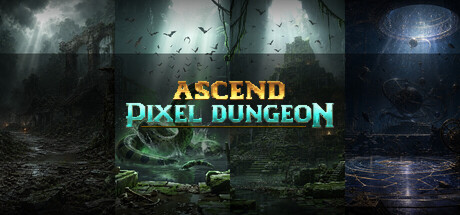
About the Use of AI in the Game
AI-assisted tools have been used in various aspects of this project's development process.
Programming: AI-assisted tools were used during the development of game systems, user interfaces, and various technical features. The generated code was reviewed, edited, tested, and adapted to the project's needs by the development team.
Visuals: AI tools were used in the creation of certain concept designs, environment artwork, and visual content. However, all content was reviewed, refined, and adapted to fit the artistic direction of the project by the development team.
Creative Process: The development process generally follows three stages. First, the game concept, environment designs, and core creative decisions are created by the team. AI tools are then used to generate alternative ideas, variations, and more detailed iterations of existing concepts. Finally, all results are reviewed, refined, and improved through manual quality control processes.
For example, some environment designs begin with compositions and layouts created by the team. AI tools may then be used to assist with additional detailing, after which the final adjustments and refinements are completed manually.
Our goal is to use AI as a tool that supports the creative process while ensuring that all creative decisions, project direction, and final quality control remain under human supervision.
AI tools (coding assistants) were used to help write portions of the game's source code during development. All art, music, and game content shipped in the product are hand-authored or procedurally generated by our own code; no generative AI is used to produce any assets, and no AI generates content at runtime.
Basically, I write software for a living but I was not a video game dev, so I used some coding assistants to help me out with areas I was less familiar.
Generative AI tools were used during development to assist with portions of the game's pre-generated 2D artwork, UI assets, localization, code, and promotional materials. All output was reviewed, edited, and integrated by the developer. The game does not generate AI content during gameplay.
Some of Pick Playground's development was assisted by generative AI tools, including parts of the code and some of the art. Everything in the game was reviewed and finalized by the developer.
AI-assisted tools were used during development to help produce some 2D art assets (character and enemy artwork, UI icons), sound effects, voice lines, and supporting code. All AI-assisted content was created before release and reviewed by the development team. The game does not generate any content or code in real time during gameplay, and it does not connect to any external AI service while playing.
Generative AI was used in this game to assist with the creation of some character voiceovers and in the coding process. The game's visual and narrative design were created by our team.
Generative AI tools assisted with portions of development, including some player-facing UI, tutorial and campaign text, and implementation code.
All output was reviewed and edited by the developer. The game does not generate AI content while running.
Maps and terrain are generated using deterministic procedural algorithms and public-domain geographic data. Audio uses licensed recordings and conventional synthesis/editing, not generative AI.
Ai was used to develop the code, artwork, various events, and dialogue in the game. Most player-facing text was reviewed by humans and many of the events and conversations were approved, improved, or rewritten by humans. There is no run-time AI usage, everything was created before the game runs, only standard computer actions are done at runtime. ex. selections and randomization of existing content.
Most of the art for Hive & Harvest has been initially generated by AI models, which has then been manually edited to achieve the desired tessellation look.
Coding of the game involved AI models for the purpose of quality control.
Code: I'm a solo developer and I use AI coding agents. The architecture, game design, systems, and direction are mine; the agents write code to my spec, under my review. That includes the UI, which agents build from my own designs and styles.
3D art: Made by a professional artist. No AI.
Music and SFX: Currently placeholders, licensed from Ocular Sounds, who state their sounds are crafted from original source recordings by their in-house sound design team. To be replaced with commissioned work.
Writing: Written by me. AI agents help me edit and apply corrections; I approve every word that ships. A professional writer will be brought on as development continues.
Illustrations: Not in the game yet. They will be commissioned from professional artists.
Generative AI tools were used during development to assist with programming and drafts of some user-interface text and localization. All shipped content was reviewed and edited by the developer. The animated cat artwork is licensed human-created pixel art. Taskbar Cats does not generate AI content during use and does not connect to external AI services.
Pre-release, temporary audio and visual publicly available assets have been used that may be AI generated. Programming and localization are LLM assisted. Custom creative content (artwork, sprites, narrative, etc.) is all handcrafted.
Artificial Intelligence was used primarily for generating Steam capsule artwork, specific gameplay sounds, and assistance with mathematical code functions. All AI-generated content was manually edited and reviewed throughout every stage of development.
This project is human-led and human-authored. The core concept, research direction, cultural framing, interactive decisions, visual judgement, source selection, and the final content of the work were all determined by me.
AI was used as a supporting production tool, mainly for: debugging Unity and C# errors; suggesting code structure for prototype scripts; organising local folders and repository structure; searching for public references and technical resources; and drafting editable documentation outlines that I then reviewed and revised.
AI was not used as an autonomous author. It did not decide the research direction, cultural interpretation, aesthetic intention, or final meaning of the work. AI-generated text and code were treated as working material - selected, edited, corrected, rejected, or rewritten. The personal reflection was written by me; no AI-generated text is presented as personal reflective writing.
Generative AI tools were used during development to assist with writing, reviewing, and optimizing portions of the game’s code. All AI-assisted code was manually reviewed, modified, and tested by the developer. Generative AI is not used to generate content while the game is running, nor was it used to create player-facing artwork, audio, narrative, or other text content.
The developer used generative AI tools during the development process to assist in coding, generate and retouch art assets, write game text, and create background music, voiceovers, and sound effects. All AI-generated assets have been reviewed, edited, and curated by the developer.
Generative AI tools were used during development to assist with selected pre-generated visual assets and portions of the programming work. All AI-assisted content is manually reviewed, edited, and integrated by the developer. Visual assets are repainted, adjusted, and brought into a consistent art style before being used in the game or promotional materials. The game does not generate AI content during gameplay and does not connect to any external AI services.
While a vast majority of Gloomhallow was human created, it was created by a solo developer (single person) - AI assisted in very specific fields such as;
- C# Coding
- SFX Generation
- OST Creation
- Very select UI Animations
Aquasushi Cat was created in collaboration between a human developer and AI tools.
• Music and songs were generated locally using AI (ComfyUI).
• Parts of the game's code — including the code that procedurally draws the hand-styled vector graphics — were written with the help of an AI assistant (Claude).
• The in-game localization (English and Japanese) and store text were produced with AI assistance.
• A small number of sound effects were AI-generated; most sounds were recorded by the developer.
All content was directed, reviewed and finalized by a human developer. No AI content is generated live during gameplay.
Generative AI tools were used to produce the game's source code and assist with music, localisation, store artwork, and some in-game text. The developer created the original concept, defined the intended gameplay and voxel-based presentation, and continuously reviewed, tested, corrected, refined, and approved the implementation. The game does not generate AI content during gameplay.
This game uses AI tools in the following ways:
Music: Composed using Suno.
Code: Written and debugged with AI assistance.
Art: Created with AI assistance.
All AI-assisted content was reviewed, edited, and finalized by the developer.
During development of this game, generative AI was used to assist with writing portions of the source code. All AI-generated code was reviewed, modified, tested, and approved by the developer before being incorporated into the game. The game's design, functionality, and overall quality are the result of developer oversight and implementation.
Gemfire Survival was developed with assistance from generative AI tools (such as Large Language Models) to help write and structure the source code and draft store descriptions. All AI-generated content was reviewed, edited, and integrated manually. The game does not feature live, runtime generative AI or external API connections during gameplay.
Generative AI tools were used throughout development to assist in creating and refining game code, 2D artwork, UI assets, audio, music, and written content, and Steam promotional materials. All AI-assisted content included in the released product is selected, reviewed, integrated, and tested by the developer. The game does not use generative AI at runtime and does not generate content or code during gameplay.
Pre-generated AI content:
Some of the game's 2D illustrations — world and game-mode cover art, story-scene illustrations, character portraits, and store/promotional images — were created with the assistance of generative AI image tools. Every image was prompted, curated, selected and edited by the developer.
Portions of the game's source code were written with the assistance of an AI coding tool, always under direct human direction, review and testing.
Gameplay sprites, user interface, and fonts come from licensed third-party asset packs or were made by hand.
The game does NOT generate any content with AI at runtime: all content is fixed at development time, and no player data is sent to any AI service.
Generative AI was used as a supporting tool during solo development, mainly to find technical information faster, compare possible solutions, check code, organize notes, and explore early ideas. It saves a lot of time that would otherwise be spent searching through browser tabs and documentation. I also use it to help with translations. The game’s design, development decisions, implementation, and final content remain entirely under my control.. The game does not generate AI content during gameplay.
Programming: AI tools (Cursor) were utilized to assist with drafting partial code blocks and isolated scripts. The overall core logic, architecture, and system design were manually programmed by the developer.
Art Assets: An AI image generator (PixelLab) was used to help conceptualize and generate some of the pixel art assets. These assets were manually reviewed and integrated to fit the game's retro aesthetic.
Localization / Translation: AI translation tools were used to assist in translating in-game text and store page descriptions into multiple languages.
During development, generative AI was used for programming assistance, drafting UI text and English localization, and assisting with the layout and composition of graphical assets for Steam. Any content incorporated into the final product was reviewed and edited by the developer. No AI-generated content is produced while the game is running.
Prismals is a hand-crafted project built by a dedicated one-man band. To bring this project to life, AI tools were utilized strictly as a collaborative assistant, refining original coding, polishing hand-drawn artwork and mastering the soundtrack. Every core idea, story beat and artistic vision is entirely human-made.
This game was developed using generative AI during production. Generative AI was used to create the game's code, artwork, visual assets, user interface, music, sound effects, and text. All AI-generated content was reviewed, tested, curated, and integrated into the final game by the developer. The game does not generate AI content during gameplay.
During the process of production, generative AI may be used in following processes: coding and debugging, production of conceptual art of game assets, production of rough models of game assets, production of simple animation effects, restoration of image, audio or video quality, localization and translation. All AI generated game assets that appear directly in game are revised and finalized by real human artists.
During development, generative AI was used to assist with creating placeholder artwork, text, and portions of the game's code. All AI-generated content was reviewed, edited, and integrated by the development team, and we confirm that the final content does not knowingly infringe the intellectual property rights of others.
Generative AI tools were used solely for programming assistance, code review, debugging, and technical problem-solving during development. They were not used to generate visual or audio assets. No content or code is generated by AI during gameplay, and the game does not connect to external AI services. All AI-assisted code was reviewed, tested, and integrated by the developer.
About the Use of AI in the Game
AI-assisted tools have been used in various aspects of this project's development process.
Programming: AI-assisted tools were used during the development of game systems, user interfaces, and various technical features. The generated code was reviewed, edited, tested, and adapted to the project's needs by the development team.
Visuals: AI tools were used in the creation of certain concept designs, environment artwork, and visual content. However, all content was reviewed, refined, and adapted to fit the artistic direction of the project by the development team.
Creative Process: The development process generally follows three stages. First, the game concept, environment designs, and core creative decisions are created by the team. AI tools are then used to generate alternative ideas, variations, and more detailed iterations of existing concepts. Finally, all results are reviewed, refined, and improved through manual quality control processes.
For example, some environment designs begin with compositions and layouts created by the team. AI tools may then be used to assist with additional detailing, after which the final adjustments and refinements are completed manually.
Our goal is to use AI as a tool that supports the creative process while ensuring that all creative decisions, project direction, and final quality control remain under human supervision.
AI tools (coding assistants) were used to help write portions of the game's source code during development. All art, music, and game content shipped in the product are hand-authored or procedurally generated by our own code; no generative AI is used to produce any assets, and no AI generates content at runtime.
Basically, I write software for a living but I was not a video game dev, so I used some coding assistants to help me out with areas I was less familiar.
Generative AI tools were used during development to assist with portions of the game's pre-generated 2D artwork, UI assets, localization, code, and promotional materials. All output was reviewed, edited, and integrated by the developer. The game does not generate AI content during gameplay.