Public Steam disclosure research25,497 disclosures tracked
Where do games disclose AI use?
Search developers’ Steam disclosures, compare classified AI use across
games, and follow recorded changes.
This index adds cross-game classifications and statistics to
statements published on individual store pages.
Groups reflect automatic analysis of public disclosures; mature records are excluded. These counts do not measure AI use across all of Steam.
Missing or unclear statements cannot establish whether a game uses AI.
Character portraits and evidence images were created with OpenAI's image generation; some diagrams were authored as SVG with OpenAI Codex. These assets were reviewed before release (originality and likeness pass). Sound effects and the ambient music bed are produced by a deterministic synthesis program (oscillators, filtered noise, and math-based DSP), not by a generative-AI audio model, and from no sampled or library audio; the synthesis script itself was written with AI coding assistance (AI-assisted code, not AI-generated audio). Fonts, engine, and runtime are non-AI third-party components under their own licenses.
Generative AI tools were used during development to assist with portions of the game’s code. All AI-assisted code was reviewed, edited, and tested by the developer. The game does not generate AI content during gameplay and does not connect to external AI services.
AI tools were used to assist development, including code, Chinese/Spanish localization text and store page copy. All AI-assisted content was reviewed and curated by the developer. The game does not generate any content with AI at runtime.
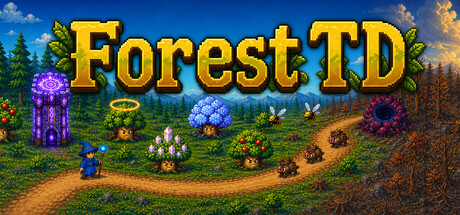
This game is built by a two-member team: a human developer and an AI assistant working under his direction. Large parts of the game code and many pre-rendered assets (enemy creatures, towers, environment props, marketing artwork) were created with the assistance of generative AI — always based on human design decisions, and reviewed, tested and curated by the developer. The game does not generate any content at runtime using AI.
Some of this game's code was written with the assistance of AI development tools. All art, music, audio, and text that ship in the game are human-created (from licensed asset packs) or procedurally rendered — no AI-generated art, audio, or text is included in the game.
AI tools were used during development to assist in creating portions of the game's code, text, and 2D artwork, including some store page assets. All AI-assisted content was generated during development and reviewed by the developer. The game does not use AI to generate any content at runtime.
Localization of the textual content for non-english languages is mainly produced as translations from english using generative artificial intelligence. LLM's have been used as a help also in writing and reviewing of program code, development helper tools, infrastructure setup, security checks, test maintenance and requirements management.
Generative AI was used during the development of this game to assist with the creation of certain visual assets and to help with portions of the programming process. All gameplay mechanics, game design, story, progression, and creative direction were designed and implemented by the developer.
None of the game's artwork, audio, or imagery is AI-generated. Portraits, interface, and all store and marketing art are hand-authored vector and procedural work, and that is a hard rule of the project. We do use AI assistance during development for writing and code, including drafting store text and the scripts that lay out our marketing art, all of it reviewed and edited by hand. No image-generation models are used anywhere, in the game or in its marketing.
Dialogue and narration are generated at runtime by a small language model running entirely on the player's machine. Nothing is sent to any server. The model has no authority over the game: a deterministic simulation decides every outcome, fact, and number, and the model only phrases scenes from state the engine hands it. Its output is structurally constrained and validated against the simulation before it appears, and invalid output is rejected. Prompts and validation keep generated text within the game's fiction and its PG-13 register. Player-typed orders go only to the local model and never leave the machine.
Campfire Battles is our attempt to bring an idea to life as a two-person team. AI tools helped us work quickly, particularly on the coding side, but every piece was reviewed and refined by hand.
This game's code was written with the assistance of generative AI. No AI-generated artwork or audio is used.
The visuals are hand-coded by the developer and the music is procedurally generated. AI also assisted with some in-game text and its French translation.
The core game mechanics, game design, and overall creative direction are 100% my original vision. No AI tools were used for conceptualizing ideas or narrative structure. The programming code was generated utilizing the Rosebud AI platform, and the 2D visual assets were initially created with generative art tools. Code, artwork, and music were reviewed, manually edited, and arranged by me to bring my specific creative vision to life.
The game's 2D artwork (character portraits, scenes, backgrounds) and music were created with generative AI tools, then curated and edited by the developer. Parts of the game's code and narrative text were written with AI assistance, under human direction, review and rewriting. All AI-assisted content is pre-generated during development: nothing is generated by AI while you play.
Im a solo indie dev, so I used IA tools for better usage of production time. I used code tools to make it easier to implement mechanics. I used Art IA tools to make starting points from where I can work on top. I used Sound IA tools to make music for this game.
Of course all these is because im a solo dev. Im planning to contract a team in the future if Im able to.
Heartwood Incremental was made by a solo developer working alongside an AI assistant (Anthropic's Claude). The AI helped write the game's code, including the code that procedurally draws its pixel-art sprites, tree, and icons, and helped draft written content such as upgrade, achievement, and store text. Everything was directed, reviewed, and refined by the human developer, and hand-checked before release. No generative AI runs while you play: nothing is created on your device at runtime, and all art and text are fixed in the build.
Don't worry, this game is made by an experienced developer. It's fun and good quality. Give it a try!
That being said: AI was used to facilitate development. For example: it was used to facilitate coding and localization.
Generative AI tools were used during development to assist with visual assets, in-game text, localization, and programming. All AI-assisted content was reviewed, edited, tested, and integrated by the developer. No generative AI is used while the game is running.
All content in this game was created by a single developer using generative AI tools, under full human supervision.
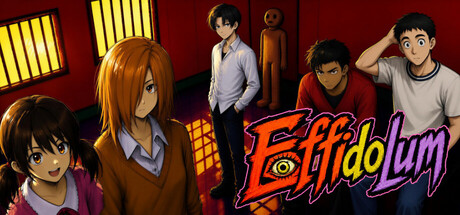
The scenario and script were written by the developer (writing assistance: Claude). All theme song lyrics were written by the developer. Backgrounds, character sprites, the logo, and the OP/ED movies were generated with Leonardo AI, based on the developer's own character designs, compositions, and art direction. The music and theme songs were produced with Suno AI. All voice acting was generated with ElevenLabs; every line in all three languages (Japanese, English, and Simplified Chinese, approx. 1,900 lines each) was individually reviewed by the developer for pronunciation, acting, and emotional delivery, and only approved takes were used. Localization was assisted by Claude Code, with every translation reviewed by the developer. Programming was assisted by Claude Code.
The store page and marketing assets (capsule images, logo, trailers, etc.) were likewise created with Leonardo AI (imagery) and Suno AI (music). Screenshots and trailer footage are captures of the actual game (the game itself contains the AI-generated assets described above).
Every AI-generated asset was reviewed, selected, and corrected by the developer before use. No content is generated by AI at runtime. A breakdown of tools by production stage is included in the end credits.
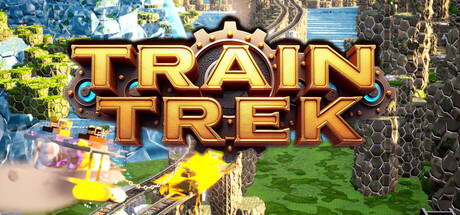
Train Trek uses generative AI in two ways.
During development we used AI tools to help make some assets: the user-interface art (HUD and menu icons, menu artwork, frames, button plates, mouse cursors), the instrumental soundtrack, and some sound effects. All of it was chosen, edited and finished by hand before it shipped. The 3D models are built procedurally by our own scripts, and the design, world generation and balancing are authored by hand. Parts of the source code were written with an AI coding assistant, reviewed and tested by the developer.
While you play, the game speaks using a text-to-speech model that ships inside the game and runs entirely on your own computer. It voices tutorial guidance, hints and menu narration instead of pre-recorded audio. It needs no internet connection, sends nothing anywhere, and never records or listens to you. It only reads lines we wrote and shipped with the game - it does not invent dialogue.
Portions of this game were created with the assistance of generative AI tools. This includes parts of the game's code, artwork and UI graphics, sound effects, and written text (in-game and on the store page). All AI-assisted content was directed, reviewed, and edited by the developer before inclusion. No AI content is generated during gameplay, the cribbage opponent uses conventional game algorithms, not generative AI and the game does not connect to any AI services at runtime.
Generative AI tools were used during development to assist with the game's custom C# code, gameplay systems, UI structure and layout, in-game written content, official word list, localization in nine languages, and draft store-page copy.
All AI-assisted outputs were reviewed, edited, tested, and integrated by the developer. Visual art, icons, fonts, music, and sound effects are separately licensed third-party assets.
No generative AI is used during gameplay, and the game does not connect to external AI services.
P·A·L - Personal Artificial Lifeform is a generative AI software suite. P·A·L generates written word, spoken word, voice to text, generative images, generative music and sound, game code, and is capable of learning through user choices.
Always use AI responsibly.
Selected background elements, tilesets, and player and boss character models used AI-generated source material that was manually reworked and adapted. Translations were created and edited with AI assistance. Part of the game's logic was developed with AI assistance. All design and gameplay decisions were made by the developer.
I use generative AI tools in the development of OXYTOPIA. All AI output is directed, reviewed, and edited by me before it ships.
What AI is used for:
Branding art — the game's logo and app/store icons were designed with the help of AI models and are rendered in-engine as original vector/code artwork.
Source code — parts of the game's code were written with AI coding assistants.
What is not AI-generated: the in-game gameplay art (tiles, characters, buildings, items, plants) and all audio are hand-made or licensed from human creators.
At runtime: OXYTOPIA generates no content with AI while you play, and no player data is ever sent to any AI service during gameplay.
As this is a solo-developed project, I have utilized generative AI assistants for the writing, debugging, and structuring of the game's programming code.
Additionally, AI has been used in a very minor and complementary capacity for some secondary environmental visual elements. The vast majority of the core artistic assets, art direction, game design, 3D modeling, and overall experience have been entirely hand-crafted and assembled.
AI was used to help develop parts of the game such as code, formulas, and concepts. Game origination, development, assets, and management was solely led by human solo developer. There is no use of AI during any active play of this game.
AI tools were used in writing the game's code. No AI generated images, music, audio, or models were used. All artwork is Public-Domain paintings from famous, historical artists.
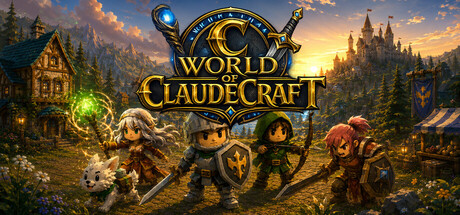
World of ClaudeCraft is, unapologetically, a game built with AI — the name is a hint. We used AI in two ways, and we want to be clear about both.
During development, the game's code was written with an AI coding assistant, and we used AI generation tools to create some of the assets that ship in the game as ordinary, fixed files:
Sound: Most in-game sound effects and all spoken NPC voice lines were generated with ElevenLabs' AI audio and text-to-speech models. The written dialogue itself is authored by us; AI produced the spoken audio.
3D models: A small number of creature models (the "Drowned Litany") were generated with Meshy AI (text-to-3D).
Everything else is either created by the game's own code (the world, towns, terrain, water, weather, and the music soundtrack are all generated procedurally at runtime) or is licensed third-party art — CC0 model, texture, and HDRI packs plus a purchased commercial icon set. That content is not AI-generated.
Critically: no generative AI runs while you play. Every AI-made asset was generated once, offline, during development and baked into the game as a static file. The running game makes no AI or LLM calls, and none of your gameplay or personal data is ever sent to an AI system. The simulation is fully deterministic — the same inputs always produce the same result.
Portions of the application code were developed with AI assistance. Some UI text translations were produced with AI tools and reviewed by the developer. All visual assets, artwork, and design are human-made.
An AI assistant (Anthropic's Claude) helped write the game's code and draft store/marketing text, all reviewed by the developer. All art is hand-made and procedurally rendered; all music and sound effects are human-created or licensed (CC0 / commissioned). No AI-generated art, audio, or voice ships in the game, and no AI content is generated during play.
Generative artificial intelligence has been used to create store page thumbnails based on the developer's scene work.
Generative artificial intelligence has been used by the developer to vastly improve the performance of the developers code with respect to loading times. The developer struggled for months to figure out how to reduce a 30 second+ loading time and thanks to the contributions of gen AI that has been brought down to 5 seconds.
Generative AI was used to assist in the development of the game, including parts of the game engine code, internal development tools, some visual assets, and language proofreading. All AI-generated output was reviewed and supervised by a human. The game's audio was sourced from third-party providers outside the studio and, to the best of our knowledge, was not created using generative AI.
Every visual asset in the game is an open-source, licensed, open-source pixel icon, or a real in-game render. no AI image production. Some of the game codes were written with AI-assisted development tools under the direct supervision of the developer, and localization was human-inspired for all sentences after machine translation initials. There is no real-time AI creation in the game
In-Game Text Creation and Translation: We use AI to create and translate text for in-game content and store descriptions.
Program Code Generation: We use AI to create and optimize the programming code that implements the game’s features and systems.
Sound Effect Generation: We use AI to generate sound effects used in the game.
This game was built in a basement by a dad of 3 with claude, gemini, grok, copilot and chat gpt, all pitched in with various parts. some of the backgrounds and icons atrwork had ai refinement in the process but were all reformatted and redrawn as conceptualized by dev
Generative artificial intelligence has been used to create store page thumbnails based on the developer's scene work.
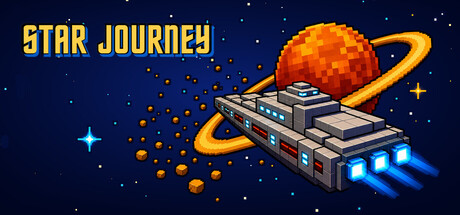
Generative artificial intelligence has been used by the developer to improve the performance of the developers code to achieve incredible in game performance with respect to voxel mesh rendering and voxel lighting calculations. Thanks to the contributions of gen ai Star Journey performs beautifully even on laptops that have no dedicated GPU.
The game's design, game systems, balance, and English narrative are human-developed. AI tools were used during development as a coding assistant, with any recommended code changes specified, reviewed, and tested by the developer. The Japanese localization was produced with AI assistance and hand-edited for nuances, idioms, and accuracy. AI tools were also used for grammar and spell checking. No content is AI-generated at runtime.
Character portraits and evidence images were created with OpenAI's image generation; some diagrams were authored as SVG with OpenAI Codex. These assets were reviewed before release (originality and likeness pass). Sound effects and the ambient music bed are produced by a deterministic synthesis program (oscillators, filtered noise, and math-based DSP), not by a generative-AI audio model, and from no sampled or library audio; the synthesis script itself was written with AI coding assistance (AI-assisted code, not AI-generated audio). Fonts, engine, and runtime are non-AI third-party components under their own licenses.
Generative AI tools were used during development to assist with portions of the game’s code. All AI-assisted code was reviewed, edited, and tested by the developer. The game does not generate AI content during gameplay and does not connect to external AI services.
AI tools were used to assist development, including code, Chinese/Spanish localization text and store page copy. All AI-assisted content was reviewed and curated by the developer. The game does not generate any content with AI at runtime.
This game is built by a two-member team: a human developer and an AI assistant working under his direction. Large parts of the game code and many pre-rendered assets (enemy creatures, towers, environment props, marketing artwork) were created with the assistance of generative AI — always based on human design decisions, and reviewed, tested and curated by the developer. The game does not generate any content at runtime using AI.
Some of this game's code was written with the assistance of AI development tools. All art, music, audio, and text that ship in the game are human-created (from licensed asset packs) or procedurally rendered — no AI-generated art, audio, or text is included in the game.
AI tools were used during development to assist in creating portions of the game's code, text, and 2D artwork, including some store page assets. All AI-assisted content was generated during development and reviewed by the developer. The game does not use AI to generate any content at runtime.
Localization of the textual content for non-english languages is mainly produced as translations from english using generative artificial intelligence. LLM's have been used as a help also in writing and reviewing of program code, development helper tools, infrastructure setup, security checks, test maintenance and requirements management.
Generative AI was used during the development of this game to assist with the creation of certain visual assets and to help with portions of the programming process. All gameplay mechanics, game design, story, progression, and creative direction were designed and implemented by the developer.
None of the game's artwork, audio, or imagery is AI-generated. Portraits, interface, and all store and marketing art are hand-authored vector and procedural work, and that is a hard rule of the project. We do use AI assistance during development for writing and code, including drafting store text and the scripts that lay out our marketing art, all of it reviewed and edited by hand. No image-generation models are used anywhere, in the game or in its marketing.
Dialogue and narration are generated at runtime by a small language model running entirely on the player's machine. Nothing is sent to any server. The model has no authority over the game: a deterministic simulation decides every outcome, fact, and number, and the model only phrases scenes from state the engine hands it. Its output is structurally constrained and validated against the simulation before it appears, and invalid output is rejected. Prompts and validation keep generated text within the game's fiction and its PG-13 register. Player-typed orders go only to the local model and never leave the machine.
Campfire Battles is our attempt to bring an idea to life as a two-person team. AI tools helped us work quickly, particularly on the coding side, but every piece was reviewed and refined by hand.
This game's code was written with the assistance of generative AI. No AI-generated artwork or audio is used.
The visuals are hand-coded by the developer and the music is procedurally generated. AI also assisted with some in-game text and its French translation.
The core game mechanics, game design, and overall creative direction are 100% my original vision. No AI tools were used for conceptualizing ideas or narrative structure. The programming code was generated utilizing the Rosebud AI platform, and the 2D visual assets were initially created with generative art tools. Code, artwork, and music were reviewed, manually edited, and arranged by me to bring my specific creative vision to life.
The game's 2D artwork (character portraits, scenes, backgrounds) and music were created with generative AI tools, then curated and edited by the developer. Parts of the game's code and narrative text were written with AI assistance, under human direction, review and rewriting. All AI-assisted content is pre-generated during development: nothing is generated by AI while you play.
Im a solo indie dev, so I used IA tools for better usage of production time. I used code tools to make it easier to implement mechanics. I used Art IA tools to make starting points from where I can work on top. I used Sound IA tools to make music for this game.
Of course all these is because im a solo dev. Im planning to contract a team in the future if Im able to.
Heartwood Incremental was made by a solo developer working alongside an AI assistant (Anthropic's Claude). The AI helped write the game's code, including the code that procedurally draws its pixel-art sprites, tree, and icons, and helped draft written content such as upgrade, achievement, and store text. Everything was directed, reviewed, and refined by the human developer, and hand-checked before release. No generative AI runs while you play: nothing is created on your device at runtime, and all art and text are fixed in the build.
Don't worry, this game is made by an experienced developer. It's fun and good quality. Give it a try!
That being said: AI was used to facilitate development. For example: it was used to facilitate coding and localization.
Generative AI tools were used during development to assist with visual assets, in-game text, localization, and programming. All AI-assisted content was reviewed, edited, tested, and integrated by the developer. No generative AI is used while the game is running.
All content in this game was created by a single developer using generative AI tools, under full human supervision.
The scenario and script were written by the developer (writing assistance: Claude). All theme song lyrics were written by the developer. Backgrounds, character sprites, the logo, and the OP/ED movies were generated with Leonardo AI, based on the developer's own character designs, compositions, and art direction. The music and theme songs were produced with Suno AI. All voice acting was generated with ElevenLabs; every line in all three languages (Japanese, English, and Simplified Chinese, approx. 1,900 lines each) was individually reviewed by the developer for pronunciation, acting, and emotional delivery, and only approved takes were used. Localization was assisted by Claude Code, with every translation reviewed by the developer. Programming was assisted by Claude Code.
The store page and marketing assets (capsule images, logo, trailers, etc.) were likewise created with Leonardo AI (imagery) and Suno AI (music). Screenshots and trailer footage are captures of the actual game (the game itself contains the AI-generated assets described above).
Every AI-generated asset was reviewed, selected, and corrected by the developer before use. No content is generated by AI at runtime. A breakdown of tools by production stage is included in the end credits.
Train Trek uses generative AI in two ways.
During development we used AI tools to help make some assets: the user-interface art (HUD and menu icons, menu artwork, frames, button plates, mouse cursors), the instrumental soundtrack, and some sound effects. All of it was chosen, edited and finished by hand before it shipped. The 3D models are built procedurally by our own scripts, and the design, world generation and balancing are authored by hand. Parts of the source code were written with an AI coding assistant, reviewed and tested by the developer.
While you play, the game speaks using a text-to-speech model that ships inside the game and runs entirely on your own computer. It voices tutorial guidance, hints and menu narration instead of pre-recorded audio. It needs no internet connection, sends nothing anywhere, and never records or listens to you. It only reads lines we wrote and shipped with the game - it does not invent dialogue.
Portions of this game were created with the assistance of generative AI tools. This includes parts of the game's code, artwork and UI graphics, sound effects, and written text (in-game and on the store page). All AI-assisted content was directed, reviewed, and edited by the developer before inclusion. No AI content is generated during gameplay, the cribbage opponent uses conventional game algorithms, not generative AI and the game does not connect to any AI services at runtime.
Generative AI tools were used during development to assist with the game's custom C# code, gameplay systems, UI structure and layout, in-game written content, official word list, localization in nine languages, and draft store-page copy.
All AI-assisted outputs were reviewed, edited, tested, and integrated by the developer. Visual art, icons, fonts, music, and sound effects are separately licensed third-party assets.
No generative AI is used during gameplay, and the game does not connect to external AI services.
P·A·L - Personal Artificial Lifeform is a generative AI software suite. P·A·L generates written word, spoken word, voice to text, generative images, generative music and sound, game code, and is capable of learning through user choices.
Always use AI responsibly.
Selected background elements, tilesets, and player and boss character models used AI-generated source material that was manually reworked and adapted. Translations were created and edited with AI assistance. Part of the game's logic was developed with AI assistance. All design and gameplay decisions were made by the developer.
I use generative AI tools in the development of OXYTOPIA. All AI output is directed, reviewed, and edited by me before it ships.
What AI is used for:
Branding art — the game's logo and app/store icons were designed with the help of AI models and are rendered in-engine as original vector/code artwork.
Source code — parts of the game's code were written with AI coding assistants.
What is not AI-generated: the in-game gameplay art (tiles, characters, buildings, items, plants) and all audio are hand-made or licensed from human creators.
At runtime: OXYTOPIA generates no content with AI while you play, and no player data is ever sent to any AI service during gameplay.
As this is a solo-developed project, I have utilized generative AI assistants for the writing, debugging, and structuring of the game's programming code.
Additionally, AI has been used in a very minor and complementary capacity for some secondary environmental visual elements. The vast majority of the core artistic assets, art direction, game design, 3D modeling, and overall experience have been entirely hand-crafted and assembled.
AI was used to help develop parts of the game such as code, formulas, and concepts. Game origination, development, assets, and management was solely led by human solo developer. There is no use of AI during any active play of this game.
AI tools were used in writing the game's code. No AI generated images, music, audio, or models were used. All artwork is Public-Domain paintings from famous, historical artists.
World of ClaudeCraft is, unapologetically, a game built with AI — the name is a hint. We used AI in two ways, and we want to be clear about both.
During development, the game's code was written with an AI coding assistant, and we used AI generation tools to create some of the assets that ship in the game as ordinary, fixed files:
Sound: Most in-game sound effects and all spoken NPC voice lines were generated with ElevenLabs' AI audio and text-to-speech models. The written dialogue itself is authored by us; AI produced the spoken audio.
3D models: A small number of creature models (the "Drowned Litany") were generated with Meshy AI (text-to-3D).
Everything else is either created by the game's own code (the world, towns, terrain, water, weather, and the music soundtrack are all generated procedurally at runtime) or is licensed third-party art — CC0 model, texture, and HDRI packs plus a purchased commercial icon set. That content is not AI-generated.
Critically: no generative AI runs while you play. Every AI-made asset was generated once, offline, during development and baked into the game as a static file. The running game makes no AI or LLM calls, and none of your gameplay or personal data is ever sent to an AI system. The simulation is fully deterministic — the same inputs always produce the same result.
Portions of the application code were developed with AI assistance. Some UI text translations were produced with AI tools and reviewed by the developer. All visual assets, artwork, and design are human-made.
An AI assistant (Anthropic's Claude) helped write the game's code and draft store/marketing text, all reviewed by the developer. All art is hand-made and procedurally rendered; all music and sound effects are human-created or licensed (CC0 / commissioned). No AI-generated art, audio, or voice ships in the game, and no AI content is generated during play.
Generative artificial intelligence has been used to create store page thumbnails based on the developer's scene work.
Generative artificial intelligence has been used by the developer to vastly improve the performance of the developers code with respect to loading times. The developer struggled for months to figure out how to reduce a 30 second+ loading time and thanks to the contributions of gen AI that has been brought down to 5 seconds.
Generative AI was used to assist in the development of the game, including parts of the game engine code, internal development tools, some visual assets, and language proofreading. All AI-generated output was reviewed and supervised by a human. The game's audio was sourced from third-party providers outside the studio and, to the best of our knowledge, was not created using generative AI.
Every visual asset in the game is an open-source, licensed, open-source pixel icon, or a real in-game render. no AI image production. Some of the game codes were written with AI-assisted development tools under the direct supervision of the developer, and localization was human-inspired for all sentences after machine translation initials. There is no real-time AI creation in the game
In-Game Text Creation and Translation: We use AI to create and translate text for in-game content and store descriptions.
Program Code Generation: We use AI to create and optimize the programming code that implements the game’s features and systems.
Sound Effect Generation: We use AI to generate sound effects used in the game.
This game was built in a basement by a dad of 3 with claude, gemini, grok, copilot and chat gpt, all pitched in with various parts. some of the backgrounds and icons atrwork had ai refinement in the process but were all reformatted and redrawn as conceptualized by dev
Generative artificial intelligence has been used to create store page thumbnails based on the developer's scene work.
Generative artificial intelligence has been used by the developer to improve the performance of the developers code to achieve incredible in game performance with respect to voxel mesh rendering and voxel lighting calculations. Thanks to the contributions of gen ai Star Journey performs beautifully even on laptops that have no dedicated GPU.
The game's design, game systems, balance, and English narrative are human-developed. AI tools were used during development as a coding assistant, with any recommended code changes specified, reviewed, and tested by the developer. The Japanese localization was produced with AI assistance and hand-edited for nuances, idioms, and accuracy. AI tools were also used for grammar and spell checking. No content is AI-generated at runtime.