Public Steam disclosure research25,497 disclosures tracked
Where do games disclose AI use?
Search developers’ Steam disclosures, compare classified AI use across
games, and follow recorded changes.
This index adds cross-game classifications and statistics to
statements published on individual store pages.
Groups reflect automatic analysis of public disclosures; mature records are excluded. These counts do not measure AI use across all of Steam.
Missing or unclear statements cannot establish whether a game uses AI.
Generative AI was used during development as a supporting tool for parts of the music, selected visual assets, some voice-over lines, portions of the code, and the editing or localization of selected text. The game's concept, design, story, and creative direction are the developer's original work. All AI-assisted content was reviewed and edited as needed by the developer. The game does not use generative AI or generate new AI content during gameplay.
We use AI to assist with game development, including code, translations, and the creation of background assets. The game does not use any real-time AI systems.
Some development used generative AI tools to assist with writing code, shaders, and drafting some in-game text. All content was approved by the developer.
I know many players have reservations about AI-generated content, so I want to be upfront about exactly how it was used in this game.
I'm an ordinary gamer who has played games for almost twenty years and always dreamed of making one of my own. But I can't write code, and I've never been trained in art or music. This game exists because generative AI filled those gaps for me: parts of the code were written with the help of AI coding tools; some character, environment, and UI art was created with image-generation models, then hand-picked and adjusted by me; some animation, music, and sound effects were also made with AI tools.
Everything that makes it an actual game, though — the design, the balancing, the game feel, and every "is this fun?" decision — was done by me, across hundreds of playtests. The game contains no live-generated AI content.
For me, AI wasn't an assembly line making a game in my place. It's what let an ordinary player finally build the game he'd been dreaming about. I hope some of that comes through when you play — and I'd genuinely welcome your feedback.
The development of Mind Against Fate utilized Artificial Intelligence (AI) tools to assist in the creation of specific pre-generated assets and coding workflows:
- Visual Assets: The portraits for heroes and in-game item icons were initially generated using Kling.AI and Google generative tools, and were subsequently refined, detailed, and polished using graphic design software.
- 3D Models: Certain 3D asset bases and models in the game were created with the assistance of Meshy.AI before being finalized and integrated into the game engine.
- Coding Assistance: Development and implementation speed were enhanced using AI-assisted coding tools (Cursor AI utilizing Google Gemini and Anthropic Claude versions).
We ensure that all generated content has been thoroughly reviewed and edited to meet quality standards, and contains no copyrighted or infringing materials.
Generative AI (Anthropic Claude) was used during development to write game code, to create the BGM (note data transcribed from a public-domain piece by Debussy and procedurally generated music), and to compose store artwork from in-game assets. No content is generated by AI at runtime.
This game uses generative AI in the following ways:
- Some of the in-game and store page artwork was created using AI image generation tools.
- Some localization (translations) was assisted by AI tools.
All AI-generated content is reviewed and edited by the developer before release.
Background music uses royalty-free tracks and is not AI-generated.
Parts of the game's code were written with the assistance of AI coding tools.
AI Disclosure:
Generative AI was used for the following elements of this game:
・Programming: General game systems
・Graphic Assets: UI and character variations
Topological Board Game used generative AI tools during development to assist with programming, documentation, store-page text, localization drafts, and design iteration. All AI-assisted material is reviewed and edited by the developer before being included in the game or store page.
The game does not use generative AI to create live player-facing content during gameplay. It does not connect to external third-party AI services during normal gameplay. Local robot opponents, rule-based analysis, search, simulation, and self-play/research tools may be included, but these are gameplay/strategy systems rather than live generative AI content systems.
Generative AI was used during development as an assistance tool for code development, review, debugging, and refinement. Final implementation and testing were performed by the developer. The game does not use generative AI to create content at runtime. Visual assets are either original works or appropriately licensed third-party assets that were manually edited and adapted for the game.
This game was created in collaboration with my friend Claude Code.
Listen.. I know AI is hated by the community, but I am a single developer with limited time and i wanted to make my progress during that time more efficient.
The direction comes from my side and the passion for this project is still real.
Swordoria was made by a solo developer with the help of generative AI tools. Some of the game's pixel art, music, and sound effects were generated with AI and then cut, edited, recolored, and assembled by hand, and parts of the code were written with the assistance of an AI coding tool. No generative AI runs while you play — all content is created and finalized during development and shipped as fixed assets in the game.
Generative AI tools were used to create visual assets, including background artwork and in-game target images. Additionally, AI was utilized to assist with code generation during the development process.
This game used AI-assisted tools in the following areas:
Achievement icons: AI-assisted generation
Some game code: AI-assisted writing
Game design, gameplay logic, balancing, core systems, and final testing were done entirely by humans.
Code: Generative AI tools were used to create foundational logic and structural boilerplate, which was then heavily edited and modified manually.
Audio: Generative AI was used to draft the baseline tracks for the main menu and gameplay music, which were subsequently edited by hand.
Marketing Text: AI tools were used to outline the initial structure of the store page descriptions before being manually rewritten.
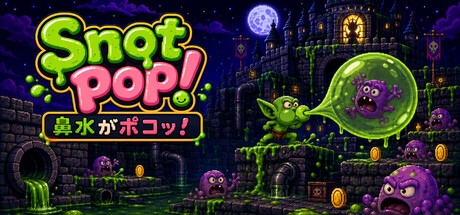
Snot Pop! is an indie project. Like many independent developers, generative AI was used as a tool among many during development; for brainstorming, writing, art and audio design, and working through balancing problems. AI was not the game designer or orchestrator of the project. All content was reviewed, directed, altered, and approved before inclusion. Everything in the game reflects deliberate creative decisions made by the developer.
This project is built by a one-man team. I use AI tools as a supportive assistant to help with development. However, every line of code, piece of text, and design decision has been manually reviewed, edited, and finalized by me to ensure the quality and soul of the game.
I've used AI for code, and to generate some 2D & 3D assets.
I know people want to boycott AI (and I can respect that opinion), but this game would be nearly impossible for a solo developer to make without it.
I cannot stress to you the amount of manual work that still has to go into something like this, even with AI tooling.
You couldn't "prompt" a game like this.
I genuinely care about creating a good game, and if my use of AI is a hard stop for you trying this game, it's your loss!
GridIron Grit is made with love, for us hardcore football sim fans, but AI did much of the heavy lifting.
AI helped me bring my dream game to life, writing code and generating game assets.
The game itself uses no generative AI within.
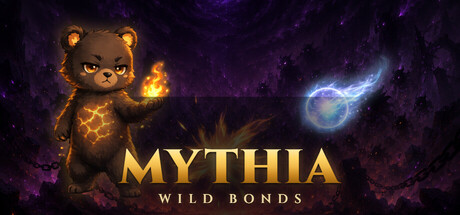
Mythia Wild Bonds was designed and built by a solo developer, game design, art direction, sound direction, and architecture are all the developer's own. AI generation tools were used to accelerate production of pixel art, sound effects, and music, each piece selected, reworked, and approved within the game's art bible and audio direction; code was also developed with AI pair-programming assistance, with all game systems designed by the developer. No content is AI-generated at runtime.
Generative AI was only utilized to assist with programming and coding during development. No AI-generated assets, such as images, graphics, or audio, were used in this game.
1.Generative AI tools were used to assist in creating some in-game art assets.
2.Generative AI tools were used to assist in creating and debugging some in-game code.
During the development of this game, generative AI tools were used to assist the developer in several areas:
- Music & Audio: The game's soundtrack and musical scores were entirely generated using AI audio tools.
- Visual Assets: AI tools were used to assist in the texturing process for a selection of 3D models.
- Localization & Text: AI assisted in the translation and localization of the game's text, as well as refining marketing materials and store descriptions.
- Coding: AI coding agents were utilized to assist with programming, code optimization, and debugging.
All AI-assisted assets and code have been carefully reviewed, curated, and integrated by the developer to ensure a cohesive and high-quality player experience.
I’m a User Experience Designer by day, and making a game has been a childhood dream of mine. I used generative AI as part of my development process, including helping with code and creating visual assets. Every asset included in the final game was personally selected, refined, placed, and directed by me to match the game’s overall vision.
During the development of this game, AI tools were used solely as a coding assistance aid — primarily to help identify and fix minor bugs, and to assist with small code corrections and improvements. AI was not used to generate any content experienced by the player, including visual assets, audio, narrative or in-game text. All artwork, sound, and written content presented to the player are original and human-created. The AI usage disclosed here is limited to development-side coding assistance and does not appear as generated content within the final player-facing experience.
Generative AI tools were used during the production of the game as creative and technical support. This applies only to content prepared in advance during development.
AI was used in several areas, including:
Artwork and promotional materials — generating base images, character concepts, interface concepts, reference images, and materials later used as a foundation for manual editing or further production.
3D models — some models are created with the help of AI tools and an image-to-3D workflow, then selected, adjusted, and integrated into the game.
Voice acting — character voices are created using AI-based voice synthesis.
Code and production tools — AI assistants support coding, code analysis, refactoring, and optimization.
Design consultation — AI tools are used as support for analyzing ideas, designing interfaces, refining descriptions, and planning game systems.
The main concept of the game, story structure, quest dependencies, world direction, and dialogue content are created and supervised by the game’s author. Content created with the help of AI is selected, edited, and implemented manually.
The game does not contain AI-generated content created in real time during gameplay.
AI tools were used as supportive tools during the development process, including assistance with code, visual assets, and music. All AI-assisted content was reviewed, edited, and integrated by our development team before being included in the game.
This game was developed with the assistance of generative AI. AI was used to help create code, written content, and some visual assets under the developer's direction. All AI-generated content is reviewed and integrated by the developer. The game does not use live generative AI during gameplay.
Generative AI was used during development as a supporting tool for parts of the music, selected visual assets, some voice-over lines, portions of the code, and the editing or localization of selected text. The game's concept, design, story, and creative direction are the developer's original work. All AI-assisted content was reviewed and edited as needed by the developer. The game does not use generative AI or generate new AI content during gameplay.
We use AI to assist with game development, including code, translations, and the creation of background assets. The game does not use any real-time AI systems.
Some development used generative AI tools to assist with writing code, shaders, and drafting some in-game text. All content was approved by the developer.
I know many players have reservations about AI-generated content, so I want to be upfront about exactly how it was used in this game.
I'm an ordinary gamer who has played games for almost twenty years and always dreamed of making one of my own. But I can't write code, and I've never been trained in art or music. This game exists because generative AI filled those gaps for me: parts of the code were written with the help of AI coding tools; some character, environment, and UI art was created with image-generation models, then hand-picked and adjusted by me; some animation, music, and sound effects were also made with AI tools.
Everything that makes it an actual game, though — the design, the balancing, the game feel, and every "is this fun?" decision — was done by me, across hundreds of playtests. The game contains no live-generated AI content.
For me, AI wasn't an assembly line making a game in my place. It's what let an ordinary player finally build the game he'd been dreaming about. I hope some of that comes through when you play — and I'd genuinely welcome your feedback.
The development of Mind Against Fate utilized Artificial Intelligence (AI) tools to assist in the creation of specific pre-generated assets and coding workflows:
- Visual Assets: The portraits for heroes and in-game item icons were initially generated using Kling.AI and Google generative tools, and were subsequently refined, detailed, and polished using graphic design software.
- 3D Models: Certain 3D asset bases and models in the game were created with the assistance of Meshy.AI before being finalized and integrated into the game engine.
- Coding Assistance: Development and implementation speed were enhanced using AI-assisted coding tools (Cursor AI utilizing Google Gemini and Anthropic Claude versions).
We ensure that all generated content has been thoroughly reviewed and edited to meet quality standards, and contains no copyrighted or infringing materials.
Generative AI (Anthropic Claude) was used during development to write game code, to create the BGM (note data transcribed from a public-domain piece by Debussy and procedurally generated music), and to compose store artwork from in-game assets. No content is generated by AI at runtime.
This game uses generative AI in the following ways:
- Some of the in-game and store page artwork was created using AI image generation tools.
- Some localization (translations) was assisted by AI tools.
All AI-generated content is reviewed and edited by the developer before release.
Background music uses royalty-free tracks and is not AI-generated.
Parts of the game's code were written with the assistance of AI coding tools.
AI Disclosure:
Generative AI was used for the following elements of this game:
・Programming: General game systems
・Graphic Assets: UI and character variations
Topological Board Game used generative AI tools during development to assist with programming, documentation, store-page text, localization drafts, and design iteration. All AI-assisted material is reviewed and edited by the developer before being included in the game or store page.
The game does not use generative AI to create live player-facing content during gameplay. It does not connect to external third-party AI services during normal gameplay. Local robot opponents, rule-based analysis, search, simulation, and self-play/research tools may be included, but these are gameplay/strategy systems rather than live generative AI content systems.
Generative AI was used during development as an assistance tool for code development, review, debugging, and refinement. Final implementation and testing were performed by the developer. The game does not use generative AI to create content at runtime. Visual assets are either original works or appropriately licensed third-party assets that were manually edited and adapted for the game.
This game was created in collaboration with my friend Claude Code.
Listen.. I know AI is hated by the community, but I am a single developer with limited time and i wanted to make my progress during that time more efficient.
The direction comes from my side and the passion for this project is still real.
Swordoria was made by a solo developer with the help of generative AI tools. Some of the game's pixel art, music, and sound effects were generated with AI and then cut, edited, recolored, and assembled by hand, and parts of the code were written with the assistance of an AI coding tool. No generative AI runs while you play — all content is created and finalized during development and shipped as fixed assets in the game.
Generative AI tools were used to create visual assets, including background artwork and in-game target images. Additionally, AI was utilized to assist with code generation during the development process.
This game used AI-assisted tools in the following areas:
Achievement icons: AI-assisted generation
Some game code: AI-assisted writing
Game design, gameplay logic, balancing, core systems, and final testing were done entirely by humans.
Code: Generative AI tools were used to create foundational logic and structural boilerplate, which was then heavily edited and modified manually.
Audio: Generative AI was used to draft the baseline tracks for the main menu and gameplay music, which were subsequently edited by hand.
Marketing Text: AI tools were used to outline the initial structure of the store page descriptions before being manually rewritten.
Snot Pop! is an indie project. Like many independent developers, generative AI was used as a tool among many during development; for brainstorming, writing, art and audio design, and working through balancing problems. AI was not the game designer or orchestrator of the project. All content was reviewed, directed, altered, and approved before inclusion. Everything in the game reflects deliberate creative decisions made by the developer.
This project is built by a one-man team. I use AI tools as a supportive assistant to help with development. However, every line of code, piece of text, and design decision has been manually reviewed, edited, and finalized by me to ensure the quality and soul of the game.
I've used AI for code, and to generate some 2D & 3D assets.
I know people want to boycott AI (and I can respect that opinion), but this game would be nearly impossible for a solo developer to make without it.
I cannot stress to you the amount of manual work that still has to go into something like this, even with AI tooling.
You couldn't "prompt" a game like this.
I genuinely care about creating a good game, and if my use of AI is a hard stop for you trying this game, it's your loss!
GridIron Grit is made with love, for us hardcore football sim fans, but AI did much of the heavy lifting.
AI helped me bring my dream game to life, writing code and generating game assets.
The game itself uses no generative AI within.
Mythia Wild Bonds was designed and built by a solo developer, game design, art direction, sound direction, and architecture are all the developer's own. AI generation tools were used to accelerate production of pixel art, sound effects, and music, each piece selected, reworked, and approved within the game's art bible and audio direction; code was also developed with AI pair-programming assistance, with all game systems designed by the developer. No content is AI-generated at runtime.
Generative AI was only utilized to assist with programming and coding during development. No AI-generated assets, such as images, graphics, or audio, were used in this game.
1.Generative AI tools were used to assist in creating some in-game art assets.
2.Generative AI tools were used to assist in creating and debugging some in-game code.
During the development of this game, generative AI tools were used to assist the developer in several areas:
- Music & Audio: The game's soundtrack and musical scores were entirely generated using AI audio tools.
- Visual Assets: AI tools were used to assist in the texturing process for a selection of 3D models.
- Localization & Text: AI assisted in the translation and localization of the game's text, as well as refining marketing materials and store descriptions.
- Coding: AI coding agents were utilized to assist with programming, code optimization, and debugging.
All AI-assisted assets and code have been carefully reviewed, curated, and integrated by the developer to ensure a cohesive and high-quality player experience.
I’m a User Experience Designer by day, and making a game has been a childhood dream of mine. I used generative AI as part of my development process, including helping with code and creating visual assets. Every asset included in the final game was personally selected, refined, placed, and directed by me to match the game’s overall vision.
During the development of this game, AI tools were used solely as a coding assistance aid — primarily to help identify and fix minor bugs, and to assist with small code corrections and improvements. AI was not used to generate any content experienced by the player, including visual assets, audio, narrative or in-game text. All artwork, sound, and written content presented to the player are original and human-created. The AI usage disclosed here is limited to development-side coding assistance and does not appear as generated content within the final player-facing experience.
Generative AI tools were used during the production of the game as creative and technical support. This applies only to content prepared in advance during development.
AI was used in several areas, including:
Artwork and promotional materials — generating base images, character concepts, interface concepts, reference images, and materials later used as a foundation for manual editing or further production.
3D models — some models are created with the help of AI tools and an image-to-3D workflow, then selected, adjusted, and integrated into the game.
Voice acting — character voices are created using AI-based voice synthesis.
Code and production tools — AI assistants support coding, code analysis, refactoring, and optimization.
Design consultation — AI tools are used as support for analyzing ideas, designing interfaces, refining descriptions, and planning game systems.
The main concept of the game, story structure, quest dependencies, world direction, and dialogue content are created and supervised by the game’s author. Content created with the help of AI is selected, edited, and implemented manually.
The game does not contain AI-generated content created in real time during gameplay.
AI tools were used as supportive tools during the development process, including assistance with code, visual assets, and music. All AI-assisted content was reviewed, edited, and integrated by our development team before being included in the game.
This game was developed with the assistance of generative AI. AI was used to help create code, written content, and some visual assets under the developer's direction. All AI-generated content is reviewed and integrated by the developer. The game does not use live generative AI during gameplay.