Public Steam disclosure research25,508 disclosures tracked
Where do games disclose AI use?
Search developers’ Steam disclosures, compare classified AI use across
games, and follow recorded changes.
This index adds cross-game classifications and statistics to
statements published on individual store pages.
Groups reflect automatic analysis of public disclosures; mature records are excluded. These counts do not measure AI use across all of Steam.
Missing or unclear statements cannot establish whether a game uses AI.
Generative AI was used during development to assist with creating some art assets, music, sound effects, gameplay prototypes, text, and code iteration. All AI-generated content used in the game has been manually reviewed, edited, integrated, and tested before inclusion.
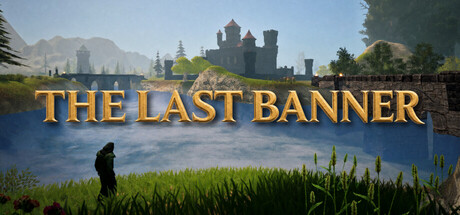
Built by a two-person studio, The Last Banner deploys AI tools as supplements only. All art and code are curated, hand crafted and built by us. We strive to create the best game possible with the best tools of the modern day.
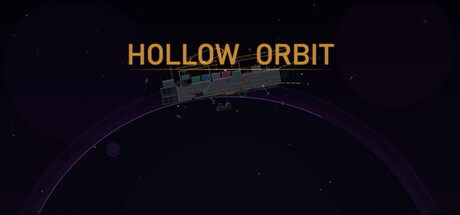
Parts of Hollow Orbit were made with help from generative AI tools — assisting with the game's code, some in-engine visuals and audio, and store/marketing assets like the logo and trailer graphics. All output was reviewed and finalized by the developer, and no content is generated by AI during gameplay.
We used generative AI mainly for generating code. It has also been used for writing flavour text, many interface descriptions and some lines for an AI character. Finally it has also been used for proofreading.
Generative AI was used as an assistant during development for drafting and editing store-page text, brainstorming, and code assistance. Final game assets, gameplay, implementation, and creative direction are reviewed and edited by the developer. No live-generated AI content is used during gameplay.
NULL//REBORN was built with agentic AI as a creative partner throughout the entire pipeline.
I designed the vision, story outline, musical direction, and game logic — then used AI to bring each piece to life:
- generating the art,
- fleshing out the script,
- composing the music, and writing the code.
Every element was guided by human intent and shaped by AI execution.
The developer used generative AI tools during development to help create some of the game's code, sound effects, and music. All AI-assisted content was reviewed and curated by the developer.
I used generative AI tools (specifically Fooocus) to help paint and generate my static 2D game backgrounds and concept/icon art. I also utilized AI-collaboration platforms to assist with audio synthesis composition and programming codebase layouts. All generated assets were fully curated, conceptualized, and processed under my own direct creative control and creative direction before building.
Cellula was developed with the assistance of generative AI tools. The developer used AI to help write C++ code, generate 3D organelle models from text descriptions, and create UI button artwork. No AI-generated content appears in the final game without human modification, curation, and integration.
This project is itself a demonstration of how AI can democratize game development — allowing a single developer with domain expertise but limited programming experience to build something that previously required a full studio.
All game design, biological accuracy, educational content, and creative direction were provided by a human physician and educator.
We used artificial intelligence tools in several areas of Parcel Empire’s development, always under human supervision.
Some of the game’s artwork was generated with the help of AI, then significantly reworked by hand to match the project’s art direction and the specific needs of the game.
The game’s music was entirely generated with the help of AI. The sound effects, however, were not generated by AI.
AI was also used to help translate the game into the available languages.
The game’s development is handled by a developer on the team. Some portions of the code were assisted by AI, but they were reviewed, adapted, and integrated under human supervision.
This game utilizes generative AI tools as an assisting tool for creating various assets, including Artwork (Character portraits, backgrounds, and some UI elements), Sound (BGM and effects), and Text (localization).
AI was also used to assist in programming and debugging. All assets were carefully selected by the developer, and the core gameplay systems, balance, boss design, and all strategic features were entirely designed and implemented by hand.
This product uses generative AI for live text-based character dialogue, optional code or technical text generation, and AI-assisted pre-generated visual assets.
Players can interact with an AI desktop character through text chat. AI responses may be generated based on the character profile, the current conversation, limited memory, and optional screen-context summaries. When requested by the user, the AI may also generate programming explanations, code snippets, configuration examples, or technical suggestions.
AI conversation features require an internet connection. In the Steam version, players do not need to create, configure, or manage any third-party AI service accounts or API keys. Access to AI features is managed by the developer’s backend service and uses in-app AI Credits purchased through Steam Wallet.
The artwork used as the basis for the built-in character was created with assistance from ChatGPT and was subsequently manually edited, separated, and rigged by the developer as a Live2D model. Some promotional images, Steam library assets, background art, and key art were also created or refined with the assistance of generative AI tools during development.
The product does not generate images, audio, music, voice, textures, 3D models, or video at runtime. Generated code is not automatically executed, compiled, installed, or applied by the application. Any use of generated code is controlled by the user outside the application.
Artificial intelligence (AI) was leveraged for key aspects of the game's development, including in-game logic, support systems, and certain artistic assets.
During the development process of this game, generative AI (LLM) tools were utilized as a coding assistant in the coding and software architecture phases.
Artificial Intelligence was used to help in the development of game code only. No art, sound, or other visual assets use or employed AI and were done by a real artist on the team.
Generative AI tools were used during development to assist with programming, concept art, marketing artwork, and the creation of some 3D assets. All AI-assisted content was reviewed, modified where necessary, and approved by the developer before being included in the game.
The game does not use generative AI to create content in real time for players.
This game uses generative AI tools during development to create or assist with some pre-generated content. This includes code assistance, visual asset creation, and music creation.
Generative AI tools are used to assist with programming during development, to create or assist with character artwork, background artwork, store page graphics, Steam community assets, and marketing materials, and to create or assist with background music.
AI-assisted assets and code are reviewed, edited, and integrated by the developer before release. The game does not use generative AI to generate real-time content during gameplay, and players do not directly interact with a generative AI system.
The “combat AI” described in the game is a gameplay system that controls enemy behavior and tactical decision-making. It is not generative AI.
Artificial intelligence (AI) was leveraged for key aspects of the game's development, including in-game logic, support systems, and certain artistic assets.
Ashen Crown was built almost entirely with the help of generative AI. The game's code was written through conversation with an AI assistant (Claude), with me directing, correcting, testing, and deciding what the game should be. All in-game visuals are drawn in code rather than created by an artist, and the sound and music were generated with AI as well. No third-party art, audio, or text assets were used. AI was a tool throughout development; the design, direction, and final decisions are mine.
AI Usage Disclosure
This game was developed with the assistance of an AI programming tool to help draft portions of the code. All AI-generated code has been reviewed, tested, and revised by the developer to ensure quality and stability.
AI was used solely as a development aid — you will not interact with any generative AI during gameplay. All in-game narrative text, financial knowledge, and numerical systems were independently created by the developer. The game runs entirely offline and does not call any external AI interfaces.
This game's development uses generative AI tools in the following ways:
Image assets: generating some artwork and image materials (directed and curated by the developer; final design decisions and adjustments are made by a human).
Coding: assisting with implementation and development (design decisions and final code review are done by a human).
No content is generated by AI at runtime.
As a small independent development team, we used generative AI as a supporting production tool during development.
All creative direction, game design, asset selection, editing, integration, and final approval were handled by the development team. AI-generated material was reviewed and modified by the developers before being included in the game.
The game does not generate AI content during gameplay.
Generative AI is only used as a programming assistant (like code completion or text localization). It’s not used to create the art, audio, or other content that players actually see. Enemy AI and procedural map generation are done with traditional game logic, not generative AI. The art and audio released come from third-party licensed materials on itch.io, with credits given in-game. The game doesn’t call any generative AI services while running.
AI tools were used to assist with parts of the game's code, the drafting of narrative and dialogue content, and initial translations of in-game and store page text. All AI-assisted output has been reviewed and edited by the development team.
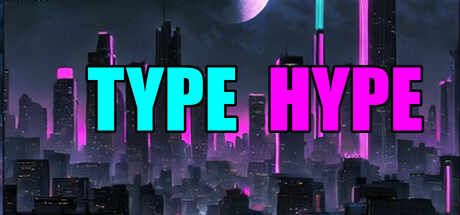
TYPE HYPE's static visual assets — the main-menu skyline background, achievement icons (34 color + 34 grayscale variants = 68 PNGs), exhibition-level theme backgrounds (15 themes × 6 layer files = 90 PNGs), and Steam capsule backgrounds — were created with the assistance of generative AI image tools (primarily OpenAI's GPT image generation). All AI-generated assets were curated, selected, and approved by the developer. No AI runs at runtime in the shipped product. Music (59 tracks) is human-composed and sourced from Pixabay under the Pixabay Content License. Code was written collaboratively by the developer with an AI coding assistant. The game contains no AI-generated content shown to players during gameplay (procedural music layering is rule-based, not AI).
In the development of this game, generative AI tools are used in the processes of programming code assistance and multilingual text translation to improve efficiency and quality.
Generative AI tools were used as development assistance for code drafting/debugging and for creating some visual source materials. All AI-assisted code and visuals included in the game were reviewed, modified, edited, and integrated by the development team.
Generative AI tools were used in a supporting role during certain parts of the development of this game. Their primary uses included programming assistance (such as code generation and debugging), the creation of some image assets used on the Steam Store page and in the game, the creation of source material for some background music and sound effects, and assistance with the translation and refinement of certain text.
AI-generated image and audio materials were not used as-is. The development team reviewed all such materials and, where necessary, retouched, cropped, color-corrected, resized, adjusted, or otherwise edited them to ensure they were suitable for the game.
Any text for which generative AI was used to assist with translation or wording was reviewed by the development team for context and accuracy, and revised as necessary before being used.
We understand that some players may have questions or concerns about the use of generative AI, and that it may be an important factor when deciding whether to purchase or play a game. By describing the extent of its use in this title as clearly as possible, we hope to provide helpful information for making that decision.
Please note that generative AI is not used during gameplay to generate new text, images, audio, dialogue, quests, or other game content in response to player input.
We utilize generative AI for most of our artwork and some of our music.
A little (5%) of the game was coded with AI assistance - this includes sdk integrations mostly for steam API.
This game does not utilize real-time AI-generated content output. In accordance with Steam guidelines, only pre-created and verified content is used.
To improve development efficiency and quality, AI-generated technology is used supplementarily in the following applications:
Program code support: Code refactoring, review, and code completion
Text translation: English translation support
Graphic asset creation: Base generation of some visuals such as potions, crafting ingredients, and background images
Furthermore, all of this content is manually reviewed and edited (added or modified); no unprocessed AI-generated content is used.
Galactum Meridian was developed with generative AI assistance under direct human creative direction. AI tools supported coding, writing, design exploration, production workflows, and selected visual and promotional assets. All material was reviewed, edited, and integrated by the developer. The game does not use live generative AI during gameplay.
AI Disclosure
This game was developed entirely with the assistance of large language models and generative AI tools. AI systems were used for graphic asset generation, concept art, narrative text drafting, lore writing, design review, creative critique, initial structural planning, code architecture, system design, feature implementation, iterative refinement, and debugging. All lore, mechanics, story, art, and game systems are pre-authored and fully static. No AI processing or generation occurs at runtime — the game runs entirely on pre-built code with no live model calls. This disclosure is provided in compliance with Steam's AI Content Policy and Valve developer transparency guidelines.
Generative AI was used during development to assist with creating some art assets, music, sound effects, gameplay prototypes, text, and code iteration. All AI-generated content used in the game has been manually reviewed, edited, integrated, and tested before inclusion.
Built by a two-person studio, The Last Banner deploys AI tools as supplements only. All art and code are curated, hand crafted and built by us. We strive to create the best game possible with the best tools of the modern day.
Parts of Hollow Orbit were made with help from generative AI tools — assisting with the game's code, some in-engine visuals and audio, and store/marketing assets like the logo and trailer graphics. All output was reviewed and finalized by the developer, and no content is generated by AI during gameplay.
We used generative AI mainly for generating code. It has also been used for writing flavour text, many interface descriptions and some lines for an AI character. Finally it has also been used for proofreading.
Generative AI was used as an assistant during development for drafting and editing store-page text, brainstorming, and code assistance. Final game assets, gameplay, implementation, and creative direction are reviewed and edited by the developer. No live-generated AI content is used during gameplay.
NULL//REBORN was built with agentic AI as a creative partner throughout the entire pipeline.
I designed the vision, story outline, musical direction, and game logic — then used AI to bring each piece to life:
- generating the art,
- fleshing out the script,
- composing the music, and writing the code.
Every element was guided by human intent and shaped by AI execution.
The developer used generative AI tools during development to help create some of the game's code, sound effects, and music. All AI-assisted content was reviewed and curated by the developer.
I used generative AI tools (specifically Fooocus) to help paint and generate my static 2D game backgrounds and concept/icon art. I also utilized AI-collaboration platforms to assist with audio synthesis composition and programming codebase layouts. All generated assets were fully curated, conceptualized, and processed under my own direct creative control and creative direction before building.
Cellula was developed with the assistance of generative AI tools. The developer used AI to help write C++ code, generate 3D organelle models from text descriptions, and create UI button artwork. No AI-generated content appears in the final game without human modification, curation, and integration.
This project is itself a demonstration of how AI can democratize game development — allowing a single developer with domain expertise but limited programming experience to build something that previously required a full studio.
All game design, biological accuracy, educational content, and creative direction were provided by a human physician and educator.
We used artificial intelligence tools in several areas of Parcel Empire’s development, always under human supervision.
Some of the game’s artwork was generated with the help of AI, then significantly reworked by hand to match the project’s art direction and the specific needs of the game.
The game’s music was entirely generated with the help of AI. The sound effects, however, were not generated by AI.
AI was also used to help translate the game into the available languages.
The game’s development is handled by a developer on the team. Some portions of the code were assisted by AI, but they were reviewed, adapted, and integrated under human supervision.
This game utilizes generative AI tools as an assisting tool for creating various assets, including Artwork (Character portraits, backgrounds, and some UI elements), Sound (BGM and effects), and Text (localization).
AI was also used to assist in programming and debugging. All assets were carefully selected by the developer, and the core gameplay systems, balance, boss design, and all strategic features were entirely designed and implemented by hand.
This product uses generative AI for live text-based character dialogue, optional code or technical text generation, and AI-assisted pre-generated visual assets.
Players can interact with an AI desktop character through text chat. AI responses may be generated based on the character profile, the current conversation, limited memory, and optional screen-context summaries. When requested by the user, the AI may also generate programming explanations, code snippets, configuration examples, or technical suggestions.
AI conversation features require an internet connection. In the Steam version, players do not need to create, configure, or manage any third-party AI service accounts or API keys. Access to AI features is managed by the developer’s backend service and uses in-app AI Credits purchased through Steam Wallet.
The artwork used as the basis for the built-in character was created with assistance from ChatGPT and was subsequently manually edited, separated, and rigged by the developer as a Live2D model. Some promotional images, Steam library assets, background art, and key art were also created or refined with the assistance of generative AI tools during development.
The product does not generate images, audio, music, voice, textures, 3D models, or video at runtime. Generated code is not automatically executed, compiled, installed, or applied by the application. Any use of generated code is controlled by the user outside the application.
Artificial intelligence (AI) was leveraged for key aspects of the game's development, including in-game logic, support systems, and certain artistic assets.
During the development process of this game, generative AI (LLM) tools were utilized as a coding assistant in the coding and software architecture phases.
Artificial Intelligence was used to help in the development of game code only. No art, sound, or other visual assets use or employed AI and were done by a real artist on the team.
Generative AI tools were used during development to assist with programming, concept art, marketing artwork, and the creation of some 3D assets. All AI-assisted content was reviewed, modified where necessary, and approved by the developer before being included in the game.
The game does not use generative AI to create content in real time for players.
This game uses generative AI tools during development to create or assist with some pre-generated content. This includes code assistance, visual asset creation, and music creation.
Generative AI tools are used to assist with programming during development, to create or assist with character artwork, background artwork, store page graphics, Steam community assets, and marketing materials, and to create or assist with background music.
AI-assisted assets and code are reviewed, edited, and integrated by the developer before release. The game does not use generative AI to generate real-time content during gameplay, and players do not directly interact with a generative AI system.
The “combat AI” described in the game is a gameplay system that controls enemy behavior and tactical decision-making. It is not generative AI.
Artificial intelligence (AI) was leveraged for key aspects of the game's development, including in-game logic, support systems, and certain artistic assets.
Ashen Crown was built almost entirely with the help of generative AI. The game's code was written through conversation with an AI assistant (Claude), with me directing, correcting, testing, and deciding what the game should be. All in-game visuals are drawn in code rather than created by an artist, and the sound and music were generated with AI as well. No third-party art, audio, or text assets were used. AI was a tool throughout development; the design, direction, and final decisions are mine.
AI Usage Disclosure
This game was developed with the assistance of an AI programming tool to help draft portions of the code. All AI-generated code has been reviewed, tested, and revised by the developer to ensure quality and stability.
AI was used solely as a development aid — you will not interact with any generative AI during gameplay. All in-game narrative text, financial knowledge, and numerical systems were independently created by the developer. The game runs entirely offline and does not call any external AI interfaces.
This game's development uses generative AI tools in the following ways:
Image assets: generating some artwork and image materials (directed and curated by the developer; final design decisions and adjustments are made by a human).
Coding: assisting with implementation and development (design decisions and final code review are done by a human).
No content is generated by AI at runtime.
As a small independent development team, we used generative AI as a supporting production tool during development.
All creative direction, game design, asset selection, editing, integration, and final approval were handled by the development team. AI-generated material was reviewed and modified by the developers before being included in the game.
The game does not generate AI content during gameplay.
Generative AI is only used as a programming assistant (like code completion or text localization). It’s not used to create the art, audio, or other content that players actually see. Enemy AI and procedural map generation are done with traditional game logic, not generative AI. The art and audio released come from third-party licensed materials on itch.io, with credits given in-game. The game doesn’t call any generative AI services while running.
AI tools were used to assist with parts of the game's code, the drafting of narrative and dialogue content, and initial translations of in-game and store page text. All AI-assisted output has been reviewed and edited by the development team.
TYPE HYPE's static visual assets — the main-menu skyline background, achievement icons (34 color + 34 grayscale variants = 68 PNGs), exhibition-level theme backgrounds (15 themes × 6 layer files = 90 PNGs), and Steam capsule backgrounds — were created with the assistance of generative AI image tools (primarily OpenAI's GPT image generation). All AI-generated assets were curated, selected, and approved by the developer. No AI runs at runtime in the shipped product. Music (59 tracks) is human-composed and sourced from Pixabay under the Pixabay Content License. Code was written collaboratively by the developer with an AI coding assistant. The game contains no AI-generated content shown to players during gameplay (procedural music layering is rule-based, not AI).
In the development of this game, generative AI tools are used in the processes of programming code assistance and multilingual text translation to improve efficiency and quality.
Generative AI tools were used as development assistance for code drafting/debugging and for creating some visual source materials. All AI-assisted code and visuals included in the game were reviewed, modified, edited, and integrated by the development team.
Generative AI tools were used in a supporting role during certain parts of the development of this game. Their primary uses included programming assistance (such as code generation and debugging), the creation of some image assets used on the Steam Store page and in the game, the creation of source material for some background music and sound effects, and assistance with the translation and refinement of certain text.
AI-generated image and audio materials were not used as-is. The development team reviewed all such materials and, where necessary, retouched, cropped, color-corrected, resized, adjusted, or otherwise edited them to ensure they were suitable for the game.
Any text for which generative AI was used to assist with translation or wording was reviewed by the development team for context and accuracy, and revised as necessary before being used.
We understand that some players may have questions or concerns about the use of generative AI, and that it may be an important factor when deciding whether to purchase or play a game. By describing the extent of its use in this title as clearly as possible, we hope to provide helpful information for making that decision.
Please note that generative AI is not used during gameplay to generate new text, images, audio, dialogue, quests, or other game content in response to player input.
We utilize generative AI for most of our artwork and some of our music.
A little (5%) of the game was coded with AI assistance - this includes sdk integrations mostly for steam API.
This game does not utilize real-time AI-generated content output. In accordance with Steam guidelines, only pre-created and verified content is used.
To improve development efficiency and quality, AI-generated technology is used supplementarily in the following applications:
Program code support: Code refactoring, review, and code completion
Text translation: English translation support
Graphic asset creation: Base generation of some visuals such as potions, crafting ingredients, and background images
Furthermore, all of this content is manually reviewed and edited (added or modified); no unprocessed AI-generated content is used.
Galactum Meridian was developed with generative AI assistance under direct human creative direction. AI tools supported coding, writing, design exploration, production workflows, and selected visual and promotional assets. All material was reviewed, edited, and integrated by the developer. The game does not use live generative AI during gameplay.
AI Disclosure
This game was developed entirely with the assistance of large language models and generative AI tools. AI systems were used for graphic asset generation, concept art, narrative text drafting, lore writing, design review, creative critique, initial structural planning, code architecture, system design, feature implementation, iterative refinement, and debugging. All lore, mechanics, story, art, and game systems are pre-authored and fully static. No AI processing or generation occurs at runtime — the game runs entirely on pre-built code with no live model calls. This disclosure is provided in compliance with Steam's AI Content Policy and Valve developer transparency guidelines.