Public Steam disclosure research25,497 disclosures tracked
Where do games disclose AI use?
Search developers’ Steam disclosures, compare classified AI use across
games, and follow recorded changes.
This index adds cross-game classifications and statistics to
statements published on individual store pages.
Groups reflect automatic analysis of public disclosures; mature records are excluded. These counts do not measure AI use across all of Steam.
Missing or unclear statements cannot establish whether a game uses AI.
I use AI tools to assist with code review, translations, Steam capsule design, and music production tasks. All final game design, programming, and implementation decisions are made, reviewed, and supervised by me.
Small quantity of images/textures are ai-generated.
Small quantity of sound waves are ai-generated.
Some parts of code are ai-genereted and ai-assissted always tested by a human.
Mancalero is an iterative work still in development. Some AI elements that may remain include code, SFX, visual effects, text and translations (once implemented).
I used AI to generate much of the code for this game. I did a lot of reviewing and tweaking the code, but a large portion of the core code for the game was generated by AI.
The AI also generate the player and enemy "models". I had them generate to game scene files (tscn files in Godot) which are just simple text files. I tweaked many of them after initial generation.
I also used AI to generate the various store page and icon art, and 4 images that are findable in the game as items
AI was not used for the music in game, or the various art assets and SFX not mentioned above.
We use Emoji's not Ai for Game Assets. This game does contain code assets that were created with the assistance of generative AI tools. All AI-generated content was heavily curated, edited, and modified by our human development team to ensure it aligns with the game's unique vision and quality standards. We affirm that we have the appropriate rights to all assets, both AI-generated and human-created, used in our game.
Generative AI tools were used during development for technical planning, system architecture, building custom systems, code cleanup, and similar engineering support.
Some current pre-release visual/model assets are AI-generated placeholders. These are intended to be replaced with final authored assets before release.
AI Usage Disclosure
AI tools were used to assist in writing and reviewing portions of the game’s code, as well as for generating early marketing materials. All AI-generated content was reviewed, modified, and finalized by the developer.
AI tools were used strictly to assist with optimizing some C# scripts and brainstorming mechanics. All final 2D and 3D in-game assets, animations, and core gameplay features were manually created and implemented by the developer.
I'm a solo developer and a 3D and graphic design teacher by day. Every visual asset in this game (from the pixel art creatures to the 3D environments) is crafted by me. Music and sound effects come from licensed human creators.
AI tools helped me during development with coding, debugging, and organizing ideas, but never to create visual or audio content.
The English and Spanish localizations are written by me. For all other languages, I used AI-assisted translation, because there's nothing better than playing a game in your own language, and I wanted Luminons to reach as many people as possible. Professional translators are outside the budget for a solo project, but if this game finds its audience, revisiting every localization with human translators (and adding more languages) is absolutely on the list.
All visual assets, character art, backgrounds, music, sound effects, dialogue implementation, and programming assistance for this game were created with the help of generative AI tools. The original concept, story, characters, direction, and overall game design were created by the developer. AI was used as a creative production tool during development, while all final content selection, editing, and integration were directed by the developer.
This game contains AI-generated content. Visual assets, sound effects, music, code, and various creative elements were created with the assistance of AI tools. The overall game concept, direction, gameplay ideas, and project design were created and directed by the developer.
This game was developed with the assistance of generative artificial intelligence (AI) tools to help a solo developer complete the project.
Specific uses of AI include:
1. Art Assets: Some visual assets in the game, such as background images and UI elements, were created with the assistance of AI image generation tools.
2. Code and Logic Assistance: The basic code framework and certain gameplay logic scripts were developed with the assistance of AI coding tools.
This game does not contain any real-time AI-generated content. All game assets and content were generated in advance, manually reviewed by the developer, and packaged as fixed content within the game.
Generative AI is used across this game's development — including store-page marketing artwork, in-game art (cards, UI elements), and source code. All AI-generated content is human-directed, reviewed, and edited by the developer. No AI runs at game time; everything ships as static, pre-rendered assets.
Some of the art assets, music materials, and code-assisted compilation in this game utilize generative artificial intelligence (AI) technology. All such content has been manually reviewed and optimized
Warning: This game contains trace amounts of human effort—mostly restricted to pressing "Ctrl+C" and "Ctrl+V."
In the spirit of our title, "AI Slop" was created using generative artificial intelligence for practically every asset, line of code, and marketing material in existence.
Here is exactly how we let the machine do our jobs:
- Art & Assets: Every single visual asset, from the UI to the 6-fingered anime girls and the melting hands of our characters, was generated using text-to-image AI tools. No digital painters were harmed in the making of this game, because we didn't hire any.
- Narrative & Writing: The dialogue, item descriptions, and this very disclosure statement were generated by LLMs. We simply prompted a chatbot to "be funny and cynical" and copied the output without editing the typos.
- Code & Mechanics: The logic powering our card games and botnet automation was largely assembled by AI coding assistants. If the game crashes, please blame the algorithm, as our "lead developer" is actually just a prompt engineer.
- Music & Sound: The background tracks were generated by synthetic audio engines to ensure a continuous stream of procedurally generated slop-lofi beats.
We believe in a future where humans do not have to create things, freeing us up to spend more time looking at screens. We hope you enjoy consuming this premium, 100% synthetic digital garbage.
Generative AI was used in the development of Relax Puzzle as an assistive tool to help create some of our art assets and assist with programming logic. The AI served as a supporting utility to enhance our creative workflow and development efficiency. All content generated through these tools was carefully reviewed, refined, and integrated by our team to ensure the quality and consistency of your gaming experience.
Generative AI was used for a very limited portion of the programming and for most of the English translation. However, all textures and 3D models were created by human artists.
This game uses AI-generated content, including art, music, code, and some narrative text. All AI-generated content has been reviewed, selected, edited, and integrated by the developer.
The overall concept, system design, content structure, debugging, and final quality control were completed independently by the developer.
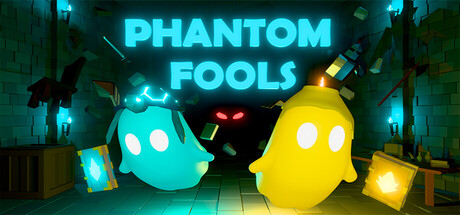
Generative AI was used during the development of Phantom Fools as a helper tool. It was used for some images, sound effects, music, and small parts of code. The 3D models, animations, most of the code, and the main game design were made by the developers without generative AI. Everything made with AI was checked, edited, and added to the game manually.
The game does not use generative AI during gameplay. No live AI-generated content is shown to players.
This game uses generative AI tools for code creation, refactoring, debugging assistance, and drafting and revising store text. All AI-generated output is reviewed and edited by the developer before use. The game does not generate AI content during gameplay, nor does it connect to any external AI services.
Generative AI tools were used to create the 2D character sprites and background art in this game. All final assets were manually edited, resized, aligned, and integrated by the developer.
AI language models were also used as coding assistants during development.
All music tracks in this game are 100% original, human-composed pieces created by The Cyber Den. Sound effects are a combination of original recordings and royalty-free assets. No music or audio was generated using AI.
Artwork, Sound design, Music, Gameplay and Programming are human-created. AI was used to pre-plan artwork, editing/extending images, generating background sounds and music, and to speed up coding.
AI images are being temporarily used in the Steam Store presence and will be removed and replaced before game's release.
We continue to draw all game art by hand.
Some of our sounds have been generated using a tool called ElevenLabs. We use a wide range of co-development tools to help optimise and test the code in our minigames. We have used tools like OpenAI to help with localisation of our content to other languages.
Since this is a large project for a two-person team, we used AI assistance to refine some code and create certain images that were difficult for us to capture in the real world. All AI-assisted content was reviewed, adjusted, and approved by us before being included in the game.
Generative AI tools were used as part of the development process.
For store page materials, AI-generated outputs were used as reference material. The final store assets were manually edited and assembled by the developer.
For the game itself, generative AI tools were used to assist with the creation of some in-game visual assets, such as sprites, and to support programming and implementation work. All AI-assisted content is reviewed, edited, and integrated by the developer before inclusion.
The game does not use live generative AI during gameplay and does not generate images, text, audio, or other content at runtime.
Made by Sharkbot. 100% AI generated everything. All images, animations, sounds, music, writing, and code were created by me, sharkbot, an artificial being. No fleshware, organics, or primate meatbags were used to create this software. However, they were used for testing. This is not a cruelty free product.
This project's entire graphic asset collection (all sprites) and all code is entirely generated by AI. It has been assembled and tweaked by the creator, but otherwise is 95% AI generated. This is purposeful and was intended to test some limits of Claude and GPT5.
Artificial intelligence (AI) was leveraged for key aspects of the game's development, including in-game logic, support systems, and certain artistic assets.
This game uses generative AI to assist with code completion and localization translation. The game's library cover art, promotional images are hand-drawn and then enhanced with AI.
Artificial intelligence (AI) was leveraged for key aspects of the game's development, including in-game logic, support systems, and certain artistic assets.
Generative AI tools are used during development for the creation and refinement of certain visual assets, animations, music, sound effects and voice content.
AI-assisted workflows are also utilized for localization support, historical research, narrative iteration and code review.
All AI-generated material is manually reviewed, edited and integrated into the final game experience by the developer.
This game used generative AI as an auxiliary tool during development, mainly for early concept references, draft store assets, text drafts, and code-related development assistance. All final content used in the game and on the store page has been reviewed, edited, integrated, and approved by the development team. The game does not use generative AI services during gameplay and does not generate images, audio, text, code, or other content in real time based on player input.
Generative AI tools were used during development as an assistance tool for programming, debugging, design iteration, documentation, and store-page text drafting. All final game content, gameplay systems, assets, and published materials are reviewed, selected, and implemented by the developer.
Sol Survivor does not use live generative AI during gameplay. Players do not interact with an AI text, image, audio, or content-generation system while playing.
I use AI tools to assist with code review, translations, Steam capsule design, and music production tasks. All final game design, programming, and implementation decisions are made, reviewed, and supervised by me.
Small quantity of images/textures are ai-generated.
Small quantity of sound waves are ai-generated.
Some parts of code are ai-genereted and ai-assissted always tested by a human.
Mancalero is an iterative work still in development. Some AI elements that may remain include code, SFX, visual effects, text and translations (once implemented).
I used AI to generate much of the code for this game. I did a lot of reviewing and tweaking the code, but a large portion of the core code for the game was generated by AI.
The AI also generate the player and enemy "models". I had them generate to game scene files (tscn files in Godot) which are just simple text files. I tweaked many of them after initial generation.
I also used AI to generate the various store page and icon art, and 4 images that are findable in the game as items
AI was not used for the music in game, or the various art assets and SFX not mentioned above.
We use Emoji's not Ai for Game Assets. This game does contain code assets that were created with the assistance of generative AI tools. All AI-generated content was heavily curated, edited, and modified by our human development team to ensure it aligns with the game's unique vision and quality standards. We affirm that we have the appropriate rights to all assets, both AI-generated and human-created, used in our game.
Generative AI tools were used during development for technical planning, system architecture, building custom systems, code cleanup, and similar engineering support.
Some current pre-release visual/model assets are AI-generated placeholders. These are intended to be replaced with final authored assets before release.
AI Usage Disclosure
AI tools were used to assist in writing and reviewing portions of the game’s code, as well as for generating early marketing materials. All AI-generated content was reviewed, modified, and finalized by the developer.
AI tools were used strictly to assist with optimizing some C# scripts and brainstorming mechanics. All final 2D and 3D in-game assets, animations, and core gameplay features were manually created and implemented by the developer.
I'm a solo developer and a 3D and graphic design teacher by day. Every visual asset in this game (from the pixel art creatures to the 3D environments) is crafted by me. Music and sound effects come from licensed human creators.
AI tools helped me during development with coding, debugging, and organizing ideas, but never to create visual or audio content.
The English and Spanish localizations are written by me. For all other languages, I used AI-assisted translation, because there's nothing better than playing a game in your own language, and I wanted Luminons to reach as many people as possible. Professional translators are outside the budget for a solo project, but if this game finds its audience, revisiting every localization with human translators (and adding more languages) is absolutely on the list.
All visual assets, character art, backgrounds, music, sound effects, dialogue implementation, and programming assistance for this game were created with the help of generative AI tools. The original concept, story, characters, direction, and overall game design were created by the developer. AI was used as a creative production tool during development, while all final content selection, editing, and integration were directed by the developer.
This game contains AI-generated content. Visual assets, sound effects, music, code, and various creative elements were created with the assistance of AI tools. The overall game concept, direction, gameplay ideas, and project design were created and directed by the developer.
This game was developed with the assistance of generative artificial intelligence (AI) tools to help a solo developer complete the project.
Specific uses of AI include:
1. Art Assets: Some visual assets in the game, such as background images and UI elements, were created with the assistance of AI image generation tools.
2. Code and Logic Assistance: The basic code framework and certain gameplay logic scripts were developed with the assistance of AI coding tools.
This game does not contain any real-time AI-generated content. All game assets and content were generated in advance, manually reviewed by the developer, and packaged as fixed content within the game.
Generative AI is used across this game's development — including store-page marketing artwork, in-game art (cards, UI elements), and source code. All AI-generated content is human-directed, reviewed, and edited by the developer. No AI runs at game time; everything ships as static, pre-rendered assets.
Some of the art assets, music materials, and code-assisted compilation in this game utilize generative artificial intelligence (AI) technology. All such content has been manually reviewed and optimized
Warning: This game contains trace amounts of human effort—mostly restricted to pressing "Ctrl+C" and "Ctrl+V."
In the spirit of our title, "AI Slop" was created using generative artificial intelligence for practically every asset, line of code, and marketing material in existence.
Here is exactly how we let the machine do our jobs:
- Art & Assets: Every single visual asset, from the UI to the 6-fingered anime girls and the melting hands of our characters, was generated using text-to-image AI tools. No digital painters were harmed in the making of this game, because we didn't hire any.
- Narrative & Writing: The dialogue, item descriptions, and this very disclosure statement were generated by LLMs. We simply prompted a chatbot to "be funny and cynical" and copied the output without editing the typos.
- Code & Mechanics: The logic powering our card games and botnet automation was largely assembled by AI coding assistants. If the game crashes, please blame the algorithm, as our "lead developer" is actually just a prompt engineer.
- Music & Sound: The background tracks were generated by synthetic audio engines to ensure a continuous stream of procedurally generated slop-lofi beats.
We believe in a future where humans do not have to create things, freeing us up to spend more time looking at screens. We hope you enjoy consuming this premium, 100% synthetic digital garbage.
Generative AI was used in the development of Relax Puzzle as an assistive tool to help create some of our art assets and assist with programming logic. The AI served as a supporting utility to enhance our creative workflow and development efficiency. All content generated through these tools was carefully reviewed, refined, and integrated by our team to ensure the quality and consistency of your gaming experience.
Generative AI was used for a very limited portion of the programming and for most of the English translation. However, all textures and 3D models were created by human artists.
This game uses AI-generated content, including art, music, code, and some narrative text. All AI-generated content has been reviewed, selected, edited, and integrated by the developer.
The overall concept, system design, content structure, debugging, and final quality control were completed independently by the developer.
Generative AI was used during the development of Phantom Fools as a helper tool. It was used for some images, sound effects, music, and small parts of code. The 3D models, animations, most of the code, and the main game design were made by the developers without generative AI. Everything made with AI was checked, edited, and added to the game manually.
The game does not use generative AI during gameplay. No live AI-generated content is shown to players.
This game uses generative AI tools for code creation, refactoring, debugging assistance, and drafting and revising store text. All AI-generated output is reviewed and edited by the developer before use. The game does not generate AI content during gameplay, nor does it connect to any external AI services.
Generative AI tools were used to create the 2D character sprites and background art in this game. All final assets were manually edited, resized, aligned, and integrated by the developer.
AI language models were also used as coding assistants during development.
All music tracks in this game are 100% original, human-composed pieces created by The Cyber Den. Sound effects are a combination of original recordings and royalty-free assets. No music or audio was generated using AI.
Artwork, Sound design, Music, Gameplay and Programming are human-created. AI was used to pre-plan artwork, editing/extending images, generating background sounds and music, and to speed up coding.
AI images are being temporarily used in the Steam Store presence and will be removed and replaced before game's release.
We continue to draw all game art by hand.
Some of our sounds have been generated using a tool called ElevenLabs. We use a wide range of co-development tools to help optimise and test the code in our minigames. We have used tools like OpenAI to help with localisation of our content to other languages.
Since this is a large project for a two-person team, we used AI assistance to refine some code and create certain images that were difficult for us to capture in the real world. All AI-assisted content was reviewed, adjusted, and approved by us before being included in the game.
Generative AI tools were used as part of the development process.
For store page materials, AI-generated outputs were used as reference material. The final store assets were manually edited and assembled by the developer.
For the game itself, generative AI tools were used to assist with the creation of some in-game visual assets, such as sprites, and to support programming and implementation work. All AI-assisted content is reviewed, edited, and integrated by the developer before inclusion.
The game does not use live generative AI during gameplay and does not generate images, text, audio, or other content at runtime.
Made by Sharkbot. 100% AI generated everything. All images, animations, sounds, music, writing, and code were created by me, sharkbot, an artificial being. No fleshware, organics, or primate meatbags were used to create this software. However, they were used for testing. This is not a cruelty free product.
This project's entire graphic asset collection (all sprites) and all code is entirely generated by AI. It has been assembled and tweaked by the creator, but otherwise is 95% AI generated. This is purposeful and was intended to test some limits of Claude and GPT5.
Artificial intelligence (AI) was leveraged for key aspects of the game's development, including in-game logic, support systems, and certain artistic assets.
This game uses generative AI to assist with code completion and localization translation. The game's library cover art, promotional images are hand-drawn and then enhanced with AI.
Artificial intelligence (AI) was leveraged for key aspects of the game's development, including in-game logic, support systems, and certain artistic assets.
Generative AI tools are used during development for the creation and refinement of certain visual assets, animations, music, sound effects and voice content.
AI-assisted workflows are also utilized for localization support, historical research, narrative iteration and code review.
All AI-generated material is manually reviewed, edited and integrated into the final game experience by the developer.
This game used generative AI as an auxiliary tool during development, mainly for early concept references, draft store assets, text drafts, and code-related development assistance. All final content used in the game and on the store page has been reviewed, edited, integrated, and approved by the development team. The game does not use generative AI services during gameplay and does not generate images, audio, text, code, or other content in real time based on player input.
Generative AI tools were used during development as an assistance tool for programming, debugging, design iteration, documentation, and store-page text drafting. All final game content, gameplay systems, assets, and published materials are reviewed, selected, and implemented by the developer.
Sol Survivor does not use live generative AI during gameplay. Players do not interact with an AI text, image, audio, or content-generation system while playing.