Public Steam disclosure research25,380 disclosures tracked
Where do games disclose AI use?
Search developers’ Steam disclosures, compare classified AI use across
games, and follow recorded changes.
This index adds cross-game classifications and statistics to
statements published on individual store pages.
Groups reflect automatic analysis of public disclosures; mature records are excluded. These counts do not measure AI use across all of Steam.
Missing or unclear statements cannot establish whether a game uses AI.
This game uses generative AI tools in certain aspects of its development process, including:
Music Design: Some background music and sound effects were generated using AI tools, then edited and finalized by human composers.
Visual Assets: Selected textures and 3D models were created with reference to AI-generated concepts and were manually refined and integrated by artists.
Programming Support: Generative AI was used to assist in debugging and refining small portions of the game code, with all output reviewed and tested by developers.
No generative AI is used during gameplay. The game does not generate new AI content at runtime.
Code & Development: AI tools were used to assist in organizing code structure and suggesting specific functions or methods. However, the vast majority of the game’s codebase was manually written and audited by the developer to ensure quality and performance.
Text & Marketing: AI was utilized to help draft and refine the text used in the "About This Game" section and the short description on the Steam Store page.
Parts of the game's code and design were created with the assistance of generative AI tools (ChatGPT) during development. No AI-generated content is created in real time during gameplay.
I built Devil's Due as a weekend project, using Claude Opus for coding support and AI for the art assets (since I’m not exactly a 2D artist). I wanted to see if I could create something fun with AI assistance, and I really hope you guys enjoy playing it!
This game is the result of individual development. AI was used as a supportive tool for brainstorming, as well as for experimentation in programming, graphics, and music. No AI-generated content was included in the game without modification: every element was revised, edited, and manually refined for the final version.
Some art, music, and code structures in this game were assisted by AI tools during development.
All outputs have been reviewed, refined, and integrated by human developers to ensure consistent style and high-quality gameplay experience.
During the development of this game, AI tools were utilized to accelerate the production process and to assist a solo developer in realizing their vision. The use of AI was concentrated in two main areas:
Coding and Software Development: This AI language model (Gemini) was used as an assistant for writing, debugging, and refactoring the game's C# scripts for Unity. All code logic, game design, and final architectural decisions were directed by the developer. Code snippets generated by the AI were reviewed and integrated into the project by the developer.
3D Model and Asset Generation: AI-powered image and model generation tools were used to create some of the 3D models and other visual assets in the game. These tools served as a source of inspiration and a starting point to speed up the development workflow. All generated assets were curated, edited, and finalized by the developer to fit the artistic vision of the game.
The creative vision, game design, and the final version of the game were shaped entirely by human direction and effort.
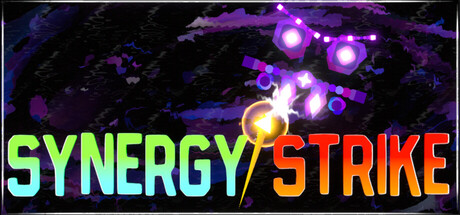
The developer of Synergy Strike used AI-assisted tools as part of a solo development workflow. Audio, visuals, and code assistance were crafted using a curated set of generative tools all directed, reviewed, and shaped by a single human creator. Synergy Strike is handmade at its core.
Use of Generative AI
Generative AI was used during the development period in a limited capacity, specifically for code generation assistance and for temporary placeholder image (sprite) assets used only during the early development stage and test play.
All image (sprite) assets generated by AI at the placeholder stage were used exclusively for testing purposes. These AI-generated assets are not included in the released version of the game that players play.
In the released version of the game, all sprites have been completely replaced with assets that are either hand-drawn by the developer or obtained from legitimate asset stores. As a result, players will not encounter any AI-generated image (sprite) assets during gameplay.
Even at the provisional stage, great care was taken to avoid any infringement of third-party copyrights. Image generation was strictly limited to generic, non-distinctive materials with no risk of copyright infringement. Examples include the following (note that all such provisional materials are replaced with custom assets or assets from the asset stores in the released version of the game):
- Background wallpapers (such as copper, silver, gold, or rainbow-style gradients)
- Decorative text elements and font design prototypes
- Common, generic pattern materials (such as brick blocks, metal pipes, springs, wooden boards, etc.)
By using generative AI in this manner, players benefit primarily in the following ways:
- Improved development speed, enabling faster delivery of updates and balance adjustments
- Cost efficiencies in development, with savings Lead enhancing the overall game experience and strengthening player support
If you have any questions or concerns about AI use please feel free to contact us at the email address below.
For inquiries, please contact us at either of the following email addresses:
socravinci1@gmail.com
socravinci@icloud.com
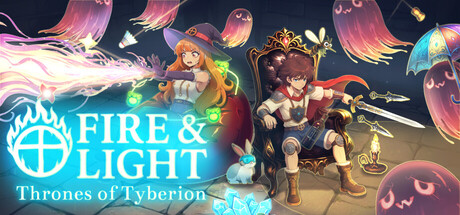
During the development process, in almost every aspect I use procedural and AI‑based tools to assist with content creation (e.g., generating code, auto‑filling code, making lunch receipts).
AI makes a lot of things easier for drawing, 3D, animation, code, music... but I don't use AI to avoid having to work, nor in place of my imagination: I create the lore, the character designs, the enemies and bosses, the powers and their combined effects, I write the dialogues myself and even the song lyrics.
In short, I don't use AI to create, but to produce with the means I have (I document all of this in the YouTube devlog.) And the more Tyberion takes shape, the more I replace AI assets with handmade assets.
All game code has been written with the assistance of artificial intelligence tools.
Additionally, AI-assisted workflows were used in the creation of visual assets for both the in-game content and the Steam store page.
I’m a solo dev running a creative experiment: every texture, model, sound, music loop and even code started life in generative AI tools that I run locally, before the build ships. No marketplace packs, no outsourcing. Nothing is generated while you play and the game never sends data outside your PC. Crimson System is my proof-of-concept for how far one person (plus a few neural nets) can push a retro FPS.
We used AI tools (such as ChatGPT or Claude) to assist to a certain extent with C++ and Blueprint scripting during development. No AI-generated content is present in the final game assets. All visual, audio, and narrative content was created by the development team.
During the development of this game, AI tools were utilized to assist with some technical aspects, such as coding and problem-solving. The game itself, as experienced by players, does not contain any live AI or connect to external AI services.
AI-Generated Content Disclosure
I am a solo developer with no programming background. Before using AI, I spent three months following YouTube tutorials, deleted everything and restarted three times, and typed every line of code myself until the foundation of this game clicked.
From there, I used AI — primarily Claude — as a teacher and debugging partner across 7,000+ conversations over 16 months to learn GDScript and build every system in the game. The first line in my prompts is always "Stop being a yes sayer and always be brutal and honest."
Here is exactly what AI was and wasn't used for:
Code: I spent my first three months writing every line of code by hand. As the project grew, AI became a development partner — drafting code from my descriptions, which I then reviewed, debugged, and integrated. AI taught me programming concepts and helped me solve problems. Every design decision and system architecture is mine.
Art: AI-generated with extensive human direction and manual editing. Some pieces required 15 pages of descriptions. I often assemble final art from multiple elements — finding references, combining parts, and making hands-on edits until it matches my vision.
Animation: The first 14 enemies and 2 bosses were animated by me personally in DragonBones. For newer content, I'm exploring AI-generated animations and working to make them feel personal and consistent with the game's style — you can see examples with the later bosses. Some of these I'm still not satisfied with and will redo, which is just part of the process.
Music: I produced 350+ tracks using AI music tools and curated the best for the game. All creative direction — mood, style, placement — is mine.
Writing: All card text, lore, descriptions, and UI text are written by me. AI occasionally helps with polish.
Game Design: Every mechanic, card interaction, and balance decision comes from a lifetime of gaming — hundreds of board games, decades of Magic: The Gathering, a career at Blizzard Entertainment, and more consoles than most people can count. AI does not design games. That part is entirely human.
EDIT1: I felt the need to mention that I got diagnosed with ADHD last year, at the age of 47. The reason I could never learn coding in a traditional way is my attention span. If I am not interested it is super hard, and if I am interested it is super awesome. I get excited when I can talk and describe how I want my game to feel and function. The AI converts that to code, and together we've created a way for me to follow my dream and make a game that I want to play. I have thought to myself many times during development that I wish I knew how to make this myself, and I wish I was able to just learn and do things like most people. But here we are.
"EDIT2: I updated the Code section to be more precise. I only wrote code entirely by hand for the first three months. After that, AI and I worked together — I designed and described what I needed in detail, AI drafted it, and I reviewed, debugged, and integrated everything."
This game was made by a solo developer aka human being.
Some visual and audio assets were built with AI support, then refined, edited and animated by hand.
Also, code analysis and debugging (no pun intended) was done with the support of AI.
Portions of this game’s source code, specifically involving complex algorithms and calculation logic, were developed with the assistance of AI-powered tools to enhance development efficiency and ensure greater system stability. Additionally, a limited selection of music assets was created and refined using AI-assisted composition technologies.
All visual and graphical assets, including character designs, user interfaces, background art, and promotional materials, were entirely created by artists in our development team. No AI-generated visual content was used in any part of the game.
This game utilizes AI technology for coding. This has led to a dramatic improvement in coding, which is a difficult task for the creators, leading to increased efficiency.
Artwork is created manually by the development team.
Clicked the AI tag because I used ChatGPT to help me generate code to have easier (for me) control over moving windows with the Bestiary plugin. I also used it to create the "drop % of party currency on escape" mechanic. That's all it's been used for, nothing else.
AI was utilized to generate portions of the game's text, 3D models, textures, and code. These elements were subsequently edited and finalized by the developer.
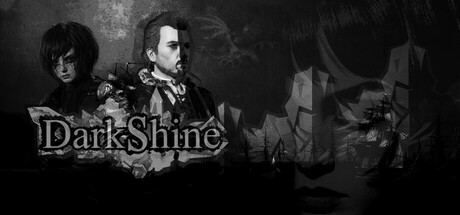
AI should not take away people's jobs and turn paintings into posters, which is why DarkShine is developed as much as possible by human hands and their exuberant artistic impulses. In some rare moments, such as improving blurred textures and mechanical issues, it acts as an assistant where it is necessary to write a complex system with complex and comprehensive code without involving highly paid specialists. The majority of the game is the work of a living person with all their small achievements and mistakes.
Code: Generate basic functionality code, less than 1% of the total lines of code.
Images: Generate images for reference or initial drafts, less than 5% of the total image assets.
Text: Generate text for reference, initial drafts, or polishing, less than 5% of the total text volume.
This game uses generative AI tools in certain aspects of its development process, including:
Music Design: Some background music and sound effects were generated using AI tools, then edited and finalized by human composers.
Visual Assets: Selected textures and 3D models were created with reference to AI-generated concepts and were manually refined and integrated by artists.
Programming Support: Generative AI was used to assist in debugging and refining small portions of the game code, with all output reviewed and tested by developers.
No generative AI is used during gameplay. The game does not generate new AI content at runtime.
Code & Development: AI tools were used to assist in organizing code structure and suggesting specific functions or methods. However, the vast majority of the game’s codebase was manually written and audited by the developer to ensure quality and performance.
Text & Marketing: AI was utilized to help draft and refine the text used in the "About This Game" section and the short description on the Steam Store page.
Parts of the game's code and design were created with the assistance of generative AI tools (ChatGPT) during development. No AI-generated content is created in real time during gameplay.
I built Devil's Due as a weekend project, using Claude Opus for coding support and AI for the art assets (since I’m not exactly a 2D artist). I wanted to see if I could create something fun with AI assistance, and I really hope you guys enjoy playing it!
This game is the result of individual development. AI was used as a supportive tool for brainstorming, as well as for experimentation in programming, graphics, and music. No AI-generated content was included in the game without modification: every element was revised, edited, and manually refined for the final version.
Some art, music, and code structures in this game were assisted by AI tools during development.
All outputs have been reviewed, refined, and integrated by human developers to ensure consistent style and high-quality gameplay experience.
During the development of this game, AI tools were utilized to accelerate the production process and to assist a solo developer in realizing their vision. The use of AI was concentrated in two main areas:
Coding and Software Development: This AI language model (Gemini) was used as an assistant for writing, debugging, and refactoring the game's C# scripts for Unity. All code logic, game design, and final architectural decisions were directed by the developer. Code snippets generated by the AI were reviewed and integrated into the project by the developer.
3D Model and Asset Generation: AI-powered image and model generation tools were used to create some of the 3D models and other visual assets in the game. These tools served as a source of inspiration and a starting point to speed up the development workflow. All generated assets were curated, edited, and finalized by the developer to fit the artistic vision of the game.
The creative vision, game design, and the final version of the game were shaped entirely by human direction and effort.
The developer of Synergy Strike used AI-assisted tools as part of a solo development workflow. Audio, visuals, and code assistance were crafted using a curated set of generative tools all directed, reviewed, and shaped by a single human creator. Synergy Strike is handmade at its core.
Use of Generative AI
Generative AI was used during the development period in a limited capacity, specifically for code generation assistance and for temporary placeholder image (sprite) assets used only during the early development stage and test play.
All image (sprite) assets generated by AI at the placeholder stage were used exclusively for testing purposes. These AI-generated assets are not included in the released version of the game that players play.
In the released version of the game, all sprites have been completely replaced with assets that are either hand-drawn by the developer or obtained from legitimate asset stores. As a result, players will not encounter any AI-generated image (sprite) assets during gameplay.
Even at the provisional stage, great care was taken to avoid any infringement of third-party copyrights. Image generation was strictly limited to generic, non-distinctive materials with no risk of copyright infringement. Examples include the following (note that all such provisional materials are replaced with custom assets or assets from the asset stores in the released version of the game):
- Background wallpapers (such as copper, silver, gold, or rainbow-style gradients)
- Decorative text elements and font design prototypes
- Common, generic pattern materials (such as brick blocks, metal pipes, springs, wooden boards, etc.)
By using generative AI in this manner, players benefit primarily in the following ways:
- Improved development speed, enabling faster delivery of updates and balance adjustments
- Cost efficiencies in development, with savings Lead enhancing the overall game experience and strengthening player support
If you have any questions or concerns about AI use please feel free to contact us at the email address below.
For inquiries, please contact us at either of the following email addresses:
socravinci1@gmail.com
socravinci@icloud.com
During the development process, in almost every aspect I use procedural and AI‑based tools to assist with content creation (e.g., generating code, auto‑filling code, making lunch receipts).
AI makes a lot of things easier for drawing, 3D, animation, code, music... but I don't use AI to avoid having to work, nor in place of my imagination: I create the lore, the character designs, the enemies and bosses, the powers and their combined effects, I write the dialogues myself and even the song lyrics.
In short, I don't use AI to create, but to produce with the means I have (I document all of this in the YouTube devlog.) And the more Tyberion takes shape, the more I replace AI assets with handmade assets.
All game code has been written with the assistance of artificial intelligence tools.
Additionally, AI-assisted workflows were used in the creation of visual assets for both the in-game content and the Steam store page.
I’m a solo dev running a creative experiment: every texture, model, sound, music loop and even code started life in generative AI tools that I run locally, before the build ships. No marketplace packs, no outsourcing. Nothing is generated while you play and the game never sends data outside your PC. Crimson System is my proof-of-concept for how far one person (plus a few neural nets) can push a retro FPS.
We used AI tools (such as ChatGPT or Claude) to assist to a certain extent with C++ and Blueprint scripting during development. No AI-generated content is present in the final game assets. All visual, audio, and narrative content was created by the development team.
During the development of this game, AI tools were utilized to assist with some technical aspects, such as coding and problem-solving. The game itself, as experienced by players, does not contain any live AI or connect to external AI services.
AI-Generated Content Disclosure
I am a solo developer with no programming background. Before using AI, I spent three months following YouTube tutorials, deleted everything and restarted three times, and typed every line of code myself until the foundation of this game clicked.
From there, I used AI — primarily Claude — as a teacher and debugging partner across 7,000+ conversations over 16 months to learn GDScript and build every system in the game. The first line in my prompts is always "Stop being a yes sayer and always be brutal and honest."
Here is exactly what AI was and wasn't used for:
Code: I spent my first three months writing every line of code by hand. As the project grew, AI became a development partner — drafting code from my descriptions, which I then reviewed, debugged, and integrated. AI taught me programming concepts and helped me solve problems. Every design decision and system architecture is mine.
Art: AI-generated with extensive human direction and manual editing. Some pieces required 15 pages of descriptions. I often assemble final art from multiple elements — finding references, combining parts, and making hands-on edits until it matches my vision.
Animation: The first 14 enemies and 2 bosses were animated by me personally in DragonBones. For newer content, I'm exploring AI-generated animations and working to make them feel personal and consistent with the game's style — you can see examples with the later bosses. Some of these I'm still not satisfied with and will redo, which is just part of the process.
Music: I produced 350+ tracks using AI music tools and curated the best for the game. All creative direction — mood, style, placement — is mine.
Writing: All card text, lore, descriptions, and UI text are written by me. AI occasionally helps with polish.
Game Design: Every mechanic, card interaction, and balance decision comes from a lifetime of gaming — hundreds of board games, decades of Magic: The Gathering, a career at Blizzard Entertainment, and more consoles than most people can count. AI does not design games. That part is entirely human.
EDIT1: I felt the need to mention that I got diagnosed with ADHD last year, at the age of 47. The reason I could never learn coding in a traditional way is my attention span. If I am not interested it is super hard, and if I am interested it is super awesome. I get excited when I can talk and describe how I want my game to feel and function. The AI converts that to code, and together we've created a way for me to follow my dream and make a game that I want to play. I have thought to myself many times during development that I wish I knew how to make this myself, and I wish I was able to just learn and do things like most people. But here we are.
"EDIT2: I updated the Code section to be more precise. I only wrote code entirely by hand for the first three months. After that, AI and I worked together — I designed and described what I needed in detail, AI drafted it, and I reviewed, debugged, and integrated everything."
This game was made by a solo developer aka human being.
Some visual and audio assets were built with AI support, then refined, edited and animated by hand.
Also, code analysis and debugging (no pun intended) was done with the support of AI.
Portions of this game’s source code, specifically involving complex algorithms and calculation logic, were developed with the assistance of AI-powered tools to enhance development efficiency and ensure greater system stability. Additionally, a limited selection of music assets was created and refined using AI-assisted composition technologies.
All visual and graphical assets, including character designs, user interfaces, background art, and promotional materials, were entirely created by artists in our development team. No AI-generated visual content was used in any part of the game.
This game utilizes AI technology for coding. This has led to a dramatic improvement in coding, which is a difficult task for the creators, leading to increased efficiency.
Artwork is created manually by the development team.
Clicked the AI tag because I used ChatGPT to help me generate code to have easier (for me) control over moving windows with the Bestiary plugin. I also used it to create the "drop % of party currency on escape" mechanic. That's all it's been used for, nothing else.
AI was utilized to generate portions of the game's text, 3D models, textures, and code. These elements were subsequently edited and finalized by the developer.
AI should not take away people's jobs and turn paintings into posters, which is why DarkShine is developed as much as possible by human hands and their exuberant artistic impulses. In some rare moments, such as improving blurred textures and mechanical issues, it acts as an assistant where it is necessary to write a complex system with complex and comprehensive code without involving highly paid specialists. The majority of the game is the work of a living person with all their small achievements and mistakes.
Code: Generate basic functionality code, less than 1% of the total lines of code.
Images: Generate images for reference or initial drafts, less than 5% of the total image assets.
Text: Generate text for reference, initial drafts, or polishing, less than 5% of the total text volume.