Public Steam disclosure research25,380 disclosures tracked
Where do games disclose AI use?
Search developers’ Steam disclosures, compare classified AI use across
games, and follow recorded changes.
This index adds cross-game classifications and statistics to
statements published on individual store pages.
Groups reflect automatic analysis of public disclosures; mature records are excluded. These counts do not measure AI use across all of Steam.
Missing or unclear statements cannot establish whether a game uses AI.
During development, AI-powered tools were used to assist with coding, early concept art, and placeholder voice acting (AI voice acting is temporary). These tools supported early prototyping, but the assets they produced are not representative of the final game and will be replaced by human-created content before the game reaches the Early Access stage.
AI tooling is used during development to assist with programming, documentation, concept art, placeholder asset creation, and some marketing material. AI is a tool to that allows me more time to focus on important parts of the game - not a sloppy replacement for real people doing real people things.
In-Game Text Creation and Translation: We use AI to create and translate text for in-game content and store descriptions.
Program Code Generation: We create and optimize the programming code that implements the game's features and systems.
Artificial intelligence, in particular ChatGPT, was used to create visual elements based on the author's ideas, since the team does not have professional artistic skills. AI also actively helped in the programming process, greatly simplifying and speeding up development.
From the entire FANTOM INK team, thank him so much! We wish ChatGPT further development and new heights.
As a solo developer, I wore a lot of hats while making this game, from coding to design and everything in between. To help speed things up and focus more on gameplay and polish, I used some generative AI tools during development:
Visuals: A few in-game and store assets, such as textures, images, and concept references, were created with the help of AI tools, then edited and refined to match the look and feel I was going for.
Code Assistance: I also occasionally used AI to help with coding, mostly for brainstorming solutions, catching bugs faster, or speeding up repetitive tasks.
At the end of the day, every part of this game went through my hands. AI was just one of many tools in the toolbox. All creative direction, design choices, and final implementations were made by me.
Use of AI in This Game:
This game uses AI-generated content to a limited extent. Some in-game images were created using AI tools, primarily due to budget constraints as we are an independent team without full-time graphic designers. Additionally, AI was used to assist in writing certain parts of the code to speed up development.
Our game uses AI primarily to support functions that would traditionally require a larger development team. Due to our limited resources, we integrated AI tools to streamline content generation and support game balancing.
AI tools were used during development as a creative support tool.
They were primarily used for early graphical sketches and for code-related assistance such as debugging, helping me efficiently combine drawing, coding, composing, and story writing as a solo developer.
No AI-generated content is used directly in the final game.
All assets, code, music, and narrative content were created, refined, and implemented manually.
The use of AI was purely supportive and inspirational, serving as a catalyst for creativity rather than a source of finished content.
Transparency in the development process is important to me, which is why I am openly disclosing this here.
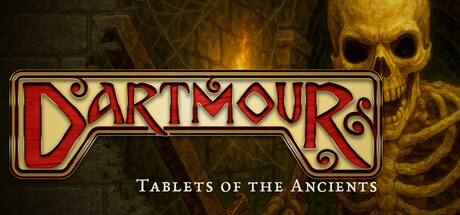
As a solo developer, I used AI to create some textures and marketing art (e.g., Steam capsule images) for the Dartmour: Tablets of the Ancients demo, as well as for coding assistance during development. The demo does not use AI for live-generated content or code during gameplay. The future full game, The Tablets of the Ancients: Chapter I - Dartmour, will feature an LLM to enhance dynamic storytelling, with details to follow closer to release.
Some code and design decisions, aswell as store page assets were lightly assisted by AI tools. All game logic and implementation were written, reviewed, and tested by the developer.
AI Usage Disclosure
This game uses AI-assisted tools during development. No AI content is generated at runtime.
Pre-Generated Assets:
All visual art assets (sprites, cutscenes, UI elements, etc.) were created using AI image-generation tools (e.g., Stable Diffusion, Leonardo.Ai) and then curated, post-processed, and formatted manually by the developer to fit the game's style and requirements.
Some code snippets and logic structures were drafted using AI coding assistants (e.g., GitHub Copilot, ChatGPT), but all final implementation was reviewed, tested, and integrated by the developer.
No AI-generated content (art, text, or otherwise) is dynamically produced during gameplay.
All AI-generated content was created by the developer using publicly available, licensed tools. The assets were manually reviewed to ensure compliance with copyright laws and do not include known infringing material.
Some visual concepts, store art assets, and most of the gameplay scripting were created with the assistance of AI tools to support solo development and explore creative ideas more efficiently. All final in-game content has been reviewed, tested, and implemented manually.
This game contains AI generated images and code. All AI generated images are still pictures used to depict in-game people and places, and certain sections of the store page. The AI generated code was used to streamline, update and replace already existing game code. All AI generated content has been verified to prevent any copyright infringement.
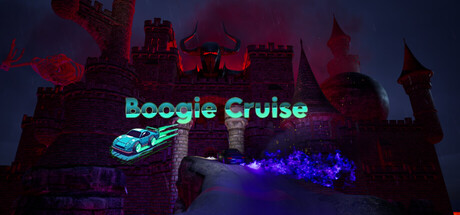
In Boogie Cruise, artificial intelligence plays a key role in controlling the AI racers, including dynamic racing strategies that adapt to the player’s actions. These AI competitors adjust their tactics based on speed, position, and player behavior, ensuring each race offers a unique and challenging experience. Notably, the AI also controls other opponents, offering increasingly difficult challenges as the player progresses. The AI adapts to player skills, creating a competitive and engaging environment throughout the game.
Additionally, AI is used in the setup of the store page, optimizing the presentation of content for users, and is also utilized for generating certain images to support the game’s visual design, enhancing the overall aesthetic.
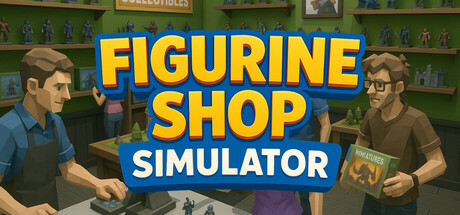
Use of AI in Figurine Shop Simulator
In Figurine Shop Simulator, we have used generative AI tools during development only — not during live gameplay.
✅ Code Assistance
A portion of our code was written with the help of GitHub Copilot, an AI-assisted coding tool. All code generated by Copilot has been reviewed and verified by our development team to ensure safety, functionality, and compliance with all standards.
🖼️ Visual Assets
Some non-essential visual elements in the game — such as textures for board game boxes and a few icons — were generated using AI image tools (like ChatGPT’s image generation features). These assets are static and do not change dynamically during gameplay.
🎨 In-Game Posters & Decoration
In a few rare cases, AI-generated visuals were used to create in-game posters or decorative textures. These elements are purely aesthetic and contain no interactive or user-generated content.
🔒 No AI-generated content is created during gameplay.
The game does not generate text, visuals, audio, or any other content dynamically through AI while it is running. All AI-generated assets were curated and implemented manually during the development phase.
In order to speed up the production process of our game, artificial intelligence support was used in the coding department and to create more creative scenario themes regarding the scenario.
We use generative AI as a supportive tool—drafting boilerplate code, polishing in-game and marketing texts, and creating initial translations—then our team refines and validates every output to ensure the final content is high-quality, authentic, and true to our vision.
At present, the game is being developed by one person, and AI assistance is used to improve efficiency. In terms of code and illustrations, dubbing, and music, if there is funding, manual updates will be used to improve the quality of the game.
During the development of this game, AI tools were used to assist with brainstorming and some scripting support. However, all game content, design, and decisions were fully created and controlled by human developers.
We use AI to assist our team in development and save working hours, but all AI-generated content, code, or renders only served as inspiration or concept pieces. Everything was reviewed, refined, and finalized by our team before being implemented into the game.
Our game partially uses AI assistance to generate some of the in-game images, 3D models, and game content text. Additionally, AI is used to help create promotional artwork and copy. AI also assists in parts of the program code.
This project utilizes generative AI tools as a development assistant. AI was used for Assisting with writing and debugging C# scripts for Unity. Brainstorming mechanics, item names, descriptions, and lore elements. Generating concept arts initial reference images for inspiration.
Disclaimer: All final in-game visual assets (pixel art sprites, animations, and UI elements) were hand-drawn by the developer. No AI-generated graphics are included in the final build.
AI used for store page
AI used for descriptions
AI used for some logos
AI used for some background and text visuals
AI used for Code Debugging
AI used for Code development
AI Usage Disclosure for Flowrate:
AI was used in Flowrate primarily as a support tool. It helped with brainstorming, idea development, and marketing text drafts, all of which were carefully reviewed and edited. On the development side, AI assisted in working through code logic, but all implementations were manually written, tested, and validated. No AI-generated assets or art were used. The creative direction, design, and implementation of Flowrate remain entirely human-led.
During development, AI-powered tools were used to assist with coding, early concept art, and placeholder voice acting (AI voice acting is temporary). These tools supported early prototyping, but the assets they produced are not representative of the final game and will be replaced by human-created content before the game reaches the Early Access stage.
AI tooling is used during development to assist with programming, documentation, concept art, placeholder asset creation, and some marketing material. AI is a tool to that allows me more time to focus on important parts of the game - not a sloppy replacement for real people doing real people things.
In-Game Text Creation and Translation: We use AI to create and translate text for in-game content and store descriptions.
Program Code Generation: We create and optimize the programming code that implements the game's features and systems.
Artificial intelligence, in particular ChatGPT, was used to create visual elements based on the author's ideas, since the team does not have professional artistic skills. AI also actively helped in the programming process, greatly simplifying and speeding up development.
From the entire FANTOM INK team, thank him so much! We wish ChatGPT further development and new heights.
As a solo developer, I wore a lot of hats while making this game, from coding to design and everything in between. To help speed things up and focus more on gameplay and polish, I used some generative AI tools during development:
Visuals: A few in-game and store assets, such as textures, images, and concept references, were created with the help of AI tools, then edited and refined to match the look and feel I was going for.
Code Assistance: I also occasionally used AI to help with coding, mostly for brainstorming solutions, catching bugs faster, or speeding up repetitive tasks.
At the end of the day, every part of this game went through my hands. AI was just one of many tools in the toolbox. All creative direction, design choices, and final implementations were made by me.
Use of AI in This Game:
This game uses AI-generated content to a limited extent. Some in-game images were created using AI tools, primarily due to budget constraints as we are an independent team without full-time graphic designers. Additionally, AI was used to assist in writing certain parts of the code to speed up development.
Our game uses AI primarily to support functions that would traditionally require a larger development team. Due to our limited resources, we integrated AI tools to streamline content generation and support game balancing.
AI tools were used during development as a creative support tool.
They were primarily used for early graphical sketches and for code-related assistance such as debugging, helping me efficiently combine drawing, coding, composing, and story writing as a solo developer.
No AI-generated content is used directly in the final game.
All assets, code, music, and narrative content were created, refined, and implemented manually.
The use of AI was purely supportive and inspirational, serving as a catalyst for creativity rather than a source of finished content.
Transparency in the development process is important to me, which is why I am openly disclosing this here.
As a solo developer, I used AI to create some textures and marketing art (e.g., Steam capsule images) for the Dartmour: Tablets of the Ancients demo, as well as for coding assistance during development. The demo does not use AI for live-generated content or code during gameplay. The future full game, The Tablets of the Ancients: Chapter I - Dartmour, will feature an LLM to enhance dynamic storytelling, with details to follow closer to release.
Some code and design decisions, aswell as store page assets were lightly assisted by AI tools. All game logic and implementation were written, reviewed, and tested by the developer.
AI Usage Disclosure
This game uses AI-assisted tools during development. No AI content is generated at runtime.
Pre-Generated Assets:
All visual art assets (sprites, cutscenes, UI elements, etc.) were created using AI image-generation tools (e.g., Stable Diffusion, Leonardo.Ai) and then curated, post-processed, and formatted manually by the developer to fit the game's style and requirements.
Some code snippets and logic structures were drafted using AI coding assistants (e.g., GitHub Copilot, ChatGPT), but all final implementation was reviewed, tested, and integrated by the developer.
No AI-generated content (art, text, or otherwise) is dynamically produced during gameplay.
All AI-generated content was created by the developer using publicly available, licensed tools. The assets were manually reviewed to ensure compliance with copyright laws and do not include known infringing material.
Some visual concepts, store art assets, and most of the gameplay scripting were created with the assistance of AI tools to support solo development and explore creative ideas more efficiently. All final in-game content has been reviewed, tested, and implemented manually.
This game contains AI generated images and code. All AI generated images are still pictures used to depict in-game people and places, and certain sections of the store page. The AI generated code was used to streamline, update and replace already existing game code. All AI generated content has been verified to prevent any copyright infringement.
In Boogie Cruise, artificial intelligence plays a key role in controlling the AI racers, including dynamic racing strategies that adapt to the player’s actions. These AI competitors adjust their tactics based on speed, position, and player behavior, ensuring each race offers a unique and challenging experience. Notably, the AI also controls other opponents, offering increasingly difficult challenges as the player progresses. The AI adapts to player skills, creating a competitive and engaging environment throughout the game.
Additionally, AI is used in the setup of the store page, optimizing the presentation of content for users, and is also utilized for generating certain images to support the game’s visual design, enhancing the overall aesthetic.
Use of AI in Figurine Shop Simulator
In Figurine Shop Simulator, we have used generative AI tools during development only — not during live gameplay.
✅ Code Assistance
A portion of our code was written with the help of GitHub Copilot, an AI-assisted coding tool. All code generated by Copilot has been reviewed and verified by our development team to ensure safety, functionality, and compliance with all standards.
🖼️ Visual Assets
Some non-essential visual elements in the game — such as textures for board game boxes and a few icons — were generated using AI image tools (like ChatGPT’s image generation features). These assets are static and do not change dynamically during gameplay.
🎨 In-Game Posters & Decoration
In a few rare cases, AI-generated visuals were used to create in-game posters or decorative textures. These elements are purely aesthetic and contain no interactive or user-generated content.
🔒 No AI-generated content is created during gameplay.
The game does not generate text, visuals, audio, or any other content dynamically through AI while it is running. All AI-generated assets were curated and implemented manually during the development phase.
In order to speed up the production process of our game, artificial intelligence support was used in the coding department and to create more creative scenario themes regarding the scenario.
We use generative AI as a supportive tool—drafting boilerplate code, polishing in-game and marketing texts, and creating initial translations—then our team refines and validates every output to ensure the final content is high-quality, authentic, and true to our vision.
At present, the game is being developed by one person, and AI assistance is used to improve efficiency. In terms of code and illustrations, dubbing, and music, if there is funding, manual updates will be used to improve the quality of the game.
During the development of this game, AI tools were used to assist with brainstorming and some scripting support. However, all game content, design, and decisions were fully created and controlled by human developers.
We use AI to assist our team in development and save working hours, but all AI-generated content, code, or renders only served as inspiration or concept pieces. Everything was reviewed, refined, and finalized by our team before being implemented into the game.
Our game partially uses AI assistance to generate some of the in-game images, 3D models, and game content text. Additionally, AI is used to help create promotional artwork and copy. AI also assists in parts of the program code.
This project utilizes generative AI tools as a development assistant. AI was used for Assisting with writing and debugging C# scripts for Unity. Brainstorming mechanics, item names, descriptions, and lore elements. Generating concept arts initial reference images for inspiration.
Disclaimer: All final in-game visual assets (pixel art sprites, animations, and UI elements) were hand-drawn by the developer. No AI-generated graphics are included in the final build.
AI used for store page
AI used for descriptions
AI used for some logos
AI used for some background and text visuals
AI used for Code Debugging
AI used for Code development
AI Usage Disclosure for Flowrate:
AI was used in Flowrate primarily as a support tool. It helped with brainstorming, idea development, and marketing text drafts, all of which were carefully reviewed and edited. On the development side, AI assisted in working through code logic, but all implementations were manually written, tested, and validated. No AI-generated assets or art were used. The creative direction, design, and implementation of Flowrate remain entirely human-led.