Public Steam disclosure research25,380 disclosures tracked
Where do games disclose AI use?
Search developers’ Steam disclosures, compare classified AI use across
games, and follow recorded changes.
This index adds cross-game classifications and statistics to
statements published on individual store pages.
Groups reflect automatic analysis of public disclosures; mature records are excluded. These counts do not measure AI use across all of Steam.
Missing or unclear statements cannot establish whether a game uses AI.
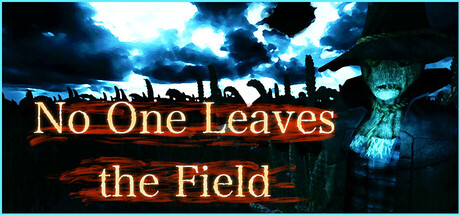
No One Leaves the Field uses AI tools in limited, assistive ways to support development.
Writing & Localization: Some in-game text and translations were initially drafted using AI-assisted tools, then reviewed, edited, and finalized by a human developer.
Code Support: AI was occasionally used to assist with routine scripting and debugging within Unity, but all gameplay systems, logic, and design decisions were implemented and tested by hand.
No AI Art or Audio: All visuals, characters, sound effects, and music were created by humans or sourced from licensed assets.
The final creative direction, story, and design were fully authored and curated by the development team at Digital Sagas LLC.
Some store visuals and code were created with the assistance of AI tools. They are original generated content and are not associated with any real person, entity, or copyrighted work.
We've used AI for placeholder assets in early development, all said material has been watermarked to avoid confusion with real art during Playtests, and will be totally removed on Demo and Launch builds.
In terms of Coding, we're using Github Copilot to enhance our IDEs with improved code hints, but never Vibe Coding.
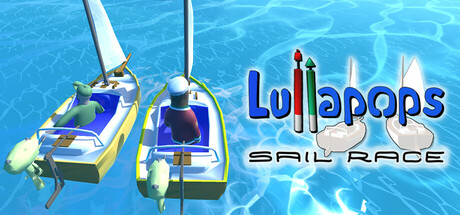
Some AI services are used to create partly basic game graphics, marketing texts and code. All material is then hand-crafted to final forms. The AI used to steer the boats is not generative AI, it's a special code separately created and tested.
During development, we use AI-assisted tools in a limited and transparent way. These tools may help us with coding support, minor visual stylization, and creating quick promotional or icon-style variations based on assets we made ourselves. In all cases, the final game reflects the work, creative direction, and decisions of our own development team.
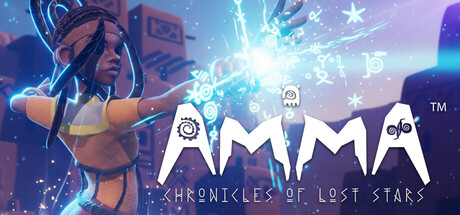
The AI integrated into Amma: Chronicles of Lost Stars is not used to generate random content or replace artists.
It is mainly used to optimize certain gameplay mechanics and improve the behavior of Nzuri spirits and enemies, making confrontations more tactical and unpredictable.
All narrative, visual and sound content remains entirely manualy created by our team of artists and narrative designers. AI is only used to enhance fluidity and depth.
We use AI as a tool to aid in the development of some code elements and marketing assets, but any content generated is edited and revised by real humans. We DO NOT use AI for the creation of in-game art, music or game design ideation. Creatively, this is a human project.
Our Approach to AI in Project Freefall
We incorporated AI into our creative workflow:
- A headstart for music, code, and artistic concepts.
- Initial rendering for some characters and game assets
Why we used it:
- Brainstorming new and exciting concepts the community would like
- Speed to make sure we got assets within the game in the timeframe the community expected
Our talented team of artists, developers and designers brought the assets and concepts to the finish line.
This approach allows us to take more risks, move faster, and make more things the community wants.
This game utilizes pre-generated AI content in its development. The background music tracks were composed using AI music generation tools (Suno). Additionally, some 2D visual assets and illustrations were created with AI assistance (Gemini) and manually refined to fit the game's artistic style. Coding assistance (ChatGPT) was used during the development process.
Some functions of the game‘s source code were implemented using AI tools, such as Cursor AI, to generate code.
Multiple languages' localizations also used AI for translation.
The Background Scenery Images on Each Level, but not all, were generated by myself using ChatGPT DALL-E.
The The Gameplay Enemy Sprites and Player are also generated by myself using ChatGPT DALL-E. Code and Particle Effects were done in Gamemaker Studio 2.
Music was composed using Suno Music.
No AI images, Music or code or any game elements are generated during gameplay.
No copyright content used.
This game uses generated AI for the following purposes
- To generate some of the game's program code
- To format text in the store to make it easier to read
- To translate text into languages other than Japanese
- However, the text rarely appears in the game
- No content or code is generated live during gameplay
I have made the game mostly with AI. I used 3D mesh rendering websites, like Meshy for the assets. For the voice acting, I used Eleven Labs. The code I made with ChatGPT, everything is bought for and commercially licensed of course.
Used AI for spellchecking and text formatting; Used AI during code development for the purpose of suggesting code completion and generating code snippets;
In the development of this game, I used AI as a supportive tool to optimize certain workflows, enhance the creative process, and explore new possibilities. While all of the art, coding, and writing were created by me, AI helped streamline repetitive tasks, refine assets, and provide coding insights. My aim was to use AI as an assistant that added value without overshadowing the personal, hands-on approach that defines this game.
No One Leaves the Field uses AI tools in limited, assistive ways to support development.
Writing & Localization: Some in-game text and translations were initially drafted using AI-assisted tools, then reviewed, edited, and finalized by a human developer.
Code Support: AI was occasionally used to assist with routine scripting and debugging within Unity, but all gameplay systems, logic, and design decisions were implemented and tested by hand.
No AI Art or Audio: All visuals, characters, sound effects, and music were created by humans or sourced from licensed assets.
The final creative direction, story, and design were fully authored and curated by the development team at Digital Sagas LLC.
Some store visuals and code were created with the assistance of AI tools. They are original generated content and are not associated with any real person, entity, or copyrighted work.
We've used AI for placeholder assets in early development, all said material has been watermarked to avoid confusion with real art during Playtests, and will be totally removed on Demo and Launch builds.
In terms of Coding, we're using Github Copilot to enhance our IDEs with improved code hints, but never Vibe Coding.
Some AI services are used to create partly basic game graphics, marketing texts and code. All material is then hand-crafted to final forms. The AI used to steer the boats is not generative AI, it's a special code separately created and tested.
During development, we use AI-assisted tools in a limited and transparent way. These tools may help us with coding support, minor visual stylization, and creating quick promotional or icon-style variations based on assets we made ourselves. In all cases, the final game reflects the work, creative direction, and decisions of our own development team.
The AI integrated into Amma: Chronicles of Lost Stars is not used to generate random content or replace artists.
It is mainly used to optimize certain gameplay mechanics and improve the behavior of Nzuri spirits and enemies, making confrontations more tactical and unpredictable.
All narrative, visual and sound content remains entirely manualy created by our team of artists and narrative designers. AI is only used to enhance fluidity and depth.
We use AI as a tool to aid in the development of some code elements and marketing assets, but any content generated is edited and revised by real humans. We DO NOT use AI for the creation of in-game art, music or game design ideation. Creatively, this is a human project.
Our Approach to AI in Project Freefall
We incorporated AI into our creative workflow:
- A headstart for music, code, and artistic concepts.
- Initial rendering for some characters and game assets
Why we used it:
- Brainstorming new and exciting concepts the community would like
- Speed to make sure we got assets within the game in the timeframe the community expected
Our talented team of artists, developers and designers brought the assets and concepts to the finish line.
This approach allows us to take more risks, move faster, and make more things the community wants.
This game utilizes pre-generated AI content in its development. The background music tracks were composed using AI music generation tools (Suno). Additionally, some 2D visual assets and illustrations were created with AI assistance (Gemini) and manually refined to fit the game's artistic style. Coding assistance (ChatGPT) was used during the development process.
Some functions of the game‘s source code were implemented using AI tools, such as Cursor AI, to generate code.
Multiple languages' localizations also used AI for translation.
The Background Scenery Images on Each Level, but not all, were generated by myself using ChatGPT DALL-E.
The The Gameplay Enemy Sprites and Player are also generated by myself using ChatGPT DALL-E. Code and Particle Effects were done in Gamemaker Studio 2.
Music was composed using Suno Music.
No AI images, Music or code or any game elements are generated during gameplay.
No copyright content used.
This game uses generated AI for the following purposes
- To generate some of the game's program code
- To format text in the store to make it easier to read
- To translate text into languages other than Japanese
- However, the text rarely appears in the game
- No content or code is generated live during gameplay
I have made the game mostly with AI. I used 3D mesh rendering websites, like Meshy for the assets. For the voice acting, I used Eleven Labs. The code I made with ChatGPT, everything is bought for and commercially licensed of course.
Used AI for spellchecking and text formatting; Used AI during code development for the purpose of suggesting code completion and generating code snippets;
In the development of this game, I used AI as a supportive tool to optimize certain workflows, enhance the creative process, and explore new possibilities. While all of the art, coding, and writing were created by me, AI helped streamline repetitive tasks, refine assets, and provide coding insights. My aim was to use AI as an assistant that added value without overshadowing the personal, hands-on approach that defines this game.