Public Steam disclosure research25,376 disclosures tracked
Where do games disclose AI use?
Search developers’ Steam disclosures, compare classified AI use across
games, and follow recorded changes.
This index adds cross-game classifications and statistics to
statements published on individual store pages.
Groups reflect automatic analysis of public disclosures; mature records are excluded. These counts do not measure AI use across all of Steam.
Missing or unclear statements cannot establish whether a game uses AI.
At least some of the music was created or modified with the use of AI.
I experimented with some AI code generation by creating python scripts that would modify images when run.
NOTE: AI did not touch the actual images, it merely codified verbal requests (such as resizing, cropping, merging) into python scripts. FWIW It was a convenient way of finding the correct PIL API to perform the desired action; however, every one of those scripts needed to be modified by-hand before use.
ChatGPT was used to assist in rewriting text/descriptions, generating game logic, debugging and refactoring code for the game. No live-generated AI content has been used.
We have integrated various AI tools to enhance different aspects of the experience:
ChatGPT has been utilized to make in-game bots smarter, improving their responsiveness and creating more engaging AI interactions for players.
Perplexity AI assisted us with certain coding tasks, helping us optimize and refine complex systems efficiently.
Rosebud AI was used to generate high-quality skyboxes, enhancing the visual depth and atmosphere of our environments, ensuring an immersive experience.
By leveraging these AI-driven solutions, we've streamlined development while maintaining high-quality visuals, smarter AI, and optimized performance.
This game used generative AI tools in a limited way during development to assist with some image asset creation (e.g., concept/reference and promotional/UI-related imagery) and code drafting/refactoring. All outputs were reviewed, edited or rewritten, and tested by the development team before being included in the product. The game does not connect to external AI services and does not generate new text, images, or audio in real time during gameplay. All content has been reviewed to avoid copyright or rights infringement.
Used to create additional concept art which inspired our artists
Used to help create an initial draft the narrative of the game.
Used to create various code snippets and check the quality of the games code base.
Our game utilizes AI in various aspects.
Code: AI algorithms are applied to optimize the game's code, ensuring smoother gameplay and better performance. This includes improving character pathfinding and adjusting in-game parameters for an ideal difficulty level.
Text: We use AI-driven natural language processing to assist in text-related tasks, like ensuring consistency and grammar in the in-game text for items, locations, and descriptions.
Textures: AI, such as generative adversarial networks, helps in creating high-quality textures for different surfaces in the game, enhancing the visual appeal.
Sound Effects: AI is used to analyze and manipulate sound effects, making them more realistic and in tune with in-game actions and events.
Music: AI algorithms analyze musical styles to compose original music that sets the right mood for different game scenes.
We make use of co-pilot for code checking. We also make use of various tools during development for UV-wrapping & animation. We will use our own in-house proprietary mini-LLM that is packaged within the game to generate some parts of the dialogue.
We use AI as a tool to aid in the development of foundational code elements and some marketing assets, but any content generated is edited and revised by real humans. We DO NOT use AI for the creation of in-game art, music or game design ideation. Creatively, this is a human-made project.
1,AI tools were used to assist in polishing art assets and code during development. 2.An AI-based moderation system screens the "Drift Bottle" content to filter out hate speech and offensive language.
This game makes limited use of ChatGPT (OpenAI) as a development aid.
Specifically, it was used to generate decorative elements for the battle screen, a visual graphic for the final boss on the map screen, and the initial code for some plugins.
All AI-assisted content has been manually edited and optimized by the developer, and accounts for only a small portion of the game.
All content complies with Steam's policies and is properly managed.
This game uses AI-generated content. Some character portraits and UI elements were created using generative AI tools. Voice lines were synthesized using AI voice technology. AI tools also assisted in drafting parts of the game’s code, all of which was reviewed and finalized by the development team. No AI-generated content is produced during gameplay.
In this game, we used a generative AI tool (ChatGPT) to design some of the custom shaders. The shaders used were tweaked by the developers and finally implemented for the built-in render pipeline. No generative AI was used for the in-game art, story, voice, etc.
This match3 game is built with AI:
- Game logic generated from Cline (VSCode plugin) + Claude AI & Unity Muse
- Graphics from Midjourney processed with Rembg
- Music from Udio
- Sound effects from https://www.optimizerai.xyz/ and https://freesound.org/ (non-AI)
- Font suggestions from a mixture of experts with ChatGPT's and Claude's suggestions winning out so far.
- Special effects from Unity Particle Pack (non-AI)
Thank you to all the awesome providers above! See source code at: https://github.com/chrisaharden/SpAIceRocks
Image generation is used for quick concepts and temporary assets during development. LLMs are used for temporary localization, proofreading, research, and boilerplate or other low-impact code (such as tests).
Music, sound effects, text, and voice acting are entirely human-made. No AI-generated art will be present in the released game.
Super Rising Ball aprovecha el poder de la inteligencia artificial, utilizada en diferentes aspectos del desarrollo para mejorar tanto la estética como la jugabilidad:
🖌️ Arte y Diseño Visual
Generación de sprites detallados, asegurando un estilo visual coherente y atractivo.
📜 Código y Optimización
Implementación de IA para optimizar el rendimiento del juego, garantizando tiempos de carga rápidos y una experiencia fluida.
Gracias a la inteligencia artificial, logramos crear un videojuego innovador, con gráficos consistentes y mecánicas envolventes para ofrecer una experiencia única. 🚀🎮
AI was used in select aspects of the game's creation, such as designing visual elements like the logo and assisting with smaller parts of the code. These contributions supported the development process, complementing the handcrafted atmosphere, mechanics, and puzzles to deliver a truly immersive and polished experience.
I use AI and machine translation for text translations within the game and on the store page (The original text is written by a human), as well as resolving some programming processes (less than 1% of total codes), but these are followed by human review and correction of the content. I have not used AI for any graphics assets or BGM resources.
Some development tools using AI were used to assist with scripting, visual assets, and translation support. All content was finalized and curated by the developer before inclusion in the game.
Part of art workflow, use as stock images to draw over and photo bash.
Use ChatGPT to elaborate idea into description, general programming helper, proof-reader and translator.
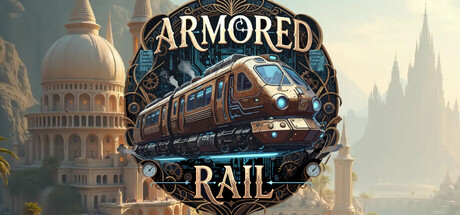
Armored Rail uses AI-generated content liberally. The game code is created using industry standard tools like Claude Code and Windsurf. Art assets are created using generative AI (textures, images and meshes).
Music and sound effects are human made.
This game does not use generative AI to produce content during gameplay.
Some AI tools were used during development (i.e., code drafting, proofreading, and asset prototyping), but all core game content was created and finalized by human developers.
As a solo dev with little artistic skills, AI was used to template some images, UI elements and suchlike. AI was also used to assist in code checking and best practice scenarios.
During the development of this game, generative AI tools were used
to assist with creating certain art assets, proofreading text, and checking code.
All AI-generated content has been reviewed, edited, and finalized by the development team,
ensuring quality and compliance with Steam’s content guidelines.
We leverage AI at every stage of Bloodstone's development, from generating art assets and crafting detailed text descriptions to fine-tuning game balance and planning. Our vision is to seamlessly integrate AI into the gameplay itself, with plans to incorporate GPT-powered NPCs in the future. These dynamic, intelligent NPCs will deliver immersive, ever-evolving content, enhancing the depth and interactivity of the game world.
About this game:
1. The Simplified Chinese translation was initially generated using Online Translator and later proofread and revised by a human translator.
2. A small portion of the game's code was adjusted with the help of ChatGPT, while the majority was written by the developer.
Generative AI tools were used as part of the development workflow for programming assistance, debugging support, implementation planning, and visual refinement.
AI-assisted visual workflows were used to explore, refine, or produce some visual elements. All such content was reviewed and integrated manually by the developer.
Ashes of Morgravia does not use live generative AI during gameplay. The game does not generate AI content at runtime and does not send player input to AI services.
I have ChatGPT and Copilot to assist me in creating the code.
Some textural assistance was provided by ChatGPT, Copilot and Gemini.
We have Udio composing some of the music.
Also, I used BiaB, ACS, CREEVO, and Orpheus, which are not AI but auto-generators, for some songs.
The code for the game was only provided by AI. The assets are designed/made by us. In the game it self there is no usage of AI such as live generating textures, etc. The text for the store page is also AI generated (except some sentences).
The "store assets" and the "libary assets" were made using chatgpt/gemini
additionally the bottom section of territory card images were made with chatgpt (the person, horse and cannon) see the last screenshot
I believe everything else was created by me/sourced from other websites
I also used chatgpt to help write/debug some code
Spud Customs is made by Lost Rabbit Digital: two siblings who handle all the coding, music, writing, and playtesting ourselves, with help from one additional artist, and one musician. We're a tiny team with no outside funding. To keep up, we sometimes use AI tools to brainstorm or generate rough drafts. But nothing ships without our hands on it. Every line of code, every sprite, every track is reviewed, rewritten, and refined by us.
At least some of the music was created or modified with the use of AI.
I experimented with some AI code generation by creating python scripts that would modify images when run.
NOTE: AI did not touch the actual images, it merely codified verbal requests (such as resizing, cropping, merging) into python scripts. FWIW It was a convenient way of finding the correct PIL API to perform the desired action; however, every one of those scripts needed to be modified by-hand before use.
ChatGPT was used to assist in rewriting text/descriptions, generating game logic, debugging and refactoring code for the game. No live-generated AI content has been used.
We have integrated various AI tools to enhance different aspects of the experience:
ChatGPT has been utilized to make in-game bots smarter, improving their responsiveness and creating more engaging AI interactions for players.
Perplexity AI assisted us with certain coding tasks, helping us optimize and refine complex systems efficiently.
Rosebud AI was used to generate high-quality skyboxes, enhancing the visual depth and atmosphere of our environments, ensuring an immersive experience.
By leveraging these AI-driven solutions, we've streamlined development while maintaining high-quality visuals, smarter AI, and optimized performance.
This game used generative AI tools in a limited way during development to assist with some image asset creation (e.g., concept/reference and promotional/UI-related imagery) and code drafting/refactoring. All outputs were reviewed, edited or rewritten, and tested by the development team before being included in the product. The game does not connect to external AI services and does not generate new text, images, or audio in real time during gameplay. All content has been reviewed to avoid copyright or rights infringement.
Used to create additional concept art which inspired our artists
Used to help create an initial draft the narrative of the game.
Used to create various code snippets and check the quality of the games code base.
Our game utilizes AI in various aspects.
Code: AI algorithms are applied to optimize the game's code, ensuring smoother gameplay and better performance. This includes improving character pathfinding and adjusting in-game parameters for an ideal difficulty level.
Text: We use AI-driven natural language processing to assist in text-related tasks, like ensuring consistency and grammar in the in-game text for items, locations, and descriptions.
Textures: AI, such as generative adversarial networks, helps in creating high-quality textures for different surfaces in the game, enhancing the visual appeal.
Sound Effects: AI is used to analyze and manipulate sound effects, making them more realistic and in tune with in-game actions and events.
Music: AI algorithms analyze musical styles to compose original music that sets the right mood for different game scenes.
We make use of co-pilot for code checking. We also make use of various tools during development for UV-wrapping & animation. We will use our own in-house proprietary mini-LLM that is packaged within the game to generate some parts of the dialogue.
We use AI as a tool to aid in the development of foundational code elements and some marketing assets, but any content generated is edited and revised by real humans. We DO NOT use AI for the creation of in-game art, music or game design ideation. Creatively, this is a human-made project.
1,AI tools were used to assist in polishing art assets and code during development. 2.An AI-based moderation system screens the "Drift Bottle" content to filter out hate speech and offensive language.
This game makes limited use of ChatGPT (OpenAI) as a development aid.
Specifically, it was used to generate decorative elements for the battle screen, a visual graphic for the final boss on the map screen, and the initial code for some plugins.
All AI-assisted content has been manually edited and optimized by the developer, and accounts for only a small portion of the game.
All content complies with Steam's policies and is properly managed.
This game uses AI-generated content. Some character portraits and UI elements were created using generative AI tools. Voice lines were synthesized using AI voice technology. AI tools also assisted in drafting parts of the game’s code, all of which was reviewed and finalized by the development team. No AI-generated content is produced during gameplay.
In this game, we used a generative AI tool (ChatGPT) to design some of the custom shaders. The shaders used were tweaked by the developers and finally implemented for the built-in render pipeline. No generative AI was used for the in-game art, story, voice, etc.
This match3 game is built with AI:
- Game logic generated from Cline (VSCode plugin) + Claude AI & Unity Muse
- Graphics from Midjourney processed with Rembg
- Music from Udio
- Sound effects from https://www.optimizerai.xyz/ and https://freesound.org/ (non-AI)
- Font suggestions from a mixture of experts with ChatGPT's and Claude's suggestions winning out so far.
- Special effects from Unity Particle Pack (non-AI)
Thank you to all the awesome providers above! See source code at: https://github.com/chrisaharden/SpAIceRocks
Image generation is used for quick concepts and temporary assets during development. LLMs are used for temporary localization, proofreading, research, and boilerplate or other low-impact code (such as tests).
Music, sound effects, text, and voice acting are entirely human-made. No AI-generated art will be present in the released game.
Super Rising Ball aprovecha el poder de la inteligencia artificial, utilizada en diferentes aspectos del desarrollo para mejorar tanto la estética como la jugabilidad:
🖌️ Arte y Diseño Visual
Generación de sprites detallados, asegurando un estilo visual coherente y atractivo.
📜 Código y Optimización
Implementación de IA para optimizar el rendimiento del juego, garantizando tiempos de carga rápidos y una experiencia fluida.
Gracias a la inteligencia artificial, logramos crear un videojuego innovador, con gráficos consistentes y mecánicas envolventes para ofrecer una experiencia única. 🚀🎮
AI was used in select aspects of the game's creation, such as designing visual elements like the logo and assisting with smaller parts of the code. These contributions supported the development process, complementing the handcrafted atmosphere, mechanics, and puzzles to deliver a truly immersive and polished experience.
I use AI and machine translation for text translations within the game and on the store page (The original text is written by a human), as well as resolving some programming processes (less than 1% of total codes), but these are followed by human review and correction of the content. I have not used AI for any graphics assets or BGM resources.
Some development tools using AI were used to assist with scripting, visual assets, and translation support. All content was finalized and curated by the developer before inclusion in the game.
Part of art workflow, use as stock images to draw over and photo bash.
Use ChatGPT to elaborate idea into description, general programming helper, proof-reader and translator.
Armored Rail uses AI-generated content liberally. The game code is created using industry standard tools like Claude Code and Windsurf. Art assets are created using generative AI (textures, images and meshes).
Music and sound effects are human made.
This game does not use generative AI to produce content during gameplay.
Some AI tools were used during development (i.e., code drafting, proofreading, and asset prototyping), but all core game content was created and finalized by human developers.
As a solo dev with little artistic skills, AI was used to template some images, UI elements and suchlike. AI was also used to assist in code checking and best practice scenarios.
During the development of this game, generative AI tools were used
to assist with creating certain art assets, proofreading text, and checking code.
All AI-generated content has been reviewed, edited, and finalized by the development team,
ensuring quality and compliance with Steam’s content guidelines.
We leverage AI at every stage of Bloodstone's development, from generating art assets and crafting detailed text descriptions to fine-tuning game balance and planning. Our vision is to seamlessly integrate AI into the gameplay itself, with plans to incorporate GPT-powered NPCs in the future. These dynamic, intelligent NPCs will deliver immersive, ever-evolving content, enhancing the depth and interactivity of the game world.
About this game:
1. The Simplified Chinese translation was initially generated using Online Translator and later proofread and revised by a human translator.
2. A small portion of the game's code was adjusted with the help of ChatGPT, while the majority was written by the developer.
Generative AI tools were used as part of the development workflow for programming assistance, debugging support, implementation planning, and visual refinement.
AI-assisted visual workflows were used to explore, refine, or produce some visual elements. All such content was reviewed and integrated manually by the developer.
Ashes of Morgravia does not use live generative AI during gameplay. The game does not generate AI content at runtime and does not send player input to AI services.
I have ChatGPT and Copilot to assist me in creating the code.
Some textural assistance was provided by ChatGPT, Copilot and Gemini.
We have Udio composing some of the music.
Also, I used BiaB, ACS, CREEVO, and Orpheus, which are not AI but auto-generators, for some songs.
The code for the game was only provided by AI. The assets are designed/made by us. In the game it self there is no usage of AI such as live generating textures, etc. The text for the store page is also AI generated (except some sentences).
The "store assets" and the "libary assets" were made using chatgpt/gemini
additionally the bottom section of territory card images were made with chatgpt (the person, horse and cannon) see the last screenshot
I believe everything else was created by me/sourced from other websites
I also used chatgpt to help write/debug some code
Spud Customs is made by Lost Rabbit Digital: two siblings who handle all the coding, music, writing, and playtesting ourselves, with help from one additional artist, and one musician. We're a tiny team with no outside funding. To keep up, we sometimes use AI tools to brainstorm or generate rough drafts. But nothing ships without our hands on it. Every line of code, every sprite, every track is reviewed, rewritten, and refined by us.