Public Steam disclosure research25,376 disclosures tracked
Where do games disclose AI use?
Search developers’ Steam disclosures, compare classified AI use across
games, and follow recorded changes.
This index adds cross-game classifications and statistics to
statements published on individual store pages.
Groups reflect automatic analysis of public disclosures; mature records are excluded. These counts do not measure AI use across all of Steam.
Missing or unclear statements cannot establish whether a game uses AI.
During the development of this game, we utilised generative AI tools to assist with tasks such as code completion, optimisation, and drafting small code snippets. This use was for developer assistance during the creation process. All final assets, code, and gameplay systems were reviewed and authored by our development team to ensure originality and compliance with legal and copyright standards. No in-game content is dynamically generated by AI.
We used generative AI tools to create code, concept art, pixel art sprites, background environments, and store page graphics. All AI-generated content was reviewed and edited by our team. No AI content is generated during gameplay.
Portion's paid for and built with the current available version of the modern "The Most High Level Programming Language" representation; through Microsoft's AI-powered coding assistant "Github Copilot".
There were 2 lines of code during the developmental process of building the game that I wasn't able to figure out on my own, I used Chat-GPT 3.5 in order to help out me with the code, and it filled in what I was struggling with.
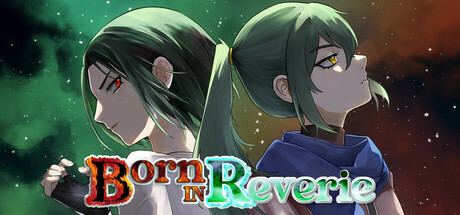
When Born In Reverie is released in full, around 5% of the code base will be AI generated snippets. All illustrations, UI elements, soundtracks, dialogue, sprite designs, etc. will be human-created.
-AI image generation was used for ideation on a small number of designs. What this actually means in practice is that AI images were created, modified, and then sent to real artists to serve as reference material in their work. The final illustrations and designs, were created by artists.
-To improve productivity, the development of Born in Reverie utilized AI tools for coding/programming support, and AI scaling algorithms to up/down sample a small number of human-created assets. Born in Reverie DOES NOT live produce anything in-game via AI generation.
-As an indie developer, I am unable to supervise the work of all the freelancers I work with and cannot guarantee their work is entirely AI free. If anyone I work with is found to produce content with significant AI usage, I will be removing their content and credits from the game and replacing their content with proper human artistry.
Above all else, Born in Reverie values human artistry and seeks to create something genuine and authentic for players to experience.
AI was used to revise, troubleshoot, and enhance code during development, including generating formats and adding logic based on common C# practices. All assets, such as images, sounds, and other content for the game, store page, marketing materials, and community assets, were ethically sourced and created without AI tools.
AI tools were used in the production process of some graphical assets. In these cases AI is mainly used as a middleman to add detail between first drafts and final product.
AI was used to assist with minor code segments and some dialogue lines.
As an independent developer, I use AI during development as a learning and workflow assistant.
It helps me understand tools, write a small portion of code, and polish some localization.
All final content in the game is personally reviewed and tested.
We use Windows Co-Pilot to answer questions regarding development tools (eg. how to approach technical problems) and Co-Pilot for Visual Studio Code to help improve coding efficiency (eg. code auto-completion).
The main uses of AI in the creation of this game were for minor coding problems, such as what sorting algorithm to use and detecting bugs occasionally. The second main use was the art. The majority of art in the game is ai generated, but there are no influences on the generation based off of real images. All generated images are random and pre-generated.
Keep in mind none of the names in the game are ai generated.
We use Windows Co-Pilot to answer questions regarding development tools (eg. how to approach technical problems) and Co-Pilot for Visual Studio Code to help improve coding efficiency (eg. code auto-completion).
Generative AI tools were used during development to assist with early concept art exploration, general coding support, and the creation of background music (BGM).
All in-game assets, gameplay systems, level design, and final implementation are fully handcrafted and curated by the developer. No AI-generated content is created dynamically during gameplay.
AI-generated art was developed based on original sketches and artwork created in our studio. We used a private LLM trained exclusively on our own original artwork to iterate and experiment with various visual concepts before finalizing our artistic direction. This process allowed us to efficiently explore creative possibilities while ensuring the final art assets remained true to our unique vision and aesthetic. AI was also assistive in code and project management.
The game is a research project into how the use of AI would affect game production, so AI has been used for images, voiceovers, code, dialogue and other areas as much as possible. Just to see what sort of results it provides.
Unlockable background images were AI-generated. We created tens of thousands of images, curated the best, and manually refined them with hours of inpainting and editing. AI coding tools assisted development. All gameplay mechanics, 22 language dictionaries, design, and concept are entirely hand-crafted.
In the development of this title, generative AI has been used in the following areas:
- Reference images for background graphics
- Programming assistance
- Translation assistance
AI tools were used during development to assist with programming and language tasks. The game's design, gameplay, story, and creative direction were created and directed by the developer.
AI generated concept art may end up in the game in some derivative form. AI may be used to debug, improve, or prototype code. This applies only to a small subset of content. The majority of content in the game does not involve AI generated content.
AI is used for cinematic cutscenes and certain 2D assets, but the majority of the work is done manually. The characters are actually hand-painted.
Similarly, code workflows include partial generation for certain C++, C#, and HLSL functions.
This game uses artificial intelligence (AI) tools to help optimize code and improve development efficiency and runtime performance. Additionally, character voices in the game were recorded by the developer himself. The voice was then synthesised by AI to create different character voices. These technologies enhance the overall quality and experience of the game.
Generative Artificial Intelligence (AI) Disclosure for NecroNomNomNom: Eldritch Horror Dating
From the very outset, "NecroNomNomNom: Eldritch Horror Dating" was conceived as a cosmic horror experiment in itself. Instead of passively wondering how generative AI might impact creative professions, we decided to confront that existential dread head-on. Our core design philosophy was to push the boundaries of AI's capabilities, attempting to completely replace human creative input and, in essence, make ourselves obsolete in the game development process.
Our findings, however, have been profoundly ironic and surprisingly reassuring. While generative AI played a significant role in various aspects of the game's development (including concept generation, preliminary asset creation, dialogue outlines, and certain code snippets), we discovered that achieving a cohesive, engaging, and polished experience still required substantial human oversight and manual intervention. AI, in its current form, proved to be an invaluable tool for iteration and initial ideation, but it could not replicate the nuanced artistic direction, problem-solving, and quality assurance that only human creativity and discernment can provide.
Ultimately, this experiment demonstrated that the path to creative obsolescence is far from straightforward. In a twist we didn't anticipate, the very act of attempting to replace ourselves with AI actually created new roles and opportunities for human collaborators in areas where AI fell short. This project, born from a fear of replacement, has, against all odds, generated more work for creative professionals rather than eliminating it. The human touch remains indispensable in bringing a truly unique and compelling vision to life.
Our team uses AI tools to assist development of some in-game content. The final product reflects the creativity and expression of our own development team.
This game includes an AI-generated music track but does not use AI to generate content during gameplay. AI was also used during development as a code assistant, but does not impact the player's experience in real-time.
Just used AI to help draft my answers, then I review them to make sure they are appropriate for what it is drafting answers for on the storepage.
I have also used AI to help me build some functions in the game for determining the calculations for player stats such as temperature and stomach system.
1. We used ChatGPT-4 to make some custom javascript plugins.
2. Used ChatGPT-4/DALL-E3 to generate some of the faces of NPC's, also some icons for the system menu.
I used AI tools during development to help with code optimization, solve problems like pathfinding and mathematical formulas, and assist with English translation and proofreading.
1. We used ChatGPT-4 to make some custom javascript plugins.
2. Used ChatGPT-4/DALL-E3 to generate some of the faces of NPC's, also some icons for the system menu.
The headers for the page are made using GrokAI
as well as some of the icons and parts of the code has guidance of AI too
All of the AI generated images have been modified in big ways and due to US laws all rights are still reserved for them especially since the AI code is extremely modified and only used as a guide not as a way to slack off
2D Art (Open AI)Narrator (elevenlabs)Narrative Help (Open AI)Coding (Different Models, Open AI, Antrhopic...)For more information on my views about AI, visit my website
* English subtitle translation assistance
OpenAI ChatGPT 4o (Before v1.0 release #BringBack4o)
Google Gemini 3 Pro (After v1.0 release)
* AI-assisted coding (2 Files, Human Reviewed)
Anthropic Claude Code
* Advice about things I can't tell anyone
Google Gemini 3 Pro
Please see below for our AI usage policy:
https://had2apps.com/games/ai_policy/#en
Description of the Game’s Use of AI
Our game does not use generative AI to create gameplay behavior or influence player decisions. All narrative content, character behavior, dialogue, level design, and artistic direction are hand-crafted by the developer.
We only use AI in limited, non-gameplay ways, such as:
Development assistance (e.g., debugging or improving scripts).
Optional asset prototyping (concept sketches used as early references before creating final assets).
No AI systems interact with the player during gameplay, and no player data is used to train AI models.
The in-game guidance, character responses, and story progression are fully authored, not generated dynamically by AI.
Using LLM Code Agent for indie development speed up (no "VIBE CODING", it's originally human made project in 2012-2025, author starts using LLM as smart assistant code edit tool since December 2025)
During the development of this game, we utilised generative AI tools to assist with tasks such as code completion, optimisation, and drafting small code snippets. This use was for developer assistance during the creation process. All final assets, code, and gameplay systems were reviewed and authored by our development team to ensure originality and compliance with legal and copyright standards. No in-game content is dynamically generated by AI.
We used generative AI tools to create code, concept art, pixel art sprites, background environments, and store page graphics. All AI-generated content was reviewed and edited by our team. No AI content is generated during gameplay.
Portion's paid for and built with the current available version of the modern "The Most High Level Programming Language" representation; through Microsoft's AI-powered coding assistant "Github Copilot".
There were 2 lines of code during the developmental process of building the game that I wasn't able to figure out on my own, I used Chat-GPT 3.5 in order to help out me with the code, and it filled in what I was struggling with.
When Born In Reverie is released in full, around 5% of the code base will be AI generated snippets. All illustrations, UI elements, soundtracks, dialogue, sprite designs, etc. will be human-created.
-AI image generation was used for ideation on a small number of designs. What this actually means in practice is that AI images were created, modified, and then sent to real artists to serve as reference material in their work. The final illustrations and designs, were created by artists.
-To improve productivity, the development of Born in Reverie utilized AI tools for coding/programming support, and AI scaling algorithms to up/down sample a small number of human-created assets. Born in Reverie DOES NOT live produce anything in-game via AI generation.
-As an indie developer, I am unable to supervise the work of all the freelancers I work with and cannot guarantee their work is entirely AI free. If anyone I work with is found to produce content with significant AI usage, I will be removing their content and credits from the game and replacing their content with proper human artistry.
Above all else, Born in Reverie values human artistry and seeks to create something genuine and authentic for players to experience.
AI was used to revise, troubleshoot, and enhance code during development, including generating formats and adding logic based on common C# practices. All assets, such as images, sounds, and other content for the game, store page, marketing materials, and community assets, were ethically sourced and created without AI tools.
AI tools were used in the production process of some graphical assets. In these cases AI is mainly used as a middleman to add detail between first drafts and final product.
AI was used to assist with minor code segments and some dialogue lines.
As an independent developer, I use AI during development as a learning and workflow assistant.
It helps me understand tools, write a small portion of code, and polish some localization.
All final content in the game is personally reviewed and tested.
We use Windows Co-Pilot to answer questions regarding development tools (eg. how to approach technical problems) and Co-Pilot for Visual Studio Code to help improve coding efficiency (eg. code auto-completion).
The main uses of AI in the creation of this game were for minor coding problems, such as what sorting algorithm to use and detecting bugs occasionally. The second main use was the art. The majority of art in the game is ai generated, but there are no influences on the generation based off of real images. All generated images are random and pre-generated.
Keep in mind none of the names in the game are ai generated.
We use Windows Co-Pilot to answer questions regarding development tools (eg. how to approach technical problems) and Co-Pilot for Visual Studio Code to help improve coding efficiency (eg. code auto-completion).
Generative AI tools were used during development to assist with early concept art exploration, general coding support, and the creation of background music (BGM).
All in-game assets, gameplay systems, level design, and final implementation are fully handcrafted and curated by the developer. No AI-generated content is created dynamically during gameplay.
AI-generated art was developed based on original sketches and artwork created in our studio. We used a private LLM trained exclusively on our own original artwork to iterate and experiment with various visual concepts before finalizing our artistic direction. This process allowed us to efficiently explore creative possibilities while ensuring the final art assets remained true to our unique vision and aesthetic. AI was also assistive in code and project management.
The game is a research project into how the use of AI would affect game production, so AI has been used for images, voiceovers, code, dialogue and other areas as much as possible. Just to see what sort of results it provides.
Unlockable background images were AI-generated. We created tens of thousands of images, curated the best, and manually refined them with hours of inpainting and editing. AI coding tools assisted development. All gameplay mechanics, 22 language dictionaries, design, and concept are entirely hand-crafted.
In the development of this title, generative AI has been used in the following areas:
- Reference images for background graphics
- Programming assistance
- Translation assistance
AI tools were used during development to assist with programming and language tasks. The game's design, gameplay, story, and creative direction were created and directed by the developer.
AI generated concept art may end up in the game in some derivative form. AI may be used to debug, improve, or prototype code. This applies only to a small subset of content. The majority of content in the game does not involve AI generated content.
AI is used for cinematic cutscenes and certain 2D assets, but the majority of the work is done manually. The characters are actually hand-painted.
Similarly, code workflows include partial generation for certain C++, C#, and HLSL functions.
This game uses artificial intelligence (AI) tools to help optimize code and improve development efficiency and runtime performance. Additionally, character voices in the game were recorded by the developer himself. The voice was then synthesised by AI to create different character voices. These technologies enhance the overall quality and experience of the game.
Generative Artificial Intelligence (AI) Disclosure for NecroNomNomNom: Eldritch Horror Dating
From the very outset, "NecroNomNomNom: Eldritch Horror Dating" was conceived as a cosmic horror experiment in itself. Instead of passively wondering how generative AI might impact creative professions, we decided to confront that existential dread head-on. Our core design philosophy was to push the boundaries of AI's capabilities, attempting to completely replace human creative input and, in essence, make ourselves obsolete in the game development process.
Our findings, however, have been profoundly ironic and surprisingly reassuring. While generative AI played a significant role in various aspects of the game's development (including concept generation, preliminary asset creation, dialogue outlines, and certain code snippets), we discovered that achieving a cohesive, engaging, and polished experience still required substantial human oversight and manual intervention. AI, in its current form, proved to be an invaluable tool for iteration and initial ideation, but it could not replicate the nuanced artistic direction, problem-solving, and quality assurance that only human creativity and discernment can provide.
Ultimately, this experiment demonstrated that the path to creative obsolescence is far from straightforward. In a twist we didn't anticipate, the very act of attempting to replace ourselves with AI actually created new roles and opportunities for human collaborators in areas where AI fell short. This project, born from a fear of replacement, has, against all odds, generated more work for creative professionals rather than eliminating it. The human touch remains indispensable in bringing a truly unique and compelling vision to life.
Our team uses AI tools to assist development of some in-game content. The final product reflects the creativity and expression of our own development team.
This game includes an AI-generated music track but does not use AI to generate content during gameplay. AI was also used during development as a code assistant, but does not impact the player's experience in real-time.
Just used AI to help draft my answers, then I review them to make sure they are appropriate for what it is drafting answers for on the storepage.
I have also used AI to help me build some functions in the game for determining the calculations for player stats such as temperature and stomach system.
1. We used ChatGPT-4 to make some custom javascript plugins.
2. Used ChatGPT-4/DALL-E3 to generate some of the faces of NPC's, also some icons for the system menu.
I used AI tools during development to help with code optimization, solve problems like pathfinding and mathematical formulas, and assist with English translation and proofreading.
1. We used ChatGPT-4 to make some custom javascript plugins.
2. Used ChatGPT-4/DALL-E3 to generate some of the faces of NPC's, also some icons for the system menu.
The headers for the page are made using GrokAI
as well as some of the icons and parts of the code has guidance of AI too
All of the AI generated images have been modified in big ways and due to US laws all rights are still reserved for them especially since the AI code is extremely modified and only used as a guide not as a way to slack off
2D Art (Open AI)Narrator (elevenlabs)Narrative Help (Open AI)Coding (Different Models, Open AI, Antrhopic...)For more information on my views about AI, visit my website
* English subtitle translation assistance
OpenAI ChatGPT 4o (Before v1.0 release #BringBack4o)
Google Gemini 3 Pro (After v1.0 release)
* AI-assisted coding (2 Files, Human Reviewed)
Anthropic Claude Code
* Advice about things I can't tell anyone
Google Gemini 3 Pro
Please see below for our AI usage policy:
https://had2apps.com/games/ai_policy/#en
Description of the Game’s Use of AI
Our game does not use generative AI to create gameplay behavior or influence player decisions. All narrative content, character behavior, dialogue, level design, and artistic direction are hand-crafted by the developer.
We only use AI in limited, non-gameplay ways, such as:
Development assistance (e.g., debugging or improving scripts).
Optional asset prototyping (concept sketches used as early references before creating final assets).
No AI systems interact with the player during gameplay, and no player data is used to train AI models.
The in-game guidance, character responses, and story progression are fully authored, not generated dynamically by AI.
Using LLM Code Agent for indie development speed up (no "VIBE CODING", it's originally human made project in 2012-2025, author starts using LLM as smart assistant code edit tool since December 2025)