Public Steam disclosure research25,508 disclosures tracked
Where do games disclose AI use?
Search developers’ Steam disclosures, compare classified AI use across
games, and follow recorded changes.
This index adds cross-game classifications and statistics to
statements published on individual store pages.
Groups reflect automatic analysis of public disclosures; mature records are excluded. These counts do not measure AI use across all of Steam.
Missing or unclear statements cannot establish whether a game uses AI.
Generative AI tools were used during development to create background music with Suno, application and shortcut icon artwork, and Steam store and library artwork. They were also used to assist with programming and player-facing text, including Steam store descriptions and localization. All included AI-assisted outputs were reviewed and approved by the developer before inclusion. The game does not use live-generated AI.
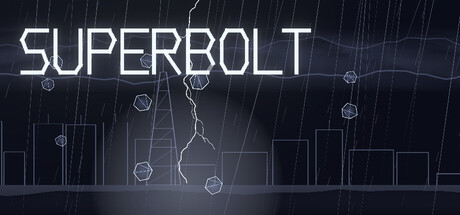
SUPERBOLT is built almost entirely from code: the lightning, the effects, the interface and the audio are generated by the game as it runs. Generative AI was used during production to help prepare some supporting artwork — background layers and achievement icons — and to draft some of the written text. Nothing is generated by AI while you play, and the game connects to no AI service.
Portions of the game's written content (event texts, character letters, narrative descriptions) and the English localization were created with the assistance of generative AI tools, under the developer's direction, with human review and editing of all content. Some artwork was created with AI image tools and manually edited. No content is generated by AI at runtime.
LIMP MODE is made by a solo developer who uses generative AI as a tool during production.
Where AI was used: the game's code, the cover artwork that all store page capsule images are built from, the songs played on the in-game radio, the spoken lines of one story character (text-to-speech), parts of the in-game visual and audio assets, and the drafting of the English store page and marketing texts. The player character's voice lines are recorded by the developer himself and are not AI-generated.
All game design, mechanics, balancing and creative direction come from the developer. Every AI-assisted result was reviewed and edited by the developer before it shipped.
The game does not generate any content while it is running and does not connect to any AI service during gameplay.
Parts of this game's development — including some code, scene layouts, texts and translations — were created with the assistance of generative AI tools under developer supervision. No content is generated by AI at runtime; everything was prepared in advance and reviewed by hand.
DUNGEON AI DRAGON uses generative AI in two ways. (1) Pre-generated content: some artwork (character portraits, item illustrations, decorative assets), quest text drafts and localizations were created with the assistance of AI tools and were reviewed and edited by our team before shipping. (2) Live-generated content: NPC dialogue, combat narration and dynamic quest flavor text are generated at runtime by large language models. Live generation is constrained by hand-authored character sheets, world lore and quest definitions. All game rules, stats, prices, rewards and progression are computed by a deterministic rule engine — AI output can never grant items, change prices or alter game state.
Localizations other than Italian are AI-assisted, with human and community review ongoing during development. All game design, writing, and art direction are human-made.
Artificial intelligence tools were utilized as a reference and assistive aid in the creation of certain art assets, audio elements, and localization translations for this game.
Portions of this game's content were created with the assistance of generative AI tools under human direction and review. This includes much but not all of the visual artwork, the soundtrack, and the store page text and marketing copy. All AI-assisted content was curated, edited, and approved by the developer.
Team Commander uses generative AI to interpret player-issued natural-language commands and convert them into predefined in-game actions. The AI is used for command interpretation and does not generate unrestricted story, dialogue, images, or other free-form gameplay content. Generative AI was also used to assist with some visual and localized store materials.
Some temporary store page artwork (capsule images) and marketing text were created with the assistance of AI tools. The game itself does not contain AI-generated art, sound, or content, and does not use AI generation at runtime.
Some visual assets, branding exploration, and first-pass localization drafts were created or assisted with generative AI tools. All content is reviewed, edited, and integrated by the developer before being included in the game or store materials. The game does not generate AI content in real time during gameplay.
AI was only used to generate minimal resources to support unit design and partial localization.
All AI-assisted content has been reviewed, and the final assets were manually drawn to fit the game's artistic style and atmosphere.
This game uses generative AI to create visual art assets (plants, scenery, animals, UI, etc.) during development. In-game, the cat companion's chat dialogue is generated in real time by a local AI model that runs entirely offline on the player's device; no player input is sent to any external service.
Generative AI tools were used to assist with translations of user interface text and game descriptions into some supported languages. All localization content is pre-generated and included in the game files. The game does not generate any content using AI at runtime.
Voxel Siege uses generative AI for some pre-generated content, all reviewed by the developer before inclusion. Specifically: some in-game material/block textures were created with AI image tools; the music and sound effects were created with AI audio-generation tools; the store page description and some marketing copy were drafted with AI assistance; and some level/fortress layouts were generated with AI-assisted tooling. All AI-generated content was created during development (not live or at runtime), was reviewed by the developer, and does not incorporate third-party intellectual property. The game does not generate any AI content live during gameplay.
AI is used in part for translating text from Japanese into the supported languages.
AI is not used for game development, content generation, or any purposes other than translation.
Generative AI tools were used during development to assist with portions of the programming, user interface and text presentation implementation, as well as initial drafts of some localizations. The game’s setting, narrative text, visual design, and all final content were created and determined by the developer. No generative image models were used, and the game does not connect to or invoke any generative AI services at runtime. It contains no live-generated content.
We are committed to the ethical use of AI. As such, limited assistance with some text, spoken dialogue, narrative, localization, and store/marketing copy may have been utilized.
It is not used to generate artwork or live gameplay content, and all final content is reviewed by the team.
This game uses pre-generated AI content. Some character art, key art, and Steam store graphics were created with generative AI image tools and then selected, cropped, and composited by the developer. English and Simplified Chinese text (in-game localization and store copy) was drafted with generative AI and then reviewed and edited. The game does not use live AI generation during gameplay.
Generative AI tools were used during development to create and assist with some pre-generated artwork, localization, and store/marketing assets. All AI-assisted content was reviewed and edited by the developer before inclusion in the final product. The game does not generate AI content during gameplay.
AI Was used to generate the page description, it was also used to test certain parts of the game and help debug a few problems, there was partial AI usage also for the game music, while the music itself was created in FL Studio there was usage to generate some of the variants of the tracks
Generative AI tools were used during development to assist with portions of the game's code, visual asset creation, localization, and marketing artwork. All included content was selected, edited, integrated, and reviewed by the developer. The game does not generate AI content during gameplay.
Generative AI tools were used during development to assist with some pre-generated visual assets, written content, and development-related creative work. All AI-assisted content included in the final game and store materials is reviewed by the developer before release. The game does not generate AI content during gameplay and does not connect to external AI services while running.
Root Cause is utilizes AI assets in the game. This content, when utilized, is generated during development, then curated, edited, and committed to the project before release. Nothing is generated while the game is running.
Items that may be generated:
Illustrated art.
UI/Interfaces
Icon Sets
Sounds and Music
Dialogue, case briefings, case content, and interface copy
Generative AI was used for:
- The game's logo and Steam store capsule artwork (image generation)
- Translation of in-game text into Turkish, German, French and Spanish
-AI-generated images were reviewed and edited before use.
Generative AI tools were used for localization assistance and for the creation or editing of certain promotional/marketing assets. The game itself does not contain AI-generated content, and no generative AI systems are used during gameplay.
Generative AI was used during development as a coding assistant and to assist with drafting and translating store-page and marketing text. Some pixel-art assets were rendered by deterministic drawing code written with AI assistance; the final images were not directly output by a text-to-image or diffusion model. All shipped and published content was reviewed and edited by the developer. No generative AI runs in the game, and no content is generated from player input.
HASSO uses generative AI tools for part of its pre-produced content: the card illustrations, and the translation of the game's text into the languages it supports. All AI-generated content is reviewed and curated before it is included in the game. The user interface icons, the music and the sound effects are not AI-generated. No content is generated by AI at runtime: the player never sends prompts and never receives live AI output.
This game utilizes pre-generated AI tools to create SFXs, music, UI images, texts, and one 3D model. Some of which are edited and all of which are selected with care.
Quarter Mile contains no AI-generated art, music, voice or in-game text.
Every visual in the game is rendered in real time from geometry and materials authored by hand in code — there are no image assets. Every sound is synthesized by the game while you play, from a physical model of the engine; no audio files ship with the game. All car data and track layouts are hand-authored.
The store page capsule art and screenshots are rendered by the game itself, using the same renderer that draws the game — they are not concept art, not painted, and not AI-generated.
The game description and other store page text were written with the assistance of an AI writing assistant, and portions of the game's source code were written with the assistance of an AI coding assistant. All of it was reviewed and edited by the developer.
The game does not use generative AI at runtime. Nothing is generated while you play, there is no network connection of any kind, and the game is fully playable offline.
Some assets and code in Angkor were created with the assistance of generative AI tools, including 2D art, sound effects, portions of the game's code, and some in-game text. All AI-assisted content was reviewed, edited, and integrated by a human developer. Angkor does not generate any content live during gameplay.
Dashboard Engine uses AI only at runtime, on your own device, and bundles no pre-generated AI content.
On-device neural text-to-speech (installed by default): the app includes neural TTS voices (MeloTTS and Kokoro) that synthesize spoken audio from text locally on your PC. An English voice is bundled and installed by default; other languages download on demand. These voices produce speech at runtime — for the assistant's replies, spoken system alerts, and voice previews. They are used purely as speech output: a "voice profile" is a small set of tuning settings that reference a licensed base voice, and the app stores or uploads no voice recordings of any kind.
Optional AI assistant (off by default): if you turn it on, you connect it to a language model you run locally on your own machine or local network (for example Ollama or LM Studio). Your typed messages are sent to that local model to generate conversational replies in real time, which can be read aloud by the on-device TTS above. There is no cloud AI service, account, or API key — nothing leaves your PC.
All AI output is generated live from your own input and your own local models, so it is not authored or reviewed by the developer. No AI-generated content is pre-created or bundled with the app.
AI assistance was used to translate the user interface and this store page into non-English languages. The artwork, trailers, and original English text were created by the developer.
The narrative and interface text in this game - dialogue, tutorial guidance, in-game descriptions, and localization into all supported languages (Russian, English, French, Italian, German, Spanish, Dutch, Polish, Portuguese) - was generated with the assistance of generative AI (a large language model), based on the developer's original game concept, design, and creative direction. No other content in this game - art, music, sound, or gameplay - is AI-generated.
Some of the art in this game was made with the help of generative AI. The voxel character portraits were generated from written prompts using an AI image generator, then cut out, colour-corrected, posed and animated by hand by the developer. The store page capsules and the achievement icons are composed from that same character art. Parts of the store page text, and the game's translations into its eight supported languages, were produced with AI assistance and reviewed by the developer.
No generative AI runs while you play — nothing is generated in real time. The patrons' behaviour is ordinary game AI: hand-written rules and probability tables. The music and every sound effect are not AI-generated; they are synthesised procedurally.
Generative AI tools were used during development to create background music with Suno, application and shortcut icon artwork, and Steam store and library artwork. They were also used to assist with programming and player-facing text, including Steam store descriptions and localization. All included AI-assisted outputs were reviewed and approved by the developer before inclusion. The game does not use live-generated AI.
SUPERBOLT is built almost entirely from code: the lightning, the effects, the interface and the audio are generated by the game as it runs. Generative AI was used during production to help prepare some supporting artwork — background layers and achievement icons — and to draft some of the written text. Nothing is generated by AI while you play, and the game connects to no AI service.
Portions of the game's written content (event texts, character letters, narrative descriptions) and the English localization were created with the assistance of generative AI tools, under the developer's direction, with human review and editing of all content. Some artwork was created with AI image tools and manually edited. No content is generated by AI at runtime.
LIMP MODE is made by a solo developer who uses generative AI as a tool during production.
Where AI was used: the game's code, the cover artwork that all store page capsule images are built from, the songs played on the in-game radio, the spoken lines of one story character (text-to-speech), parts of the in-game visual and audio assets, and the drafting of the English store page and marketing texts. The player character's voice lines are recorded by the developer himself and are not AI-generated.
All game design, mechanics, balancing and creative direction come from the developer. Every AI-assisted result was reviewed and edited by the developer before it shipped.
The game does not generate any content while it is running and does not connect to any AI service during gameplay.
Parts of this game's development — including some code, scene layouts, texts and translations — were created with the assistance of generative AI tools under developer supervision. No content is generated by AI at runtime; everything was prepared in advance and reviewed by hand.
DUNGEON AI DRAGON uses generative AI in two ways. (1) Pre-generated content: some artwork (character portraits, item illustrations, decorative assets), quest text drafts and localizations were created with the assistance of AI tools and were reviewed and edited by our team before shipping. (2) Live-generated content: NPC dialogue, combat narration and dynamic quest flavor text are generated at runtime by large language models. Live generation is constrained by hand-authored character sheets, world lore and quest definitions. All game rules, stats, prices, rewards and progression are computed by a deterministic rule engine — AI output can never grant items, change prices or alter game state.
Localizations other than Italian are AI-assisted, with human and community review ongoing during development. All game design, writing, and art direction are human-made.
Artificial intelligence tools were utilized as a reference and assistive aid in the creation of certain art assets, audio elements, and localization translations for this game.
Portions of this game's content were created with the assistance of generative AI tools under human direction and review. This includes much but not all of the visual artwork, the soundtrack, and the store page text and marketing copy. All AI-assisted content was curated, edited, and approved by the developer.
Team Commander uses generative AI to interpret player-issued natural-language commands and convert them into predefined in-game actions. The AI is used for command interpretation and does not generate unrestricted story, dialogue, images, or other free-form gameplay content. Generative AI was also used to assist with some visual and localized store materials.
Some temporary store page artwork (capsule images) and marketing text were created with the assistance of AI tools. The game itself does not contain AI-generated art, sound, or content, and does not use AI generation at runtime.
Some visual assets, branding exploration, and first-pass localization drafts were created or assisted with generative AI tools. All content is reviewed, edited, and integrated by the developer before being included in the game or store materials. The game does not generate AI content in real time during gameplay.
AI was only used to generate minimal resources to support unit design and partial localization.
All AI-assisted content has been reviewed, and the final assets were manually drawn to fit the game's artistic style and atmosphere.
This game uses generative AI to create visual art assets (plants, scenery, animals, UI, etc.) during development. In-game, the cat companion's chat dialogue is generated in real time by a local AI model that runs entirely offline on the player's device; no player input is sent to any external service.
Generative AI tools were used to assist with translations of user interface text and game descriptions into some supported languages. All localization content is pre-generated and included in the game files. The game does not generate any content using AI at runtime.
Voxel Siege uses generative AI for some pre-generated content, all reviewed by the developer before inclusion. Specifically: some in-game material/block textures were created with AI image tools; the music and sound effects were created with AI audio-generation tools; the store page description and some marketing copy were drafted with AI assistance; and some level/fortress layouts were generated with AI-assisted tooling. All AI-generated content was created during development (not live or at runtime), was reviewed by the developer, and does not incorporate third-party intellectual property. The game does not generate any AI content live during gameplay.
AI is used in part for translating text from Japanese into the supported languages.
AI is not used for game development, content generation, or any purposes other than translation.
Generative AI tools were used during development to assist with portions of the programming, user interface and text presentation implementation, as well as initial drafts of some localizations. The game’s setting, narrative text, visual design, and all final content were created and determined by the developer. No generative image models were used, and the game does not connect to or invoke any generative AI services at runtime. It contains no live-generated content.
We are committed to the ethical use of AI. As such, limited assistance with some text, spoken dialogue, narrative, localization, and store/marketing copy may have been utilized.
It is not used to generate artwork or live gameplay content, and all final content is reviewed by the team.
This game uses pre-generated AI content. Some character art, key art, and Steam store graphics were created with generative AI image tools and then selected, cropped, and composited by the developer. English and Simplified Chinese text (in-game localization and store copy) was drafted with generative AI and then reviewed and edited. The game does not use live AI generation during gameplay.
Generative AI tools were used during development to create and assist with some pre-generated artwork, localization, and store/marketing assets. All AI-assisted content was reviewed and edited by the developer before inclusion in the final product. The game does not generate AI content during gameplay.
AI Was used to generate the page description, it was also used to test certain parts of the game and help debug a few problems, there was partial AI usage also for the game music, while the music itself was created in FL Studio there was usage to generate some of the variants of the tracks
Generative AI tools were used during development to assist with portions of the game's code, visual asset creation, localization, and marketing artwork. All included content was selected, edited, integrated, and reviewed by the developer. The game does not generate AI content during gameplay.
Generative AI tools were used during development to assist with some pre-generated visual assets, written content, and development-related creative work. All AI-assisted content included in the final game and store materials is reviewed by the developer before release. The game does not generate AI content during gameplay and does not connect to external AI services while running.
Root Cause is utilizes AI assets in the game. This content, when utilized, is generated during development, then curated, edited, and committed to the project before release. Nothing is generated while the game is running.
Items that may be generated:
Illustrated art.
UI/Interfaces
Icon Sets
Sounds and Music
Dialogue, case briefings, case content, and interface copy
Generative AI was used for:
- The game's logo and Steam store capsule artwork (image generation)
- Translation of in-game text into Turkish, German, French and Spanish
-AI-generated images were reviewed and edited before use.
Generative AI tools were used for localization assistance and for the creation or editing of certain promotional/marketing assets. The game itself does not contain AI-generated content, and no generative AI systems are used during gameplay.
Generative AI was used during development as a coding assistant and to assist with drafting and translating store-page and marketing text. Some pixel-art assets were rendered by deterministic drawing code written with AI assistance; the final images were not directly output by a text-to-image or diffusion model. All shipped and published content was reviewed and edited by the developer. No generative AI runs in the game, and no content is generated from player input.
HASSO uses generative AI tools for part of its pre-produced content: the card illustrations, and the translation of the game's text into the languages it supports. All AI-generated content is reviewed and curated before it is included in the game. The user interface icons, the music and the sound effects are not AI-generated. No content is generated by AI at runtime: the player never sends prompts and never receives live AI output.
This game utilizes pre-generated AI tools to create SFXs, music, UI images, texts, and one 3D model. Some of which are edited and all of which are selected with care.
Quarter Mile contains no AI-generated art, music, voice or in-game text.
Every visual in the game is rendered in real time from geometry and materials authored by hand in code — there are no image assets. Every sound is synthesized by the game while you play, from a physical model of the engine; no audio files ship with the game. All car data and track layouts are hand-authored.
The store page capsule art and screenshots are rendered by the game itself, using the same renderer that draws the game — they are not concept art, not painted, and not AI-generated.
The game description and other store page text were written with the assistance of an AI writing assistant, and portions of the game's source code were written with the assistance of an AI coding assistant. All of it was reviewed and edited by the developer.
The game does not use generative AI at runtime. Nothing is generated while you play, there is no network connection of any kind, and the game is fully playable offline.
Some assets and code in Angkor were created with the assistance of generative AI tools, including 2D art, sound effects, portions of the game's code, and some in-game text. All AI-assisted content was reviewed, edited, and integrated by a human developer. Angkor does not generate any content live during gameplay.
Dashboard Engine uses AI only at runtime, on your own device, and bundles no pre-generated AI content.
On-device neural text-to-speech (installed by default): the app includes neural TTS voices (MeloTTS and Kokoro) that synthesize spoken audio from text locally on your PC. An English voice is bundled and installed by default; other languages download on demand. These voices produce speech at runtime — for the assistant's replies, spoken system alerts, and voice previews. They are used purely as speech output: a "voice profile" is a small set of tuning settings that reference a licensed base voice, and the app stores or uploads no voice recordings of any kind.
Optional AI assistant (off by default): if you turn it on, you connect it to a language model you run locally on your own machine or local network (for example Ollama or LM Studio). Your typed messages are sent to that local model to generate conversational replies in real time, which can be read aloud by the on-device TTS above. There is no cloud AI service, account, or API key — nothing leaves your PC.
All AI output is generated live from your own input and your own local models, so it is not authored or reviewed by the developer. No AI-generated content is pre-created or bundled with the app.
AI assistance was used to translate the user interface and this store page into non-English languages. The artwork, trailers, and original English text were created by the developer.
The narrative and interface text in this game - dialogue, tutorial guidance, in-game descriptions, and localization into all supported languages (Russian, English, French, Italian, German, Spanish, Dutch, Polish, Portuguese) - was generated with the assistance of generative AI (a large language model), based on the developer's original game concept, design, and creative direction. No other content in this game - art, music, sound, or gameplay - is AI-generated.
Some of the art in this game was made with the help of generative AI. The voxel character portraits were generated from written prompts using an AI image generator, then cut out, colour-corrected, posed and animated by hand by the developer. The store page capsules and the achievement icons are composed from that same character art. Parts of the store page text, and the game's translations into its eight supported languages, were produced with AI assistance and reviewed by the developer.
No generative AI runs while you play — nothing is generated in real time. The patrons' behaviour is ordinary game AI: hand-written rules and probability tables. The music and every sound effect are not AI-generated; they are synthesised procedurally.