Public Steam disclosure research25,512 disclosures tracked
Where do games disclose AI use?
Search developers’ Steam disclosures, compare classified AI use across
games, and follow recorded changes.
This index adds cross-game classifications and statistics to
statements published on individual store pages.
Groups reflect automatic analysis of public disclosures; mature records are excluded. These counts do not measure AI use across all of Steam.
Missing or unclear statements cannot establish whether a game uses AI.
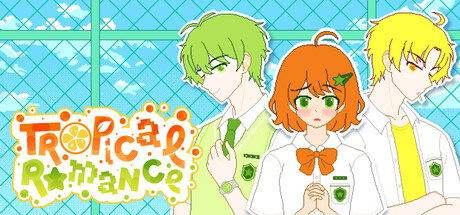
This game uses generative AI to create visual assets, including character portraits, event CGs, and background images. All generated images were selected, adjusted, and finalized by the developer.
The scenario, dialogue, game design, and system programming were created by the developer. AI translation assistance was used as part of the localization process, with the results reviewed by the developer.
Generative AI tools were used during development to assist with the creation of some visual assets, store artwork and initial localization drafts. All generated content was reviewed, edited, and integrated by the developer.
Immortal Chess does not generate AI content during gameplay.
We view artificial intelligence solely as a supportive tool. Generative AI was used only as a supportive tool for certain visual designs and language translation.
Artificial intelligence helped with grammar corrections in in-game text; these corrections were then carefully reviewed and edited manually.
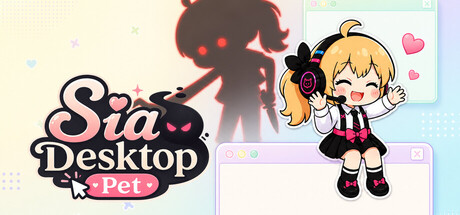
Sia's art and sound - her sprites, the outfits, the tarot cards, the item and monster icons, the sound effects - were produced with the help of generative AI tools and then edited and assembled by hand. The store images were made the same way. The game's text was written in Korean by hand; the seven other language translations were AI-assisted and reviewed by a human.
Nothing is generated while you play. The game ships as fixed image, sound and text files and never contacts an AI service.
AI was used to generate code, art prototypes which were then handcrafted in Aseprite, CSS for UIs, and tedious copy stuffed in nooks and crannies to fill out the world.
Portions of the game's text content (item descriptions and English localization) and store page text were written with the assistance of a generative AI language model, under human direction with full review and editing. All artwork is hand-drawn by the developers, and the game does not use any live/runtime AI generation.
AI tool assisted in translating the store page into 15 different languages.
We do NOT use AI-generated art, and we never intentionally include AI assets in our game. We sometimes buy assets and use stock photos. We do our best to verify them, but nowadays, distinguishing AI from human-made art can be hard.
That said, if there is any specific artwork that you believe looks like AI or raises concerns, we would appreciate it if you could point it out on our Discord server. We will investigate and replace anything that might have slipped through.
AI-generated art is NOT something we want to include in our game.
Gildoria uses AI-assisted tools in parts of its development: some UI icons were made with AI image generation, the in-game text was translated with AI translation tools. All of it was reviewed and edited by the developer. 3D art, level design, game design and codes are human-made or licensed. No content is generated by AI while the game runs.
This game adopts generative AI technology to provide players with real-time interactive text dialogue with in-game NPCs. We have set strict content filtering rules to prevent the generation of inappropriate, illegal, pornographic or violent content. Players can report improper AI outputs through Steam's built-in marking tool.
Portions of this game's content were created with generative AI assistance under human direction and review: in-game text (social feed posts, event copy), localization into 8 languages, and marketing materials including the trailer. All AI-assisted content was reviewed by the developer. The game does not generate AI content at runtime.
Generative AI was used during development to assist with brainstorming, coding assistance, and drafting certain written materials. All game content, gameplay implementation, testing, review, and final decisions were completed and verified by the developer before release.
All primary artwork in this game, including the main character and every enemy, was created by hand either drawn by the developer or by human artists. AI assistance was limited to a few secondary visual effects (light effects, explosions, blood/spray), produced with custom procedural drawing scripts written with the help of an AI coding assistant and then hand-edited and curated by the developer. Some in-game text translations may be pre-generated with AI-assisted localization and reviewed by the developer. No image, audio, or video generation models were used. No AI is used at runtime.
Some in-game art - including relic icons, character/enemy art, and background imagery - was created with the assistance of generative AI tools during development. Some written content, such as boss dialogue and relic/item flavor text, was drafted with the assistance of generative AI and then reviewed and edited by the development team before being included in the game.
Generative AI is used in this title for translation (to support multiple languages) and for the initial concepts of the background music.
All final assets have undergone a process of editing, refinement, and review by human creators.
Generative AI tools were used during development to assist in creating and refining certain pre-generated visual, audio, localization, and promotional materials. All AI-assisted content was reviewed, edited, and curated by the development team before being included in the game or its marketing materials. The game does not generate AI content in real time during gameplay.
In this game, generative AI is used for the following purposes:
・Selecting options based on voice commands input by the user
・Generating portions of the display text
・Generating portions of the narration script
・The narration audio is created using a speech synthesis engine; generative AI is not used.
The game contains a few voice lines that where generated using a text-to-speech service. I assume this service used some sort of gen-AI. For some translations an AI was used for proofreading.
AI was utilized to generate some references and provide consultations during the code development process. Additionally, AI assisted in translating and correcting grammatical errors, as English is not my native language.
I wanted to lie and say I didn’t use ai at all, but my conscience wouldn't let me.
This game was developed with the assistance of generative AI tools for certain content, including:
Some visual art assets (images/textures)
Some narrative and story text
Programming assistance
All AI-generated content has been reviewed, edited, and integrated by the developer to ensure final quality and stylistic consistency.
Generative AI tools were used during development to assist with programming, translation/localization, and the creation of most of the game's artwork and music. All AI-assisted content was reviewed, selected, edited, and integrated by the developer. The game does not generate AI content during gameplay and does not connect to external AI services.
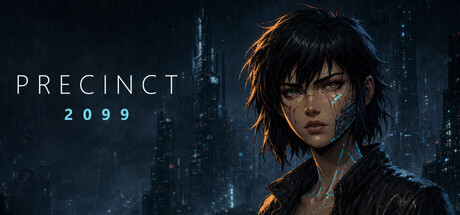
Precinct 2099 uses generative AI as a production tool. Part of the visual material (backgrounds, character art and store images) and the music were created with AI tools and then selected, edited and art-directed by hand by our team. Some of the localisation work is AI-assisted. The story, script, characters and game design are written by humans. The game does not generate any content live while you play: everything ships pre-generated with the build.
Some marketing materials for this game were made with generative AI: the trailer's narration uses an AI text-to-speech voice, and parts of this store page were drafted with AI assistance.
Nothing inside the game is AI-generated. The soundtrack is human-composed music licensed for commercial use, all artwork and logos are drawn programmatically by the game's own code, and every screenshot is captured from real gameplay. The game generates no AI content while you play.
Pre-generated generative AI was used during development to assist with visual artwork, music, sound effects, spoken audio, narrative and dialogue, and portions of the game code. The developer directed, reviewed, selected, edited, arranged, tested, and integrated the final content. No generative AI content is created while the game is running.
This whole game exists because I wondered whether, with these tools, I could actually make one.
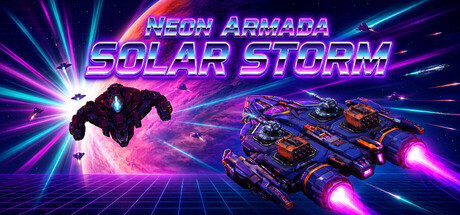
Generative AI tools were used to create assets that ship with the game. The 3D ship and enemy models were generated with Meshy AI from my own 2D concept art, and AI tools assisted with in-game text, audio, and parts of the store page and marketing materials.
The design, code and balance are mine — the wave generation, the ship and weapon tuning, the modification link-set system, the campaign structure. Seventeen worlds' worth of hand-tuned numbers.
I'm a solo developer with a full-time job and three kids. The answer to the question turned out to be yes, and this is it.
Some 3D assets in this game were created with the help of AI generation tools, then edited, retextured and integrated by hand. Parts of the written text, including store page copy and in-game text translations, were drafted with AI assistance and reviewed by the developer. No content is generated live while you play, and no AI-generated voice acting is used. Everything is created and checked before release.
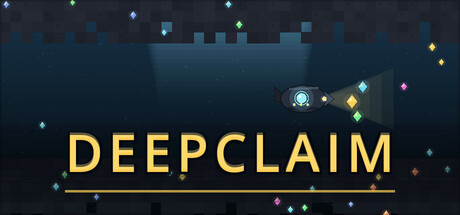
Deepclaim was made by a solo developer working with an AI coding assistant (Anthropic's Claude). The AI assisted in writing the game's code, which draws all of the game's visuals procedurally at runtime (the game ships with no image files) and synthesizes all of its audio procedurally (no audio files). AI assistance was also used for some in-game text, the Steam store page description, and the store/marketing capsule images. All AI-assisted output was directed, reviewed, and edited by the developer.
This game uses generative AI in the creation of some graphics, text, and English localization. All AI-generated content has been reviewed and edited by the developer before being used.
No generative AI content is created during gameplay.
AI translation tools were used to produce the localized text for the game. Additionally, initial concept drafts for select visual assets were generated using AI, but were subsequently heavily modified, painted over, and finalized by human artists.
Generative AI Usage
- Reference for some backgrounds and CG compositions
- Editing and proofreading of some text
- Assistance with English and Japanese localization
All final content was created, reviewed, and/or revised by the developer.
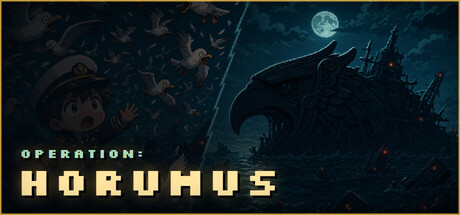
Operation: Horumus is a "vibe coding" experiment. Most of the game's content — code, game design, pixel art, sound effects, procedural music, narrative writing, and all four language localizations (English, Korean, Japanese, Simplified Chinese) — was developed with extensive use of generative AI tools, under the developer's direction. Every creative and technical decision was made by the developer, and all AI-generated output was reviewed and curated before inclusion.
No AI is invoked during gameplay. The game runs entirely offline and makes no calls to external AI services.
This is a parody experiment, and the use of AI is part of the experiment itself. We disclose it here so you can decide whether that approach is interesting to you.
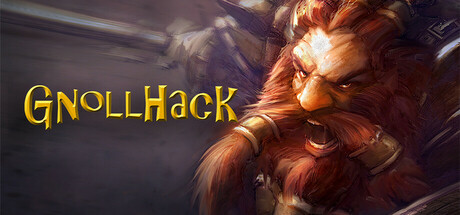
GnollHack features 'Overseer', an optional in-game AI assistant. Using external generative AI models, Overseer provides live-generated text responses to players during gameplay. Players can ask questions about mechanics or request contextual hints based on their current game state. AI content is strictly limited to text chat, and the service utilizes safety filters and prompt guardrails to ensure responses are safe, relevant, and free of illegal or harmful content.
Some in-game text and store page copy was drafted with an AI assistant and edited by the developer. No generative AI runs in the game or generates content at runtime. All artwork is programmatically composited from photographs taken by the developer.
AI helped with some writing, troubleshooting, localization, and the Steam store page. All art, animation, music, sound effects, and level design were created entirely by me. I reviewed and edited everything AI assisted with, and several translations were also checked by native speakers. The game does not generate AI content during gameplay and does not connect to any external AI services.
Generative AI tools were used as an editorial and localization assistant for some written content in the game and on the Steam store page. All such text is reviewed, revised, and approved by the development team. The game does not use generative AI at runtime.
This game uses generative artificial intelligence in part to improve development efficiency.
It is primarily utilized to assist with programming implementation and development tasks, as well as for generating BGM melodies and assisting in the creation of in-game messages.
However, all final decisions regarding game specifications and quality control are made by the developer, and only AI-generated content that has been reviewed and adjusted by human hands is used.
Parts of this game's source code and in-game text were produced with the assistance of generative AI tools during development.
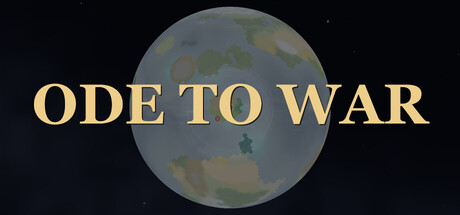
The planet itself is not AI-generated. It is built by conventional deterministic algorithms : noise functions, Voronoi tessellation, plate tectonics, erosion and climate simulation (the same family of techniques used in procedural generation for decades. Every world is reproducible from its seed).
No AI runs while you play, and the game never connects to an external AI service.
Generative AI tools were used to assist in creating and refining some pre-generated visual assets, narrative text, localization, and store/marketing artwork. All AI-assisted content was reviewed, edited, and curated by Plants Game. No content is generated during gameplay, and the game does not connect to external AI services.
Some BGM are AI-generated. Additionally, some textures were AI-generated based on human designs and fully refined by hand. AI tools were also used for translation and general development assistance.
This game uses generative AI to create visual assets, including character portraits, event CGs, and background images. All generated images were selected, adjusted, and finalized by the developer.
The scenario, dialogue, game design, and system programming were created by the developer. AI translation assistance was used as part of the localization process, with the results reviewed by the developer.
Generative AI tools were used during development to assist with the creation of some visual assets, store artwork and initial localization drafts. All generated content was reviewed, edited, and integrated by the developer.
Immortal Chess does not generate AI content during gameplay.
We view artificial intelligence solely as a supportive tool. Generative AI was used only as a supportive tool for certain visual designs and language translation.
Artificial intelligence helped with grammar corrections in in-game text; these corrections were then carefully reviewed and edited manually.
Sia's art and sound - her sprites, the outfits, the tarot cards, the item and monster icons, the sound effects - were produced with the help of generative AI tools and then edited and assembled by hand. The store images were made the same way. The game's text was written in Korean by hand; the seven other language translations were AI-assisted and reviewed by a human.
Nothing is generated while you play. The game ships as fixed image, sound and text files and never contacts an AI service.
AI was used to generate code, art prototypes which were then handcrafted in Aseprite, CSS for UIs, and tedious copy stuffed in nooks and crannies to fill out the world.
Portions of the game's text content (item descriptions and English localization) and store page text were written with the assistance of a generative AI language model, under human direction with full review and editing. All artwork is hand-drawn by the developers, and the game does not use any live/runtime AI generation.
AI tool assisted in translating the store page into 15 different languages.
We do NOT use AI-generated art, and we never intentionally include AI assets in our game. We sometimes buy assets and use stock photos. We do our best to verify them, but nowadays, distinguishing AI from human-made art can be hard.
That said, if there is any specific artwork that you believe looks like AI or raises concerns, we would appreciate it if you could point it out on our Discord server. We will investigate and replace anything that might have slipped through.
AI-generated art is NOT something we want to include in our game.
Gildoria uses AI-assisted tools in parts of its development: some UI icons were made with AI image generation, the in-game text was translated with AI translation tools. All of it was reviewed and edited by the developer. 3D art, level design, game design and codes are human-made or licensed. No content is generated by AI while the game runs.
This game adopts generative AI technology to provide players with real-time interactive text dialogue with in-game NPCs. We have set strict content filtering rules to prevent the generation of inappropriate, illegal, pornographic or violent content. Players can report improper AI outputs through Steam's built-in marking tool.
Portions of this game's content were created with generative AI assistance under human direction and review: in-game text (social feed posts, event copy), localization into 8 languages, and marketing materials including the trailer. All AI-assisted content was reviewed by the developer. The game does not generate AI content at runtime.
Generative AI was used during development to assist with brainstorming, coding assistance, and drafting certain written materials. All game content, gameplay implementation, testing, review, and final decisions were completed and verified by the developer before release.
All primary artwork in this game, including the main character and every enemy, was created by hand either drawn by the developer or by human artists. AI assistance was limited to a few secondary visual effects (light effects, explosions, blood/spray), produced with custom procedural drawing scripts written with the help of an AI coding assistant and then hand-edited and curated by the developer. Some in-game text translations may be pre-generated with AI-assisted localization and reviewed by the developer. No image, audio, or video generation models were used. No AI is used at runtime.
Some in-game art - including relic icons, character/enemy art, and background imagery - was created with the assistance of generative AI tools during development. Some written content, such as boss dialogue and relic/item flavor text, was drafted with the assistance of generative AI and then reviewed and edited by the development team before being included in the game.
Generative AI is used in this title for translation (to support multiple languages) and for the initial concepts of the background music.
All final assets have undergone a process of editing, refinement, and review by human creators.
Generative AI tools were used during development to assist in creating and refining certain pre-generated visual, audio, localization, and promotional materials. All AI-assisted content was reviewed, edited, and curated by the development team before being included in the game or its marketing materials. The game does not generate AI content in real time during gameplay.
In this game, generative AI is used for the following purposes:
・Selecting options based on voice commands input by the user
・Generating portions of the display text
・Generating portions of the narration script
・The narration audio is created using a speech synthesis engine; generative AI is not used.
The game contains a few voice lines that where generated using a text-to-speech service. I assume this service used some sort of gen-AI. For some translations an AI was used for proofreading.
AI was utilized to generate some references and provide consultations during the code development process. Additionally, AI assisted in translating and correcting grammatical errors, as English is not my native language.
I wanted to lie and say I didn’t use ai at all, but my conscience wouldn't let me.
This game was developed with the assistance of generative AI tools for certain content, including:
Some visual art assets (images/textures)
Some narrative and story text
Programming assistance
All AI-generated content has been reviewed, edited, and integrated by the developer to ensure final quality and stylistic consistency.
Generative AI tools were used during development to assist with programming, translation/localization, and the creation of most of the game's artwork and music. All AI-assisted content was reviewed, selected, edited, and integrated by the developer. The game does not generate AI content during gameplay and does not connect to external AI services.
Precinct 2099 uses generative AI as a production tool. Part of the visual material (backgrounds, character art and store images) and the music were created with AI tools and then selected, edited and art-directed by hand by our team. Some of the localisation work is AI-assisted. The story, script, characters and game design are written by humans. The game does not generate any content live while you play: everything ships pre-generated with the build.
Some marketing materials for this game were made with generative AI: the trailer's narration uses an AI text-to-speech voice, and parts of this store page were drafted with AI assistance.
Nothing inside the game is AI-generated. The soundtrack is human-composed music licensed for commercial use, all artwork and logos are drawn programmatically by the game's own code, and every screenshot is captured from real gameplay. The game generates no AI content while you play.
Pre-generated generative AI was used during development to assist with visual artwork, music, sound effects, spoken audio, narrative and dialogue, and portions of the game code. The developer directed, reviewed, selected, edited, arranged, tested, and integrated the final content. No generative AI content is created while the game is running.
This whole game exists because I wondered whether, with these tools, I could actually make one.
Generative AI tools were used to create assets that ship with the game. The 3D ship and enemy models were generated with Meshy AI from my own 2D concept art, and AI tools assisted with in-game text, audio, and parts of the store page and marketing materials.
The design, code and balance are mine — the wave generation, the ship and weapon tuning, the modification link-set system, the campaign structure. Seventeen worlds' worth of hand-tuned numbers.
I'm a solo developer with a full-time job and three kids. The answer to the question turned out to be yes, and this is it.
Some 3D assets in this game were created with the help of AI generation tools, then edited, retextured and integrated by hand. Parts of the written text, including store page copy and in-game text translations, were drafted with AI assistance and reviewed by the developer. No content is generated live while you play, and no AI-generated voice acting is used. Everything is created and checked before release.
Deepclaim was made by a solo developer working with an AI coding assistant (Anthropic's Claude). The AI assisted in writing the game's code, which draws all of the game's visuals procedurally at runtime (the game ships with no image files) and synthesizes all of its audio procedurally (no audio files). AI assistance was also used for some in-game text, the Steam store page description, and the store/marketing capsule images. All AI-assisted output was directed, reviewed, and edited by the developer.
This game uses generative AI in the creation of some graphics, text, and English localization. All AI-generated content has been reviewed and edited by the developer before being used.
No generative AI content is created during gameplay.
AI translation tools were used to produce the localized text for the game. Additionally, initial concept drafts for select visual assets were generated using AI, but were subsequently heavily modified, painted over, and finalized by human artists.
Generative AI Usage
- Reference for some backgrounds and CG compositions
- Editing and proofreading of some text
- Assistance with English and Japanese localization
All final content was created, reviewed, and/or revised by the developer.
Operation: Horumus is a "vibe coding" experiment. Most of the game's content — code, game design, pixel art, sound effects, procedural music, narrative writing, and all four language localizations (English, Korean, Japanese, Simplified Chinese) — was developed with extensive use of generative AI tools, under the developer's direction. Every creative and technical decision was made by the developer, and all AI-generated output was reviewed and curated before inclusion.
No AI is invoked during gameplay. The game runs entirely offline and makes no calls to external AI services.
This is a parody experiment, and the use of AI is part of the experiment itself. We disclose it here so you can decide whether that approach is interesting to you.
GnollHack features 'Overseer', an optional in-game AI assistant. Using external generative AI models, Overseer provides live-generated text responses to players during gameplay. Players can ask questions about mechanics or request contextual hints based on their current game state. AI content is strictly limited to text chat, and the service utilizes safety filters and prompt guardrails to ensure responses are safe, relevant, and free of illegal or harmful content.
Some in-game text and store page copy was drafted with an AI assistant and edited by the developer. No generative AI runs in the game or generates content at runtime. All artwork is programmatically composited from photographs taken by the developer.
AI helped with some writing, troubleshooting, localization, and the Steam store page. All art, animation, music, sound effects, and level design were created entirely by me. I reviewed and edited everything AI assisted with, and several translations were also checked by native speakers. The game does not generate AI content during gameplay and does not connect to any external AI services.
Generative AI tools were used as an editorial and localization assistant for some written content in the game and on the Steam store page. All such text is reviewed, revised, and approved by the development team. The game does not use generative AI at runtime.
This game uses generative artificial intelligence in part to improve development efficiency.
It is primarily utilized to assist with programming implementation and development tasks, as well as for generating BGM melodies and assisting in the creation of in-game messages.
However, all final decisions regarding game specifications and quality control are made by the developer, and only AI-generated content that has been reviewed and adjusted by human hands is used.
Parts of this game's source code and in-game text were produced with the assistance of generative AI tools during development.
The planet itself is not AI-generated. It is built by conventional deterministic algorithms : noise functions, Voronoi tessellation, plate tectonics, erosion and climate simulation (the same family of techniques used in procedural generation for decades. Every world is reproducible from its seed).
No AI runs while you play, and the game never connects to an external AI service.
Generative AI tools were used to assist in creating and refining some pre-generated visual assets, narrative text, localization, and store/marketing artwork. All AI-assisted content was reviewed, edited, and curated by Plants Game. No content is generated during gameplay, and the game does not connect to external AI services.
Some BGM are AI-generated. Additionally, some textures were AI-generated based on human designs and fully refined by hand. AI tools were also used for translation and general development assistance.