Public Steam disclosure research25,514 disclosures tracked
Where do games disclose AI use?
Search developers’ Steam disclosures, compare classified AI use across
games, and follow recorded changes.
This index adds cross-game classifications and statistics to
statements published on individual store pages.
Groups reflect automatic analysis of public disclosures; mature records are excluded. These counts do not measure AI use across all of Steam.
Missing or unclear statements cannot establish whether a game uses AI.
To improve development efficiency and creative inspiration, our team integrated AI-assisted tools into the development of the game. We used Claude and GLM as creative partners to help us draft and refine portions of the game's visuals, story, dialogue, and text, as well as to help translate the store page content into different languages (not in-game text).
Please be assured that AI is just one part of our creative process — every piece of content ultimately presented to players, from each word to the overall story, has been carefully designed, reviewed, and revised by our development team to ensure the highest quality and the best gaming experience.
This game was originally written in Chinese, and all non-Chinese localizations were created with the assistance of AI translation.
A part of game music was created by AI.
All other content — artwork, game design — was created by the development team without the use of generative AI.
Some of this game's artwork — including key art, the main-menu background, and store/marketing images — was created with the help of generative AI (Midjourney) and then curated and edited by the developer.
Everything else, including gameplay, code, sound, and the in-game pixel art, is human-made or from licensed asset packs. No AI-generated content is produced live while you play.
Some in-game text translations were produced with AI assistance and reviewed for accuracy.
Our Policy on AI & Procedural Generation
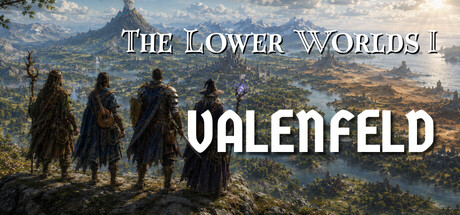
Valenfeld is built by one person, on a shoestring budget, with an Elder Scrolls–sized ambition. Here is exactly how, and why, AI fits into that.
Why we use it
Valenfeld is a solo indie project chasing a scope that normally takes a studio of dozens: a massive, hand-lorekept world you can wander for years without hitting an edge. That scope is not achievable by one person typing every tree, every ruin, and every line of dialogue by hand on a shoestring budget and an ambitious timeline. So we lean on AI-enabled workflows and, more importantly, cutting-edge procedural algorithms to scale content production and world scale to match the ambition — not to replace it.
What always stays human
Every piece of content in the game — every place, character, creature, item, quest, and line of lore — is built and overseen by a human creator and judge, grounded in our own ideas, our own lore, and our own systems design. AI does not decide what Valenfeld is. It never originates the world's canon, its themes, or its design intent on its own; it accelerates producing what we've already decided the world should be, and everything it touches is reviewed before it ships.
Not AI slop — procedural generation is the point
We're not interested in dumping raw model output into the game and calling it done. Our actual goal is an experimental, large-scale world built on cutting-edge procedural algorithms — terrain, dungeons, towns, ecosystems, even history — designed to be massively replayable for years, not a one-and-done AI slideshow. AI-assisted tooling is one part of the production pipeline that gets us there faster on a small budget; the procedural systems and the authored lore they run on are the actual craft, and that's where our attention to detail goes.
Our bet
We believe that if we focus relentlessly on delivering the best game possible — with a genuinely obsessive eye for detail on everything we ship — we can produce something great on a low budget and a small team of one. That is the bar we hold ourselves to, not "shipped fast" or "shipped cheap."
As we grow
This is how we build today, as a solo project with an ambitious scope and timeline. If and when Valenfeld earns a bigger budget for this game or for future releases, we intend to keep building just as ambitiously — with a team of art, lore, and gameplay experts working alongside these same tools, not replaced by them. Thinking about the best possible game comes first; everything else, including how we scale to build it, follows from that.
— Metatransformer Studios
Portions of this game's art and audio were created using generative AI tools during development: card and character artwork, backgrounds and icons (including store page artwork), music, sound effects, and voice audio were AI-generated under human direction, then curated and edited by the developers. Game design, rules, code, card text and names, and all narrative writing are human-authored. Nothing is generated by AI while you play.
We want to be transparent with our players.
It is possible that AI-assisted tools were used at some early stages of development, such as brainstorming, concept exploration, or helping us evaluate clarity of certain narrative elements.
Some audio assets used in the game were sourced from licensed third-party libraries and marketplaces (such as Envato), and are used under proper commercial licenses.
At the current stage of development, voice acting is generated using AI-based tools as a temporary solution. We are actively planning to replace it with professional human voice acting in future updates.
All final gameplay experience and core content are assembled, designed, and produced by our development team.
Some parts of the game were created with the help of generative AI tools. The music was made using Suno, and a few pieces of text were assisted by AI during development. Everything included in the game has been reviewed and approved by me before shipping.
'm a solo developer making this game with a very limited budget. While I was able to hire artists for some of the game's assets, I simply couldn't afford to commission every piece of content needed to complete the project.
Because of that, I used generative AI as a supplementary tool for certain assets and to assist with English translation. Since English isn't my native language, AI also helped me ensure that dialogue, jokes, and other text conveyed the intended meaning naturally.
Whenever possible, I chose to work with human artists, and all AI-generated content was carefully reviewed, edited, and integrated by me. My goal was never to replace artists, but to make it possible to finish the game as an independent developer.
Generative AI was used in a limited capacity for pre-generated visual assets and localization assistance during development. Temporary AI-generated artwork will be replaced with original artwork before the full release.
AI tools were used to assist with code development, some in-game text, and marketing visuals. All game design, story direction and gameplay mechanics were created and reviewed by the developer. No AI-generated content is produced in real-time during gameplay.
Since the game is still in active development, generative AI tools were used to create most of the artwork and text included in the game and on the store page. All generated content was carefully reviewed, heavily edited, and integrated by the developers.
Some visual assets, audio, and written content used in this game were created or assisted by generative AI and have been reviewed, edited, and integrated by the developer. The game does not use AI to generate content during gameplay.
This game uses prerendered visual content, store assets, and translations assisted by generative AI. All AI-assisted content is created before release. It is not generated dynamically during gameplay. The game does not connect to external AI services during gameplay.
In the interest of transparency: DeckCrate was built with the help of AI including the development of the app, UI, Steam assets and the documentation website under https://deckcrate.app. AI was a tool in the process and not a replacement for judgment. Everything that ships is reviewed, tested, and signed off by a human. Nothing goes out the door on an AI’s word alone: code is read and understood, behavior is verified, and the final decisions are made by the developer.
To create realistic interrogation scenarios in this detective game, this game packages a local, offline LLM to serve as the brain of the NPC suspects. This allows the user to lead the investigation however they like. Generative AI was NOT used to create this game, but an LLM is featured as a main game mechanic in the form of freeform NPC conversation.
Generative AI was used as an assistive tool during development for selected visual assets, promotional materials, and text drafts. All resulting content was reviewed, edited, and integrated by the developer. The game does not generate content during gameplay and does not connect to third-party AI services.
Syncline is developed by me — AI tools were used to assist with parts of development, including code, some text content (UI copy, tutorial hints, level descriptions, store page copy), localization/translations, and some audio. All such content was directed by me and reviewed/edited before being included. No content is generated by AI at runtime — everything players see, hear, and play is fixed at build time.
Some of this game's shipped assets were created with the assistance of generative AI tools, all reviewed and curated by our team: 3D models and their textures (generated from our team's original concept designs), 2D illustrations and UI artwork, music and sound effects, and AI-assisted translations of in-game text for some supported languages. All AI-generated assets are used under commercial licenses with full usage rights. No content is generated while the game is running, and the game does not connect to any external AI service.
Generative AI tools, including OpenAI ChatGPT/Codex, assisted during development with portions of the original C++ code, interface text, gameplay balancing, documentation, store-page materials, geometric visual design, and music synthesis. The developer reviewed, tested, selected, and integrated the resulting material. In-game graphics are procedurally drawn from original geometric shapes, while the original music and sound effects are synthesized by the game. No third-party characters, music recordings, voices, logos, or downloaded asset packs are included.
In this game, the developer uses AI tools in the creation of the following pre-generated content that players see:
1. Artwork: Image assets and promotional materials.
2. Text: In-game text, store page descriptions, and their multilingual translations.
Pre-generated: Store page capsule art and marketing images were created with AI assistance. In-game text (unit descriptions, UI copy) and the store description were written with AI assistance. All in-game visuals are drawn procedurally at runtime by the game's own code. No AI model runs in the game and no content is generated during play. All AI-assisted output was reviewed and edited by the developer and contains no third-party or infringing material.
This game uses generative AI in limited, non-gameplay-critical areas:
- AI-assisted code refactoring and performance optimization during development
- AI-assisted translation polishing for multi-language support
- UI layout refinement suggested by AI tools during the design process
All core gameplay logic, the unique drawing-and-deduction design, and all original game artwork were created, reviewed and refined by human developers.
Generative AI tools were used to help create parts of this game, always under the developer's direction: a significant part of the artwork (such as backgrounds, unit graphics, UI elements and store page images) was created with AI assistance and then reviewed, edited and hand-tuned by the developer. AI also assisted in writing the in-game text and translating it, along with this store page, into the supported languages. Music and sound effects are not AI-generated. No AI content is generated live during gameplay.
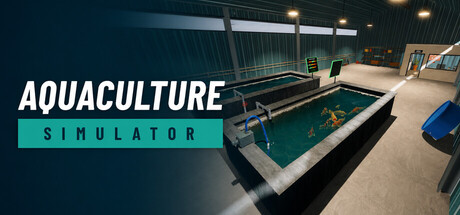
Some of this game's assets were created with generative AI tools and then integrated by hand: the fish models, the facility hall, and the tanks. Some in-game text, the tutorial and the customer emails, was written with the help of an AI language model. All other assets (music, sound, icons, textures, remaining UI) are hand-made or CC0. Every game system, the water simulation, koi grading, economy, customer and calendar logic, is hand-written code. No generative AI runs at runtime; nothing is generated live while you play.
Ai is used to create some loading-screens and other branding materials, also can be used in descriptive texts of the game.
All game code/assets are 100% made by humans.
Some in-game text, store page copy, and 2D marketing assets were created with the assistance of AI tools. All AI-assisted content was reviewed and curated by the developer. The game does not generate any content using AI during gameplay.
AI tools were used to assist development, including code, Chinese/Spanish localization text and store page copy. All AI-assisted content was reviewed and curated by the developer. The game does not generate any content with AI at runtime.
NarrationOS uses generative AI to create its output. It synthesizes speech from your books using an AI voice model (Resemble AI's Chatterbox) and can generate a custom voice from a short recording you supply. A local AI language model assists with text analysis. All generation happens locally on your device. You are responsible for having the rights to any content or voice you use, and voice cloning requires your confirmation of consent.
The development of Memento made use of generative AI tools across several stages of production. Cutscenes are created using AI-based video generation tools. Graphic elements such as environments, characters, and card illustrations were created or refined with the help of generative AI tools. Parts of the soundtrack and text were also produced with AI assistance. All content was manually selected, edited, and integrated by the developer.
Some game text, procedural artwork, sound effects, and store page copy were created with AI assistance, then reviewed and curated by the developer. Character and enemy sprites are licensed, human-made pixel art. No content is AI-generated during gameplay.
Generative AI was used during the development of this game. Specifically, AI tools were utilized to assist in the creation and optimization of [some art assets / text localization / narrative polish]. All AI-generated content has been thoroughly reviewed and manually refined by the development team to ensure quality.
AI tools were used during development to assist in creating portions of the game's code, text, and 2D artwork, including some store page assets. All AI-assisted content was generated during development and reviewed by the developer. The game does not use AI to generate any content at runtime.
Some visual concepts, promotional artwork, and certain written materials used for the game's presentation were created or refined with the assistance of generative AI. All AI-assisted content has been carefully reviewed, edited, and approved by the development team to ensure artistic consistency, originality, and quality. The gameplay, design decisions, and final player experience are fully curated by the developers.
This game uses generative AI only for in-game character dialogue. Players can communicate with certain characters using natural language, and the AI generates text responses based on the game's setting and the current conversation context. Apart from character dialogue text, the game's artwork, music, sound effects, code, store page assets, and marketing materials are not generated by AI.
Localization of the textual content for non-english languages is mainly produced as translations from english using generative artificial intelligence. LLM's have been used as a help also in writing and reviewing of program code, development helper tools, infrastructure setup, security checks, test maintenance and requirements management.
About Generative AI
During development, we used generative AI tools to assist in creating some art assets, text copy, and voice-over segments. All AI‑generated content has been reviewed, modified, and refined item by item by our design team to ensure it meets the game’s overall style and quality standards, and final approval was carried out manually before release.
We have taken necessary measures to ensure that no AI‑generated content infringes upon any third‑party copyrights, trademarks, or other legal rights.
None of the game's artwork, audio, or imagery is AI-generated. Portraits, interface, and all store and marketing art are hand-authored vector and procedural work, and that is a hard rule of the project. We do use AI assistance during development for writing and code, including drafting store text and the scripts that lay out our marketing art, all of it reviewed and edited by hand. No image-generation models are used anywhere, in the game or in its marketing.
Dialogue and narration are generated at runtime by a small language model running entirely on the player's machine. Nothing is sent to any server. The model has no authority over the game: a deterministic simulation decides every outcome, fact, and number, and the model only phrases scenes from state the engine hands it. Its output is structurally constrained and validated against the simulation before it appears, and invalid output is rejected. Prompts and validation keep generated text within the game's fiction and its PG-13 register. Player-typed orders go only to the local model and never leave the machine.
This game used generative AI as an assistive tool for translation and localization, and for producing some sound effects and music. All final text and audio were reviewed, edited, and approved by humans before inclusion.
To improve development efficiency and creative inspiration, our team integrated AI-assisted tools into the development of the game. We used Claude and GLM as creative partners to help us draft and refine portions of the game's visuals, story, dialogue, and text, as well as to help translate the store page content into different languages (not in-game text).
Please be assured that AI is just one part of our creative process — every piece of content ultimately presented to players, from each word to the overall story, has been carefully designed, reviewed, and revised by our development team to ensure the highest quality and the best gaming experience.
This game was originally written in Chinese, and all non-Chinese localizations were created with the assistance of AI translation.
A part of game music was created by AI.
All other content — artwork, game design — was created by the development team without the use of generative AI.
Some of this game's artwork — including key art, the main-menu background, and store/marketing images — was created with the help of generative AI (Midjourney) and then curated and edited by the developer.
Everything else, including gameplay, code, sound, and the in-game pixel art, is human-made or from licensed asset packs. No AI-generated content is produced live while you play.
Some in-game text translations were produced with AI assistance and reviewed for accuracy.
Our Policy on AI & Procedural Generation
Valenfeld is built by one person, on a shoestring budget, with an Elder Scrolls–sized ambition. Here is exactly how, and why, AI fits into that.
Why we use it
Valenfeld is a solo indie project chasing a scope that normally takes a studio of dozens: a massive, hand-lorekept world you can wander for years without hitting an edge. That scope is not achievable by one person typing every tree, every ruin, and every line of dialogue by hand on a shoestring budget and an ambitious timeline. So we lean on AI-enabled workflows and, more importantly, cutting-edge procedural algorithms to scale content production and world scale to match the ambition — not to replace it.
What always stays human
Every piece of content in the game — every place, character, creature, item, quest, and line of lore — is built and overseen by a human creator and judge, grounded in our own ideas, our own lore, and our own systems design. AI does not decide what Valenfeld is. It never originates the world's canon, its themes, or its design intent on its own; it accelerates producing what we've already decided the world should be, and everything it touches is reviewed before it ships.
Not AI slop — procedural generation is the point
We're not interested in dumping raw model output into the game and calling it done. Our actual goal is an experimental, large-scale world built on cutting-edge procedural algorithms — terrain, dungeons, towns, ecosystems, even history — designed to be massively replayable for years, not a one-and-done AI slideshow. AI-assisted tooling is one part of the production pipeline that gets us there faster on a small budget; the procedural systems and the authored lore they run on are the actual craft, and that's where our attention to detail goes.
Our bet
We believe that if we focus relentlessly on delivering the best game possible — with a genuinely obsessive eye for detail on everything we ship — we can produce something great on a low budget and a small team of one. That is the bar we hold ourselves to, not "shipped fast" or "shipped cheap."
As we grow
This is how we build today, as a solo project with an ambitious scope and timeline. If and when Valenfeld earns a bigger budget for this game or for future releases, we intend to keep building just as ambitiously — with a team of art, lore, and gameplay experts working alongside these same tools, not replaced by them. Thinking about the best possible game comes first; everything else, including how we scale to build it, follows from that.
— Metatransformer Studios
Portions of this game's art and audio were created using generative AI tools during development: card and character artwork, backgrounds and icons (including store page artwork), music, sound effects, and voice audio were AI-generated under human direction, then curated and edited by the developers. Game design, rules, code, card text and names, and all narrative writing are human-authored. Nothing is generated by AI while you play.
We want to be transparent with our players.
It is possible that AI-assisted tools were used at some early stages of development, such as brainstorming, concept exploration, or helping us evaluate clarity of certain narrative elements.
Some audio assets used in the game were sourced from licensed third-party libraries and marketplaces (such as Envato), and are used under proper commercial licenses.
At the current stage of development, voice acting is generated using AI-based tools as a temporary solution. We are actively planning to replace it with professional human voice acting in future updates.
All final gameplay experience and core content are assembled, designed, and produced by our development team.
Some parts of the game were created with the help of generative AI tools. The music was made using Suno, and a few pieces of text were assisted by AI during development. Everything included in the game has been reviewed and approved by me before shipping.
'm a solo developer making this game with a very limited budget. While I was able to hire artists for some of the game's assets, I simply couldn't afford to commission every piece of content needed to complete the project.
Because of that, I used generative AI as a supplementary tool for certain assets and to assist with English translation. Since English isn't my native language, AI also helped me ensure that dialogue, jokes, and other text conveyed the intended meaning naturally.
Whenever possible, I chose to work with human artists, and all AI-generated content was carefully reviewed, edited, and integrated by me. My goal was never to replace artists, but to make it possible to finish the game as an independent developer.
Generative AI was used in a limited capacity for pre-generated visual assets and localization assistance during development. Temporary AI-generated artwork will be replaced with original artwork before the full release.
AI tools were used to assist with code development, some in-game text, and marketing visuals. All game design, story direction and gameplay mechanics were created and reviewed by the developer. No AI-generated content is produced in real-time during gameplay.
Since the game is still in active development, generative AI tools were used to create most of the artwork and text included in the game and on the store page. All generated content was carefully reviewed, heavily edited, and integrated by the developers.
Some visual assets, audio, and written content used in this game were created or assisted by generative AI and have been reviewed, edited, and integrated by the developer. The game does not use AI to generate content during gameplay.
This game uses prerendered visual content, store assets, and translations assisted by generative AI. All AI-assisted content is created before release. It is not generated dynamically during gameplay. The game does not connect to external AI services during gameplay.
In the interest of transparency: DeckCrate was built with the help of AI including the development of the app, UI, Steam assets and the documentation website under https://deckcrate.app. AI was a tool in the process and not a replacement for judgment. Everything that ships is reviewed, tested, and signed off by a human. Nothing goes out the door on an AI’s word alone: code is read and understood, behavior is verified, and the final decisions are made by the developer.
To create realistic interrogation scenarios in this detective game, this game packages a local, offline LLM to serve as the brain of the NPC suspects. This allows the user to lead the investigation however they like. Generative AI was NOT used to create this game, but an LLM is featured as a main game mechanic in the form of freeform NPC conversation.
Generative AI was used as an assistive tool during development for selected visual assets, promotional materials, and text drafts. All resulting content was reviewed, edited, and integrated by the developer. The game does not generate content during gameplay and does not connect to third-party AI services.
Syncline is developed by me — AI tools were used to assist with parts of development, including code, some text content (UI copy, tutorial hints, level descriptions, store page copy), localization/translations, and some audio. All such content was directed by me and reviewed/edited before being included. No content is generated by AI at runtime — everything players see, hear, and play is fixed at build time.
Some of this game's shipped assets were created with the assistance of generative AI tools, all reviewed and curated by our team: 3D models and their textures (generated from our team's original concept designs), 2D illustrations and UI artwork, music and sound effects, and AI-assisted translations of in-game text for some supported languages. All AI-generated assets are used under commercial licenses with full usage rights. No content is generated while the game is running, and the game does not connect to any external AI service.
Generative AI tools, including OpenAI ChatGPT/Codex, assisted during development with portions of the original C++ code, interface text, gameplay balancing, documentation, store-page materials, geometric visual design, and music synthesis. The developer reviewed, tested, selected, and integrated the resulting material. In-game graphics are procedurally drawn from original geometric shapes, while the original music and sound effects are synthesized by the game. No third-party characters, music recordings, voices, logos, or downloaded asset packs are included.
In this game, the developer uses AI tools in the creation of the following pre-generated content that players see:
1. Artwork: Image assets and promotional materials.
2. Text: In-game text, store page descriptions, and their multilingual translations.
Pre-generated: Store page capsule art and marketing images were created with AI assistance. In-game text (unit descriptions, UI copy) and the store description were written with AI assistance. All in-game visuals are drawn procedurally at runtime by the game's own code. No AI model runs in the game and no content is generated during play. All AI-assisted output was reviewed and edited by the developer and contains no third-party or infringing material.
This game uses generative AI in limited, non-gameplay-critical areas:
- AI-assisted code refactoring and performance optimization during development
- AI-assisted translation polishing for multi-language support
- UI layout refinement suggested by AI tools during the design process
All core gameplay logic, the unique drawing-and-deduction design, and all original game artwork were created, reviewed and refined by human developers.
Generative AI tools were used to help create parts of this game, always under the developer's direction: a significant part of the artwork (such as backgrounds, unit graphics, UI elements and store page images) was created with AI assistance and then reviewed, edited and hand-tuned by the developer. AI also assisted in writing the in-game text and translating it, along with this store page, into the supported languages. Music and sound effects are not AI-generated. No AI content is generated live during gameplay.
Some of this game's assets were created with generative AI tools and then integrated by hand: the fish models, the facility hall, and the tanks. Some in-game text, the tutorial and the customer emails, was written with the help of an AI language model. All other assets (music, sound, icons, textures, remaining UI) are hand-made or CC0. Every game system, the water simulation, koi grading, economy, customer and calendar logic, is hand-written code. No generative AI runs at runtime; nothing is generated live while you play.
Ai is used to create some loading-screens and other branding materials, also can be used in descriptive texts of the game.
All game code/assets are 100% made by humans.
Some in-game text, store page copy, and 2D marketing assets were created with the assistance of AI tools. All AI-assisted content was reviewed and curated by the developer. The game does not generate any content using AI during gameplay.
AI tools were used to assist development, including code, Chinese/Spanish localization text and store page copy. All AI-assisted content was reviewed and curated by the developer. The game does not generate any content with AI at runtime.
NarrationOS uses generative AI to create its output. It synthesizes speech from your books using an AI voice model (Resemble AI's Chatterbox) and can generate a custom voice from a short recording you supply. A local AI language model assists with text analysis. All generation happens locally on your device. You are responsible for having the rights to any content or voice you use, and voice cloning requires your confirmation of consent.
The development of Memento made use of generative AI tools across several stages of production. Cutscenes are created using AI-based video generation tools. Graphic elements such as environments, characters, and card illustrations were created or refined with the help of generative AI tools. Parts of the soundtrack and text were also produced with AI assistance. All content was manually selected, edited, and integrated by the developer.
Some game text, procedural artwork, sound effects, and store page copy were created with AI assistance, then reviewed and curated by the developer. Character and enemy sprites are licensed, human-made pixel art. No content is AI-generated during gameplay.
Generative AI was used during the development of this game. Specifically, AI tools were utilized to assist in the creation and optimization of [some art assets / text localization / narrative polish]. All AI-generated content has been thoroughly reviewed and manually refined by the development team to ensure quality.
AI tools were used during development to assist in creating portions of the game's code, text, and 2D artwork, including some store page assets. All AI-assisted content was generated during development and reviewed by the developer. The game does not use AI to generate any content at runtime.
Some visual concepts, promotional artwork, and certain written materials used for the game's presentation were created or refined with the assistance of generative AI. All AI-assisted content has been carefully reviewed, edited, and approved by the development team to ensure artistic consistency, originality, and quality. The gameplay, design decisions, and final player experience are fully curated by the developers.
This game uses generative AI only for in-game character dialogue. Players can communicate with certain characters using natural language, and the AI generates text responses based on the game's setting and the current conversation context. Apart from character dialogue text, the game's artwork, music, sound effects, code, store page assets, and marketing materials are not generated by AI.
Localization of the textual content for non-english languages is mainly produced as translations from english using generative artificial intelligence. LLM's have been used as a help also in writing and reviewing of program code, development helper tools, infrastructure setup, security checks, test maintenance and requirements management.
About Generative AI
During development, we used generative AI tools to assist in creating some art assets, text copy, and voice-over segments. All AI‑generated content has been reviewed, modified, and refined item by item by our design team to ensure it meets the game’s overall style and quality standards, and final approval was carried out manually before release.
We have taken necessary measures to ensure that no AI‑generated content infringes upon any third‑party copyrights, trademarks, or other legal rights.
None of the game's artwork, audio, or imagery is AI-generated. Portraits, interface, and all store and marketing art are hand-authored vector and procedural work, and that is a hard rule of the project. We do use AI assistance during development for writing and code, including drafting store text and the scripts that lay out our marketing art, all of it reviewed and edited by hand. No image-generation models are used anywhere, in the game or in its marketing.
Dialogue and narration are generated at runtime by a small language model running entirely on the player's machine. Nothing is sent to any server. The model has no authority over the game: a deterministic simulation decides every outcome, fact, and number, and the model only phrases scenes from state the engine hands it. Its output is structurally constrained and validated against the simulation before it appears, and invalid output is rejected. Prompts and validation keep generated text within the game's fiction and its PG-13 register. Player-typed orders go only to the local model and never leave the machine.
This game used generative AI as an assistive tool for translation and localization, and for producing some sound effects and music. All final text and audio were reviewed, edited, and approved by humans before inclusion.