
Disclosure
AI was used for translation, testing, and art assistance.
- Creator
- 狐狸博士 Dr.Fox
- Reviews
- -
- Added
- Jul 20, 2026
Public Steam disclosure research 25,519 disclosures tracked
Search developers’ Steam disclosures, compare classified AI use across games, and follow recorded changes. This index adds cross-game classifications and statistics to statements published on individual store pages.
Code help, debugging and other development work.
Capsule art, trailers and promotional material.
Pre-made art, audio, writing and other game assets.
Interactive or runtime AI features disclosed by the developer.
Groups reflect automatic analysis of public disclosures; mature records are excluded. These counts do not measure AI use across all of Steam. Missing or unclear statements cannot establish whether a game uses AI.
AI was used for translation, testing, and art assistance.
Generative AI (Claude, Anthropic) was used to draft narrative text including level briefing descriptions, objective text, and in-game educational hints. All narrative content was written collaboratively with human review and editing before inclusion in the final game.
In-Game Text Creation and Translation: We use AI to create and translate text for in-game content and store descriptions. Program Code Generation: We use AI to create and optimize the programming code that implements the game’s features and systems. Sound Effect Generation: We use AI to generate sound effects used in the game.
Generative AI was used to assist in the creation of certain Steam store page artwork (excluding screenshots and trailers) and in the multilingual localization of the store page.
Some character and environment artwork, and portions of marketing/store text, were created with the assistance of generative AI tools. All assets were selected, edited, and integrated by the developer, who has the rights to use them. No AI runs at runtime in the game.
The game's design, game systems, balance, and English narrative are human-developed. AI tools were used during development as a coding assistant, with any recommended code changes specified, reviewed, and tested by the developer. The Japanese localization was produced with AI assistance and hand-edited for nuances, idioms, and accuracy. AI tools were also used for grammar and spell checking. No content is AI-generated at runtime.
Generative AI was used during development as a supporting tool for parts of the music, selected visual assets, some voice-over lines, portions of the code, and the editing or localization of selected text. The game's concept, design, story, and creative direction are the developer's original work. All AI-assisted content was reviewed and edited as needed by the developer. The game does not use generative AI or generate new AI content during gameplay.
We have used generative AI tools to translate the game into additional languages and make it accessible to a wider audience. The development team has reviewed and overseen the integration of all text to ensure it is displayed correctly and that the interface and menus function properly.
Translated with the help of AI. Thank you for your understanding.
The game uses Generative AI for the following in a Static manner nothing is dynamically generated I have used some of it for: Some Card Art, Some Event Art and finally Localization - Please try the free demo before purchase if you require a language other than English to see if its workable. Thank you!
We use AI to assist with game development, including code, translations, and the creation of background assets. The game does not use any real-time AI systems.
Some development used generative AI tools to assist with writing code, shaders, and drafting some in-game text. All content was approved by the developer.
Generative AI tools were used during development, including for localization of in-game text.
Generative AI is used as a production support tool throughout development. It assists with localization, workflow acceleration, and the integration of assets across multiple disciplines into a consistent production pipeline. All AI-assisted content is reviewed, edited, integrated, and quality-controlled by the development team before being included in the final game.
Generative AI tools were used during development to create and manually refine some illustrations, store page artwork, and music tracks, as well as to assist with text preparation and localization. The game does not generate any AI content in real time.
Pocket Chief! uses generative AI for optional text conversations, activity summaries, and task organization. Some artwork and localization used in the product and its marketing were also created with AI assistance. Users can choose Pocket Chief Cloud, connect their own compatible model provider (BYOK), or use a local model endpoint.
This game is primarily built with pre-generated AI-assisted content, including artwork, text, localization, music, video, and marketing materials. All AI-assisted content is reviewed, selected, and edited by the developer before being included in the game or store page. The game does not use live-generated AI during gameplay and does not connect to any external AI service while running.
AI tools were used to assist in drafting some written text (in-game lore entries and store page descriptions); all such text was reviewed and edited by the developer. All artwork, animation, music, and sound effects are human-created licensed assets. The game does not use AI to generate any content at runtime.
Generative AI was used only as a supporting tool for the design of some fictional bottle brands and language translation.
AI tools were used only for brainstorming, writing support, and planning during development. The game does not generate AI content during gameplay.
This game was developed based on the concept of creating a Steam game with AI and Unity. Some in-game 3D models, images/artwork, UI elements, sounds, text, and multilingual localization copy were generated or assisted by generative AI tools, then directly edited, arranged, implemented, and finalized by the developer in Unity. The game does not generate new AI content in real time during gameplay. All AI-generated or AI-assisted elements were created, reviewed, and edited in advance before being included as part of the game content.
AI translation for several language
This game uses generative AI in the following ways: - Some of the in-game and store page artwork was created using AI image generation tools. - Some localization (translations) was assisted by AI tools. All AI-generated content is reviewed and edited by the developer before release. Background music uses royalty-free tracks and is not AI-generated. Parts of the game's code were written with the assistance of AI coding tools.
Generative AI was used during development to create certain music, assist with localization, and produce some icon assets. All AI-generated content included in the final game was reviewed, edited, and approved by the development team before release.
Sound design and Localization (localization can hopefully be community sourced with proper credit given in-game for users that assist with translations)
During gameplay, the AI generates regional information and sightseeing guides (utilizing the Google Gemini API ). These generated texts change in real time and may occasionally contain inaccurate information. Additionally, some images displayed within the game and on the store page utilize assets pre-generated by Google Gemini. (These are pre-generated contents, not live-generated during gameplay.)
Topological Board Game used generative AI tools during development to assist with programming, documentation, store-page text, localization drafts, and design iteration. All AI-assisted material is reviewed and edited by the developer before being included in the game or store page. The game does not use generative AI to create live player-facing content during gameplay. It does not connect to external third-party AI services during normal gameplay. Local robot opponents, rule-based analysis, search, simulation, and self-play/research tools may be included, but these are gameplay/strategy systems rather than live generative AI content systems.
Portions of this game's store page text were created with the assistance of generative AI tools and then edited by the developer. CueVR itself does not use generative AI: its captions are produced entirely by on-device speech-to-text transcription of a live microphone, with no content generation and no external AI services.
Generative AI was used to assist with the creation and refinement of selected visual assets, promotional images, Steam store page graphics, and localization materials.
Generative AI was used during development to assist with the translation and localization of in-game text into multiple languages
The announcer voice audio is generated using text-to-speech technology. The game's phrase pool was written with AI assistance and human review. Some commissioned store and library artwork may include AI-generated elements.
This game does not use generative AI at runtime and does not generate content based on player input. Generative AI was used during development to assist with some static artwork, icons, promotional images, and draft text. All such content was reviewed, edited, integrated, and approved by the developer.
AI Gen tools were used in a variety of ways for this game. Asset image concepting, narrative re-writes, 3d meshing, and marketing assets typically went through some form of a.i. modification, but then returned to a human-in-the-loop production step before game integration.
AI-assisted tools were used for parts of the game’s localization.
Generative AI was used during development for certain text descriptions and for a limited number of illustrative assets. These visuals were subsequently reworked by the game’s artist for consistency with the game’s final style. No generative AI is used during gameplay.
Gen AI was used only for translation assistance. No AI was used for artwork, visuals, audio, or gameplay content.
In EverRail, AI-generated voiceover is used only for machine characters: the train's AI board computer and robot enemies, voices that are artificial in the story itself, which also lets us offer them in multiple languages. Beyond that, our team uses generative AI as a tool to support development, with our artists, designers, and engineers refining and hand-building every asset that makes it into the game.
This game makes use of AI for localization of the following languages: Ukrainian, Spanish, Japanese, Korean, Polish, Portugese (Brasil), Russian, Simplified Chinese, Traditional Chinese, Turkish, Hindi. We're working with native translators, so expect this list to become shorter with time.
Veyrasol uses generative AI tools as part of its art pipeline. Both 3D models and 2D artwork used in the game (illustrations, backgrounds, UI and unit icons), as well as store page and marketing graphics such as capsule images and banners, were created with the help of generative AI tools and then reviewed, edited and assembled by the developer. Generative AI tools were also used to help write parts of the marketing website and store page copy. The core game (engine, server logic, real-time combat, and systems) is hand-coded by the developer, and no content is generated by AI at runtime during play.
Generative AI tools were used during development to assist with creating some concept art, graphical assets, and text for the game and its Steam store page. All generated content was reviewed, edited, and integrated by the developer. No generative AI is used during gameplay.
AI tools were used during development to assist with initial language translation drafts and secondary asset editing.
This game uses generative AI as part of its art and localization pipeline. Specifically: - Character portrait artwork: The hunters' painted bust portraits (shown on the character-select screen, and reused in store page capsule art and the trailer) were generated using a local Stable Diffusion XL model with a custom LoRA, then composited by hand into final scenes. - Localization: UI text translations for French, German, Spanish (Spain), Spanish (Latin America), Portuguese (Brazil), Italian, Polish, and Turkish were produced with AI assistance and reviewed before shipping. All AI-assisted content was reviewed by the development team before inclusion. No content is generated live or in response to player input during gameplay — all AI-assisted assets are fixed at build time.
AI tools assisted with programming and with translating the game's interface text into languages other than English. All translations and text were reviewed by the developer; the game's design, visuals, and audio are not AI-generated.
Art. All 2D art in Wartorn is produced with AI image-generation tools and then selected, edited, retouched and composited by hand by the developer. This covers the character portraits, the scene backgrounds, the ending and gallery illustrations, the achievement icons, and the store capsules, screenshots and trailer, which are derived from that same in-game art. Text. The story, the branching structure and the choice design are the developer's own. AI writing tools were used to assist in drafting the prose and dialogue, and AI translation tools were used to produce the five localizations (English, Traditional Chinese, Simplified Chinese, Russian, Ukrainian). All text is reviewed and edited by the developer before shipping. Audio. Music and sound effects are royalty-free stock audio licensed from Pixabay. They are not generated by the developer using AI tools. Runtime. No content is generated while the game is running. Every asset is final and ships with the build, and the game makes no calls to any AI service.
The game's localization was done using AI.
Players may select a preset worldview and character template, or customize their own worldview and character settings before starting the game. They can interact via text typing in the in-game chat window, as well as click AI-provided options to engage with AI-generated content.
Code: Generative AI tools were used to create foundational logic and structural boilerplate, which was then heavily edited and modified manually. Audio: Generative AI was used to draft the baseline tracks for the main menu and gameplay music, which were subsequently edited by hand. Marketing Text: AI tools were used to outline the initial structure of the store page descriptions before being manually rewritten.
This game uses VOICEVOX for character voice synthesis (taunt lines, victory lines, etc.). All voice lines were generated during development and are pre-recorded into the game. Nothing is generated live during gameplay, and the game does not connect to any external AI service at runtime. AI (Claude) was also used to help translate this store page into English.
Some character illustrations were refined using generative AI as an assistive tool based on artwork originally designed and created by the developer. The final artwork was then manually reviewed and edited. Generative AI was also used to assist with the initial English localization, which was subsequently reviewed and revised before implementation in the game.
Snot Pop! is an indie project. Like many independent developers, generative AI was used as a tool among many during development; for brainstorming, writing, art and audio design, and working through balancing problems. AI was not the game designer or orchestrator of the project. All content was reviewed, directed, altered, and approved before inclusion. Everything in the game reflects deliberate creative decisions made by the developer.
| Title⇅ | Disclosure | Creator⇅ | Src | Reviews⇅ | Added↓ |
|---|---|---|---|---|---|
 阿可与小白:大战污染兽 In-game content arttext | AI was used for translation, testing, and art assistance. | 狐狸博士 Dr.Fox | - | Jul 20, 2026 | |
 Cloud Arch Simulator In-game content text | Generative AI (Claude, Anthropic) was used to draft narrative text including level briefing descriptions, objective text, and in-game educational hints. All narrative content was written collaboratively with human review and editing before inclusion in the final game. | Jose Morales | - | Jul 20, 2026 | |
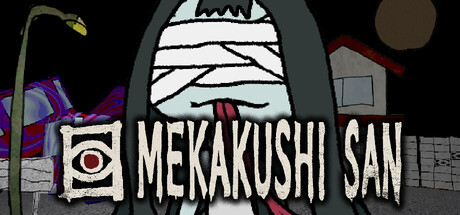 MEKAKUSHI-SAN In-game content textcodeaudio | In-Game Text Creation and Translation: We use AI to create and translate text for in-game content and store descriptions.
Program Code Generation: We use AI to create and optimize the programming code that implements the game’s features and systems.
Sound Effect Generation: We use AI to generate sound effects used in the game. | nobisiko games | - | Jul 20, 2026 | |
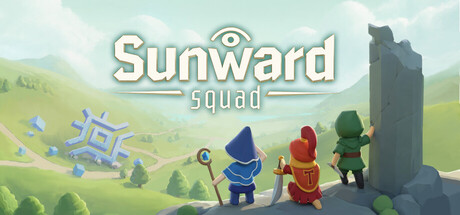 Sunward Squad In-game content arttext | Generative AI was used to assist in the creation of certain Steam store page artwork (excluding screenshots and trailers) and in the multilingual localization of the store page. | PotatoBin | - | Jul 20, 2026 | |
 Aethermoor In-game content arttext | Some character and environment artwork, and portions of marketing/store text, were created with the assistance of generative AI tools. All assets were selected, edited, and integrated by the developer, who has the rights to use them. No AI runs at runtime in the game. | Jonathan Cogswell | - | Jul 20, 2026 | |
 Warp to Sector One In-game content codetext | The game's design, game systems, balance, and English narrative are human-developed. AI tools were used during development as a coding assistant, with any recommended code changes specified, reviewed, and tested by the developer. The Japanese localization was produced with AI assistance and hand-edited for nuances, idioms, and accuracy. AI tools were also used for grammar and spell checking. No content is AI-generated at runtime. | hextor.Games | 27 | Jul 20, 2026 | |
 Lancers Cup In-game content artaudiocodetext | Generative AI was used during development as a supporting tool for parts of the music, selected visual assets, some voice-over lines, portions of the code, and the editing or localization of selected text. The game's concept, design, story, and creative direction are the developer's original work. All AI-assisted content was reviewed and edited as needed by the developer. The game does not use generative AI or generate new AI content during gameplay. | Sanaryco Games | - | Jul 20, 2026 | |
 Shadowbound In-game content text | We have used generative AI tools to translate the game into additional languages and make it accessible to a wider audience. The development team has reviewed and overseen the integration of all text to ensure it is displayed correctly and that the interface and menus function properly. | Dozy Duck Games | - | Jul 19, 2026 | |
 Provener In-game content text | Translated with the help of AI. Thank you for your understanding. | Provener Works | - | Jul 19, 2026 | |
 Little Adventure Tale In-game content arttext | The game uses Generative AI for the following in a Static manner nothing is dynamically generated I have used some of it for: Some Card Art, Some Event Art and finally Localization - Please try the free demo before purchase if you require a language other than English to see if its workable. Thank you! | TheOilyGooseStudio | - | Jul 19, 2026 | |
 Poker Games In-game content arttextcode | We use AI to assist with game development, including code, translations, and the creation of background assets. The game does not use any real-time AI systems. | Typeco | - | Jul 19, 2026 | |
 TAJRISH 1994 In-game content codetext | Some development used generative AI tools to assist with writing code, shaders, and drafting some in-game text. All content was approved by the developer. | Half-Baked Cake | - | Jul 18, 2026 | |
 Porthole - Local Port Sharing In-game content text | Generative AI tools were used during development, including for localization of in-game text. | SeStudio | 719 | Jul 18, 2026 | |
 Professor Mong Mong: The Window to the North In-game content text | Generative AI is used as a production support tool throughout development. It assists with localization, workflow acceleration, and the integration of assets across multiple disciplines into a consistent production pipeline. All AI-assisted content is reviewed, edited, integrated, and quality-controlled by the development team before being included in the final game. | Thorsten Koerner | - | Jul 18, 2026 | |
 Epoch Vault In-game content artaudiotext | Generative AI tools were used during development to create and manually refine some illustrations, store page artwork, and music tracks, as well as to assist with text preparation and localization. The game does not generate any AI content in real time. | Epoch Vault Studio | - | Jul 18, 2026 | |
 Pocket Chief! Live AI textart | Pocket Chief! uses generative AI for optional text conversations, activity summaries, and task organization. Some artwork and localization used in the product and its marketing were also created with AI assistance. Users can choose Pocket Chief Cloud, connect their own compatible model provider (BYOK), or use a local model endpoint. | STARWISH LIMITED | - | Jul 18, 2026 | |
 The Broken Crown In-game content arttextaudio | This game is primarily built with pre-generated AI-assisted content, including artwork, text, localization, music, video, and marketing materials. All AI-assisted content is reviewed, selected, and edited by the developer before being included in the game or store page. The game does not use live-generated AI during gameplay and does not connect to any external AI service while running. | PiperFox | - | Jul 18, 2026 | |
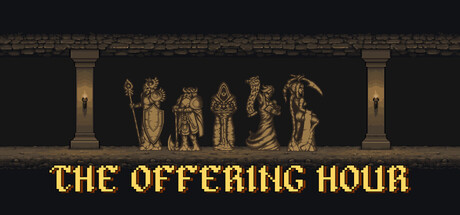 The Offering Hour In-game content text | AI tools were used to assist in drafting some written text (in-game lore entries and store page descriptions); all such text was reviewed and edited by the developer. All artwork, animation, music, and sound effects are human-created licensed assets. The game does not use AI to generate any content at runtime. | mazestepsstudio | - | Jul 18, 2026 | |
 Cellar Keeper In-game content arttext | Generative AI was used only as a supporting tool for the design of some fictional bottle brands and language translation. | EgoTrampoline | - | Jul 18, 2026 | |
 BlockSouls Dev only text | AI tools were used only for brainstorming, writing support, and planning during development. The game does not generate AI content during gameplay. | Suchinski Studio | - | Jul 18, 2026 | |
 Don't Go Duck In-game content artaudiotext | This game was developed based on the concept of creating a Steam game with AI and Unity. Some in-game 3D models, images/artwork, UI elements, sounds, text, and multilingual localization copy were generated or assisted by generative AI tools, then directly edited, arranged, implemented, and finalized by the developer in Unity.
The game does not generate new AI content in real time during gameplay. All AI-generated or AI-assisted elements were created, reviewed, and edited in advance before being included as part of the game content. | Bad_Melon | - | Jul 18, 2026 | |
 Super Football Arena In-game content text | AI translation for several language | indigo game production | - | Jul 18, 2026 | |
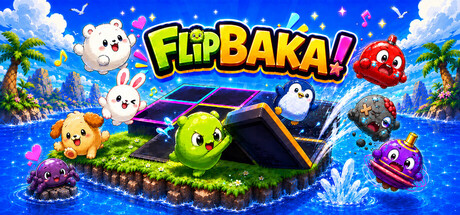 FlipPanic In-game content arttextcode | This game uses generative AI in the following ways:
- Some of the in-game and store page artwork was created using AI image generation tools.
- Some localization (translations) was assisted by AI tools.
All AI-generated content is reviewed and edited by the developer before release.
Background music uses royalty-free tracks and is not AI-generated.
Parts of the game's code were written with the assistance of AI coding tools. | WingWind | - | Jul 18, 2026 | |
 LoveLine In-game content audiotextart | Generative AI was used during development to create certain music, assist with localization, and produce some icon assets. All AI-generated content included in the final game was reviewed, edited, and approved by the development team before release. | Bone-US | - | Jul 18, 2026 | |
 Deflect In-game content text | Sound design and Localization (localization can hopefully be community sourced with proper credit given in-game for users that assist with translations) | AlzKrak Games | - | Jul 18, 2026 | |
 CityExplorer In-game content textart | During gameplay, the AI generates regional information and sightseeing guides (utilizing the Google Gemini API ). These generated texts change in real time and may occasionally contain inaccurate information.
Additionally, some images displayed within the game and on the store page utilize assets pre-generated by Google Gemini. (These are pre-generated contents, not live-generated during gameplay.) | YOKATA forest words | - | Jul 18, 2026 | |
 Topological Board Game In-game content codetext | Topological Board Game used generative AI tools during development to assist with programming, documentation, store-page text, localization drafts, and design iteration. All AI-assisted material is reviewed and edited by the developer before being included in the game or store page.
The game does not use generative AI to create live player-facing content during gameplay. It does not connect to external third-party AI services during normal gameplay. Local robot opponents, rule-based analysis, search, simulation, and self-play/research tools may be included, but these are gameplay/strategy systems rather than live generative AI content systems. | You-Xun Zhang | - | Jul 18, 2026 | |
 CueVR Store/marketing text | Portions of this game's store page text were created with the assistance of generative AI tools and then edited by the developer. CueVR itself does not use generative AI: its captions are produced entirely by on-device speech-to-text transcription of a live microphone, with no content generation and no external AI services. | Riggle Bridge | - | Jul 18, 2026 | |
 PixaMixa In-game content arttext | Generative AI was used to assist with the creation and refinement of selected visual assets, promotional images, Steam store page graphics, and localization materials. | Ipkapu | - | Jul 18, 2026 | |
 Neural Soul In-game content text | Generative AI was used during development to assist with the translation and localization of in-game text into multiple languages | WistfulDog | - | Jul 18, 2026 | |
 Typo Royale In-game content audiotext | The announcer voice audio is generated using text-to-speech technology. The game's phrase pool was written with AI assistance and human review.
Some commissioned store and library artwork may include AI-generated elements. | House Matzke | - | Jul 18, 2026 | |
 放置事务所 In-game content arttext | This game does not use generative AI at runtime and does not generate content based on player input. Generative AI was used during development to assist with some static artwork, icons, promotional images, and draft text. All such content was reviewed, edited, integrated, and approved by the developer. | drowsycatstudio | - | Jul 18, 2026 | |
 Drone Core Command In-game content arttext | AI Gen tools were used in a variety of ways for this game. Asset image concepting, narrative re-writes, 3d meshing, and marketing assets typically went through some form of a.i. modification, but then returned to a human-in-the-loop production step before game integration. | Earthborn Interactive | - | Jul 18, 2026 | |
 Professional Money Relocator In-game content text | AI-assisted tools were used for parts of the game’s localization. | Two Random Guys Studio | - | Jul 18, 2026 | |
 Spirit of Europe - Enlightenment In-game content arttext | Generative AI was used during development for certain text descriptions and for a limited number of illustrative assets. These visuals were subsequently reworked by the game’s artist for consistency with the game’s final style. No generative AI is used during gameplay. | Predict Edumedia | - | Jul 18, 2026 | |
 Leafborn In-game content text | Gen AI was used only for translation assistance. No AI was used for artwork, visuals, audio, or gameplay content. | Green Cat Games | - | Jul 18, 2026 | |
 EverRail In-game content audiotext | In EverRail, AI-generated voiceover is used only for machine characters: the train's AI board computer and robot enemies, voices that are artificial in the story itself, which also lets us offer them in multiple languages. Beyond that, our team uses generative AI as a tool to support development, with our artists, designers, and engineers refining and hand-building every asset that makes it into the game. | Aesir Interactive | 339 | Jul 18, 2026 | |
 semperfly - fpv drone simulator In-game content text | This game makes use of AI for localization of the following languages: Ukrainian, Spanish, Japanese, Korean, Polish, Portugese (Brasil), Russian, Simplified Chinese, Traditional Chinese, Turkish, Hindi. We're working with native translators, so expect this list to become shorter with time. | Nordfen | - | Jul 18, 2026 | |
 Veyrasol In-game content arttext | Veyrasol uses generative AI tools as part of its art pipeline. Both 3D models and 2D artwork used in the game (illustrations, backgrounds, UI and unit icons), as well as store page and marketing graphics such as capsule images and banners, were created with the help of generative AI tools and then reviewed, edited and assembled by the developer. Generative AI tools were also used to help write parts of the marketing website and store page copy. The core game (engine, server logic, real-time combat, and systems) is hand-coded by the developer, and no content is generated by AI at runtime during play. | Suleyman Ozcan | - | Jul 17, 2026 | |
 ZONE 47 Store/marketing arttext | Generative AI tools were used during development to assist with creating some concept art, graphical assets, and text for the game and its Steam store page. All generated content was reviewed, edited, and integrated by the developer. No generative AI is used during gameplay. | 7trange Play | - | Jul 17, 2026 | |
 Groovekeeper In-game content textart | AI tools were used during development to assist with initial language translation drafts and secondary asset editing. | NoRyte Studios | - | Jul 17, 2026 | |
 Yokai Hunter In-game content arttext | This game uses generative AI as part of its art and localization pipeline. Specifically:
- Character portrait artwork: The hunters' painted bust portraits (shown on the character-select screen, and reused in store page capsule art and the trailer) were generated using a local Stable Diffusion XL model with a custom LoRA, then composited by hand into final scenes.
- Localization: UI text translations for French, German, Spanish (Spain), Spanish (Latin America), Portuguese (Brazil), Italian, Polish, and Turkish were produced with AI assistance and reviewed before shipping.
All AI-assisted content was reviewed by the development team before inclusion. No content is generated live or in response to player input during gameplay — all AI-assisted assets are fixed at build time. | Shrimp Gang Studio | - | Jul 17, 2026 | |
 Infinite Elevator In-game content text | AI tools assisted with programming and with translating the game's interface text into languages other than English. All translations and text were reviewed by the developer; the game's design, visuals, and audio are not AI-generated. | Sad Network | - | Jul 17, 2026 | |
 Wartorn: A Visual Novel of the Ukraine War In-game content arttext | Art. All 2D art in Wartorn is produced with AI image-generation tools and then selected, edited, retouched and composited by hand by the developer. This covers the character portraits, the scene backgrounds, the ending and gallery illustrations, the achievement icons, and the store capsules, screenshots and trailer, which are derived from that same in-game art.
Text. The story, the branching structure and the choice design are the developer's own. AI writing tools were used to assist in drafting the prose and dialogue, and AI translation tools were used to produce the five localizations (English, Traditional Chinese, Simplified Chinese, Russian, Ukrainian). All text is reviewed and edited by the developer before shipping.
Audio. Music and sound effects are royalty-free stock audio licensed from Pixabay. They are not generated by the developer using AI tools.
Runtime. No content is generated while the game is running. Every asset is final and ships with the build, and the game makes no calls to any AI service. | Taiwan1996 | - | Jul 17, 2026 | |
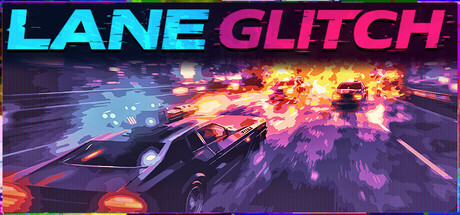 Lane Glitch In-game content text | The game's localization was done using AI. | Playactive Games | - | Jul 17, 2026 | |
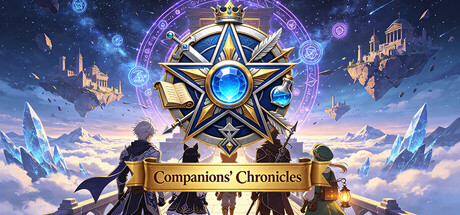 Companions' Chronicles Live AI text | Players may select a preset worldview and character template, or customize their own worldview and character settings before starting the game. They can interact via text typing in the in-game chat window, as well as click AI-provided options to engage with AI-generated content. | TLSoul | - | Jul 17, 2026 | |
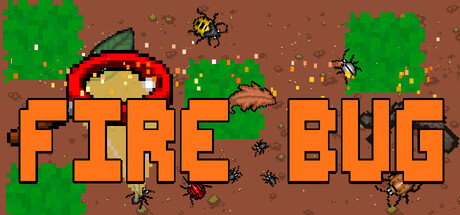 Fire Bug In-game content codeaudiotext | Code: Generative AI tools were used to create foundational logic and structural boilerplate, which was then heavily edited and modified manually.
Audio: Generative AI was used to draft the baseline tracks for the main menu and gameplay music, which were subsequently edited by hand.
Marketing Text: AI tools were used to outline the initial structure of the store page descriptions before being manually rewritten. | Jesse Dale | - | Jul 17, 2026 | |
 KasMind In-game content audiotext | This game uses VOICEVOX for character voice synthesis (taunt lines, victory lines, etc.).
All voice lines were generated during development and are pre-recorded into the game.
Nothing is generated live during gameplay, and the game does not connect to any external AI service at runtime.
AI (Claude) was also used to help translate this store page into English. | kgrdev | - | Jul 17, 2026 | |
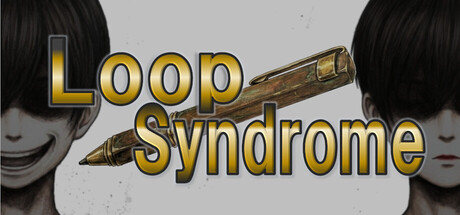 LOOP SYNDROME In-game content arttext | Some character illustrations were refined using generative AI as an assistive tool based on artwork originally designed and created by the developer. The final artwork was then manually reviewed and edited. Generative AI was also used to assist with the initial English localization, which was subsequently reviewed and revised before implementation in the game. | TBCATGAMES | - | Jul 17, 2026 | |
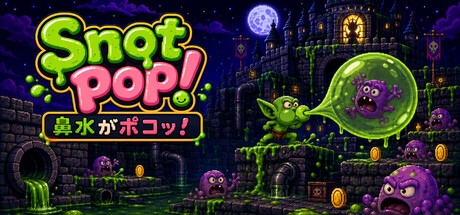 Snot Pop! In-game content artaudiotextcode | Snot Pop! is an indie project. Like many independent developers, generative AI was used as a tool among many during development; for brainstorming, writing, art and audio design, and working through balancing problems. AI was not the game designer or orchestrator of the project. All content was reviewed, directed, altered, and approved before inclusion. Everything in the game reflects deliberate creative decisions made by the developer. | Decent Enough Games | - | Jul 17, 2026 |


