Public Steam disclosure research25,519 disclosures tracked
Where do games disclose AI use?
Search developers’ Steam disclosures, compare classified AI use across
games, and follow recorded changes.
This index adds cross-game classifications and statistics to
statements published on individual store pages.
Groups reflect automatic analysis of public disclosures; mature records are excluded. These counts do not measure AI use across all of Steam.
Missing or unclear statements cannot establish whether a game uses AI.
OverlayGG's in-game guides are written with the help of generative AI. We use large language models to research and condense publicly available information about each game into concise reference guides. All guides are generated ahead of time and stored in our catalog — nothing is generated live while you play. You can flag any guide for correction directly in the app. Some of our store-page and marketing artwork is also created using AI image tools.
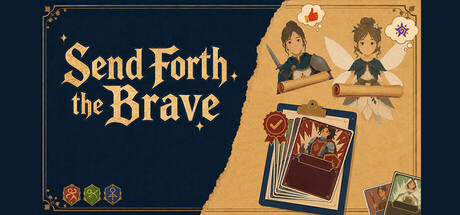
This game uses generative AI during gameplay to create an original in-game character called a "Logos" for use by that player. Based on text entered or selected by the player, the AI generates a 2D illustration of the Logos in real time, along with its name, flavor text, and similar content. The generated Logos can be added to your deck and used to progress through the game.
The game also includes pre-generated AI content: enemy and event illustrations were created with Adobe Firefly during development. Generation is performed using cloud-based external AI services (Adobe Firefly for image generation, OpenAI for text generation).
The words entered by the player, generation conditions, and the data of the generated Logos are sent to and stored on our server. These records are used to provide the generation feature, review reported results, and investigate errors. A generated Logos is visible only to the player who created it and is not shared with other players.
Some information required for generation is sent from our server to external AI services. Data sent from our server to these services is not used to train or improve their models. Please do not enter any personal information, such as your name or contact details, or any confidential information you would not want third parties to know.
Salt and Soil uses generative AI during gameplay to create some Annual Family Council narrative text and structured choice outcomes based on the current campaign state. Generated council content is constrained by the game’s historical setting, family data, localization rules, and gameplay schema, then validated before it is shown to the player.
Generative AI was used to assist in the creation of some in-game text and dialogue. All other game assets, including textures, models, and sound, were created without the use of generative AI.
Minisprite Engine was created by a small team using a combination of original work and generative AI tools.
Its mascot and hand-drawn character art were created by our designer, without the use of AI. Generative AI tools were used in creating other visual assets — including UI and store page artwork — and in drafting and localizing text across multiple languages.
All content was reviewed and refined by the team before release.
Generative AI tools were used during development and marketing to assist with ideation, drafting, rewriting, and visual exploration for IN & OUT.
All final content included in the game, store page, screenshots, capsules, trailers, and marketing materials is reviewed, selected, edited, and approved by the development team before publication.
The game does not use live-generated AI content at runtime. No player input is sent to an AI service, and no gameplay, puzzle, narrative, visual, audio, or localization content is generated dynamically by AI while the game is running.
No game assets or gameplay content were generated using AI.
Localization into some supported languages was created with AI assistance and reviewed by the developers and community where possible.
Some artwork, music, text, and translations in this game were initially created with the assistance of AI tools, and were then manually edited, revised, or recreated by the developer.
Generative AI-assisted tools were used as part of the development process for Xenogarden.
This includes support in creating and refining selected visual content such as concept art, artwork, textures, marketing materials and store page assets, as well as assistance with text, localization, sound/music ideas and creative drafts.
All content included in the game is pre-generated, selected, reviewed and curated. The game does not generate new AI content during gameplay and does not connect to external AI services during gameplay.
Pueblo Duerme uses generative AI during gameplay to create short in-game text chat messages for bot players in social deduction matches. The game includes local Qwen3 GGUF models that run on the player's PC through a local llama-server process, with Quality and Performance modes available in the settings menu. Player messages are not sent to an external AI service. The system is limited to gameplay dialogue and uses validation and fallback responses to keep messages within the game's rules.
Space Delivery is a solo indie project by Christian Wolf. Generative AI was one of the tools used to make it: all character voice-over and some sound effects were generated with ElevenLabs, AI image tools were used for the game's icons and some other menu/UI artwork, and AI tools were used to translate the game and its store page from English. The trailer and promotional images were assembled using AI tools from the game's own assets. AI also assisted with coding and design during development. All game design, art direction, and final creative decisions were made by the developer.
1. Some character art utilizes hand-drawn original sketches and designs, with AI used for coloring and lighting effects.
2. Background illustrations are AI-generated and then manually refined.
3. The script is AI-generated, with manual editing and content additions.
4. For languages other than Traditional Chinese, AI translation is used, followed by manual proofreading of terminology and content.
Generative AI tools were used during development as creative and technical assistance, including support for programming, debugging, text drafting, localization, and some visual/marketing asset iteration. The game does not generate AI content during gameplay. All final content included in the game and store page was reviewed, selected, and edited by the developer before publication.
AI tools were used during development to assist with certain aspects of programming, artwork, sound effects, and localization. All AI-assisted outputs were reviewed, substantially edited, and integrated by the developer. No unedited or raw AI-generated content appears in the final game.
Generative AI was used during development to help draft and edit some in-game text, such as card descriptions and UI copy. All AI-assisted text was reviewed and finalized by the developer before shipping. The game does not generate content live using AI.
Generative AI was used to assist with some images, sound effects, music, and translations. All AI-assisted content was reviewed, edited, and curated by the developer before being included in the game.
Some of the game's background music (BGM) uses tracks created with generative AI, and AI tools were used for localization (translation) into some languages. Store page images and some in-game illustrations (such as cutscenes and maps) were created with the assistance of AI image generation tools. Some in-game icons are based on AI-generated images that were then manually retouched and refined by the developer. All other content (in-game pixel art including characters and monsters, code, original story, etc.) was not created with AI.
AI was used for to help write and come up with description text edited by a person to fit the game better, tags, and some other minor items on the steam page. AI was not used in the development of the game there are no AI generated assets in this game at all.
This game uses generative AI during development in the following areas:
* Localization: AI tools were used to assist with translating some in-game text. All translations are reviewed and edited by the developer before being included in the game.
* Art Assets: AI tools were used to assist in creating some visual assets. All generated materials are selected, edited, and finalized by the developer.
* Programming: AI tools were used to assist with parts of the game's code development.
* Store Page: AI tools were used to assist in creating certain store page materials.
The game does not include any live-generated AI content. All AI-assisted content is generated during development, reviewed by a human, and finalized before being included in the shipped build.
Generative AI tools were used during development to assist with the creation and editing of some visual assets, background assets, character assets, code, and text. The game does not include live AI-generated content based on player input. All AI-assisted content has been reviewed, edited, and approved by the developer before inclusion. The game does not contain AI-generated adult-only content.
Suho's background music was produced with the help of a generative AI music tool, and some store-page text was drafted with AI assistance and edited by a human. We intend to replace the AI-generated music with commissioned, original music. All gameplay, game design, code, and in-game visual art are human-authored or rendered programmatically (not AI-generated), and no AI content is generated live during play - the soundtrack ships as fixed, pre-made audio files.
Generative AI tools were used as an aid in creating this store page description and its translations into each language (all reviewed and edited by the developer).
quietd does not generate any content using AI during gameplay, and it does not connect to any external AI services.
Yes, I used AI-assisted tools during the development of this game. They were primarily used for code logic support, translation optimization, and copy polishing. The core gameplay design, art style, level design, and overall player experience were all directed and finalized by me personally. The AI served as a productivity tool, while all creative decisions and implementation choices were made by me.
Generative AI tools, including GPT/Codex, were used during development to assist with code, UI text, layout iteration, documentation drafts, store copy, planning materials, QA checklists, and release preparation.
All AI-assisted content included in ClickAssist or its store materials was reviewed, selected, edited, and integrated by the developer before publication.
ClickAssist itself does not include live-generated AI content, AI chatbots, runtime AI generation, external AI service connections, or in-app AI image generation.
Generative AI tools were used during development to assist with some early visual concepts, select sprite bases, music/audio drafts, and voice/audio prototypes. All AI-assisted content included in the game was selected, edited, refined, and reviewed by the development team to fit the game’s final style and direction. The game does not generate AI content during gameplay.
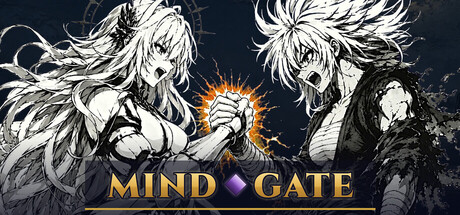
MindGate's content—including character illustrations, related store and promotional images, and in-game text—is created by the developer using generative AI tools. The developer directs, selects, edits, and finalizes every asset, and makes all gameplay design and balance decisions.
We used generative AI tools in a few clearly defined parts of this project, and we want to be upfront about where.
During development, we used AI coding assistants to help write and review parts of the source code, the same way many modern studios use these tools. We also used generative AI to help create some of the store page and marketing assets, such as promotional images and parts of the written copy. Everything produced this way was checked, edited, and approved by us before it went live.
Inside the app itself, the background removal feature runs on machine learning models to cut backgrounds out of images that you choose to load. These models only process the images you give them, on your own machine, and nothing is generated or sent anywhere without your action.
The core gameplay experience, meaning the overlays you place, the cursor effects, the pinning behavior, and the audio reactive features, is built from regular code and does not generate content with AI at runtime. Any HTML overlays you get from the Steam Workshop are made and shared by other users, so their content is up to whoever created them.
We do not use AI to generate live content that changes on its own while you use the app, and we do not train models on your data.
Several of the original tracks included with the base game were created with the help of AI tooling as was some of the initial iconography and translations.
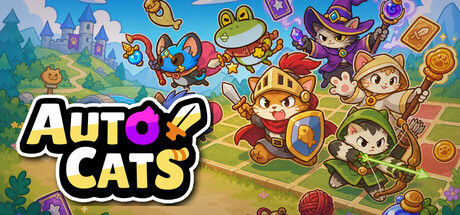
Auto Cats uses generative AI tools for some pre-generated visual and written content, including selected marketing artwork, concept-assisted item artwork, and some pre-written random event content.
This game uses generative AI tools to assist in creating and optimizing some art assets, music/sound effects, and localization texts. All AI-generated content has been manually reviewed and edited to comply with platform policies and copyright standards.
As a small development studio, we had to use AI to generate translations for the game and the Steam page in order to make the game accessible to the widest possible audience.
The graphic and audio assets were created either by us or by the team at Craftpix.net (who, it seems, do not use AI).
Generative AI was used during the development process to assist with code optimization, refactoring, and text translation. None of the AI-generated content is generated in real-time or active during live gameplay.
During the development of this game, we used generative AI tools to assist with creating some background visuals and drafting initial narrative texts. All AI-generated content has been manually reviewed, edited, and adapted by our team to ensure it meets our quality standards and fits the game's creative vision. We take full responsibility for all final content presented in the game
In this work, much of the text is interactively generated by a language generation AI. In addition, language generation AI is used for various judgments on the text entered by players. Furthermore, all the illustrations in this work are created using image generation AI.
This game uses AI assistance as a support tool for efficient development.
Scope of AI Use
- Assistance with programming and code implementation
- Drafting and style adjustment for English localization
- Drafting and editing of some in-game text, including Observation Records in the Anomaly Codex, command reaction text, countermeasure procedures, and other text related to gameplay explanations and strategy
- Drafting, editing, and proofreading of general text such as social media announcements, descriptions, and notices
Scope Where AI Is Not Used
Character images, Anomaly images, background images, Steam capsule images, audio, and BGM are created by the developer or use licensed distributed assets.
No AI-generated assets are used for these materials.
Content Created and Managed by the Developer
The story, worldbuilding, characters, basic Anomaly concepts, and the folklore and supplementary materials related to the Anomalies are independently created by the developer.
Game design and various specifications are also determined by the developer.
For any content created with AI assistance, the final decision on whether to use the text, as well as quality control, is handled by the developer.
Generative AI was used only to assist with localization/translation partially. All localized text was reviewed and edited before release. No AI-generated content was used otherwise.
OverlayGG's in-game guides are written with the help of generative AI. We use large language models to research and condense publicly available information about each game into concise reference guides. All guides are generated ahead of time and stored in our catalog — nothing is generated live while you play. You can flag any guide for correction directly in the app. Some of our store-page and marketing artwork is also created using AI image tools.
This game uses generative AI during gameplay to create an original in-game character called a "Logos" for use by that player. Based on text entered or selected by the player, the AI generates a 2D illustration of the Logos in real time, along with its name, flavor text, and similar content. The generated Logos can be added to your deck and used to progress through the game.
The game also includes pre-generated AI content: enemy and event illustrations were created with Adobe Firefly during development. Generation is performed using cloud-based external AI services (Adobe Firefly for image generation, OpenAI for text generation).
The words entered by the player, generation conditions, and the data of the generated Logos are sent to and stored on our server. These records are used to provide the generation feature, review reported results, and investigate errors. A generated Logos is visible only to the player who created it and is not shared with other players.
Some information required for generation is sent from our server to external AI services. Data sent from our server to these services is not used to train or improve their models. Please do not enter any personal information, such as your name or contact details, or any confidential information you would not want third parties to know.
Salt and Soil uses generative AI during gameplay to create some Annual Family Council narrative text and structured choice outcomes based on the current campaign state. Generated council content is constrained by the game’s historical setting, family data, localization rules, and gameplay schema, then validated before it is shown to the player.
Generative AI was used to assist in the creation of some in-game text and dialogue. All other game assets, including textures, models, and sound, were created without the use of generative AI.
Minisprite Engine was created by a small team using a combination of original work and generative AI tools.
Its mascot and hand-drawn character art were created by our designer, without the use of AI. Generative AI tools were used in creating other visual assets — including UI and store page artwork — and in drafting and localizing text across multiple languages.
All content was reviewed and refined by the team before release.
Generative AI tools were used during development and marketing to assist with ideation, drafting, rewriting, and visual exploration for IN & OUT.
All final content included in the game, store page, screenshots, capsules, trailers, and marketing materials is reviewed, selected, edited, and approved by the development team before publication.
The game does not use live-generated AI content at runtime. No player input is sent to an AI service, and no gameplay, puzzle, narrative, visual, audio, or localization content is generated dynamically by AI while the game is running.
No game assets or gameplay content were generated using AI.
Localization into some supported languages was created with AI assistance and reviewed by the developers and community where possible.
Some artwork, music, text, and translations in this game were initially created with the assistance of AI tools, and were then manually edited, revised, or recreated by the developer.
Generative AI-assisted tools were used as part of the development process for Xenogarden.
This includes support in creating and refining selected visual content such as concept art, artwork, textures, marketing materials and store page assets, as well as assistance with text, localization, sound/music ideas and creative drafts.
All content included in the game is pre-generated, selected, reviewed and curated. The game does not generate new AI content during gameplay and does not connect to external AI services during gameplay.
Pueblo Duerme uses generative AI during gameplay to create short in-game text chat messages for bot players in social deduction matches. The game includes local Qwen3 GGUF models that run on the player's PC through a local llama-server process, with Quality and Performance modes available in the settings menu. Player messages are not sent to an external AI service. The system is limited to gameplay dialogue and uses validation and fallback responses to keep messages within the game's rules.
Space Delivery is a solo indie project by Christian Wolf. Generative AI was one of the tools used to make it: all character voice-over and some sound effects were generated with ElevenLabs, AI image tools were used for the game's icons and some other menu/UI artwork, and AI tools were used to translate the game and its store page from English. The trailer and promotional images were assembled using AI tools from the game's own assets. AI also assisted with coding and design during development. All game design, art direction, and final creative decisions were made by the developer.
1. Some character art utilizes hand-drawn original sketches and designs, with AI used for coloring and lighting effects.
2. Background illustrations are AI-generated and then manually refined.
3. The script is AI-generated, with manual editing and content additions.
4. For languages other than Traditional Chinese, AI translation is used, followed by manual proofreading of terminology and content.
Generative AI tools were used during development as creative and technical assistance, including support for programming, debugging, text drafting, localization, and some visual/marketing asset iteration. The game does not generate AI content during gameplay. All final content included in the game and store page was reviewed, selected, and edited by the developer before publication.
AI tools were used during development to assist with certain aspects of programming, artwork, sound effects, and localization. All AI-assisted outputs were reviewed, substantially edited, and integrated by the developer. No unedited or raw AI-generated content appears in the final game.
Generative AI was used during development to help draft and edit some in-game text, such as card descriptions and UI copy. All AI-assisted text was reviewed and finalized by the developer before shipping. The game does not generate content live using AI.
Generative AI was used to assist with some images, sound effects, music, and translations. All AI-assisted content was reviewed, edited, and curated by the developer before being included in the game.
Some of the game's background music (BGM) uses tracks created with generative AI, and AI tools were used for localization (translation) into some languages. Store page images and some in-game illustrations (such as cutscenes and maps) were created with the assistance of AI image generation tools. Some in-game icons are based on AI-generated images that were then manually retouched and refined by the developer. All other content (in-game pixel art including characters and monsters, code, original story, etc.) was not created with AI.
AI was used for to help write and come up with description text edited by a person to fit the game better, tags, and some other minor items on the steam page. AI was not used in the development of the game there are no AI generated assets in this game at all.
This game uses generative AI during development in the following areas:
* Localization: AI tools were used to assist with translating some in-game text. All translations are reviewed and edited by the developer before being included in the game.
* Art Assets: AI tools were used to assist in creating some visual assets. All generated materials are selected, edited, and finalized by the developer.
* Programming: AI tools were used to assist with parts of the game's code development.
* Store Page: AI tools were used to assist in creating certain store page materials.
The game does not include any live-generated AI content. All AI-assisted content is generated during development, reviewed by a human, and finalized before being included in the shipped build.
Generative AI tools were used during development to assist with the creation and editing of some visual assets, background assets, character assets, code, and text. The game does not include live AI-generated content based on player input. All AI-assisted content has been reviewed, edited, and approved by the developer before inclusion. The game does not contain AI-generated adult-only content.
Suho's background music was produced with the help of a generative AI music tool, and some store-page text was drafted with AI assistance and edited by a human. We intend to replace the AI-generated music with commissioned, original music. All gameplay, game design, code, and in-game visual art are human-authored or rendered programmatically (not AI-generated), and no AI content is generated live during play - the soundtrack ships as fixed, pre-made audio files.
Generative AI tools were used as an aid in creating this store page description and its translations into each language (all reviewed and edited by the developer).
quietd does not generate any content using AI during gameplay, and it does not connect to any external AI services.
Yes, I used AI-assisted tools during the development of this game. They were primarily used for code logic support, translation optimization, and copy polishing. The core gameplay design, art style, level design, and overall player experience were all directed and finalized by me personally. The AI served as a productivity tool, while all creative decisions and implementation choices were made by me.
Generative AI tools, including GPT/Codex, were used during development to assist with code, UI text, layout iteration, documentation drafts, store copy, planning materials, QA checklists, and release preparation.
All AI-assisted content included in ClickAssist or its store materials was reviewed, selected, edited, and integrated by the developer before publication.
ClickAssist itself does not include live-generated AI content, AI chatbots, runtime AI generation, external AI service connections, or in-app AI image generation.
Generative AI tools were used during development to assist with some early visual concepts, select sprite bases, music/audio drafts, and voice/audio prototypes. All AI-assisted content included in the game was selected, edited, refined, and reviewed by the development team to fit the game’s final style and direction. The game does not generate AI content during gameplay.
MindGate's content—including character illustrations, related store and promotional images, and in-game text—is created by the developer using generative AI tools. The developer directs, selects, edits, and finalizes every asset, and makes all gameplay design and balance decisions.
We used generative AI tools in a few clearly defined parts of this project, and we want to be upfront about where.
During development, we used AI coding assistants to help write and review parts of the source code, the same way many modern studios use these tools. We also used generative AI to help create some of the store page and marketing assets, such as promotional images and parts of the written copy. Everything produced this way was checked, edited, and approved by us before it went live.
Inside the app itself, the background removal feature runs on machine learning models to cut backgrounds out of images that you choose to load. These models only process the images you give them, on your own machine, and nothing is generated or sent anywhere without your action.
The core gameplay experience, meaning the overlays you place, the cursor effects, the pinning behavior, and the audio reactive features, is built from regular code and does not generate content with AI at runtime. Any HTML overlays you get from the Steam Workshop are made and shared by other users, so their content is up to whoever created them.
We do not use AI to generate live content that changes on its own while you use the app, and we do not train models on your data.
Several of the original tracks included with the base game were created with the help of AI tooling as was some of the initial iconography and translations.
Auto Cats uses generative AI tools for some pre-generated visual and written content, including selected marketing artwork, concept-assisted item artwork, and some pre-written random event content.
This game uses generative AI tools to assist in creating and optimizing some art assets, music/sound effects, and localization texts. All AI-generated content has been manually reviewed and edited to comply with platform policies and copyright standards.
As a small development studio, we had to use AI to generate translations for the game and the Steam page in order to make the game accessible to the widest possible audience.
The graphic and audio assets were created either by us or by the team at Craftpix.net (who, it seems, do not use AI).
Generative AI was used during the development process to assist with code optimization, refactoring, and text translation. None of the AI-generated content is generated in real-time or active during live gameplay.
During the development of this game, we used generative AI tools to assist with creating some background visuals and drafting initial narrative texts. All AI-generated content has been manually reviewed, edited, and adapted by our team to ensure it meets our quality standards and fits the game's creative vision. We take full responsibility for all final content presented in the game
In this work, much of the text is interactively generated by a language generation AI. In addition, language generation AI is used for various judgments on the text entered by players. Furthermore, all the illustrations in this work are created using image generation AI.
This game uses AI assistance as a support tool for efficient development.
Scope of AI Use
- Assistance with programming and code implementation
- Drafting and style adjustment for English localization
- Drafting and editing of some in-game text, including Observation Records in the Anomaly Codex, command reaction text, countermeasure procedures, and other text related to gameplay explanations and strategy
- Drafting, editing, and proofreading of general text such as social media announcements, descriptions, and notices
Scope Where AI Is Not Used
Character images, Anomaly images, background images, Steam capsule images, audio, and BGM are created by the developer or use licensed distributed assets.
No AI-generated assets are used for these materials.
Content Created and Managed by the Developer
The story, worldbuilding, characters, basic Anomaly concepts, and the folklore and supplementary materials related to the Anomalies are independently created by the developer.
Game design and various specifications are also determined by the developer.
For any content created with AI assistance, the final decision on whether to use the text, as well as quality control, is handled by the developer.
Generative AI was used only to assist with localization/translation partially. All localized text was reviewed and edited before release. No AI-generated content was used otherwise.