Public Steam disclosure research25,514 disclosures tracked
Where do games disclose AI use?
Search developers’ Steam disclosures, compare classified AI use across
games, and follow recorded changes.
This index adds cross-game classifications and statistics to
statements published on individual store pages.
Groups reflect automatic analysis of public disclosures; mature records are excluded. These counts do not measure AI use across all of Steam.
Missing or unclear statements cannot establish whether a game uses AI.
This game uses generative AI in the following limited ways:
AI tools were used during development to assist in generating and organizing vocabulary word data.
AI may have been used to help draft or structure non-final text content, which has been manually reviewed and edited by the developer.
No generative AI is used in real-time gameplay, player interaction, or runtime content generation.
This game does not use external AI services during gameplay.
Generative AI was not used to create any in-game content resources. AI was utilized solely for the translation of certain in-game dialogue and external content, such as our Steam page and community posts.
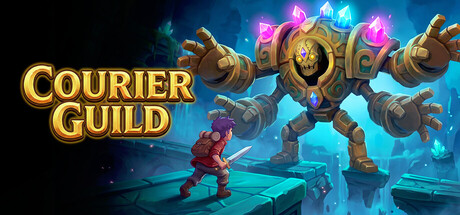
Some content in COURIER GUILD was created with the assistance of AI tools, including visual assets, music, and text. All AI-generated content has been manually reviewed, edited, and refined by the developer to fit the game's style and vision.
Generative AI tools were used to refine store descriptions and assist with the translation of certain UI elements to provide a better experience for international players. All visual assets and core gameplay mechanics are original creations.
Some item icons, visual assets, and music in this game were created with the assistance of generative AI. In-game text was translated to multiple languages using AI. All AI-generated content was reviewed, edited, and curated by the developer.
Some content in this game was created with the assistance of generative AI tools during development, including certain visual assets, store artwork, capsule art, and text. All AI-assisted content was reviewed, edited, and integrated by the developer to ensure it fits the game’s design and overall player experience.
Some art assets are sourced from the CC0 asset libraries provided by Kenney. Music and sound effects used in the game are sourced from Phat Phrog Studio and ZapSplat.
One developer. AI tools helped with images and text because some things are bigger than one pair of hands. Everything you see reflects my own creative decisions.
We are using generative AI for first-wave localization and some software implementation (Claude code).
We recognize that human artists and programmers take precedence over these tools, and deserve real compensation as opposed to the cheap inferior labor of neural nets.
This game uses generative AI tools to assist with the translation of text from German to English, as well as for proofreading and editing written content. All AI-assisted outputs are reviewed and refined by the developers to ensure quality and consistency.
Generative AI tools were used to assist in the conceptual design of the game's logo, as well as for translating and polishing in-game text and store page descriptions into multiple languages. All core visual assets, including the pixel art, character designs, and cover illustrations, are strictly and entirely hand-crafted by the human developer.
Artificial Intelligence was used as a supportive tool in the creative process to generate or refine certain 2D graphical elements, such as UI icons, background textures, and concept art. All assets have been manually reviewed, edited, and finalized by the development team to ensure quality and artistic consistency.
Translation and Localization: Parts of the text localization were processed with the assistance of AI-based translation tools. Every text string was subsequently reviewed by human editors to ensure terminological accuracy, proper grammar, and cultural adaptation.
This project leverages generative AI to assist in software development and documentation processing, covering data retrieval and synthesis, localization, modular script implementation, and code logic optimization. By utilizing AI for cross-disciplinary knowledge integration and performance refactoring, all outputs undergo manual review and adjustment. This ensures that core creativity remains developer-led while enhancing development efficiency under the premise of maintaining system stability.
AI is being used to do automated testing and code review. AI and Google Translate were used to generate the initial set of translations. There are currently people working on localization - it is just going to take time. If you would like to help with the localization please see: https://weblate.kuhnflix.app/ (I would appreciate your assistance!)
AI tools assisted with game design documentation, initial draft text content, and development planning. The initial AI-generated in-game texts have been replaced with hand-written translations (German complete; English replacement in progress). All in-game content is reviewed and curated by the developer. No AI is used during gameplay.
American Football Coach utilises artificial intelligence to randomise players and finances at the start of each game load, for the gameplay of each individual match, the questions posed by the media and the occasional random event, which can effect your finances and prestige positively or negatively.
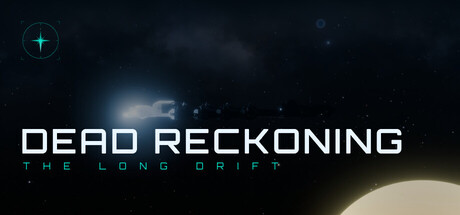
Dead Reckoning is written, and designed by one person. I want to be precise about where AI tools do and don't appear in it.
Creative content — no generative AI. All writing, narrative, and design is mine. I've worked as a technical writer for twelve years; the game's voice is my own. All art and visual assets are hand-made or licensed from named human artists. All music and sound effects are licensed from named human creators (public domain / Creative Commons) — none of it is AI-generated. This is a hard line and I intend to keep it.
Development & release tooling — where AI assists. I use AI in the engineering and release pipeline only, never to author the game itself:
- Coding assistance while writing the game's GDScript.
- An automated QA/test harness that plays the simulation thousands of times to catch crashes and balance regressions.
- Assistance in building linters (Valve YAML sheets) that check the project's text.
- Drafting and summarizing the release notes (patch notes) from the project's changelog.
None of this creates any of the writing, art, audio, or design inside the game.
Localization. The four translations (German, French, Italian, Spanish) are machine-translated by DeepL from my English source, with automated guards that fall back to English wherever a translation would break. This is an accessibility vs. quality decision, and I decided on the former. Proper localizations are planned and will be contracted out if the budget allows.
This game only uses AI tools to assist in generating part of the art materials and plot copy during the development stage. All AI-generated content has been fully manually reviewed, secondary modified and compliance checked. There is no real-time AI interaction function in the game, and no real-time AI response or usage scenarios for players.
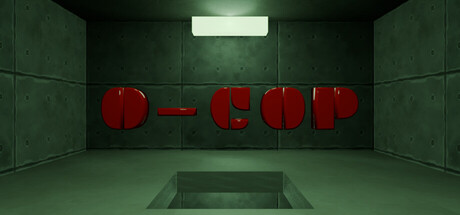
AI was used solely as a productivity tool for creating a few seamless wall textures (background wallpapers) and assisted in the initial translation of game texts. All core environment design, 3D modeling, level layouts, lighting, and art direction were created manually from scratch by the developer to ensure a unique visual style.
Generative AI tools were used during the development of this game to assist in the localization of in-game text and store page descriptions into multiple languages. All AI-assisted content has been thoroughly reviewed and curated by the developer to ensure it meets the creative vision and quality standards of the project.
Some parts of the game content were created with the assistance of artificial intelligence.
AI tools were used during the writing process of certain cases to support idea generation and narrative structuring. All content was reviewed, edited, and finalized by the developer.
Additionally, some visual assets found in the in-game gallery were generated using AI-based tools and curated to match the game's style and atmosphere.
During development of this game AI was used for code completion, art generation, text descriptions and a psychological/motivational/emotional support as well as release planning. Pretty much at every step of this game dev journey the AI was part of it.
Generative AI has been used to create some music and a small number of textures (in a limited way). It has also been used for translations and character voices.
Pingo uses generative AI to provide certain dialogue, monologue, and personalized text interactions. When these features are enabled, the game generates responses based on player input, context, and the selected AI configuration. Some features may connect to external AI services, and players may also choose to use their own compatible models or API configuration.
Voice synthesis. All informant dialogue is voiced using Google Cloud Text-to-Speech. Each of the 27 informants has a distinct voice selected to reflect their regional background.
Story illustrations. Discovery images were generated using AI image generation and curated by the developer.
Game content. Story text, discovery descriptions, and informant dialogue were drafted with AI assistance and edited by the developer.
No AI-generated content is produced live during gameplay. All content is pre-rendered and reviewed before shipping.
This game uses a custom-built local AI language model running entirely on the player's machine via the proprietary GROLAF3D ENGINE. The AI generates all dialogue, actions, and narrative responses from the kidnapper character in real time during gameplay. No internet connection is required and no player input is transmitted to external servers. The AI also powers an optional voice synthesis system for spoken responses. All AI-generated content is produced live based on player input and is unique to each session.
During the development of Furious Kitchen, we utilized generative Artificial Intelligence (AI) tools to assist in content creation and optimization. The specific implementations are as follows:
Programming & Scripts: We used AI programming assistants (Large Language Models) to help write and refactor underlying game logic code, as well as to assist with the implementation of the multi-language localization system and text translation.
Art Assets : Certain visual elements within the game (such as UI icons, background assets, or promotional base art) were created with the assistance of AI image generation tools. All generated images were subsequently redrawn, modified, and stylized manually by the developer to fit the game's aesthetic.
Music & Audio : Some background music or sound effect assets in the game were composed and arranged using AI audio generation tools.
This game does not feature any live-generated AI content (i.e., AI content generated in real-time while playing). All AI-assisted assets were pre-generated during the development phase and carefully reviewed to ensure they do not infringe upon any third-party copyrights.
This game uses generative AI in the following limited ways:
AI tools were used during development to assist in generating and organizing vocabulary word data.
AI may have been used to help draft or structure non-final text content, which has been manually reviewed and edited by the developer.
No generative AI is used in real-time gameplay, player interaction, or runtime content generation.
This game does not use external AI services during gameplay.
Generative AI was not used to create any in-game content resources. AI was utilized solely for the translation of certain in-game dialogue and external content, such as our Steam page and community posts.
Some content in COURIER GUILD was created with the assistance of AI tools, including visual assets, music, and text. All AI-generated content has been manually reviewed, edited, and refined by the developer to fit the game's style and vision.
Generative AI tools were used to refine store descriptions and assist with the translation of certain UI elements to provide a better experience for international players. All visual assets and core gameplay mechanics are original creations.
Some item icons, visual assets, and music in this game were created with the assistance of generative AI. In-game text was translated to multiple languages using AI. All AI-generated content was reviewed, edited, and curated by the developer.
Some content in this game was created with the assistance of generative AI tools during development, including certain visual assets, store artwork, capsule art, and text. All AI-assisted content was reviewed, edited, and integrated by the developer to ensure it fits the game’s design and overall player experience.
Some art assets are sourced from the CC0 asset libraries provided by Kenney. Music and sound effects used in the game are sourced from Phat Phrog Studio and ZapSplat.
One developer. AI tools helped with images and text because some things are bigger than one pair of hands. Everything you see reflects my own creative decisions.
We are using generative AI for first-wave localization and some software implementation (Claude code).
We recognize that human artists and programmers take precedence over these tools, and deserve real compensation as opposed to the cheap inferior labor of neural nets.
This game uses generative AI tools to assist with the translation of text from German to English, as well as for proofreading and editing written content. All AI-assisted outputs are reviewed and refined by the developers to ensure quality and consistency.
Generative AI tools were used to assist in the conceptual design of the game's logo, as well as for translating and polishing in-game text and store page descriptions into multiple languages. All core visual assets, including the pixel art, character designs, and cover illustrations, are strictly and entirely hand-crafted by the human developer.
Artificial Intelligence was used as a supportive tool in the creative process to generate or refine certain 2D graphical elements, such as UI icons, background textures, and concept art. All assets have been manually reviewed, edited, and finalized by the development team to ensure quality and artistic consistency.
Translation and Localization: Parts of the text localization were processed with the assistance of AI-based translation tools. Every text string was subsequently reviewed by human editors to ensure terminological accuracy, proper grammar, and cultural adaptation.
This project leverages generative AI to assist in software development and documentation processing, covering data retrieval and synthesis, localization, modular script implementation, and code logic optimization. By utilizing AI for cross-disciplinary knowledge integration and performance refactoring, all outputs undergo manual review and adjustment. This ensures that core creativity remains developer-led while enhancing development efficiency under the premise of maintaining system stability.
AI is being used to do automated testing and code review. AI and Google Translate were used to generate the initial set of translations. There are currently people working on localization - it is just going to take time. If you would like to help with the localization please see: https://weblate.kuhnflix.app/ (I would appreciate your assistance!)
AI tools assisted with game design documentation, initial draft text content, and development planning. The initial AI-generated in-game texts have been replaced with hand-written translations (German complete; English replacement in progress). All in-game content is reviewed and curated by the developer. No AI is used during gameplay.
American Football Coach utilises artificial intelligence to randomise players and finances at the start of each game load, for the gameplay of each individual match, the questions posed by the media and the occasional random event, which can effect your finances and prestige positively or negatively.
Dead Reckoning is written, and designed by one person. I want to be precise about where AI tools do and don't appear in it.
Creative content — no generative AI. All writing, narrative, and design is mine. I've worked as a technical writer for twelve years; the game's voice is my own. All art and visual assets are hand-made or licensed from named human artists. All music and sound effects are licensed from named human creators (public domain / Creative Commons) — none of it is AI-generated. This is a hard line and I intend to keep it.
Development & release tooling — where AI assists. I use AI in the engineering and release pipeline only, never to author the game itself:
- Coding assistance while writing the game's GDScript.
- An automated QA/test harness that plays the simulation thousands of times to catch crashes and balance regressions.
- Assistance in building linters (Valve YAML sheets) that check the project's text.
- Drafting and summarizing the release notes (patch notes) from the project's changelog.
None of this creates any of the writing, art, audio, or design inside the game.
Localization. The four translations (German, French, Italian, Spanish) are machine-translated by DeepL from my English source, with automated guards that fall back to English wherever a translation would break. This is an accessibility vs. quality decision, and I decided on the former. Proper localizations are planned and will be contracted out if the budget allows.
This game only uses AI tools to assist in generating part of the art materials and plot copy during the development stage. All AI-generated content has been fully manually reviewed, secondary modified and compliance checked. There is no real-time AI interaction function in the game, and no real-time AI response or usage scenarios for players.
AI was used solely as a productivity tool for creating a few seamless wall textures (background wallpapers) and assisted in the initial translation of game texts. All core environment design, 3D modeling, level layouts, lighting, and art direction were created manually from scratch by the developer to ensure a unique visual style.
Generative AI tools were used during the development of this game to assist in the localization of in-game text and store page descriptions into multiple languages. All AI-assisted content has been thoroughly reviewed and curated by the developer to ensure it meets the creative vision and quality standards of the project.
Some parts of the game content were created with the assistance of artificial intelligence.
AI tools were used during the writing process of certain cases to support idea generation and narrative structuring. All content was reviewed, edited, and finalized by the developer.
Additionally, some visual assets found in the in-game gallery were generated using AI-based tools and curated to match the game's style and atmosphere.
During development of this game AI was used for code completion, art generation, text descriptions and a psychological/motivational/emotional support as well as release planning. Pretty much at every step of this game dev journey the AI was part of it.
Generative AI has been used to create some music and a small number of textures (in a limited way). It has also been used for translations and character voices.
Pingo uses generative AI to provide certain dialogue, monologue, and personalized text interactions. When these features are enabled, the game generates responses based on player input, context, and the selected AI configuration. Some features may connect to external AI services, and players may also choose to use their own compatible models or API configuration.
Voice synthesis. All informant dialogue is voiced using Google Cloud Text-to-Speech. Each of the 27 informants has a distinct voice selected to reflect their regional background.
Story illustrations. Discovery images were generated using AI image generation and curated by the developer.
Game content. Story text, discovery descriptions, and informant dialogue were drafted with AI assistance and edited by the developer.
No AI-generated content is produced live during gameplay. All content is pre-rendered and reviewed before shipping.
This game uses a custom-built local AI language model running entirely on the player's machine via the proprietary GROLAF3D ENGINE. The AI generates all dialogue, actions, and narrative responses from the kidnapper character in real time during gameplay. No internet connection is required and no player input is transmitted to external servers. The AI also powers an optional voice synthesis system for spoken responses. All AI-generated content is produced live based on player input and is unique to each session.
During the development of Furious Kitchen, we utilized generative Artificial Intelligence (AI) tools to assist in content creation and optimization. The specific implementations are as follows:
Programming & Scripts: We used AI programming assistants (Large Language Models) to help write and refactor underlying game logic code, as well as to assist with the implementation of the multi-language localization system and text translation.
Art Assets : Certain visual elements within the game (such as UI icons, background assets, or promotional base art) were created with the assistance of AI image generation tools. All generated images were subsequently redrawn, modified, and stylized manually by the developer to fit the game's aesthetic.
Music & Audio : Some background music or sound effect assets in the game were composed and arranged using AI audio generation tools.
This game does not feature any live-generated AI content (i.e., AI content generated in real-time while playing). All AI-assisted assets were pre-generated during the development phase and carefully reviewed to ensure they do not infringe upon any third-party copyrights.